
25. Dog Rule
Me: Write a story about making rules for their own sake – that is, they are not followed up with enforcement.
CoPilot:
In the charming town of Maplewood, the residents prided themselves on their well-kept streets and friendly community. One sunny afternoon, Mrs. Thompson, a long-time resident, decided to take a leisurely stroll through the park. As she walked, she admired the blooming flowers and the laughter of children playing nearby.
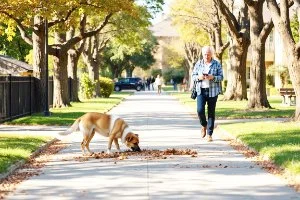
Suddenly, her peaceful walk was interrupted by an unpleasant sight. A large dog was defecating right in the middle of the path. Its owner, a young man engrossed in his phone, seemed oblivious to the mess his pet was making. Mrs. Thompson watched in disbelief as the man walked away without cleaning up after his dog.
Fuming, she muttered to herself, "There ought to be a law against that!" She continued her walk, but the incident gnawed at her. She couldn't shake the feeling that something needed to be done.
Later that day, Mrs. Thompson attended a town hall meeting. As the discussion turned to community issues, she seized the opportunity to voice her concern. "I witnessed something very disturbing today," she began. "A dog defecated in the park, and the owner didn't clean it up. This is unacceptable! There ought to be a rule against that."
The room buzzed with murmurs of agreement. Mayor Caldwell, who was presiding over the meeting, nodded thoughtfully. "Mrs. Thompson, you raise a valid point. We do have a rule requiring pet owners to clean up after their animals, but it seems enforcement is lacking."
A young woman named Emily, who worked at the local animal shelter, spoke up. "I agree with Mrs. Thompson, but we need to consider how we can effectively enforce such rules. Simply having a rule isn't enough if people don't follow it."
The debate continued, with some residents suggesting stricter fines and others proposing more public awareness campaigns. Mr. Jenkins, an elderly gentleman known for his wit, chimed in. "You know, sometimes it's not about the rules themselves, but about fostering a sense of responsibility and community."
The mayor smiled. "That's a good point, Mr. Jenkins. Perhaps we need a combination of both enforcement and education."
Inspired by the discussion, the town council decided to take action. They launched a campaign to remind pet owners of their responsibilities, complete with posters, social media posts, and even a catchy slogan: "Scoop the Poop, Keep Maplewood Beautiful!" They also increased patrols in the park and issued fines to those who ignored the rules.
Over the next few weeks, the campaign had a noticeable impact. More pet owners were seen carrying bags and cleaning up after their dogs. The park became cleaner, and the community felt a renewed sense of pride in their town.
One day, as Mrs. Thompson took her usual walk through the park, she noticed the young man from before, this time diligently picking up after his dog. He saw her and gave a sheepish smile. "I guess there really ought to be a rule against that," he said, holding up the bag.
Mrs. Thompson smiled back. "It's not just about the rule. It's about respecting our community and each other."
In the end, Maplewood learned that while rules are important, it's the sense of shared responsibility and respect that truly makes a difference. The saying "there ought to be a rule against that" had its place, but it was the community's collective effort that kept their town beautiful and harmonious.
Me: Are there any good reasons to have rules for their own sake – enforced of not enforced.?
CoPilot:
Here’s a follow‑up story set in Maplewood that explores the deeper philosophical question: Are there any good reasons to have rules for their own sake—whether or not they’re enforced?
A Maplewood Story: The Rule With No Purpose
A few months after the great “Scoop the Poop” success, Maplewood’s town council gathered once again. This time, the atmosphere was lighter—no pressing crisis, no heated debate. Even Mayor Caldwell remarked, “It’s nice to meet when nothing is going wrong.”
During the meeting, Councilmember Ramirez raised an unusual topic.
“I was reviewing our municipal code,” she said, tapping a thick binder, “and I found something odd. We still have a rule on the books requiring every household to keep a lantern lit on their porch after sunset… to guide night travelers.” She paused. “This was written in 1892.”
The room chuckled.
Mr. Jenkins, resident wit and lover of town history, raised an eyebrow. “Well, I suppose it might help the odd time traveler.”
Emily from the animal shelter added, “No one enforces it, no one follows it, and I’m pretty sure no one even knows it exists.”
Mayor Caldwell leaned forward. “So the question is: Should we remove this old rule?”
Before anyone answered, Mrs. Thompson—who had now become something of a community voice—spoke thoughtfully. “It sounds ridiculous. But the real question is: Should a rule only matter if it's useful? Or is there something to be said for the principle of having rules—even ones we don’t enforce?”
The room quieted.
A few days later, Maplewood Elementary held a school assembly. Principal Harris had noticed something peculiar: even though the school had a rule requiring students to “stand in line quietly before entering the building,” the teachers rarely enforced it strictly.
Yet the kids—especially the younger ones—lined up neatly every morning.
When asked why, a third-grader named Lily shrugged. “It just feels better when everyone knows what to do.”
Principal Harris shared this story at the next council meeting. “They don’t follow the rule because someone is watching. They follow it because the rule gives them a clear expectation. It helps them feel safe.”
The council pondered this.
Emily spoke up next. “At the shelter, we have rules about how animals should be handled. Some of those rules aren’t enforced every minute—but they exist to shape habits, to create a culture.”
Mr. Jenkins laughed softly. “So you’re saying rules can be like seatbelts for behavior—there even when no one checks.”
Mrs. Thompson added, “The lantern rule might be outdated, but it reminds us that long ago people cared about guiding strangers safely through the dark. Maybe rules—even old ones—tell a story about who we wanted to be.”
Councilmember Ramirez nodded. “Maybe the question isn’t whether the rule is enforced, but whether it still reflects a value we want to keep.”
Inspired by the discussion, the council didn’t remove the old lantern rule. Instead, they launched a small, optional event called Lantern Night. Families were invited to place a lantern—or a battery-powered candle—on their porch for one evening to “light the way for neighbors.”
Participation was voluntary. No one would check. No fines, no warnings.
Yet when the night came, almost the entire town joined in.
Children ran around admiring the lights. Neighbors chatted on porches. Elderly residents reminisced about childhood traditions. The town glowed—literally and figuratively.
Mrs. Thompson, standing beside a warm lantern, whispered, “Maybe some rules don’t need to be enforced. Maybe some rules just remind us of who we are.”
In the end, Maplewood discovered that:
Some rules guide behavior because of enforcement.
Some rules guide behavior because they shape culture, expectations, or identity.
And some rules stay alive not because anyone must follow them—but because people want to.
The lantern rule stayed on the books—not as a command, but as a story. A reminder.
And in Maplewood, that was reason enough.
Me to my Readers: I think I got what I asked for. What a wonderful world CoPilot lives in --or mistakenly thinks that we live in?