

23. Rule Abuse
23. Rule Abuse
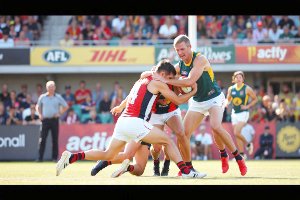
ME: Write a story about a football team that has a reputation of breaking the rules, written or unwritten, in order to win.
CoPilot:
The Dark Tactics of Coach Harris
In the heart of Melbourne, where Aussie Rules football was more than just a sport but a way of life, there was a small, scrappy team known as the Eastside Eagles. The Eagles were not the biggest or the strongest team in the league, but they had a secret weapon: their coach, Jack Harris. Coach Harris was a seasoned veteran of the game, known for his unconventional and often controversial tactics.
Coach Harris had a unique philosophy. He believed that in order to win, his team needed to use every advantage they could muster, especially when facing larger and more physically dominant opponents. His strategy was simple but effective: use the opponent’s strength against them. He encouraged his smaller players to provoke their bigger opponents into committing fouls, and when the umpires weren’t looking, to use stealthy, targeted violence to gain the upper hand.
The Eastside Eagles were a team of underdogs. Most of their players were smaller and less physically imposing than those on other teams. But what they lacked in size, they made up for in speed, agility, and cunning. Coach Harris saw potential in these qualities and devised a plan to turn their perceived weaknesses into strengths.
During practice sessions, Coach Harris drilled his players on how to draw fouls. He taught them to use their agility to get under the skin of their larger opponents, to taunt them subtly, and to make them lose their temper. “Remember,” he would say, “a foul is as good as a goal if it gets us a free kick.”
One of Coach Harris’s star players was a young man named Timmy. Timmy was quick and nimble, but he often found himself outmatched physically. Coach Harris took Timmy under his wing and taught him the art of provocation. “You see that big guy over there?” Harris pointed to a towering opponent during a practice match. “He’s got a temper. Get in his face, make him angry. He’ll lash out, and when he does, the umpire will be on him like a hawk.”
Timmy took the advice to heart. During their next game, he danced around the larger players, making snide comments and quick jabs. It wasn’t long before one of the bigger opponents, frustrated by Timmy’s antics, shoved him hard. The umpire blew the whistle, and the Eagles were awarded a free kick. Timmy grinned as he jogged back to his teammates. Coach Harris nodded approvingly from the sidelines.
But Coach Harris’s tactics didn’t stop at drawing fouls. He also taught his players how to use stealthy violence to their advantage. “When the umpire’s not looking,” he would say, “you need to make your presence felt. A well-placed elbow or a quick jab to the ribs can take the wind out of their sails.”
The players were hesitant at first, but they trusted their coach. They practiced these moves in secret, learning how to deliver them quickly and discreetly. During games, they would wait for the perfect moment, when the umpire’s attention was elsewhere, to strike. A quick elbow to the gut, a knee to the thigh—small, targeted acts of violence that could incapacitate an opponent without drawing attention.
The Eagles’ tactics began to pay off. They started winning games against teams that were much larger and stronger. Their opponents grew frustrated and demoralized, often losing their composure and committing fouls that gave the Eagles an advantage. The team’s reputation grew, and so did the controversy surrounding their methods.
One game, in particular, became a turning point. The Eagles were up against the Westside Warriors, a team known for their physical dominance. The game was intense, with both sides playing aggressively. Timmy, following Coach Harris’s instructions, managed to provoke one of the Warriors’ star players into a violent outburst. The player was sent off, and the Eagles capitalized on the opportunity to secure a narrow victory.
However, the Eagles’ success came at a cost. Rumors began to spread about their underhanded tactics. Opposing teams and fans accused them of playing dirty, and the league officials started to take notice. Coach Harris was called in for a meeting with the league’s disciplinary committee.
“Coach Harris,” the chairman began, “we’ve received numerous complaints about your team’s conduct. There are allegations of deliberate provocation and unsportsmanlike behavior. How do you respond?”
Coach Harris remained calm. “We play to win, within the rules. If our opponents can’t control their tempers, that’s their problem, not ours.”
The committee was not entirely convinced, but without concrete evidence, they could do little more than issue a warning. However, the scrutiny on the Eagles increased, and the umpires began to watch their games more closely.
The increased attention made it harder for the Eagles to employ their tactics. Opponents were also more cautious, aware of the Eagles’ reputation. The team struggled to adapt, and their performance began to suffer. Tensions rose within the team, and some players started to question Coach Harris’s methods.
One day, after a particularly tough loss, Timmy confronted Coach Harris. “Coach, this isn’t working anymore. We’re losing games, and our reputation is in tatters. Maybe it’s time we played fair.”
Coach Harris looked at Timmy, his expression hardening. “Fair? Do you think the other teams play fair? This is a tough game, and we need every edge we can get.”
Timmy shook his head. “I don’t want to win like this. It’s not worth it.”
The team’s morale was at an all-time low. Coach Harris realized that he needed to change his approach if he wanted to keep his team together. He called a meeting and addressed the players.
“I know things have been tough,” he began. “We’ve relied on tactics that some might call questionable. But I see now that it’s not sustainable. We need to find a way to win that we can all be proud of.”
The players were relieved to hear this. They agreed to focus on improving their skills and teamwork, rather than relying on provocation and stealthy violence. It was a difficult transition, but they were determined to make it work.
The Eagles worked hard to rebuild their reputation. They trained rigorously, honing their skills and developing new strategies that emphasized their strengths. Slowly but surely, they began to see results. They won games through sheer determination and teamwork, earning the respect of their opponents and fans.
Coach Harris watched with pride as his team transformed. He realized that true success came not from bending the rules, but from playing with integrity and heart. The Eagles’ journey had been a tumultuous one, but it had brought them closer together and made them stronger.
The season culminated in a final game against the Westside Warriors. The stakes were high, and the tension was palpable. The Eagles knew they had to give it their all. As the game progressed, it became clear that the Eagles were a different team from the one that had relied on dirty tactics.
They played with skill, precision, and sportsmanship. Timmy, now a confident and respected player, led the team with grace and determination. The game was close, but in the final moments, the Eagles scored the winning goal, securing their place as champions.
The victory was sweet, but it was the journey that mattered most. The Eagles had learned valuable lessons about integrity, teamwork, and the true spirit of the game. Coach Harris, once known for his controversial tactics, had earned a new reputation as a mentor who had guided his team through adversity to success.
The Eastside Eagles became a symbol of redemption and resilience. They had proven that even in the face of challenges, it was possible to rise above and achieve greatness. And as they celebrated their victory, they knew that their bond as a team—and as friends—was stronger than ever.
In the end, the Eagles’ story was not just about winning games, but about the power of transformation and the importance of playing with honor. They had discovered that the true essence of the game lay not in bending the rules, but in embracing the values that made it worth playing.
Me: “In the final game of the Westside Warriors against the Eastside Eagles, the Eagles won by a goal, kicked in the last second of the game. The Westside Warriors appealed and accused the Eagles Coach of having made a deal with the goal umpire. Worse, it looked like the crowd of onlookers was going to erupt onto the field. Write a story that follows the events up to and after this frightening scene.
Copilot: The Final Whistle
The tension was palpable as the Westside Warriors faced off against the Eastside Eagles in the championship game. The score was tied, and the clock was ticking down. With just seconds left, the Eagles' star player, Jake, lined up for a final shot. The crowd held its breath as the ball soared through the air and sailed between the goalposts just as the buzzer sounded. The Eagles had won by a single point.
The Eastside fans erupted in cheers, but the Warriors and their supporters were in shock. Almost immediately, accusations began to fly. The Warriors' coach, Mr. Harris, stormed onto the field, pointing a finger at the Eagles' coach, Mr. Thompson. "This isn't over!" he shouted. "You made a deal with the goal umpire!"
The crowd, already on edge, began to murmur and shift uneasily. Some fans started to push towards the field, and it looked like a full-blown riot might break out. Security personnel rushed to form a barrier between the two sides, trying to keep the peace.
In the midst of the chaos, the league commissioner, Ms. Rodriguez, took to the microphone. "Everyone, please calm down," she urged. "We will investigate these allegations thoroughly. For now, I ask that you all leave the stadium in an orderly fashion."
Reluctantly, the crowd began to disperse, though the tension was still thick in the air. The players from both teams were escorted to their locker rooms, where they sat in stunned silence. The Warriors felt robbed, while the Eagles were unsure how to celebrate their victory amidst the controversy.
The next day, the league launched a formal investigation. They reviewed footage from the game, interviewed the goal umpire, and spoke with both coaches. It was a tense few days as everyone awaited the outcome.
Finally, the league released their findings. There was no evidence of any deal or foul play. The goal umpire had made a fair call, and the Eagles' victory stood. However, the league acknowledged the need for better transparency and communication to prevent such incidents in the future.
In the aftermath, the Warriors and Eagles met for a joint press conference. Coach Harris apologized for his outburst, and Coach Thompson expressed his hope that the two teams could move past the incident. The players shook hands, and the community began to heal.
The championship game would be remembered not just for its dramatic finish, but for the lessons learned about sportsmanship, integrity, and the importance of keeping cool under pressure. The final whistle had blown, but the story of that fateful game would live on as a reminder of what truly matters in sports.
Me : To my Readers who are acquainted with Aussie Rules football, will note that there are many errors and a presumption that the game was some kind of generic football. So I decided to ask the question again specifying that it was Aussie rules. The answer is not much different, thus illuminating the somewhat lack of accuracy of AI, and the clear tendency to mush a lot of information into a soup of some very general principles of behavior and the feel-good solutions of impossible situations and events.
Copilot: Title: The Final Showdown
The final game of the Aussie Rules football season was nothing short of electrifying. The Westside Warriors and the Eastside Eagles were neck and neck, each team giving their all. With the score tied and only seconds left on the clock, the Eagles' star forward, Liam, took a daring shot at goal. The ball sailed through the air, and just as the final siren blared, it split the goalposts. The Eagles had won by a single point.
The Eastside fans erupted in jubilation, but the Warriors and their supporters were stunned. Almost immediately, accusations began to fly. The Warriors' coach, Mr. Harris, stormed onto the field, pointing an accusatory finger at the Eagles' coach, Mr. Thompson. "This isn't over!" he shouted. "You made a deal with the goal umpire!"
The crowd, already on edge, began to murmur and shift uneasily. Some fans started to push towards the field, and it looked like a full-blown riot might break out. Security personnel rushed to form a barrier between the two sides, trying to keep the peace.
In the midst of the chaos, the league commissioner, Ms. Rodriguez, took to the microphone. "Everyone, please calm down," she urged. "We will investigate these allegations thoroughly. For now, I ask that you all leave the stadium in an orderly fashion."
Reluctantly, the crowd began to disperse, though the tension was still thick in the air. The players from both teams were escorted to their locker rooms, where they sat in stunned silence. The Warriors felt robbed, while the Eagles were unsure how to celebrate their victory amidst the controversy.
The next day, the league launched a formal investigation. They reviewed footage from the game, interviewed the goal umpire, and spoke with both coaches. It was a tense few days as everyone awaited the outcome.
Finally, the league released their findings. There was no evidence of any deal or foul play. The goal umpire had made a fair call, and the Eagles' victory stood. However, the league acknowledged the need for better transparency and communication to prevent such incidents in the future.
In the aftermath, the Warriors and Eagles met for a joint press conference. Coach Harris apologized for his outburst, and Coach Thompson expressed his hope that the two teams could move past the incident. The players shook hands, and the community began to heal.
The championship game would be remembered not just for its dramatic finish, but for the lessons learned about sportsmanship, integrity, and the importance of keeping cool under pressure. The final whistle had blown, but the story of that fateful game would live on as a reminder of what truly matters in sports.
Me: Enough said…