

33. Fixed by Breaking
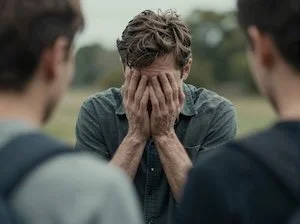
Me: Write a story that shows how breaking a rule can have a considerable benefit.
CoPilot:
In the bustling city of Veridia, there lived a young woman named Elara. She was known for her sharp mind and unyielding spirit. Elara worked as a software developer at a prestigious tech company, where innovation was encouraged but rules were strictly enforced.
One day, Elara stumbled upon a problem that had stumped her team for weeks. The company's policy was clear: no one was allowed to alter the core code without explicit permission from the higher-ups. But Elara, driven by her curiosity and determination, believed she had found a solution that required just such a change.
Late one night, when the office was empty, Elara decided to break the rule. She carefully modified the core code, implementing her solution. The next morning, the system ran flawlessly, solving the issue that had plagued them. Her colleagues were amazed, and her boss, though initially furious, couldn't deny the brilliance of her solution.
Elara's actions sparked a debate within the company. Some argued that rules were there for a reason, to maintain order and prevent chaos. Others believed that innovation often required stepping outside the boundaries. In the end, the company revised its policies, allowing for more flexibility and encouraging employees to think outside the box.
Elara's story spread throughout Veridia, inspiring others to question the status quo and push the limits of what was possible. She had shown that sometimes, breaking the rules wasn't about defiance but about progress and innovation.
Me: It would appear that the rule breaker was rewarded for her “crime.” CoPilot, write another story that addresses this problem of rule-beaking, for I thought that the whole idea of rules was the punishment promised those who broke them.
CoPilot”
In the serene village of Greenfield, there was a long-standing tradition known as the "Circle of Trust." This rule was simple yet profound: every villager was expected to be honest and trustworthy in all their dealings. The Circle of Trust was the foundation of the community's harmony and prosperity.
One day, a young man named Liam, who had recently moved to Greenfield, found himself in a difficult situation. He had borrowed a significant sum of money from his neighbor, Mr. Harris, to start a small business. Despite his best efforts, the business failed, and Liam was unable to repay the loan on time.
Desperate and ashamed, Liam decided to lie to Mr. Harris, telling him that the money had been stolen. Mr. Harris, a kind and trusting man, believed Liam and offered his sympathy. However, the lie weighed heavily on Liam's conscience, and he began to withdraw from the community, avoiding eye contact and social gatherings.
The village elders, sensing something was amiss, called a meeting to discuss the growing tension. They reminded everyone of the importance of the Circle of Trust and how it had always been the bedrock of their community. Liam, feeling the pressure of his deceit, finally confessed his lie in front of the entire village.
"I broke the Circle of Trust," Liam admitted, his voice trembling. "I lied to Mr. Harris because I was afraid and ashamed. I am truly sorry for my actions."
The villagers were shocked and disappointed, but they also saw the remorse in Liam's eyes. Mr. Harris stepped forward, placing a hand on Liam's shoulder. "Liam, you made a mistake, but it takes courage to admit it. The Circle of Trust is broken, but that doesn't mean it can't be made whole again."
The village elders nodded in agreement. Elder Miriam, the wisest among them, spoke up. "When a rule is broken, it leaves a scar. But scars can heal with time, effort, and forgiveness. Liam, you must work to rebuild the trust you have lost."
Liam vowed to make amends. He started by working extra hours to repay Mr. Harris, not just the money he owed, but also with interest. He volunteered for community projects, helping to repair the village school and planting trees in the park. He attended every village meeting, openly sharing his progress and seeking advice.
The villagers, seeing Liam's genuine efforts, began to forgive him. Slowly but surely, the Circle of Trust started to mend. It wasn't an easy process, and there were moments of doubt and setbacks. But Liam's determination and the community's willingness to give him a second chance made all the difference.
Years later, Greenfield was as harmonious as ever. The Circle of Trust had been restored, stronger than before. The villagers had learned that while breaking a rule could cause pain and division, it was possible to make it whole again through honesty, hard work, and forgiveness.
Liam became a respected member of the community, known for his integrity and dedication. He often shared his story with newcomers, reminding them that mistakes were part of being human, but it was how they responded to those mistakes that truly defined them.
In the end, the village of Greenfield thrived, not because they never broke the rules, but because they knew how to heal and grow stronger from their experiences. The Circle of Trust remained a guiding principle, a testament to the power of redemption and the resilience of the human spirit.
Me: A lovely story. Now write the story again but this time acknowledge that if you break a rule you get punished, and once punished, one is rarely forgiven. And even if forgiven the infraction is not forgotten….
CoPilot: The Cost of a Broken Trust
Greenfield was a small village where reputation mattered. People borrowed tools without contracts, left produce stands unattended, and trusted one another's word. The local saying was simple: Trust takes years to build and minutes to destroy.
Liam learned that lesson the hard way.
After moving to Greenfield, he borrowed a large sum of money from his neighbor, Mr. Harris, to start a landscaping business. They signed a written agreement, and Mr. Harris, believing in the young man's ambition, offered favorable repayment terms.
Unfortunately, the business failed within a year.
Liam was terrified. He had no savings, no profitable contracts, and no clear way to repay the debt. Rather than admit the truth, he invented a story. He told Mr. Harris that his remaining business funds had been stolen during a break-in.
Mr. Harris was sympathetic. He postponed repayment and even helped Liam file a police report.
The lie might have survived if Liam had left it there. But investigations have a way of uncovering facts.
The police found no evidence of a break-in. They discovered that the money had been spent on failed business expenses months earlier. Worse, records showed Liam knew this when he reported the theft.
When confronted, he confessed.
The consequences were immediate.
The police charged him with filing a false report. The court imposed a fine and community service. The financial debt remained. Interest continued to accumulate.
But the legal punishment was only part of the cost.
Mr. Harris withdrew all support and demanded repayment according to the original contract. Several villagers who had considered hiring Liam decided not to. Others became reluctant to enter into agreements with him. Nobody shouted at him in the streets. Nobody sought revenge.
They simply stopped trusting him.
At the next village meeting, Elder Miriam addressed the situation.
"Liam has been punished by the court," she said. "That matter is settled. But trust is different. Trust is not owed. It is earned."
No one argued.
Over the next few years, Liam worked two jobs to repay his debt. He completed his court-ordered service. He obeyed every rule and met every obligation.
Yet things never returned to how they had been.
People were polite. They were professional. But they remembered.
When community committees chose volunteers to manage funds, Liam was never selected.
When cooperative business ventures were formed, he was not invited.
When new residents asked about local contractors, villagers mentioned his skills but also his history.
Liam could not demand that others forget.
The punishment for breaking the law had ended after his sentence was completed. The consequences of breaking trust continued much longer.
One evening, years later, a newcomer asked him whether Greenfield was a forgiving place.
Liam thought carefully before answering.
"It's a fair place," he said.
"What's the difference?"
"A forgiving place gives you back what you lost. A fair place gives you the chance to keep moving forward."
The newcomer nodded.
Liam had rebuilt his finances. He had rebuilt his career. But he had never fully rebuilt his reputation. Some things, once damaged, could be repaired only partially.
Greenfield continued to prosper because its people understood a difficult truth: rules existed for a reason, and breaking them carried consequences. Punishment could satisfy justice, but it could not erase the harm that had been done.
And so the village's Circle of Trust endured, not because everyone was forgiven, but because everyone knew that trust, once broken, had a cost.
Me: but what if Liam was so distressed that he could not repair the damage, and, well, ended his life?
CoPilot: That would make for a much darker story, but a realistic one if handled carefully. The key would be not to present Liam's death as a justified consequence or a solution, but as an additional tragedy that grows out of shame, isolation, and hopelessness.
That would make for a much darker story, but a realistic one if handled carefully. The key would be not to present Liam's death as a justified consequence or a solution, but as an additional tragedy that grows out of shame, isolation, and hopelessness.
After Liam's lie was exposed, Greenfield reacted much as before. The court fined him for filing a false report. Mr. Harris demanded repayment of the loan. The villagers became cautious around him. No one threatened him, but the easy trust he had once enjoyed was gone.
Liam accepted the punishment. He found extra work and tried to repay what he owed. Yet every interaction seemed to remind him of his failure. People remembered. Some spoke of him kindly, others critically, but all knew his story.
Months turned into years.
Outwardly, Liam appeared to be moving forward. Inwardly, he felt trapped. Each setback seemed to confirm his belief that he had permanently ruined his life. When customers chose other contractors, he saw proof that he would never be trusted again. When villagers hesitated before lending him equipment, he saw proof that forgiveness was impossible.
The truth was more complicated. Some villagers believed he could rebuild his reputation over time. Others were uncertain. A few were quietly rooting for him. But Liam had stopped seeing those possibilities.
One autumn morning, news spread through Greenfield that Liam had taken his own life.
The village was stunned.
Many people had viewed Liam as the wrongdoer in the story. Now they were forced to confront something else: a human being had died believing there was no future left for him.
At the next village meeting, the atmosphere was unlike anything Greenfield had experienced.
Mr. Harris stood before the assembly.
"I was angry at Liam," he said. "He lied to me, and the lie hurt many people. But I never wanted this."
No one did.
Elder Miriam spoke next.
"We tell ourselves that wrongdoing deserves consequences," she said. "That is true. But consequences are not the same as hopelessness. Justice must leave room for the possibility of a future."
The villagers reflected on the months before Liam's death. Some regretted harsh words they had spoken. Some regretted silence. Others realized they had assumed someone else would reach out and help.
None of them believed Liam's lie should have been ignored. None believed the punishment should have disappeared. But they began to understand that accountability and compassion were not opposites.
Years later, Greenfield still remembered Liam.
His story was no longer told merely as a warning against dishonesty. It was also told as a warning about despair.
The villagers taught their children that actions have consequences, sometimes severe ones. But they also taught that no mistake, no debt, and no public failure should convince a person that their life is beyond repair.
The tragedy was not that Liam had been punished for breaking the rules. The tragedy was that he came to believe punishment meant he no longer had a place in the world.
And that belief cost him everything.
Me: I have nothing to add….