Open Access Publisher and Free Library
CRIMINAL JUSTICE.jpeg

CRIMINAL JUSTICE

CRIMINAL JUSTICE-CRIMINAL LAW-PROCDEDURE-SENTENCING-COURTS

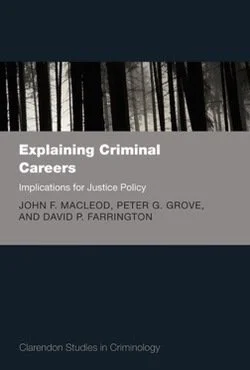
Explaining Criminal Careers: Implications for Justice Policy

By John F. MacLeod, Peter G. Grove, and David P. Farrington

Explaining Criminal Careers presents a simple quantitative theory of crime, conviction and reconviction, the assumptions of the theory are derived directly from a detailed analysis of cohort samples drawn from the “UK Home Office” Offenders Index (OI). Mathematical models based on the theory, together with population trends, are used to make: exact quantitative predictions of features of criminal careers; aggregate crime levels; the prison population; and to explain the age-crime curve, alternative explanations are shown not to be supported by the data. Previous research is reviewed, clearly identifying the foundations of the current work. Using graphical techniques to identify mathematical regularities in the data, recidivism (risk) and frequency (rate) of conviction are analysed and modelled. These models are brought together to identify three categories of offender: high-risk / high-rate, high-risk / low-rate and low-risk / low-rate. The theory is shown to rest on just 6 basic assumptions. Within this theoretical framework the seriousness of offending, specialisation or versatility in offence types and the psychological characteristics of offenders are all explored suggesting that the most serious offenders are a random sample from the risk/rate categories but that those with custody later in their careers are predominantly high-risk/high-rate. In general offenders are shown to be versatile rather than specialist and can be categorised using psychological profiles. The policy implications are drawn out highlighting the importance of conviction in desistance from crime and the absence of any…..

  • additional deterrence effect of imprisonment. The use of the theory in evaluation of interventions is demonstrated.

Oxford, UK; New York: Oxford University Press, 2021. 273p.

download
A Kind of Mending: Restorative Justice in the Pacific Islands

 Edited bySinclair Dinnen , Anita Jowitt, Tess Newton

With their rich traditions of conflict resolution and peacemaking, the Pacific Islands provide a fertile environment for developing new approaches to crime and conflict. Interactions between formal justice systems and informal methods of dispute resolution contain useful insights for policy makers and others interested in socially attuned resolutions to the problems of order that are found increasingly in the Pacific Islands as elsewhere. Contributors to this volume include Pacific Islanders from Vanuatu, Fiji, the Solomon Islands, Papua New Guinea including Bougainville, as well as outsiders with a longstanding interest in the region. They come from a variety of backgrounds and include criminal justice practitioners, scholars, traditional leaders and community activists. The chapters deal with conflict in a variety of contexts, from interpersonal disputes within communities to large-scale conflicts between communities. This is a book not only of stories but also of practical models that combine different traditions in creative ways and that offer the prospect of building more sustainable resolutions to crime and conflict.

Canberra: ANU Press, 2010. 324p.

download
The International Criminal Court in Turbulent Times

Edited by Gerhard Werle and Andreas Zimmermann

The chapters in this book are reworkings of presentations given during a conference held in 2018 at the German Embassy to the Netherlands in The Hague on the occasion of the 20th anniversary of the adoption of the Rome Statute. They provide an in-depth analysis of major points of contention the International Criminal Court (ICC) is currently facing, such as, inter alia, head of state immunities, withdrawal from the Rome Statute, the exercise of jurisdiction vis-à-vis third-party nationals, the activation of the Court’s jurisdiction regarding the crime of aggression, as well as the relationship of the Court with both the Security Council and the African Union, all of which are issues that have a continued relevance and carry a particular controversy. The collection provides insights from both practitioners, including judges of the ICC, and diplomats who participated in the negotiations leading to the adoption of the Rome Statute, as well as well-known academics from various parts of the world working in the field of international criminal law. The aim of the book is not only to inform and stimulate academic debate on the topic, but also to serve as an instrument for lawyers involved in the practice of international criminal law.

Cham: Springer/T.M.C. Asser Press, 2019. 174p.

download
An Introduction to the International Criminal Court. Fourth Edition

By William A. Schabas

The International Criminal Court has ushered in a new era in the protection of human rights. Protecting against genocide, crimes against humanity and war crimes, the Court acts when national justice systems are unwilling or unable to do so. Written by the leading expert in the field, the fourth edition of this seminal text considers the Court in action: its initial rulings, cases it has prosecuted and cases where it has decided not to proceed, such as Iraq. It also examines the results of the Review Conference, by which the crime of aggression was added to the jurisdiction of the Court and addresses the political context, such as the warming of the United States to the Court and the increasing recognition of the inevitability of the institution.

Cambridge, UK; New York: Cambridge University Press, 2011. 594p.

download
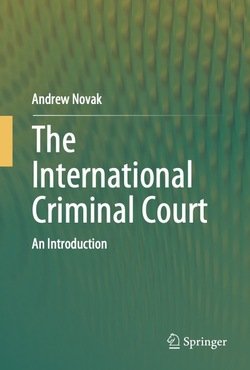
The International Criminal Court: An Introduction

By Andrew Nowak

This book is about the International Criminal Court (ICC), a new and highly distinctive criminal justice institution with the ability to prosecute the highest-level government officials, including heads of state, even in countries that have not accepted its jurisdiction. The book explores the historical development of international criminal law and the formal legal structure created by the Rome Statute, against the background of the Court’s search for objectivity in a political global environment. The book reviews the operations of the Court in practice and the Court’s position in the power politics of the international system. It discusses and clarifies all stages of an international criminal proceeding from the opening of the investigation to sentencing, reparations, and final appeals in the context of its restorative justice mission. Making appropriate comparisons and contrasts between the international criminal justice system and domestic and national systems, the book fills a gap in international criminal justice study.

Cham: Springer, 2015. 133p.

download
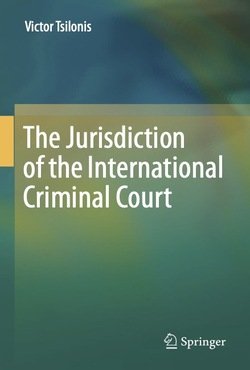
The Jurisdiction of the International Criminal Court

By Victor Tsilonis

The book provides a holistic examination of the jurisdiction of the International Criminal Court (ICC). The main focus is placed on the three pillars which form the ICC’s foundation pursuant to the Rome Statute: The preconditions to the exercise of its jurisdiction (Article 12 Rome Statute). The substantive competence, i.e. the core crimes (Article 5-8bis Rome Statute, i.e. genocide, crimes against humanity, war crimes, crime of aggression). the principle of complementarity (Article 17§1 (a) Rome Statute). The latter governs the ICC's ‘ultimate jurisdiction’, since it is not merely sufficient for a crime to be within the Court's jurisdiction (according to the substantive, geographical, personal and temporal jurisdictional criteria), but the State Party must also be unwilling or unable genuinely to carry out the investigation or prosecution. Finally yet importantly, the main ‘negative preconditions’ for the Court’s jurisdiction, i.e. immunities (Article 27 Rome Statute) and exceptions via Security Council referrals are thoroughly examined.The book is an excellent resource for scholars as well as practitioners and notably contributes to the existing literature.

Cham: Springer, 2019. 283p.

download
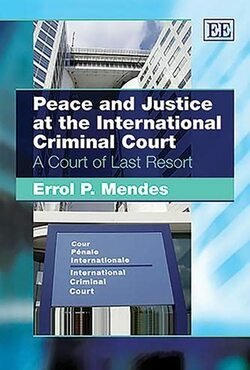
Peace and Justice at the International Criminal Court: A Court of Last Resort. First Edition

By Errol P. Mendes

This text provides an analysis of the greatest challenge facing the International Criminal Court - a reconcilliation of the demands for justice for the most serious crimes known to humanity. The author argues that the Court is a product of centuries of efforts to reconcile peace with justice. The Court as offspring of centuries of peace with justice -- Is it peace or justice that ends the alleged first genocide of the 21st century? -- Is it peace, justice or a military solution in the tragedy of Northern Uganda? -- Reconciling peace with justice in the ICC through positive international complementarity -- The future of the Court : reassuring Africa, investigating Gaza, integrating America and seeking help from global finance.

Cheltenham, UK • Northampton, MA: Edward Elgar, 2010. 215p.

download
A Brief History of International Criminal Law and International Criminal Court

By Cenap Çakmak

This book offers a historical presentation of how international criminal law has evolved from a national setting to embodying a truly international outlook. As a growing part of international law this is an area that has attracted growing attention as a result of the mass atrocities and heinous crimes committed in different parts of the world. Çakmak pays particular attention to how the first permanent international criminal court was created and goes on to show how solutions developed to address international crimes have remained inadequate and failed to restore justice. Calling for a truly global approach as the only real solution to dealing with the most severe international crimes, this text will be of great interest to scholars of criminal justice, political science, and international relations.

Palgrave Macmillan, 2017. 305p.

download
The International Criminal Court – An International Criminal World Court?

By Sarah Babaian

This book provides an analysis of whether the International Criminal Court can be regarded as an International Criminal World Court, capable of exercising its jurisdiction upon every individual despite the fact that not every State is a Party to the Rome Statute. The analysis is based on a twin-pillar system, which consists of a judicial and an enforcement pillar. The judicial pillar is based on the most disputed articles of the Rome Statute; its goal is to determine the potential scope of the Court’s strength through the application of its jurisdiction regime. The enforcement pillar provides an analysis of the cooperation and judicial assistance mechanism pursuant to the Rome Statute’s provisions and its practical implementation through States’ practices. The results of the analysis, and the lack of an effective enforcement mechanism, demonstrate that the ICC cannot in fact be considered a criminal world court. In conclusion, possible solutions are presented in order to improve the enforcement pillar of the Court so that the tremendous strength of the ICC’s judicial pillar, and with it, the exercise of worldwide jurisdiction, can be effectively implemented.

Cham: Springer, 2018. 216p.

download
Seventy Years of the International Law Commission: Drawing a Balance for the Future

Edited  by The United Nations  

Seventy Years of the International Law Commission: Drawing a Balance for the Future brings together voices from academia and practice to celebrate and critically evaluate the work of the United Nations International Law Commission (ILC) over the past seventy years. The edited volume draws on the events commemorating the seventieth anniversary of the Commission, which took place in New York and Geneva in May and July 2018. At a time when multilateral law-making has become increasingly challenging, the edited volume appraises the role of one the most important driving forces behind the codification of international law and discusses the ILC’s future contribution to the development of international law. Readership: The prospective readership of the edited volume will be very diverse, including academics and practitioners of international law around the world.

Leiden; Boston: Brill Nijhoff,  2021. 475p.

download
Principles of Islamic International Criminal Law

By Farhad Malekian

The goal of this book is to minimize the misunderstandings and conflicts between International law and Islamic law. The objective is to bring peace into justice and justice into peace for the prevention of violations of human rights law, humanitarian law, international criminal law, and impunity. Readership: This book offers a peaceful resolution into international justice for researchers, students, practicing lawyers, military personnel, governmental officials, diplomats, judges, and prosecutors. It constitutes a prized addition to university and public libraries.

Leiden; Boston: Brill Nijhoff, 2011. 476p.

download
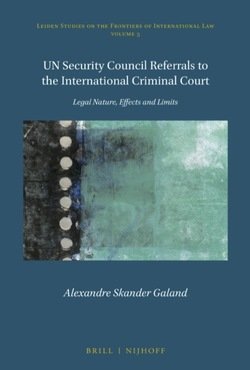
UN Security Council Referrals to the International Criminal Court: Legal Nature, Effects and Limits

By Alexandre Skander Galand

Galand critically spells out a comprehensive conception of the nature and effects of Security Council referrals that responds to the various limits to the International Criminal Court’s exercise of jurisdiction over situations that concern nationals and territories of non-party States.

Leiden; Boston: Brill Nijhoff, 2018. 279p.

download
Power and Principle: The Politics of International Criminal Courts

By Christopher Rudolph

Human rights advocates have long pressed for international institutions to prosecute crimes against humanity. With its global reach and mandate to investigate and prosecute some of the world's most severe crimes (genocide, war crimes, and crimes against humanity) the creation of the International Criminal Court in 2002 was hailed as a landmark event in the evolution of truly global society. Supporters argue that the ICC and other transnational tribunals will deter the commission of atrocities and contribute to global peace and stability, and they laud its independence and its potential to check the arbitrary use of power against the powerless. To better understand how international criminal courts function and determine their broader implications for global society, this book examines the factors that led to the creation and evolution of international criminal courts, the nature of the support for and opposition to such institutions, and how they function.

Ithaca, NY: Cornell University Press, 232p.

download
Do Exclusionary Rules Ensure a Fair Trial? A Comparative Perspective on Evidentiary Rules,

Edited by Sabine Gless and Thomas Richter.

This open access publication discusses exclusionary rules in different criminal justice systems. It is based on the findings of a research project in comparative law with a focus on the question of whether or not a fair trial can be secured through evidence exclusion. Part I explains the legal framework in which exclusionary rules function in six legal systems: Germany, Switzerland, People’s Republic of China, Taiwan, Singapore, and the United States. Part II is dedicated to selected issues identified as crucial for the assessment of exclusionary rules. These chapters highlight the delicate balance of interests required in the exclusion of potentially relevant information from a criminal trial and discusses possible approaches to alleviate the legal hurdles involved.

NY. Cham: Springer, 2019. 387p.

download
Read-Me.Org
Rethinking Nordic Courts

Edited by Laura Ervo, Pia Letto-Vanamo, Anna Nylund

This open access book examines whether a distinctly Nordic procedural or court culture exists and what the hallmarks of that culture are. Do Nordic courts and court proceedings share a distinct set of ideas and values that in combination constitute the core of a regional legal culture? How do Europeanisation, privatisation, diversification and digitisation influence courts and court proceedings in the Nordic countries? The book traces the genesis and formation of Nordic courts and justice systems to provide a richer comprehension of contemporary Nordic legal culture, and an understanding of the relationship between legal cultural stability and change. In answering these questions, the book provides models for conceptualising procedural culture. Nordic procedural culture has partly developed organically and is partly also the product of deliberate efforts to maintain a certain level of alignment between the Nordic countries. Studying Nordic cooperation enables us to gain a deeper understanding of current regional, European and global harmonisation processes within procedural law. The influx of supranational European law, increased use of alternative dispute resolution and growth in regulation density that produces a conflict between specialisation and coherence, have tangible impact on the role of courts in a democratic society, the form of court proceedings and court structures. This book examines whether and why some trends exert more tangible, or perhaps simply more perceptible, influence on procedural culture than others.

Cham: Springer, 2021. 304p.

download
Read-Me.Org
Adversarial System Analysis of the Salvadoran Gangs

By David E. Spencer, Herard von Santos, and Juan Carlos Morales

Gangs have existed for many decades in El Salvador. They did not receive a lot of attention until the 1990s. The gangs prior to the 1990s were more like the stereotypical gangs that people usually think of: misguided youth, mostly involved in petty crime and solicitation. They were not considered a very serious threat to personal or national security at that time. These gangs called themselves by a variety of names, but by the 1980s people were calling them “maras” as a general term for all gangs. The word “mara” is a Salvadoran slang word which means group of friends or gang in the sense that it refers to a tight knit group of buddies that frequently socialize together. If you are out socializing with your friends and your wife calls you to ask where you are, the answer is that I am here with “la mara” meaning I am here with my group of pals, the guys that one plays poker with or drinks a few beers or any other similar typical male social activity. The word is still used in this way, even though it has developed an increasingly negative connotation due to its association with the extremely violent criminal gangs. This is important because there has been a lot of speculation about the meaning of the word that in the authors’ opinion is improbable and counterproductive.

Washington, DC: William J. Perry Center for Hemispheric Defense Studies, 2009. 120p.

download
Read-Me.Org
Closing Rikers Island: A Roadmap for Reducing Jail in New York City

By Michael Rempel, Krystal Rodriguez, Tyler Nims, Joanna Weill, Zachary Katznelson and Madison Volpe

New York City has embarked on a far-reaching effort to shutter its notorious Rikers Island jail complex. The effort hinges on safely reducing the number of people in city jails—an achievable goal that demands policy changes at a number of levels. This report lays out a roadmap for safely limiting the use of jail in the years ahead, as a new set of elected policymakers will be tasked with bringing to fruition the end of Rikers. The good news is that New York City will be building on decades of successful reforms that have already driven down both crime and incarceration. Yet challenges lie ahead. The COVID-19 pandemic has been accompanied by a tragic increase in shootings in our city and nationwide. Nationwide protests prompted by the killings of Black Americans by police have highlighted vast racial disparities in who is arrested and incarcerated. Perennial problems at Rikers are growing worse, including intolerable conditions and unacceptably high levels of violence. New Yorkers demand, and deserve, to live in safe communities. Efforts to reduce incarceration must be accompanied by meaningful efforts to prevent crime. But importantly, the available data contradict the notion that justice reforms are linked to the recent rise in shootings.

  • As the trends of the past three decades indicate, more jail does not equal more safety. To the contrary, an emerging body of research indicates that the overuse of jail, while temporarily incapacitating people, can actually lead to more criminal activity and risks undermining the health of individuals, families, and entire neighborhoods. Those who go into jail with challenges— substance use, mental health concerns, joblessness, unstable housing, etc.—tend to come out with those challenges worsened. Jail also comes at tremendous financial cost: incarcerating one person on Rikers for a year costs a staggering $447,000.2 The strategies for reducing incarceration in this report draw on existing and original research and interviews with more than 60 criminal justice officials, practitioners, service providers, and advocates. We estimate that, once implemented, the strategies proposed here could safely reduce the jail population to between 2,700 and 3,150 people. Delivering on the promise of these strategies, and achieving the projected reductions in jail, will depend on political will, robust implementation, and ongoing monitoring to track progress.

New York: Independent Commission on NYC Criminal Justice and Incarceration Reform and Center for Court Innovation, 2021. 91p.

download
Read-Me.Org
A More Just New York City: Closing the Chapter on Rikers

By Independent Commission on NYC Criminal Justice and Incarceration Reform

In April 2017, our Commission called for deep changes to the criminal justice system in New York City, including the permanent closure of the dysfunctional jail complex on Rikers Island. Today, we are closer than ever to that goal. A HISTORIC OPPORTUNITY TO CLOSE RIKERS The administration’s current plan parallels, in important respects, the blueprint that our Commission put forward two-and-a-half years ago. It would reduce New York City’s eleven operating jails to four, cut the number of jail beds from 14,000 to fewer than 4,000, and reduce the number of people in jail to 3,300 or fewer. Rebuilding existing jails in Brooklyn, Manhattan, and Queens, and establishing a new jail in the Bronx to replace the current jail boat docked off of Hunts Point, will improve safety and conditions for incarcerated people and correction officers. This smaller, borough-based system would mean that people in jail would be closer to their families, services, lawyers, and courts. This will speed cases, boost chances for re-entry, and reduce recidivism. Final designs must include robust input from all stakeholders, including nearby residents, formerly incarcerated people, and advocates.

New York: Independent Commission on NYC Criminal Justice and Incarceration Reform: 2019. 16p.

download
Read-Me.Org
What To Do About Closing Rikers

By Elizabeth Glazer and Michael Jacobson

In our first special report, public safety veterans Elizabeth Glazer and Michael Jacobson provide a detailed, data-grounded roadmap to close Rikers Island that would simultaneously:

Increase safety inside and outside the city’s jails;

Cut operating costs and invest more in communities;

Shrink the jail population to approximately 2,200; and

Limit the criminal justice system’s footprint.

In the face of the humanitarian crises on Rikers, now in public view everyday, we show how paying attention and reducing the population can provide both immediate relief and a long-term solution.

New York: The City, 2022.

download
Read-Me.Org