
How to Address Children’s Online Safety in the United States
By ASHLEY JOHNSON
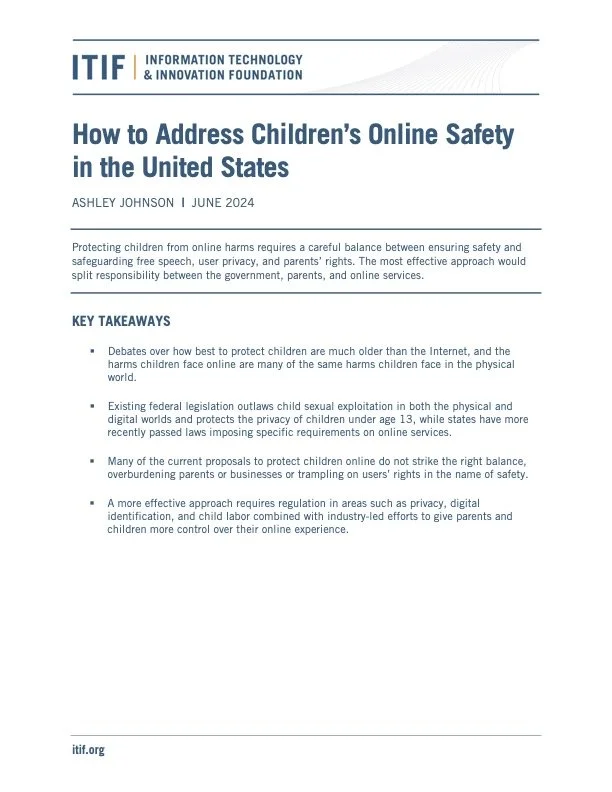
Protecting children from online harms requires a careful balance between ensuring safety and safeguarding free speech, user privacy, and parents’ rights. The most effective approach would split responsibility between the government, parents, and online services. KEY TAKEAWAYS Debates over how best to protect children are much older than the Internet, and the harms children face online are many of the same harms children face in the physical world. Existing federal legislation outlaws child sexual exploitation in both the physical and digital worlds and protects the privacy of children under age 13, while states have more recently passed laws imposing specific requirements on online services. Many of the current proposals to protect children online do not strike the right balance, overburdening parents or businesses or trampling on users’ rights in the name of safety. A more effective approach requires regulation in areas such as privacy, digital identification, and child labor combined with industry led efforts to give parents and children more control over their online experience.
Washington, DC: INFORMATION TECHNOLOGY & INNOVATION FOUNDATION | , 2024. 32p.