
An Unfinished Story: Kansas Youth Justice Reform 10 Years After Senate Bill 367,
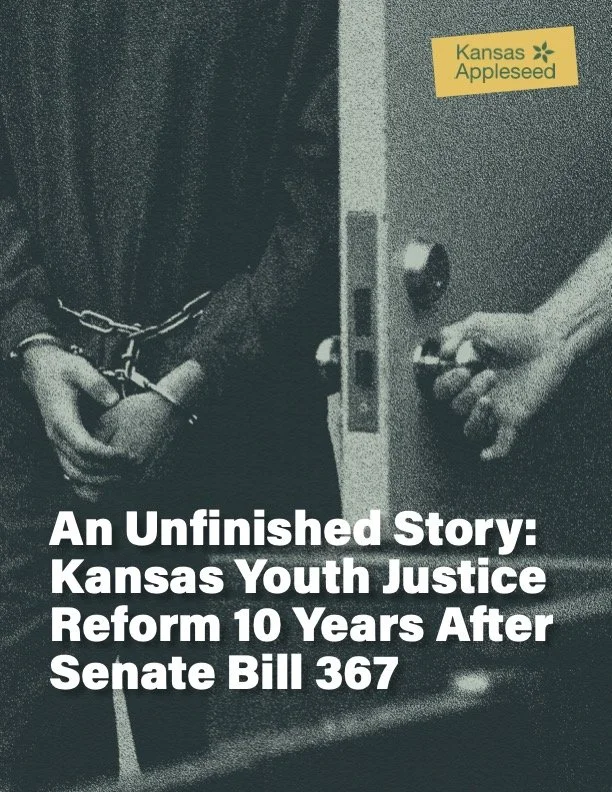
By Kansas Appleseed
In 2016, the Kansas Legislature enacted Senate Bill 367, a comprehensive overhaul of the state’s juvenile justice system. SB 367 aimed to reserve youth incarceration to only high-risk individuals, improve outcomes, and use evidence-based practices to revamp intervention. SB 367 limited the length of court jurisdiction and probation terms, depending on offense severity and risk assessment. Further, probation and detention limits were implemented for most offenses. Rather than relying on secure confinement and punishment, SB 367 shifted Kansas toward community-based sentencing alternatives by expanding immediate intervention programs. It required the use of risk and needs assessments and established graduated sanctions for probation violations with non-custodial responses when possible. It mandated interagency collaboration and required reintegration planning for youth who had been removed from their homes. These amendments to the Kansas Juvenile Justice Code and the Code for Care of Children help to avoid youth reincarceration. SB 367 created the Kansas Juvenile Justice Oversight Committee to sustain the reforms. The Committee was established to monitor implementation, measure outcomes, and recommend improvements. A dedicated Evidence Based Programs Account was established, funded through projected savings from reduced incarceration, to support community programs, prevention efforts, and evidence-based services. The bill also mandated statewide training for practitioners, emphasized collaboration between agencies, and invested in data systems to track outcomes across the state. The intent of SB 367 was to ensure that Kansas’s juvenile justice system emphasized rehabilitation over punishment. The bill reserved out-of-home placement for only the most serious offenders and directed state resources toward interventions that addressed the root causes of delinquency. When enacted, it was a reform that other states looked to as a guide when evaluating their own youth justice systems. This report looks at the impact of SB 367 in Kansas a decade after its passage. It examines the rationale and research behind SB 367, its successes, the areas that still need reform in the youth justice system, the attacks on the bill since passage that have limited its effectiveness, and finally recommendations for future action to ensure the promises of SB 367 are realized. The purpose is to remind the state of the importance of these reforms for the success of Kansas children and communities.
Lawrence KS: Kansas Appleseed, 2025. 31p.