Open Access Publisher and Free Library
Fiction+Mediajpg.jpg

FICTION and MEDIA

CRIME AND MEDIA — TWO PEAS IN A POD

The Vigilantes Of Montana

By J. Dimsdale.

Or Popular Justice in the Rocky Mountains.. “Being a correct and impartial narrative of the chase, trial, capture, execution of Henry Plummer’s Road Agent Band, together with accounts of the lives and crimes of many of the robbers and desperadoes. The whole thing being interspersed with sketches of the life in the mining camps of the Far West.”

State Publishing Co. (1866) 352 pages

download
Read-Me.Org
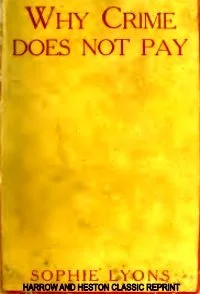
Why Crime Does not Pay

By Sophie Lyons.

Queen of the Underworld. The publishers believe that a picture of life sketched by a master hand — somebody who stands in the world of crime as Edison does in his field or as Morgan and Rockefeller do in their — could not fail to be impressive and valuable and prove the oft repeated statement that crime does not pay.”

New York Ogilvie Publishing (1913) 294 pages.

download
Read-Me.Org
Dekker's Seven Deadly Sins

By Thomas Dekker.

The Seven Deadly Sinnes of London. “Drawne in seven severall Coaches, Through the seven severall Gates of the Citie. Bringing the Plague with them.”

Cambridge London (1905) 96 pages.

download
Read-Me.Org
Reading and Disorder in Antebellum Amerrica

By David M. Stewart.

Historians of workingmen in the antebellum United States have long been preoccupied with labor politics and with the racism, nativism, and misogyny of their public culture. Reading and Disorder in Antebellum America expands our account of such men by asking questions about their social and bodily lives that are more discrete, yet still engaged with the economic forces that radically altered working life as the market revolution transformed a rural, agricultural nation into one that was commercial, industrial, and urban. To advance a more capacious view of workingmen, David M. Stewart turns to reading, which is where many first encountered antebellum change as a material fact. Tapping sources from serial fiction, reform tracts, and children’s books, to diet, land use policy, and personal correspondence, Stewart contends that in helping retool a workforce of farmers and artisans to meet the disciplinary needs of capital, the period’s burgeoning new print culture industry developed rhetoric that used emotional coercion to affect conduct. This rhetoric also became the basis for recreational idioms that compensated for the pain of both coercive reading itself and the world such reading produced. In the space between the disciplinary and recreational lives of workingmen, Reading and Disorder revises how we understand them as performative subjects, which is to say, as cause and effect of changing antebellum times.

Columbus, OH: Ohio State University Press, 2011. 242p.

download
Read-Me.Org
Learning to Live with Crime: American crime narrative in the neoconservative turn

By Christopher P. Wilson.

Since the mid-1960s, the war on crime has reshaped public attitudes about state authority, criminal behavior, and the responsibilities of citizenship. But how have American writers grappled with these changes? What happens when a journalist approaches the workings of organized crime not through its legendary Godfathers but through a workaday, low-level figure who informs on his mob? Why is it that interrogation scenes have become so central to prime-time police dramas of late? What is behind writers’ recent fascination with “cold case” homicides, with private security, or with prisons? In Learning to Live with Crime, Christopher P. Wilson examines this war on crime and how it has made its way into cultural representation and public consciousness. Under the sway of neoconservative approaches to criminal justice and public safety, Americans have been urged to see crime as an inevitable risk of modern living and to accept ever more aggressive approaches to policing, private security, and punishment. The idea has been not simply to fight crime but to manage its risks; to inculcate personal vigilance in citizens; and to incorporate criminals’ knowledge through informants and intelligence gathering. At its most scandalous, this study suggests, contemporary law enforcement has even come to mimic crime’s own operations.

Columbus, OH: Ohio State University Press, 2010. 302p.

download
The Dangerous Lover: Gothic villains, Byronism, and the Nineteenth-century Seduction Narrative

By Deborah Lutz.

The dangerous lover has haunted our culture for over two hundred years; English, American, and European literature is permeated with his erotic presence. The Dangerous Lover takes seriously the ubiquity of the brooding romantic hero—his dark past, his remorseful and rebellious exile from comfortable everyday living. Deborah Lutz traces the recent history of this figure, through the melancholy iconoclasm of the Romantics, the lost soul redeemed by love of the Brontës, and the tormented individualism of twentieth-century love narratives. Arguing for this character’s central influence not only in literature but also in the history of ideas, this book places the dangerous lover firmly within the philosophy of Martin Heidegger, the Modernism of Georg Lukács, and Roland Barthes’s theories on love and longing. Working with canonical authors such as Ann Radcliffe, Charles Maturin, Lord Byron, Charles Dickens, George Eliot, and Oscar Wilde, and also with non-canonical texts such as contemporary romance, The Dangerous Lover combines a lyrical, essayistic style with a depth of inquiry that raises questions about the mysteries of desire, death, and eroticism. The Dangerous Lover is the first book-length study of this pervasive literary hero; it also challenges the tendency of sophisticated philosophical readings of popular narratives and culture to focus on male-coded genres. In its conjunction of high and low literary forms, this volume explores new historical and cultural framings for female-coded popular narratives.

Columbus, OH: Ohio State University Press, 2006. 117p.

download
Read-Me.Org
Conflict Bodies: The Politics of Rape Representation in the Francophone Imaginary

By Régine Michelle Jean-Charles.

This book explores the relationship between rape and narratives of violence in francophone literature and culture. The book offers ways to account for the raped bodies beneath the conflicts of slavery, genocide, dictatorship, natural disasters and war—and to examine why doing so is necessary. Through a feminist analysis of the rhetoric and representation of rape in francophone African and Caribbean cultural production, Conflict Bodies examines theoretical, visual, and literary texts that challenge the dominant views of postcolonial violence. Using an interdisciplinary and comparative framework to consider different contexts—Haiti, Guadeloupe, Rwanda, and Democratic Republic of the Congo—Régine Michelle Jean-Charles illuminates how analyzing survivors’ subjectivities, stories, and embodied experiences provides a nuanced understanding of what is at stake in rape representation. Referencing theories from francophone literary studies, transnational black feminisms, and rape cultural criticism to analyze novels, film, photography, drama, and documentaries, Jean-Charles argues that in today’s global climate—where one in three women worldwide has been raped, rape is being used as a tool of war, and rape myths circulate with vehemence—traditional “scripts of violence” that fail to account for sexual violence demand refusal, re-thinking, and re-imagining.

Columbus, OH: Ohio State University Press, 2014. 335p.

download