
Open Access Free Library
CRIMINAL JUSTICE.jpeg

CRIMINAL JUSTICE

CRIMINAL JUSTICE-CRIMINAL LAW-PROCDEDURE-SENTENCING-COURTS

The Relation Between Residential Property and Its Surroundings and Day- and Night-Time Residential Burglary

Lorena Montoya1, Marianne Junger1, and Yfke Ongena2

This article examines how residential property and its surroundings influence day- and night-time residential burglary. Crime Prevention Through Environmental Design (CPTED) principles of territoriality, surveillance, access control, target hardening, image maintenance, and activity support underpin the study. Data were collected by observing 851 houses in the city of Enschede, half of which were burgled and half representing a random selection of houses not burgled. Multilevel multinomial regression models were estimated for predicting day- and night-time burglaries. The findings show that territoriality and access control predict daytime burglary while access control and target hardening predict night-time burglary. The analysis controls for offender availability, target attractiveness, and residential stability. The conclusion is that two separate burglary prevention frameworks are needed: one for day-and another one for night-time burglary.

Environment and Behavior, 2014 SAGE Publications

Read-Me.Org
The Conflict Between People’s Urge to Punish AI and Legal Systems

Gabriel Lima 1,2, Meeyoung Cha 2,1, , Chihyung Jeon 3, and Kyung Sin Park 4

Regulating artificial intelligence (AI) has become necessary in light of its deployment in high-risk scenarios. This paper explores the proposal to extend legal personhood to AI and robots, which had not yet been examined through the lens of the general public. We present two studies (N = 3,559) to obtain people’s views of electronic legal personhood vis- ` a-vis existing liability models. Our study reveals people’s desire to punish automated agents even though these entities are not recognized any mental state. Furthermore, people did not believe automated agents’ punishment would fulfill deterrence nor retribution and were unwilling to grant them legal punishment preconditions, namely physical independence and assets. Collectively, these findings suggest a conflict between the desire to punish automated agents and its perceived impracticability. We conclude by discussing how future design and legal decisions may influence how the public reacts to automated agents’ wrongdoings.

Read-Me.Org
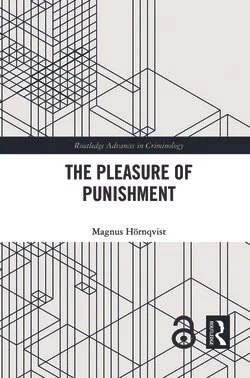
The Pleasure of Punishment

By David Gadd, Claire L. Fox, Mary- Louise Corr, Steph Alger and Ian Butler

Based on a reading of contemporary philosophical arguments, this book accounts for how punishment has provided audiences with pleasure in different historical contexts. Watching tragedies, contemplating hell, attending executions, or imagining prisons have generated pleasure, according to con- temporary observers, in ancient Greece, in medieval Catholic Europe, in the early- modern absolutist states, and in the post- 1968 Western world. The pleasure was often judged morally problematic, and raised questions about which desires were satisfied, and what the enjoyment was like. This book offers a research synthesis that ties together existing work on the pleasure of punishment. It considers how the shared joys of punishment gradually disappeared from the public view at a precise historic conjuncture, and explores whether arguments about the carnivalesque character of cruelty can provide support for the continued existence of penal pleasure. Towards the end of this book, the reader will discover, if willing to go along and follow desire to places which are full of pain and suffering, that deeply entwined with the desire for punishment, there is also the desire for social justice.

Routledge Advances in Criminology

Read-Me.Org
The New Natural Lawyers, Contraception, Capital Punishment, and the Infallibility of the Ordinary Magisterium

Christian D. Washburn

In the years following Humanae Vitae, the encyclical enjoyed little support from Catholic theologians; but a few moral theologians, led by Germain Grisez, heroically came to its defense.1 These theolo- gians attempted to use their New Natural Law theory (NNLT) in the service of the magisterium, but their arguments proved inad- equate to stem the tide of dissent. In 1978, John C. Ford and Ger- main Grisez took a new approach, publishing an article arguing that the Church’s teaching on the immorality of artificial contraception was taught infallibly by the ordinary universal magisterium. Their article was so successful that Russell Shaw’s 1978 summary of their argument is still on the United States Conference of Catholic Bishops website.2 The NNLT, however, has led a number of its proponents to hold views on other theological issues that are clearly contrary to the teaching of Sacred Scripture and the doctrine of the Catholic Church, most notably on the issue of capital punishment.

Read-Me.Org
The Mound, the Altar, and the Tomb: Sanctuary, Jurisdiction, and Punishment in Early Medieval Hagiography

Andrew Rabin

The legal landscape of eleventh- century England was cluttered with conflicting juris- dictional claims as the crown, church, and aristocracy all grappled for political power. More than just a matter of legal precedence, however, jurisdictional disputes also came to play a central role in clerical debates over the church’s participation in the adminis- tration of secular justice, especially its involvement in the sentencing of capital crimes. Reflecting on the church’s complex jurisdictional entanglements thus offered clerical authors a chance to consider problems of legal authority and institutional identity. In exploring these issues, this article will focus on the record of a later Anglo- Saxon sanc- tuary dispute involving the abbey of Bury St. Edmunds and preserved in the Miracula sancti Edmundi of Herman the Archdeacon. Herman’s account provides a useful case study of the ways in which monastic authors navigated jurisdictional problems and ad- dressed concerns over ecclesiastical participation in meting out the ultimate penalty. In doing so, it sheds light on the ways in which ecclesiastical authors negotiated the juris- dictional complexities of eleventh- century England while also illustrating how they reconciled the practical demands of justice administration with the moral commitments of the early medieval church.

439 © 2020 Studies in Philology, Incorporated

Read-Me.Org
Psychology & Developing Societies The Meanings Jamaicans Associate with Corporal Punishment

Taniesha Burke and Olga Sutherland

This study examined the meanings Jamaicans associate with corporal punishment and its perceived effects on children, caregivers’/parents’ relationship with children and in a broader sense, Jamaican culture. A total of 183 readers’ comments on 13 articles that focused on corpo- ral punishment—published in a prominent Jamaican online newspaper— were qualitatively analysed. The results indicated that not all Jamaicans engage in or embrace the use of corporal punishment. There is a clear divide between Jamaican individuals who practise corporal punishment and those who believe it is socially unacceptable. Those in favour of it reported that it was religiously justified and effective as a method of discipline. Opponents of this view highlighted the negative physical and mental effects of corporal punishment on children and provided alterna- tive discipline methods that were less punitive and more responsive to the needs of children and the parent–child relationship. Implications of the results are discussed.

2014 26: 59 Psychology Developing Societies

DOI: 10.1177/0971333613516229

Read-Me.Org
The Justification of Punishment and Human Rights

I. Introduction: Sentencing Theory and Human Rights Human rights play an important role in the regulation of punishment. In view of this, the lack of sustained consideration of their relevance is surprising.

Although human rights principles provide state authorities with little guidance in determining the ‘appropriate sentence’,2 they nevertheless set important limits on the choice and imposition of punishment. These restrictions differ in scope and importance from the type of limits most frequently discussed in sentencing theory. The notions of justice or fairness in punishment theory are often portrayed as matters of intuition and connected to the idea of propor- tionality between the sentence and the offence: ‘People have a sense that pun- ishments scaled

Read-Me.Org
The Islamic Punishment for Blasphemy

By Gordon Nickel

Death or bodily harm suffered by people accused of blasphemy in con- nection with Islam have made up some of the most sensational news stories in the West during the past several dec- ades. News reports, however, have sel- dom explored the background to these stories in sufficient depth to allow non- Muslims to understand the thinking behind the attacks and to formulate an appropriate response.

Read-Me.Org
The ‘Fortress Farm’: Articulating a new approach to redesigning ‘Defensible Space’ in a rural context.

Abstract This conceptual paper explores and develops a holistic, contemporary model of crime prevention namely the ‘Fortress Farm’ concept as proposed by the National Farmers Union in the United Kingdom. This novel idea is underpinned by the criminological theory of defensible space as posited by Oscar Newman, and by other theories of crime prevention. A holistic, practice-based model of crime prevention drawing on all aspects of the topic is developed and discussed in the context of preventing and deterring farm crime. This model can be adapted by individual farms or collectives to design out crime on farms. In the process, this paper advances our understanding of crime prevention both at a farm level and in a wider rural context. “Countryside criminals are becoming more brazen and farmers are now having to continually increase security and adopt new ways of protecting their equipment. In some parts of the country, farmers are having to turn their farmyards into fortresses to protect themselves from repeated thieves who are targeting quads, tractors and power tools. They are using tracking devices on tractors, video and infra-red surveillance in their farmyards and even DNA markers to protect sheep from rustlers”.

Tim Price, NFU Spokesman (2017).

Read-Me.Org
The Forgotten (Practical) Side of School Safety: What Do Clery Reports Say about CPTED and Crime on College Campuses? A

Auzeen Shariati & Rob T.

Following incidents of school violence, common discourse often neglects the role of practical approaches, such as CPTED, to safe- guard campuses. This study utilized a content analysis of U.S. Clery Act Safety Reports from a national, randomly drawn strati ed sam- ple of n=100 American universities to determine the extent CPTED techniques were implemented. Findings suggested that 1) CPTED use is limited; 2) two CPTED techniques, access control and activity support, were most common; 3) institutions with higher crime rates tended to have implemented more CPTED measures; and 4) CPTED use appears to be related to less severe campus crimes. Implications are discussed.

Auzeen Shariati & Rob T. Guerette (2020): The Forgotten (Practical) Side of School Safety: What Do Clery Reports Say about CPTED and Crime on College Campuses?, Planning Practice & Research,

Read-Me.Org
The Effects of ‘Alley-Gating’ in an English Town

John Haywood Greater Manchester Police, UK Paula Kautt Loughborough University, UK Andrew Whitaker Greater Manchester Police,

Terraced housing is particularly vulnerable to burglary where the offender gains access from the rear of the premises. ‘Alley-gating’ attempts to prevent this by fitting robust gates across alleyway access points and is currently used in Oldham, North West England. This study evaluates its effectiveness at preventing burglary via statistical and geographic information system (GIS) analysis of crime data from alley-gate treatment sites in Oldham. Focus group data also identify secondary effects beyond crime reduction not apparent from the quantitative analyses. We argue that clearer understanding of the contextual dynamics specific to the gated area, together with careful analytical work and use of computerized crime mapping programmes, can inform strategic decision-making and further reduce victimization.

Read-Me.Org
The effects of closed-circuit television on crime: meta-analysis of an English national quasi-experimental multi-site evaluation

David P. Farrington Martin Gill Sam J. Waples Javier Argomaniz

Abstract This article reports results obtained in an English national quasi- experimental multi-site evaluation of 14 closed-circuit television (CCTV) projects in residential areas, town and city centers, a city hospital, and car parks (parking lots). Both police and victimization data were collected before and after the installation of CCTV in target, control and buffer areas, and police Divisions. The results showed that CCTV was effective in reducing crimes in train station car parks but not in city centers or residential areas, seemed to be effective in reducing vehicle crimes (but not other types of crimes), and was most effective when the degree of coverage by CCTV was high and when CCTV was combined with other inter- ventions such as improved lighting. Implications for situational crime prevention theory are drawn. There was no evidence of displacement or diffusion of benefits. It is concluded that CCTV needs to be implemented more effectively, based on an analysis of the crime problem and its causes, and needs to be evaluated using a randomized experimental design.

Published online: 14 February 2007 #Springer Science + Business Media B.V. 2007

Read-Me.Org
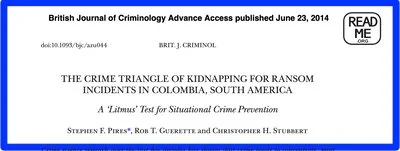
The Crime Triangle of Kidnapping for ransom inCidenTs in Colombia, souTh ameriCa A ‘Litmus’ Test for Situational Crime Prevention

Christopher H. sSubbert

Crime science research over the last few decades has shown that crime tends to concentrate, most notably spatially and temporally. These and other concentrations oriented by the crime triangle (victims, offenders and places) offer important implications for the development of effective preven- tion initiatives. Yet, these indings have mostly been derived from analysis of conventional domestic crimes leaving questions as to whether similar patterning occurs among less studied crime types, such as kidnappings. This study examined 9,696 kidnapping incidents (2002–2011) in Colombia, South America, to see whether kidnappings for ransom exhibit similar concentrations according to the crime triangle framework. Results suggest that kidnappings indeed have spatio-temporal and other concentrations, which could be used to guide policy makers and policing organizations in the formulation of strategic preventive action, rather than relying on reactive efforts after kidnapping incidents have already occurred.

Read-Me.Org
The Centrality of Theory in Modern Day Crime Prevention: Developments, Challenges, and Opportunities

Brandon C. Welsh, Gregory M. Zimmerman & Steven N. Zane

Theory matters in crime prevention. Indeed, but this is hardly the full story. Crime prevention is oftentimes viewed as atheoretical not grounded in the etiology of crime and offending. Reasons abound for this view, and the recent interest in an evidence-based approach to policy-making has been at the forefront. This article reviews the role that theory plays in modern day crime prevention, with a special focus on the three main crime prevention strategies: developmental, community, and situational. The review identifies a number of key challenges and opportunities for making theory more central to crime prevention. It suggests that the classification system employed in situational crime prevention has allowed for a more

The Centrality of Theory in Modern Day Crime Prevention: Developments, Challenges, and Opportunities, Justice Quarterly, 35:1, 

Read-Me.Org
LAS DOS CARAS DE LA PREVENCIÓN SITUACIONAL: EL DESPLAZAMIENTO Y LA DIFUSIÓN DE BENEFICIOS Una investigación criminológica sobre el cierre de dos macro prostíbulos en una localidad catalana

CARLES SOTO

La tesis que les voy a presentar se ha convertido en una parte de mi familia. El largo periodo que he utilizado en el estudio y la redacción de la investigación hizo que fuera creciendo como uno más de la parentela. Ahora es el momento de presentar la tesis en sociedad y el agradecimiento se convierte en un repaso de estos años de trabajo compartido entre mi familia y la Criminologia.

URPINA Licenciado en Criminologia DEPARTAMENTO DE DERECHO PENAL Y CRIMINOLOGIA FACULTAD DE DERECHO

Read-Me.Org
Talking punishment: How victim perceptions of punishment change when they communicate with offenders

Diana Batchelor

Abstract The myth that restorative justice is the opposite of retributive justice persists, despite a long his- tory of rhetorical challenges. Only empirical evidence can advance the debate, so this article investigates the relationship between punishment and victim offender communication from the victim s perspective. Interviews with 40 victims of crime established that some victims saw victim offender communication and punishment as alternatives, and others saw them as independent. However, more than half the participants expected that communicating with the offender would increase their satisfaction with the offenders punishment or reported after- wards that this was in fact the case, suggesting that some victims ful l punishment objectives through communication with the offender. The changes occurred when victims received infor- mation about the offender s punishment, received feedback from the offender or used commu- nication with the offender to impose a mild punishment of their own. Victims were not excessively punitive, but this study demonstrates the existence of an association between pun- ishment and victim offender communication from at least some victims perspectives. This art- icle argues that we should not ignore or attempt to eliminate this relationship. Rather, acknowledging and examining the existence of punishment within victim offender communica- tion would improve practice and generate better outcomes for victims, offenders and society.

Centre for Criminology, University of Oxford, UK

Read-Me.Org
Young women and punishment within and beyond the penal system

Gilly Sharpe

Feminist research on troublesome girls has revealed a close relationship between welfare and punishment, extending to the de facto punishment of girls through welfare mechanisms (for example Chesney- Lind, 1989; Carrington, 1993; O’Neill, 2001). Despite these scholarly insights, limited attention has been paid to similarities and continuities in young women’s experiences of punishment and punitiveness across penal and welfare settings, and youth justice and penal practices have tended to be considered in isolation from other institutional arrangements. Such compartmentalisation serves to fragment experiences which are overlapping and interwoven, and which may have cumulative and enduring effects on individuals over time. This chapter, through a focus on the structural and cultural contexts which shape both lawbreaking and desistance (Weaver, 2019), examines the treatment and punishment of marginalised young women across three domains: education, criminal labelling and the benefits system. Following Carvalho et al (2020, pp 265– 6), I conceptualise young women’s experience of punitiveness as multi- faceted and ‘a central feature of a range of intersecting experiences and practices’. I argue that schools, formal and informal youthful criminal labels and the welfare benefits system constitute intersecting and sometimes mutually constitutive sites of punishment which, in combination, are likely to have a toxic impact on marginalised young women’s sense of self as well as on their economic and social prospects.

Read-Me.Org
Why Does Japan Retain Capital Punishment?

Leo Tolstoy’s Anna Karenina

Abstract Japan retains the death penalty for three main reasons: because it missed a major opportunity for abolition in the postwar Occupation, because of the long hegemony of the (conservative) Liberal Democratic Party, and because (like the United States and China) it has sufficient size, economic influence, and political clout to enable it to defy human rights norms. Capital punishment also persists in Japan because it performs welcome functions for politicians, prosecutors, media, and the public. Despite widespread belief to the contrary, capital punishment in Japan does not deter homicide better than long terms of imprisonment do.

Read-Me.Org
What Punishment Expresses

Craig Reeves

It is much easier to show that punishment has a symbolic significance than to say exactly what it is that punishment expresses...1. Expressivism – Philosophical and Psychosocial The philosophical view that punishment should be understood as an essentially expressive practice and evaluated as such has been influential in both the normative philosophy of punishment and in psychosocial penal theory,2 though about this view, as about many issues, there has been relatively little communication between those two traditions. Philosophical and psychosocial expressivist accounts of punishment have developed more or less independently, as if they had little to do with one another.

(Feinberg, 1965: 402)

Read-Me.Org
What Have Criminologists Done for Us Lately?

Ken Pease and Graham Farrell

‘Directly related to’ is a weaselly phrase which disguises the fact that nearly all the listed jobs require further professional training and that a criminology degree does not confer an advantage over other degree courses in recruit- ment into such careers. Only just over half of criminology graduates are in employment six months after graduation, and a third of those employed are in retail, catering and bar work. So your next Whopper and chips from Burger King may be served by a criminology graduate regretting their degree choice. So to paraphrase the old song, ‘Don’t let your daughter study criminology. Mrs Worthington’.

Ken Pease and Graham Farrell 87

Read-Me.Org