

The Stanford Prison Experiment, conducted in 1971 by Philip Zimbardo, was a study of how humans will turn to violence when given the power to do so. The infamous experiment had its flaws, but the point it makes stands. This is prevalent in many real-world situations, most of all including prison itself. The current system revolving around courts and prisons was created to keep the general public safe, but it is now used as a power play. Countless people are wrongly convicted of crimes because of discrimination and so many more are abused in prison by guards or fellow prisoners. The prison system should be focused on rehabilitation rather than punishment because punishing criminals only gives them more reasons to commit crime and reduces public safety, the current system is rigged against minority and lower class groups, and authorities such as judges and prison guards have too much power and a sentence or experience in prison is entirely based on luck of the draw.
Christopher Nathan
Some argue against coercive preventive measures on the grounds that they amount to cloaked forms of punishment. Others offer a qualified defence of such measures on the grounds that such measures have substantively different goals and purposes from punishment. Focusing on the case of civil preventive injunctions, I clear the ground and provide reasons for a third logical possibility: that coercive preventive measures are relevantly similar to punishment, but this does not itself give us a rea- son to oppose them. ‘Punishment’ has a great deal of rhetorical force, and it thereby distracts us from the justificatory work that we need to do to specify proper restric- tions on the state’s coercive powers. Whereas many commentators have proposed that legal theory provides grounds for challenging civil preventive orders, I argue for the opposite view. If we understand properly the function of civil preventive orders, we will endorse them at least in principle, and will come to rethink some central ideas in the grounding of the criminal justice processes.
E. Frankot,
This chapter provides an overview of punishment in late medi- eval Kampen in order to provide a context for the use of banishment. It discusses various punishments utilised in Kampen, such as symbolic, shameful, corporal and capital punishments, fines and imprisonment, as well as some of the town’s officials involved in punishment.
Banishment in the Late Medieval Eastern Netherlands,
By Netanel Dagan and Adiel Zimran
Punishment is often performed through judicial texts. Narrative criminology scholarship, however, has paid little attention to how criminalised people engage with these texts when constructing their self-narratives. To ll this gap, based on qualitative ndings from formerly incarcerated people in Israel, this paper aimed to theorise their engage- ment with their sentencing remarks (SR). We found that they experienced their SR as text that held communicative, transformative and physical dimensions. The ndings showed that SR impacted criminalised persons by individualising the penal dialogue, transforming their identity, and serving as objects for performing rituals during their imprisonment and upon release. The ndings contribute to an understanding of the connection between judicial work and incarcerated people s desistance and identity-making pro- cesses through the textual bridge of SR.
Christopher Belshaw
Suppose we accept that punishment can be legitimate. What form should it take? Many of us believe that it can be acceptable to fine or imprison someone, but that capital punishment, along with corporal punishment in its various manifestations, is wholly unacceptable. I suggest that it is hard to account for or justify this distinction. But granting that resistance to these latter forms is unlikely to be dislodged, and granting too that imprisonment in particular is hardly problemfree, it is worth considering whether there might be alternatives. And I argue here that we should consider enforced coma as a procedure having many advantages over the more familiar methods of delivering a penalty. Of course, there are disadvantages also. The aim isn’t to offer a detailed and practical solution to the problem of crime, but to explore some of the presumptions and principles involved in our thinking about punishment.
Journal of Controversial Ideas 2021,
Gavin Slade
In his masterful account of prison reform in England during the Industrial Revolution, Michael Ignatieff observes that to study such a subject is not merely to study penal institutions and the practices of discipline and domination within them, but to also study the “moral boundaries of social authority” in a society undergoing rapid transformation. At that time, the reform of prisons was “a response, not merely to crime, but to the whole social crisis of a period, and part of a larger strategy of political, social and legal reform designed to re-establish order on a new foundation” (Ignatieff 1981 210). This statement nicely summarizes the approach this chapter takes to studying the role that punishment played in state-building in one post-Soviet state, Georgia—a country coming out of, yet still within, profound social crisis.
Heathershaw J. & Schatz E. (eds). 2017. Paradox of Power: The Logics of State Weakness in
Daniel Birks, Michael Townsley and Timothy Hart
Studies in the United States and Europe have demonstrated that burglary and vehicle crime exhibit consistent patterns, supporting the application of crime prediction techniques to proactively deploy police resources to reduce incidents of crime. Research into whether these techniques are applicable in an Australian context is currently limited.
Australia Institute of Criminology
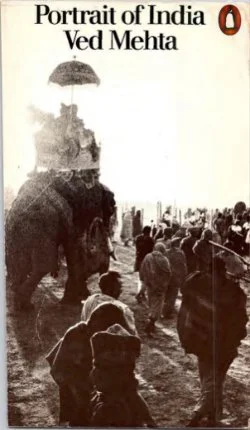
Today, i n the course o f a prolonged visit I am paying to my native country in late 1965 and 1966, I go o n a tour o f New Delhi. Since I was here last, on another visit, i n 1959 - 1 have spent nearly all my adult lite in Britain and the United States - the city has fanned out in all directions. Where once there were waste tracts, there are now little self-contained suburbs, cach busily scarching for an exclusive identity.
PENGUIN BOOKS

SONIA BOULOS1
The prohibition on “inhuman treatment” constitutes one of the central tenets of modern international human rights law. However, in the absence of any legislative definition of the term "inhuman", its interpretation becomes challenging. The aim of this article is to critically analyze the interpretation of the term “inhuman” in international human rights law and to suggest a new approach to defining it. The first part of the article highlights the failure of supra-national institutions to provide an independent definition for the term “inhuman”, while mistakenly equating it to other forms of ill-treatment. The second part of the article introduces philosophical concepts necessary for reconstructing the conceptual independence of the term inhuman. It primarily focuses on “the capability approach” and the notion of “human functioning”, as developed by Martha Nussbaum.

By Ali Mokhtari
The elimination of torture and other cruel, inhuman or degrading treatment or punishment has been a dream for reformists and human rights activists for centuries. Yet, despite these efforts torture is still being practiced in many counties. Global efforts have been made by individuals and national governments to proscribe the use of torture. Unfortunately, fin ding an internationally accepted definition ofwhat types of activities constitute torture has been a major obstacle in the battle toward its abolition. Is it an activity qualified as torture only when it is carried out for certain purposes? At the heart of the debate lies the question of whether or not corporal punishment is a form of torture. While corporal punishment is contrary to international legislation, such as the UN Declaration on the Protection of AIl Persons from Being Subjected to Torture and Other Cruel, Inhuman or Degrading Treatment or Punishment, and the UN Convention Against Torture, aspects of corporal punishment remain acceptable according certain religious traditions. An example of this is found in traditional Islamic law, which has banned both torture and other cruel, inhuman and degrading treatment or punishment, when used for the express purpose of obtaining confessions or information. In other circumstances, however, severe corporal punishment is acceptable in Islamic law. As a result, sorne Islamic states whose domestic law is rooted in traditional Islamic law, justify their use of torture by invoking Islamic traditions: they claim that corporal punishment is derived from God's will. These states tend to consider its use as lawful sanctions, and it is made legal under their domestic law. In this paper, Iran is studied as one such state.
Library and Archives Canada
By Stephanie J. Dimitroff and Ethan G. Harrod
Humans routinely punish others for violating social norms. This behavior is referred to as third-party punishment. Much of the research on this topic has been done in the context of group cooperation and unjust economic interactions. However, little is known about punishment in response to other types of more personal transgressions. In the present study, we sought to determine whether adults would punish an individual after viewing them undeservingly reject a stranger. We experimentally demonstrate that after observing an individual socially reject an unknown victim, individuals will engage in third-party punishment. Individuals who reported feeling upset with the rejecter were most likely to punish, while feeling sorry for the victim was not predictive of punishment behavior. These findings highlight the motivational role of empathic anger in punishing social norm transgressors. Notably, individuals who reported having been bullied in their own pasts were the most likely to punish the rejecter. These results demonstrate how a history of being bullied may make one more attuned to the social rejection of others in turn may make one more likely to take retributive action on behalf of another.
Konstanzer Online-Publikations-System (KOPS)

Heather Hamill
On January 16, 1999, the headline in the Andersonstown News, West Bel- fast’s local newspaper, read “Joyriding: The scourge returns.” The paper reported that the evening before, forty-two stolen cars were abandoned in West Belfast, “many of them burned out, while others were seriously damaged or vandalised.”1 There followed a series of articles over the fol- lowing months detailing the damage caused by young people driving stolen cars recklessly and often under the influence of alcohol and drugs. This included the tragic death of Patrick Hanna, who was killed when a stolen car traveling at approximately 100 mph jumped the pavement in a residential area and struck him. An eyewitness described what happened afterward: “Other joyriders returned shortly after the ambulance and po- lice left and started doing hand-brake turns at the police tape where the man had been killed. I couldn’t believe that anyone could be that cruel and heartless.”2 This incident followed a similar accident in which seven- year-old Eamon Armstrong was killed when he, too, was struck by a sto- len car. His mother and her partner were seriously injured: “With two deaths and so many injuries in the space of such a short time, there’s a real sense that the joyriders have taken over the streets and that anyone could be the next victim,”3 reported the Andersonstown News. When joy- riders smashed a stolen car into a school bus carrying pupils to school during rush hour traffic, the culprits were condemned as “worse than irre- sponsible.”4 In March 2000, District Nurse Maureen Sheehan was killed when a car driven by a joyrider caused a three-car collision on the Falls Road. In the same week, John McDonald, another local resident, was killed in a hit-and-run accident.
University of Oxford
Nolan Bennett
Despite its growing use over past decades, there has been relatively little public or scholarly discussion of life sentences that deny the possibility of parole. This essay outlines the labyrinthine legal and political developments that have rendered life imprisonment difficult to address—including the intertwined histories of the death penalty and civil death—and draws upon the life writing of those serving life to theorize a more distinct understanding of this punishment. Witnesses reveal how the possibility of life despite the impossibility of parole punishes by subverting the goals of human growth and development. The potentiality of what can be done in the present grinds up against the futility of what could have been done and what could be done were release an option. Considered alongside the laws and court opinions and claims that characterize its convoluted development, these testimonies reveal this punishment’s role in the American imagination. Life without the possibility of parole reinforces and relies upon a vision that not simply some people are unable to change, but that anyone in a democracy—no matter their position—is some steps away from irretrievable exclusion. Permanent confinement denies a restorative vision of democracy: any effort to abolish or amend it must include the voices of those imprisoned.

Lorena Montoya1, Marianne Junger1, and Yfke Ongena2
This article examines how residential property and its surroundings influence day- and night-time residential burglary. Crime Prevention Through Environmental Design (CPTED) principles of territoriality, surveillance, access control, target hardening, image maintenance, and activity support underpin the study. Data were collected by observing 851 houses in the city of Enschede, half of which were burgled and half representing a random selection of houses not burgled. Multilevel multinomial regression models were estimated for predicting day- and night-time burglaries. The findings show that territoriality and access control predict daytime burglary while access control and target hardening predict night-time burglary. The analysis controls for offender availability, target attractiveness, and residential stability. The conclusion is that two separate burglary prevention frameworks are needed: one for day-and another one for night-time burglary.
Environment and Behavior, 2014 SAGE Publications

Gabriel Lima 1,2, Meeyoung Cha 2,1, , Chihyung Jeon 3, and Kyung Sin Park 4
Regulating artificial intelligence (AI) has become necessary in light of its deployment in high-risk scenarios. This paper explores the proposal to extend legal personhood to AI and robots, which had not yet been examined through the lens of the general public. We present two studies (N = 3,559) to obtain people’s views of electronic legal personhood vis- ` a-vis existing liability models. Our study reveals people’s desire to punish automated agents even though these entities are not recognized any mental state. Furthermore, people did not believe automated agents’ punishment would fulfill deterrence nor retribution and were unwilling to grant them legal punishment preconditions, namely physical independence and assets. Collectively, these findings suggest a conflict between the desire to punish automated agents and its perceived impracticability. We conclude by discussing how future design and legal decisions may influence how the public reacts to automated agents’ wrongdoings.
By David Gadd, Claire L. Fox, Mary- Louise Corr, Steph Alger and Ian Butler
Based on a reading of contemporary philosophical arguments, this book accounts for how punishment has provided audiences with pleasure in different historical contexts. Watching tragedies, contemplating hell, attending executions, or imagining prisons have generated pleasure, according to con- temporary observers, in ancient Greece, in medieval Catholic Europe, in the early- modern absolutist states, and in the post- 1968 Western world. The pleasure was often judged morally problematic, and raised questions about which desires were satisfied, and what the enjoyment was like. This book offers a research synthesis that ties together existing work on the pleasure of punishment. It considers how the shared joys of punishment gradually disappeared from the public view at a precise historic conjuncture, and explores whether arguments about the carnivalesque character of cruelty can provide support for the continued existence of penal pleasure. Towards the end of this book, the reader will discover, if willing to go along and follow desire to places which are full of pain and suffering, that deeply entwined with the desire for punishment, there is also the desire for social justice.
Routledge Advances in Criminology
Christian D. Washburn
In the years following Humanae Vitae, the encyclical enjoyed little support from Catholic theologians; but a few moral theologians, led by Germain Grisez, heroically came to its defense.1 These theolo- gians attempted to use their New Natural Law theory (NNLT) in the service of the magisterium, but their arguments proved inad- equate to stem the tide of dissent. In 1978, John C. Ford and Ger- main Grisez took a new approach, publishing an article arguing that the Church’s teaching on the immorality of artificial contraception was taught infallibly by the ordinary universal magisterium. Their article was so successful that Russell Shaw’s 1978 summary of their argument is still on the United States Conference of Catholic Bishops website.2 The NNLT, however, has led a number of its proponents to hold views on other theological issues that are clearly contrary to the teaching of Sacred Scripture and the doctrine of the Catholic Church, most notably on the issue of capital punishment.

Andrew Rabin
The legal landscape of eleventh- century England was cluttered with conflicting juris- dictional claims as the crown, church, and aristocracy all grappled for political power. More than just a matter of legal precedence, however, jurisdictional disputes also came to play a central role in clerical debates over the church’s participation in the adminis- tration of secular justice, especially its involvement in the sentencing of capital crimes. Reflecting on the church’s complex jurisdictional entanglements thus offered clerical authors a chance to consider problems of legal authority and institutional identity. In exploring these issues, this article will focus on the record of a later Anglo- Saxon sanc- tuary dispute involving the abbey of Bury St. Edmunds and preserved in the Miracula sancti Edmundi of Herman the Archdeacon. Herman’s account provides a useful case study of the ways in which monastic authors navigated jurisdictional problems and ad- dressed concerns over ecclesiastical participation in meting out the ultimate penalty. In doing so, it sheds light on the ways in which ecclesiastical authors negotiated the juris- dictional complexities of eleventh- century England while also illustrating how they reconciled the practical demands of justice administration with the moral commitments of the early medieval church.
439 © 2020 Studies in Philology, Incorporated

Taniesha Burke and Olga Sutherland
This study examined the meanings Jamaicans associate with corporal punishment and its perceived effects on children, caregivers’/parents’ relationship with children and in a broader sense, Jamaican culture. A total of 183 readers’ comments on 13 articles that focused on corpo- ral punishment—published in a prominent Jamaican online newspaper— were qualitatively analysed. The results indicated that not all Jamaicans engage in or embrace the use of corporal punishment. There is a clear divide between Jamaican individuals who practise corporal punishment and those who believe it is socially unacceptable. Those in favour of it reported that it was religiously justified and effective as a method of discipline. Opponents of this view highlighted the negative physical and mental effects of corporal punishment on children and provided alterna- tive discipline methods that were less punitive and more responsive to the needs of children and the parent–child relationship. Implications of the results are discussed.
2014 26: 59 Psychology Developing Societies
DOI: 10.1177/0971333613516229

I. Introduction: Sentencing Theory and Human Rights Human rights play an important role in the regulation of punishment. In view of this, the lack of sustained consideration of their relevance is surprising.
Although human rights principles provide state authorities with little guidance in determining the ‘appropriate sentence’,2 they nevertheless set important limits on the choice and imposition of punishment. These restrictions differ in scope and importance from the type of limits most frequently discussed in sentencing theory. The notions of justice or fairness in punishment theory are often portrayed as matters of intuition and connected to the idea of propor- tionality between the sentence and the offence: ‘People have a sense that pun- ishments scaled