Open Access Free Library
CRIMINAL JUSTICE.jpeg

CRIMINAL JUSTICE

CRIMINAL JUSTICE-CRIMINAL LAW-PROCDEDURE-SENTENCING-COURTS

REWARD DAN PUNISHMENT

Disusun Untuk Memenuhi Tugas Pada Mata Kuliah Hadist Tarbawi

Reward dan Punishment secara sederhana adalah pemberian hadiah bagi orang yang melakukan hal yang baik dan memberikan hukuman ketika melakukan hal yang buruk, konsep ini sering dipergunakan dalam dunia pendidikan. Sebagaimana pemberian hadiah kepada orang yang mendapatkan prestasi belajar dan tidak jarang pula pendidik memberikan hukuman bagi siswanya ketika memperbuat kesalahan atau melanggar peraturan yang telah disepakati.

Read-Me.Org
REGULATION AS PUNISHMENT

Hadassa Noorda

Theorists of criminal law widely agree that state punishment involves harsh treatment and stigma and that states must therefore provide protections for targeted individuals. But certain regulatory measures can also be used to impose harsh treatment and stigma. This paper addresses the stigmatic impact of harsh regulatory measures. It argues that harsh regulatory measures that label targeted individuals as risky impose a stigma that has the potential to significantly affect these individual’s personal and professional relationships. Such measures include area restrictions applied to alleged terrorists and registration requirements for convicted sex offenders. I recommend ways of implementing legal safeguards for targeted individuals against the stigma involved in the employment of such measures.

University of Amsterdam School of Law/ NYU Center for Law and Philosophy

Read-Me.Org
Reading Utopia in the Reformation of Punishment

MATTHEW RITGER

Recent scholarship on the first English translation of Thomas More s Utopia has asked how its pub- lication in the 1550s fits with the larger agenda of Protestant Reformers who promoted the book alongside their other civic projects. This article argues that the initiatives of greatest relevance were the new house of correction at Bridewell (est. 1553 57) and the infamous Vagrancy Act of 1547 49, which failed to introduce slavery as a punishment in English law. Evidence of user inter- actions with the 1550s editions, including indexing, annotation, commonplacing, and quotation, helps to analyze how the text s complicated ideas about penal labor were received and reemphasized by early English readers. I N TR O D U C T I O N The best known feature of Utopian life is its communism, as Dominic Baker- Smith recently put it, and so one might think the most influential aspect of the original Utopia (1516) by Thomas More (1478 1535) has always been its crit- icism of private property.1 In contrast, this article argues that Utopia s most notable idea, at least in the two earliest editions of Ralph Robinson s (1520 77) first English translation (1551, 1556), was the protagonist Raphael Hythloday s contention that thieves ought to be put to work rather than put to death.2 If, as Miguel Abensour suggests, there are statements that function as genuine insti- tutions, then this might have been the closest thing More s dialogic Utopia had to a singular statement in the sixteenth and seventeenth centuries.3 This idea has been called by at least one modern historian the More tradition for its influence on English penology, and was frequently marked by early modern

Read-Me.Org
RAPE CULTURE: POWER, PROFIT, PUNISHMENT

By LEIGH GASKIN

I would like to recognize my committee, Dr. Guerrero, Dr. Bloodsworth-Lugo, and Dr. Leonard, for the labor put into this dissertation project. I am deeply grateful for each of your comments, support, and encouragement during the dissertation process. You all have been my dream team and have enabled me to do the best I could with this task. I hope each of you can find yourself somewhere in this work, as your voice and guidance shaped the project and its effectiveness.

WASHINGTON STATE UNIVERSITY Program in American Studies

Read-Me.Org
Quality Education in Low-Fee Paying Private High Schools in Mabelreign/Warren Park District in Harare,Zimbabwe:Teachers` Perspective

Davison Machisa1, Constance Gutuza2, Tichaona Mapolisa3

The study aimed to assess the quality of education in low-fee paying private high schools in the Mabelreign/Warren Park district in the Harare Metropolitan Province of Zimbabwe while paying particular attention to teachers` perspectives. A clear assessment of quality education was essential to bridge the knowledge gap on the quality of education in low-fee paying private high schools. It is also important to mention that the study was unique as it assessed the quality of education in low-fee paying private high schools in an education set-up where there was a massive increase in the population of private high schools. The study was guided by the systems theory which looks at the phenomenon at hand through the lens of interrelatedness of elements in the low-fee paying private high schools’ systems. The study adopted a quantitative method research approach, descriptive survey design, and data triangulation method. More so, the sample for the study was 44 respondents from three (3) low-fee paying private high schools in Mabelreign/Warren Park district. The sample was chosen using simple random technique from teachers that were present at each school. This study used bar graphs to analyse data collected. The study concluded that a safe learning environment has a positive contribution to quality education in low-fee paying private high schools. The study recommended that administrators in low-fee paying private high schools should ensure that anti- bullying mechanisms are put in place in order to create a safe learning environment to all the learners.

Read-Me.Org
Retributive Punishment and Revenge

Karsten J. Struhl

The move from cultures of revenge to societies with criminal justice systems and retributive punishment is undoubtedly a progressive historical development. However, it is by no means the case that revenge has disappeared. In this essay, I shall argue that revenge conceals itself precisely in legal retributive punishment. I also argue that legal retributive punishment is a substitution of public for pri- vate revenge and, therefore, a form of controlled revenge. I shall also explore the implications of these claims, implications that move in two very different politi- cal directions—as a reason to allow the victim more opportunity to express and exercise her emotions of revenge in the legal system; and as a reason to be suspi- cious of the retributive theory of punishment and the way in which it manifests itself in the criminal justice system.

Read-Me.Org
Punishment

Alessandro De Giorgi

Since the early 1980s, global processes of capitalist transformation across Western societies have revolutionized both the field of production and the com- plex of governmental institutions, practices, and technologies that, in the after- math of World War II, had consolidated into the Keynesian welfare state (Jessop, 1996, 2016; Mishra, 2014). The neoliberal paradigm of governance that has come to dominate Western societies through the last quarter of the twentieth century has resulted in a drastic redistribution of social wealth toward the top of the racial and class hierarchy, a vertical increase in economic inequalities, an acute precarization of work within increasingly segmented labor markets, a mas- sive attack on workers’ rights, and a systematic dismantling of the social safety net that had been instituted in the wake of the Keynesian compromise between capital and labor (Bonefeld, 2017; Harvey, 2005; Schram, 2015). In this sense, the neoliberal revolution has involved an organized assault against the economic relevance and political centrality of industrial labor – and, specifically in the USA, against the radical struggles for racial justice that had emerged from civil rights movement (Camp, 2016; Flamm, 2005; Parenti, 1999: 3–44).

Read-Me.Org
Punishment vs. Rehabilitation

The Stanford Prison Experiment, conducted in 1971 by Philip Zimbardo, was a study of how humans will turn to violence when given the power to do so. The infamous experiment had its flaws, but the point it makes stands. This is prevalent in many real-world situations, most of all including prison itself. The current system revolving around courts and prisons was created to keep the general public safe, but it is now used as a power play. Countless people are wrongly convicted of crimes because of discrimination and so many more are abused in prison by guards or fellow prisoners. The prison system should be focused on rehabilitation rather than punishment because punishing criminals only gives them more reasons to commit crime and reduces public safety, the current system is rigged against minority and lower class groups, and authorities such as judges and prison guards have too much power and a sentence or experience in prison is entirely based on luck of the draw.

Read-Me.Org
Punishment the Easy Way

Christopher Nathan

Some argue against coercive preventive measures on the grounds that they amount to cloaked forms of punishment. Others offer a qualified defence of such measures on the grounds that such measures have substantively different goals and purposes from punishment. Focusing on the case of civil preventive injunctions, I clear the ground and provide reasons for a third logical possibility: that coercive preventive measures are relevantly similar to punishment, but this does not itself give us a rea- son to oppose them. ‘Punishment’ has a great deal of rhetorical force, and it thereby distracts us from the justificatory work that we need to do to specify proper restric- tions on the state’s coercive powers. Whereas many commentators have proposed that legal theory provides grounds for challenging civil preventive orders, I argue for the opposite view. If we understand properly the function of civil preventive orders, we will endorse them at least in principle, and will come to rethink some central ideas in the grounding of the criminal justice processes.

Read-Me.Org
Punishment in Late Medieval Kampen

E. Frankot,

This chapter provides an overview of punishment in late medi- eval Kampen in order to provide a context for the use of banishment. It discusses various punishments utilised in Kampen, such as symbolic, shameful, corporal and capital punishments, fines and imprisonment, as well as some of the town’s officials involved in punishment.

Banishment in the Late Medieval Eastern Netherlands,

Read-Me.Org
Punishment as text

By Netanel Dagan and Adiel Zimran

Punishment is often performed through judicial texts. Narrative criminology scholarship, however, has paid little attention to how criminalised people engage with these texts when constructing their self-narratives. To ll this gap, based on qualitative ndings from formerly incarcerated people in Israel, this paper aimed to theorise their engage- ment with their sentencing remarks (SR). We found that they experienced their SR as text that held communicative, transformative and physical dimensions. The ndings showed that SR impacted criminalised persons by individualising the penal dialogue, transforming their identity, and serving as objects for performing rituals during their imprisonment and upon release. The ndings contribute to an understanding of the connection between judicial work and incarcerated people s desistance and identity-making pro- cesses through the textual bridge of SR.

Read-Me.Org
Punishment and the Body

Christopher Belshaw

Suppose we accept that punishment can be legitimate. What form should it take? Many of us believe that it can be acceptable to fine or imprison someone, but that capital punishment, along with corporal punishment in its various manifestations, is wholly unacceptable. I suggest that it is hard to account for or justify this distinction. But granting that resistance to these latter forms is unlikely to be dislodged, and granting too that imprisonment in particular is hardly problem­free, it is worth considering whether there might be alternatives. And I argue here that we should consider enforced coma as a procedure having many advantages over the more familiar methods of delivering a penalty. Of course, there are disadvantages also. The aim isn’t to offer a detailed and practical solution to the problem of crime, but to explore some of the presumptions and principles involved in our thinking about punishment.

Journal of Controversial Ideas 2021,

Read-Me.Org
Punishment and State-Building in Post-Soviet Georgia

Gavin Slade

In his masterful account of prison reform in England during the Industrial Revolution, Michael Ignatieff observes that to study such a subject is not merely to study penal institutions and the practices of discipline and domination within them, but to also study the “moral boundaries of social authority” in a society undergoing rapid transformation. At that time, the reform of prisons was “a response, not merely to crime, but to the whole social crisis of a period, and part of a larger strategy of political, social and legal reform designed to re-establish order on a new foundation” (Ignatieff 1981 210). This statement nicely summarizes the approach this chapter takes to studying the role that punishment played in state-building in one post-Soviet state, Georgia—a country coming out of, yet still within, profound social crisis.

Heathershaw J. & Schatz E. (eds). 2017. Paradox of Power: The Logics of State Weakness in

Read-Me.Org
Predictive policing in an Australian context: Assessing viability and utility

Daniel Birks, Michael Townsley and Timothy Hart

Studies in the United States and Europe have demonstrated that burglary and vehicle crime exhibit consistent patterns, supporting the application of crime prediction techniques to proactively deploy police resources to reduce incidents of crime. Research into whether these techniques are applicable in an Australian context is currently limited.

Australia Institute of Criminology

Read-Me.Org
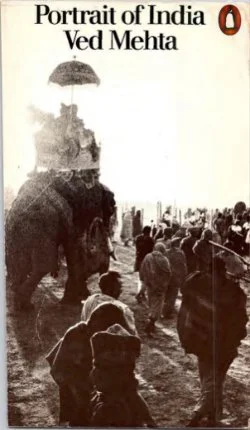
Portrait of India

Today, i n the course o f a prolonged visit I am paying to my native country in late 1965 and 1966, I go o n a tour o f New Delhi. Since I was here last, on another visit, i n 1959 - 1 have spent nearly all my adult lite in Britain and the United States - the city has fanned out in all directions. Where once there were waste tracts, there are now little self-contained suburbs, cach busily scarching for an exclusive identity.

PENGUIN BOOKS

Read-Me.Org
TOWARDS RECONSTRUCTING THE MEANING OF INHUMAN TREATMENT OR PUNISHMENT: A HUMAN CAPABILITY APPROACH

SONIA BOULOS1

The prohibition on “inhuman treatment” constitutes one of the central tenets of modern international human rights law. However, in the absence of any legislative definition of the term "inhuman", its interpretation becomes challenging. The aim of this article is to critically analyze the interpretation of the term “inhuman” in international human rights law and to suggest a new approach to defining it. The first part of the article highlights the failure of supra-national institutions to provide an independent definition for the term “inhuman”, while mistakenly equating it to other forms of ill-treatment. The second part of the article introduces philosophical concepts necessary for reconstructing the conceptual independence of the term inhuman. It primarily focuses on “the capability approach” and the notion of “human functioning”, as developed by Martha Nussbaum.

Read-Me.Org
Torture and other Cruel, Inhuman or Degrading Treatment or Punishment A Comparative Study between Intemationallaw, Islamic Jurisprudence and the Iranian Legal System

By Ali Mokhtari 

The elimination of torture and other cruel, inhuman or degrading treatment or punishment has been a dream for reformists and human rights activists for centuries. Yet, despite these efforts torture is still being practiced in many counties. Global efforts have been made by individuals and national governments to proscribe the use of torture. Unfortunately, fin ding an internationally accepted definition ofwhat types of activities constitute torture has been a major obstacle in the battle toward its abolition. Is it an activity qualified as torture only when it is carried out for certain purposes? At the heart of the debate lies the question of whether or not corporal punishment is a form of torture. While corporal punishment is contrary to international legislation, such as the UN Declaration on the Protection of AIl Persons from Being Subjected to Torture and Other Cruel, Inhuman or Degrading Treatment or Punishment, and the UN Convention Against Torture, aspects of corporal punishment remain acceptable according certain religious traditions. An example of this is found in traditional Islamic law, which has banned both torture and other cruel, inhuman and degrading treatment or punishment, when used for the express purpose of obtaining confessions or information. In other circumstances, however, severe corporal punishment is acceptable in Islamic law. As a result, sorne Islamic states whose domestic law is rooted in traditional Islamic law, justify their use of torture by invoking Islamic traditions: they claim that corporal punishment is derived from God's will. These states tend to consider its use as lawful sanctions, and it is made legal under their domestic law. In this paper, Iran is studied as one such state.

Library and Archives Canada

Read-Me.Org
Third-Party Punishment Following Observed Social Rejection

By Stephanie J. Dimitroff and Ethan G. Harrod

Humans routinely punish others for violating social norms. This behavior is referred to as third-party punishment. Much of the research on this topic has been done in the context of group cooperation and unjust economic interactions. However, little is known about punishment in response to other types of more personal transgressions. In the present study, we sought to determine whether adults would punish an individual after viewing them undeservingly reject a stranger. We experimentally demonstrate that after observing an individual socially reject an unknown victim, individuals will engage in third-party punishment. Individuals who reported feeling upset with the rejecter were most likely to punish, while feeling sorry for the victim was not predictive of punishment behavior. These findings highlight the motivational role of empathic anger in punishing social norm transgressors. Notably, individuals who reported having been bullied in their own pasts were the most likely to punish the rejecter. These results demonstrate how a history of being bullied may make one more attuned to the social rejection of others in turn may make one more likely to take retributive action on behalf of another.

Konstanzer Online-Publikations-System (KOPS)

Read-Me.Org
The Hoods: Crime and Punishment in Belfast

Heather Hamill

On January 16, 1999, the headline in the Andersonstown News, West Bel- fast’s local newspaper, read “Joyriding: The scourge returns.” The paper reported that the evening before, forty-two stolen cars were abandoned in West Belfast, “many of them burned out, while others were seriously damaged or vandalised.”1 There followed a series of articles over the fol- lowing months detailing the damage caused by young people driving stolen cars recklessly and often under the influence of alcohol and drugs. This included the tragic death of Patrick Hanna, who was killed when a stolen car traveling at approximately 100 mph jumped the pavement in a residential area and struck him. An eyewitness described what happened afterward: “Other joyriders returned shortly after the ambulance and po- lice left and started doing hand-brake turns at the police tape where the man had been killed. I couldn’t believe that anyone could be that cruel and heartless.”2 This incident followed a similar accident in which seven- year-old Eamon Armstrong was killed when he, too, was struck by a sto- len car. His mother and her partner were seriously injured: “With two deaths and so many injuries in the space of such a short time, there’s a real sense that the joyriders have taken over the streets and that anyone could be the next victim,”3 reported the Andersonstown News. When joy- riders smashed a stolen car into a school bus carrying pupils to school during rush hour traffic, the culprits were condemned as “worse than irre- sponsible.”4 In March 2000, District Nurse Maureen Sheehan was killed when a car driven by a joyrider caused a three-car collision on the Falls Road. In the same week, John McDonald, another local resident, was killed in a hit-and-run accident.

University of Oxford

Read-Me.Org
“The State was Patiently Waiting for Me to Die”: Life without the Possibility of Parole as Punishment

Nolan Bennett

Despite its growing use over past decades, there has been relatively little public or scholarly discussion of life sentences that deny the possibility of parole. This essay outlines the labyrinthine legal and political developments that have rendered life imprisonment difficult to address—including the intertwined histories of the death penalty and civil death—and draws upon the life writing of those serving life to theorize a more distinct understanding of this punishment. Witnesses reveal how the possibility of life despite the impossibility of parole punishes by subverting the goals of human growth and development. The potentiality of what can be done in the present grinds up against the futility of what could have been done and what could be done were release an option. Considered alongside the laws and court opinions and claims that characterize its convoluted development, these testimonies reveal this punishment’s role in the American imagination. Life without the possibility of parole reinforces and relies upon a vision that not simply some people are unable to change, but that anyone in a democracy—no matter their position—is some steps away from irretrievable exclusion. Permanent confinement denies a restorative vision of democracy: any effort to abolish or amend it must include the voices of those imprisoned.

Read-Me.Org