
‘Just passing time’: A review of work and training provision in adult prisons. A thematic review
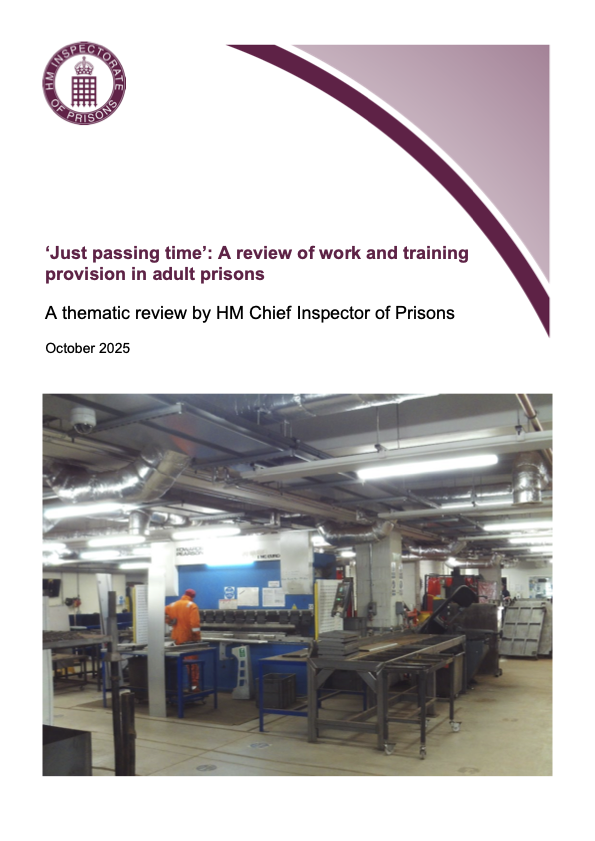
by U.K. HM Chief Inspector of Prisons
This report into the quality of work and training in prisons makes depressing reading. Although we found some effective provision delivered by dedicated, creative staff, it was only available to a small minority of prisoners. Too often, prisoners were leaving prison having gained few skills which would make a difference in helping them to avoid reoffending. The lack of adequate purposeful activity provided to prisoners has been a criticism by the Inspectorate of Prisons since its founding in 1982, but since the pandemic things have got even worse. Despite attempts to promote a renewed focus on purposeful activity, we find prisoners are locked in their cells for longer than ever. Evening association, time in the gym and communal dining, which were once common, have become rarities. In the last three years our inspection scores for purposeful activity have been terrible; 94 of the 104 closed prisons we have inspected have been rated ‘poor’ or ‘not sufficiently good’. Only in open prisons do we regularly see prisoners involved in the sorts of training or education that will help them to resettle successfully when they are released. This report shows that in many jails there are simply not enough activity spaces for the population. This has been compounded by overcrowding and the failure by the prison service to maintain buildings which are often dilapidated or, in some cases, out of use. Even where there are sufficient spaces, attendance is atrocious. In the prisons we visited for this thematic report it was at an average of 67% – a level that would get any school or college closed down. Regime curtailments, security lockdowns or staff and prisoner indifference mean that many prisoners do not go to their allocated activities or arrive so late that it is hardly worth going at all. For instructors and teachers, low attendance is incredibly demoralising and not knowing who, if anyone, is going to turn up may in part explain why recruiting or retaining these staff is so difficult. Many of the workshops or classrooms I visit on inspection have only a handful of prisoners in them and often they seem to be drinking tea or playing cards rather than working.The working day in prisons is nothing like that on the outside, with even full-time workers often spending no more than five hours off the wing. Many are underemployed in wing work that bears little relation to any work in the community. The prison service has a comical definition of full- and part-time activity, which means that in jails we visit a prisoner who works for as little as 18 hours a week can be considered to be in full-time work. Part of the reason for poor attendance is that prisoners are not motivated by the work placements or courses on offer, or they do not get allocated to activities that will teach them the skills or help them to acquire the qualifications that they actually need. The positive initiatives we did find, such as training courses directly linked to employment opportunities, were limited in scope, and at other sites we visited uncertainty around funding had resulted in valuable courses being closed.Without adequate investment, prison leaders will have limited ability to make a meaningful impact on prisoners’ prospects on release. The prison service has a duty to protect the public by keeping those who the courts have sent to prison locked up, but there is also an obligation to protect the public by making prisoners less likely to reoffend when they are released. This report shows the failure of our prisons to fulfil this responsibility. With twothirds of prisoners not in work or training six months after release, there is little doubt that many have left jail and returned to criminality, causing mayhem in their communities and creating more victims of crime. Too many prisoners are spending their time in jail lying on their beds watching daytime television, often under the influence of drugs. Until leaders in the prison service take the provision of high-quality education and training more seriously, it is hard to see how appallingly high reoffending rates can be reduced.