Open Access Publisher and Free Library
Fiction+Mediajpg.jpg

FICTION and MEDIA

CRIME AND MEDIA — TWO PEAS IN A POD

The Crime of the Century

By Henry M. Hunt.

The Assassination of Henry Patrick Cronin.. A Complete and Authentic History of the Greatest of Modern Conspiracies. Apart from its value as a history of a celebrated case, the story itself is of thrilling and fascinating interest.

Harrow and Heston Classic Reprint. Kochersperger (1889) 574 pages.

download
Read-Me.Org
Defenders and Offenders

By S. Buchner

A compilation of some 250 short biographies of criminals, their captors, and prosecutors.

Read-Me.Org Classic Reprint. (1888) New York. . 123p.

download
Read-Me.Org
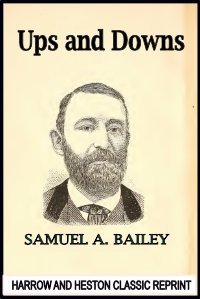
Ups and Downs of a Crook's Life

By Samuel L. Bailey

By an Ex-Convict.. “It was while serving the last days of my five years' sentence in Clinton Prison, that I began to think of what I could do to earn an honest living after I should once more be a free man….”

Goddard NY. 1889. 150 pages.

download
Read-Me.Org
Old Time Tragedies

By W. Kilby Reynolds.

Celebrated cases before the courts in St. John. N. B. Cases including: The Mispeck Tragedy; Redburn the Sailor; Burgan the “boy” burglar; and the Murder of Clayton Tilton at Musquash. Compiled from the most authentic sources.

Progress Electric Print (1895) 105 pages.

FREE Read/Download

Read-Me.Org
Knavery Unmasked

W. H. Allen.

Or The Confessions of a Celebrated Dacoit, by an Indian Detective.

Harrow and Heston Classic Reprint. (1891) 346 pages.

download
Read-Me.Org
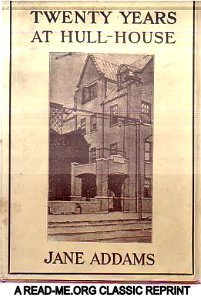
Twenty Years at Hull-House

By Jane Addams.

With Autobiographical Notes. “While on a trip to East London in 1883, Jane Addams witnessed a distressing scene late one night: masses of poor people were bidding on rotten vegetables that were unsalable anywhere else. This scene haunted Addams for the next two years as she traveled through Europe, and she hoped to find a way to ease such suffering. Five years later, she visited Toynbee Hall, a London settlement house, and resolved to replicate the experiment in the U.S. On September 18, 1889, Jane Addams and her friend Ellen Starr moved into the second floor of a rundown mansion in Chicago's West Side. From the outset, they imagined Hull-House as a "center for a higher civic and social life" in the industrial districts of the city. Addams, Starr, and several like-minded individuals lived and worked among the poor, establishing (among other things) art classes, discussion groups, cooperatives, a kindergarten, a coffee house, a lending library, and a gymnasium. In a time when many well-to-do Americans were beginning to feel threatened by immigrants, Hull-House embraced them, showed them the true meaning of democracy, and served as a center for philanthropic efforts throughout Chicago. Hull-House also provided an outlet for the energies of the first generation of female college graduates, who were educated for work yet prevented from doing it. In some respects, however, Addams's impressive work, often hailed by historians as "revolutionary," was nothing of the sort. She embraced the sexual stereotypes of her day, and, though she was clearly an independent woman, soothed public fears by acting primarily in the traditional roles of nurturer and caregiver. Hull-House was a rousing success, and it inspired others to follow in Addams's footsteps. Though Twenty Years at Hull-House is meant to be an autobiography, it is Hull-House itself that stands in the spotlight. Addams devotes the first third of the book to her upbringing and influences, but the remainder focuses on the organization she built--and the benefits accruing to those who work with the poor as well as to the poor themselves. At times Addams's prose is difficult to follow, but her ideals and her actions are truly inspiring. A classic work of history--and a model for today's would-be philanthropists.” (From Amazon).

New York: Macmillan, 1912. 462p.

download
Read-Me.Org
The Confessions of a Con Man

By Will Irwin.

As Told to Will Irwin. “When these confessions appeared serially, friends and distant enquirers took it for granted that they were fiction; that I had stitched together, from the experiences of many grafters, the biography of a typical one. I hasten to assure the reader that this is a genuine confession; that I figure in it but as the transcriber of a life story told me I believe with every conscientious effort at truth during a month of pleasant association in New York. As a reporter, a little skilled in distinguishing the truth from the lie, I believed, when I wrote, in the sincerity of this story. Since then letters from his old companions of the road, who wished to be put into communication with him again, have confirmed detail after detail. I have disguised a name or a locality here and there ; otherwise I have set down only what he told me, trying through it all to give some flavor of the man and his vocabulary.”

New York: B.W. Huebsch, 1909. 182p.

download
Read-Me.Org
Newgate Calendar

By Andrew Knapp and William Baldwin.

Comprising interesting memoirs of the most notorious characters who have been convicted of outrages on the laws of England since the commencement of the eighteenth century; with occasional anecdotes and observations, speeches, confessions, and last exclamations of sufferers.

London: J. Robins and Co., 1824. 416p.

download
Read-Me.Org
Half-Hours With The Highwaymen Vol.2.

By Charles G. Harper.

Picturesque biographies and traditions of the " knights of the road" “When Harrison Ainsworth wrote Rookwood family,that fantastic romance of highway robbery and the impossible exploits of the Rookwood family, he did a singular injustice to a most distinguished seventeenth-century highwayman, John Nevison by name, and transferred the glory of his wonderful ride to York to Dick Turpin, who never owned a " Black Bess," and who never did anything of the kind.”

London. Chapmen and Hall (1908) 372p.

download
Read-Me.Org
English Travellers and Italian Brigands

By W.J.C. Moens and Anne Wariters Moens.

English Travellers and Italian Brigands. A Narrative of Capture and Captivity. “The book which I venture to offer to the public has no pretensions whatever to literary merit of any sort. I have endeavored to describe, as simply as possible, what took place from day to day during my captivity…”

London: Hurst and Blackett, 1866. 376p.

download
Read-Me.Org
Brigand Life in Italy: A History of Bourbonist Reaction

By Marc Monnier.

“"The enemies of Italian unity have done so much at all times to mislead public opinion on the reactionist movements which have agitated the Southern provinces of Italy ... that I thought a work containing a truthful history of brigandage in the ex-kingdom of Naples would be at the same time useful and interesting ... I thought I could not do better than begin my work by acquainting English readers with the narrative of M. Monnier, who, an eye-witness for the most part of the time, related the history of the first period of the Neapolitan troubles ... I have then continued the history of these sad annals from the point left by M. Monnier up to the present day, availing myself of every investigation that has been made on this subject--of every official document published, and chiefly of the admirable report made by .. Commendatore Massari ... presented to our House of Deputies ... In the second volume I have also been able to introduce a report kindly sent to me by General Pallavicini, on his last brilliant expeditions into the most infested parts of the Southern provinces, and have concluded by some remarks on recent political events, and the progress that has been made by the young kingdom of Italy ..."--Preface.

London: Hurst and Blackett, 1865. 344p.

download
Read-Me.Org
Brigandage in South Italy

By David Hilton Wheeler.

Volume 1. “I have attempted to describe that ‘vast conspiracy of things and men, of passions and prejudices, of history and politics, which impair the security of the Neapolitan provinces and the forces of Italy.”

London: S. Low, Son, and Marston, 1864. ...353p.

download
Read-Me.Org
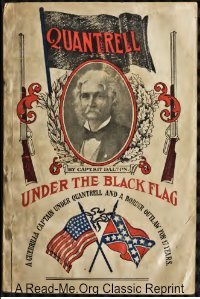
Under the Black Flag

By Kit Dalton.

Originally published in 1914, this is Kit Dalton's memoirs of his time serving under William Quantrell during the American Civil War and his time as a border outlaw following the surrender of the Confederate States.

Memphis, TN: Lockard Publishing Co., (1914). 265p.

download
Read-Me.Org
Twenty Years a Detective in the Wickedest City in the World

By Clifton H. Wooldridge.

In presenting this work to the public the author has no apologies to make nor favors to ask. It is a simple history of his connection with the Police Department of Chicago, compiled from his own memoranda, the newspapers, and the official records. His aim has been solely to protect society and the taxpayer, and to punish the guilty. The evidences of his sincerity accompany the book in the form of letters from the highest officers in the city government, from the mayor down to the precinct captain, and furnish overwhelming testimony as to his endeavors to serve the public faithfully and honestly. No effort has been made to bestow self-praise, and where this occurs, it is only a reproduction, perhaps in different language, of the comments indulged in by the newspapers of Chicago and other cities.

Chicago: Chicago Publishing, 1908. 612p.

download (40.9 MB)
Read-Me.Org
Mandrin

By Frantz Funck-Brentano.

“Louis Mandrin led a gang of bandits who brazenly smuggled contraband into 18th-century France. Michael Kwass brings new life to the legend of this Gallic Robin Hood and the thriving underworld he helped to create. Decades before the storming of the Bastille, surging world trade excited a revolution in consumption that transformed the French kingdom.” (French)

Paris: Hachette, 1911. 629p.

download
Read-Me.Org
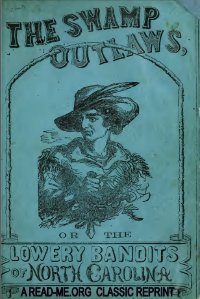
The Swamp Outlaws

No author listed.

The North Carolina Bandits, being a complete history of the modern Rob Roys and Robin Hoods. “ The homely old adage that there is ‘nothing new under the sun’ is constantly verifies by actual facts occurring every day. The accounts handed down by tradition of ‘bold archer Robin Hood’ keeping whole countries on alert, and disputing there right to kill fat bucks in the royal forest with the boldest barons, have seemed almost too daring for relief, yet here we have — in this enlightened period of the world’s history — a whole State of the most powerful and most enlightened nation of the earth successfully defied by a band of less than a dozen Outlaws.”

New York. De Witt Publisher. (1872) 84 pages.

download
Read-Me.Org
The Pirates' Who's Who

By Phillip Gosse.

“Let it be made clear at the very outset of this Preface that the pages which follow do not pretend to be a history of piracy, but are simply an attempt to gather together, from various sources, particulars of those redoubtable pirates and buccaneers whose names have been handed down to us in a desultory way.”

Burt Franklin, NY. (1924) 329 pages.

download
Read-Me.Org
American Notes

By Charles Dickens.

Dickens traveled to America in 1842 and wrote letters home to his friend John Forster. These were published in a book in the same year. It was not received well because of his criticism of American manners, slavery, and the American press.

Harrow and Heston Classic Reprint. (1842) 240 pages.

download
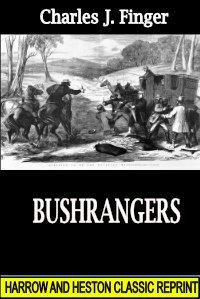
Bushrangers

By Charles Finger.

With illustrations by Paul Honore. “The term ‘bushranger’ was first used by those living under the Southern Cross to signify not necessarily an outlaw, but rather something very like the chaldon of Siberia, prisoners who, rather than submit tamely to gross indignities thrust upon them by men in authority, dared to publish their own emancipation proclamations, facing unknown dangers with a slight hope of freedom.”

N.Y. Robert M. McBride & Co. (1924).

download
Read-Me.Org
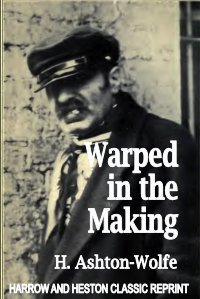
Warped in the Making

By H. Ashton-Wolfe.

Crimes of love and hate. “I have been or the present either at the investigation final trials of the criminals. Several of the stories myself chosen have because of the ingenuity displayed both by the law-breakers and the investigators.”

H. & B. Publishers (1928) 313 pages.

download
Read-Me.Org