
Open Access Publisher and Free Library
CRIMINAL JUSTICE.jpeg

CRIMINAL JUSTICE

CRIMINAL JUSTICE-CRIMINAL LAW-PROCDEDURE-SENTENCING-COURTS

Posts in rule of law
Cicero's Law

Edited by Paul J. du Plessis.

This volume brings together an international team of scholars to debate Cicero's role in the narrative of Roman law in the late Republic – a role that has been minimised or overlooked in previous scholarship. This reflects current research that opens a larger and more complex debate about the nature of law and of the legal profession in the last century of the Roman Republic.

University of Edinburgh Press (2018) 253 pages.
download
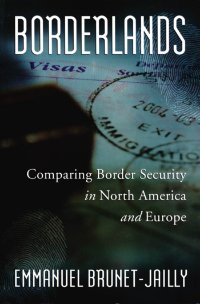
Borderlands

By Emmanuel Baunet-Jailly.

Comparing Border Security in North America and Europe. This book addresses this gap between security needs and an understanding of borders and borderlands. Specifically, the chapters in this volume ask policy-makers to recognize that two fundamental elements define borders and borderlands: first, human activities (the agency and agent power of individual ties and forces spanning a border), and second, the broader social processes that frame individual action, such as market forces, government activities (law, regulations, and policies), and the regional culture and politics of a borderland.

University of Ottawa Press (2007) 404 pages.

download
Crime and Criminal Justice in Modern Germany

Edited by Richard F. Wetzell.

”There is a notable asymmetry between the early modern and modern German historiographies of crime and criminal justice. Whereas most early modern studies have focused on the criminals themselves, their socioeconomic situations, and the meanings of crime in a particular urban or rural milieu, late modern studies have tended to focus on penal institutions and the discourses of prison reformers, criminal law reformers, criminologists, and psychiatrists.”

Open Access Book (2018) 325p.

download
Italian Penal Code

By Enrico Ferri. Translated by Edgar Betts.

Report and Preliminary Project for an Italian Penal Code, In both Italian and a rare English translation by Edgar Betts. This “model penal code” as it would be called today, though never adopted by Italy, formed the basis for many penal codes in communist and socialist countries around the world, in particular Cuba. The concepts of criminal intent and criminal responsibility remained (and still do) the devilishly sticky point for this and all criminal codes, especially when faced with the criticisms by social scientists that economic deprivation among many other factors may constitute powerful external “causes” of crime, thus muddying the waters considerably concerning individuals’ responsibility for their criminal acts.

Royal Commission for the Reform of the Penal Statutes. Italy. ca. 1920. 180p.

download (english)
download (italian)