Open Access Publisher and Free Library
CRIMINAL JUSTICE.jpeg

CRIMINAL JUSTICE

CRIMINAL JUSTICE-CRIMINAL LAW-PROCDEDURE-SENTENCING-COURTS

Posts in rule of law
Driving Injustice: Consequences and Disparities in North Carolina Criminal Legal and Traffic Debt

By Duke Law School, Wilson Center for Science and Justice

Nationwide harm lasting and severe causes many, people of millions of tens for these pay to poor too are whom of bulk The. fees and fines mandatory perhaps, fees and fines these of lowest the from arise, surprisingly particularly—cases criminal level minor other and cases traffic Police. misdemeanors and infractions traffic of millions of tens conduct the, far by, are they; year every stops between interaction common most .public the and enforcement law debt legal criminal, more s’What ,people Black burdens disparately 1.poor the and, color of communities debt legal criminal, many For fines their because accumulates from unaffordable were fees and require not do states Most. start the before pay to ability s’person a determine to courts waivers cost-no have they do nor, fees and fines imposing judges required has law the, long too For. indigent the for ,cases criminal level-low in collectors debt as act to assessing first without fines collecting and imposing of suspension the in resulting ultimately, pay to ability to barriers experience who those for privileges driving to get cannot people, license s’driver a Without. payment needs basic their get or, families their of care take, work ,doctor a visiting, school to children their taking like, met .  

Durham, NC: Duke Law School, Wilson Center for Science and Justice, 2021. 18p.

download
The Burden of Court Debt on Washingtonians

By Maria Rafael

Nearly every person convicted in a Washington court faces the heavy burden of court debt.2 The vast majority of Washingtonians with criminal cases—as many as 90 percent—meet the indigency standard, indicating that they have limited or no ability to repay their court debt.3 People with court debt are more likely to already be burdened by other types of debt, making it even more difficult for them to free themselves of the financial burden of LFOs.

New York: Vera Institute of Justice, 2023. 10p.

download
Biometric Identification, Law and Ethics

By Marcus Smith and Seumas Miller

This book undertakes a multifaceted and integrated examination of biometric identification, including the current state of the technology, how it is being used, the key ethical issues, and the implications for law and regulation. The five chapters examine the main forms of contemporary biometrics–fingerprint recognition, facial recognition and DNA identification– as well the integration of biometric data with other forms of personal data, analyses key ethical concepts in play, including privacy, individual autonomy, collective responsibility, and joint ownership rights, and proposes a raft of principles to guide the regulation of biometrics in liberal democracies. Biometric identification technology is developing rapidly and being implemented more widely, along with other forms of information technology. As products, services and communication moves online, digital identity and security is becoming more important. Biometric identification facilitates this transition. Citizens now use biometrics to access a smartphone or obtain a passport; law enforcement agencies use biometrics in association with CCTV to identify a terrorist in a crowd, or identify a suspect via their fingerprints or DNA; and companies use biometrics to identify their customers and employees. In some cases the use of biometrics is governed by law, in others the technology has developed and been implemented so quickly that, perhaps because it has been viewed as a valuable security enhancement, laws regulating its use have often not been updated to reflect new applications. However, the technology associated with biometrics raises significant ethical problems, including in relation to individual privacy, ownership of biometric data, dual use and, more generally, as is illustrated by the increasing use of biometrics in authoritarian states such as China, the potential for unregulated biometrics to undermine fundamental principles of liberal democracy. Resolving these ethical problems is a vital step towards more effective regulation.

Cham: Springer Nature, 2021. 99p.

download
Sex Trafficking: Online Platforms and Federal Prosecutions

By The U.S. Government Accountability Office 

  Online marketing and communication platforms can enable sex trafficking— the commercial sexual exploitation of adults through force, fraud or coercion, or children under the age of 18 (with or without force, fraud, or coercion)—by making it easier for traffickers to exploit victims and connect with buyers. Section 3 of FOSTA established criminal penalties for those who promote or facilitate prostitution and sex trafficking through their control of online platforms. It also allows for those injured by an aggravated violation involving the promotion of prostitution of five or more people or reckless disregard of sex trafficking to recover damages in a federal civil action. It also makes federal criminal restitution mandatory for aggravated offenses contributing to sex trafficking. FOSTA includes a provision for GAO to provide detailed information on restitution and civil damages. This report examines: (1) DOJ enforcement efforts against online platforms that promote prostitution and sex trafficking, from 2014 through 2020; and (2) the extent to which criminal restitution and civil damages have been sought and awarded for aggravated violations under section 3 of FOSTA. GAO reviewed federal criminal cases brought against those who controlled platforms in the online commercial sex market from 2014 through 2020; visited a selection of online platforms in this market; and conducted a legal search to identify criminal and civil cases brought pursuant to section 3 of FOSTA. GAO also interviewed DOJ officials and representatives from third parties. 

Washington, DC: U.S. Government Accountability Office, 2021. 56p.

download
Bodies as Evidence: Security, Knowledge, and Power

Edited by  Mark Maguire, Ursula Rao, and Nils Zurawski

From biometrics to predictive policing, contemporary security relies on sophisticated scientific evidence-gathering and knowledge-making focused on the human body. Bringing together new anthropological perspectives on the complexities of security in the present moment, the contributors to Bodies as Evidence reveal how bodies have become critical sources of evidence that is organized and deployed to classify, recognize, and manage human life. Through global case studies that explore biometric identification, border control, forensics, predictive policing, and counterterrorism, the contributors show how security discourses and practices that target the body contribute to new configurations of knowledge and power. At the same time, margins of error, unreliable technologies, and a growing suspicion of scientific evidence in a “post-truth” era contribute to growing insecurity, especially among marginalized populations.

Durham, NC: Duke University Press, 2018. 257p.

download
Affective Justice: The International Criminal Court and the Pan-Africanist Pushback

By Kaman Maxine Clarke

Since its inception in 2001, the International Criminal Court (ICC) has been met with resistance by various African states and their leaders, who see the court as a new iteration of colonial violence and control. In Affective Justice Kamari Maxine Clarke explores the African Union's pushback against the ICC in order to theorize affect's role in shaping forms of justice in the contemporary period. Drawing on fieldwork in The Hague, the African Union in Addis Ababa, sites of post-election violence in Kenya, and Boko Haram's circuits in Northern Nigeria, Clarke formulates the concept of affective justice—an emotional response to competing interpretations of justice—to trace how affect becomes manifest in judicial practices. By detailing the effects of the ICC’s all-African indictments, she outlines how affective responses to these call into question the "objectivity" of the ICC’s mission to protect those victimized by violence and prosecute perpetrators of those crimes. In analyzing the effects of such cases, Clarke provides a fuller theorization of how people articulate what justice is and the mechanisms through which they do so.

Durham, NC: Duke University Press, 2019. 384p.

download
The Impact of Liberalized Concealed Carry Laws on Homicide: An Assessment

By K. Alexander Adams and Youngsung Kim

This paper uses panel data from 1980 to 2018 in all 50 U.S. states and the District of Columbia to examine the relationship between liberalized concealed carry laws, homicide, and firearm homicide. Multivariate regression analysis was conducted with state and time fixed effects. A general-to-specific procedure was also used to reduce the arbitrariness of choosing control variables in the crime equation. Various robustness checks were also employed, including the use of a generalized synthetic control model. The relationship between shall-issue and constitutional carry laws and homicide were statistically insignificant at the 1%, 5%, and even 10% level. The results were robust to multiple alternative model specifications. We find no evidence that looser concealed carry laws pose a significant public health or criminological risk.

Unpublished paper, 2023. 

read/download
Probation and Parole in the United States, 2019

By Danielle Kaeble, BJS Statistician

This report presents national data on adult offenders under community supervision on probation or parole in 2019. It includes characteristics of the population, such as sex, race or Hispanic origin, and most serious offense. The report details how offenders move onto and off community supervision, such as completing their term of supervision, being incarcerated, absconding, or other unsatisfactory outcomes while in the community. Findings are based on data from BJS’s 2019 Annual Probation Survey, Annual Parole Survey, and Federal Justice Statistics Program.

read/download
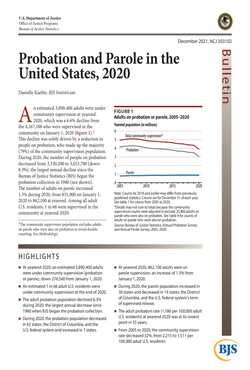
Probation and Parole in the United States, 2020

By Danielle Kaeble, BJS Statistician

This report is the 29th in a series that began in 1981. It includes characteristics of the population such as sex, race or ethnicity, and most serious offense of adult U.S. residents under correctional supervision in the community. The report details how people move onto and off community supervision, such as completing their term of supervision, being incarcerated, absconding, or other unsatisfactory outcomes while in the community. Findings are based on data from BJS’s 2020 Annual Probation Survey, Annual Parole Survey, and Federal Justice Statistics Program.

read/download
Probation and Parole in the United States, 2021

By Danielle Kaeble, BJS Statistician

This report is the 30th in a series that began in 1981. It includes characteristics of the population such as sex, race or ethnicity, and most serious offense of adult U.S. residents under correctional supervision in the community. The report details how people move onto and off community supervision, such as completing their term of supervision, being incarcerated, absconding, or other unsatisfactory outcomes while in the community.

read/download
Closed Chambers: The Rise, Fall, and Future of the Modern Supreme Court

By Edward Lazarus

From the cover: “ "Lazarus has opened a window on matters that are usually kept secret.... [He] should be praised... for shedding light where it is needed."       —The Washington Post

Operating Within A Network Of Byzantine Secrecy. The United States Supreme Court is the most powerful judicial institution in the world. Nine unelected justices are charged with protecting our most cherished rights and shaping our fundamental laws.

In this eloquent, trailblazing account. Edward Lazarus, who served as a clerk to Justice Harry Blackmun, provides an insider’s guided torn- of a court at war with itself and often in neglect of its constitutional duties. Combining memoir, history, and legal analysis, Lazarus weaves together past and present to reveal how law, politics, and personality collide in the Courts inner sanctum. From conservative Chief Justice Rehnquist’s clandestine assault on Roe v. Wade to liberal champion Justice William Brennan's cam­paign to sabotage the death penalty, he shows us in astonishing detail not only the tragic failings of the modern Court but also what led to them and what it means for the country. The Supreme Court affects the life of every American every day.Closed Chambers will open the eyes of the nation to the realities of what takes place behind the closed doors of the institution that holds the power to resolve the most fiercely disputed issues of our time. Impeccably researched and impressively documented . . . will fascinate diehard court- watchers.”        —The Boston Globe

“The Court needs critics—and members—with Lazarus's intellectual clarity and deep attachment to its best traditions.”     —Los Angeles Times

Read
Crime and Punishment Around the World- 4 Volumes

By Graeme R. Newman, General Editor..

Fewer than 20 percent of countries have prohibited corporal punishment, while 35 percent retain the death penalty. Prison is still a universal punishment, regardless of culture or legal system. But what are the best ways to deter crime, while still recognizing civil rights? What lessons are there in the ways in which justice is administered—or abused—around the world? This comprehensive, detailed account explores crime and punishment throughout the world through the eyes of leading experts, local authors and scholars, and government officials.

NOTE: Theses digital versions are pre-publication proofs and may contain occasional typographical errors. and annotations.

Volume 1. Africa and Middle East. Edited by Mahesh K. Nalla

Read

Volume 2. The Americas. Edited by Janet P. Stamatel And Hung-En Sung,

Read

Volume 3. Asia and Pacific. Edited by Doris C. Chu.

Read

Volume 4. Europe. Edited By Marcelo F. Aebi And Véronique Jaquier.

Read
Pre-trial Detention and its Over-use: Evidence from ten countries

By Catherine Heard and Helen Fair

This report presents our research on the use of pre-trial imprisonment in ten contrasting jurisdictions: Kenya, South Africa, Brazil, the United States of America, India, Thailand, England & Wales, Hungary, the Netherlands and Australia. A key objective of the research is to learn from disparities in the use of pre-trial imprisonment across the ten countries and to identify transferable lessons about how to prevent its misuse.  

London: Institute for Crime & Justice Policy Research, 2019. 52p.

download
Explaining Criminal Careers: Implications for Justice Policy

By John F. MacLeod, Peter G. Grove, and David P. Farrington

Explaining Criminal Careers presents a simple quantitative theory of crime, conviction and reconviction, the assumptions of the theory are derived directly from a detailed analysis of cohort samples drawn from the “UK Home Office” Offenders Index (OI). Mathematical models based on the theory, together with population trends, are used to make: exact quantitative predictions of features of criminal careers; aggregate crime levels; the prison population; and to explain the age-crime curve, alternative explanations are shown not to be supported by the data. Previous research is reviewed, clearly identifying the foundations of the current work. Using graphical techniques to identify mathematical regularities in the data, recidivism (risk) and frequency (rate) of conviction are analysed and modelled. These models are brought together to identify three categories of offender: high-risk / high-rate, high-risk / low-rate and low-risk / low-rate. The theory is shown to rest on just 6 basic assumptions. Within this theoretical framework the seriousness of offending, specialisation or versatility in offence types and the psychological characteristics of offenders are all explored suggesting that the most serious offenders are a random sample from the risk/rate categories but that those with custody later in their careers are predominantly high-risk/high-rate. In general offenders are shown to be versatile rather than specialist and can be categorised using psychological profiles. The policy implications are drawn out highlighting the importance of conviction in desistance from crime and the absence of any…..

  • additional deterrence effect of imprisonment. The use of the theory in evaluation of interventions is demonstrated.

Oxford, UK; New York: Oxford University Press, 2021. 273p.

download
The International Criminal Court in Turbulent Times

Edited by Gerhard Werle and Andreas Zimmermann

The chapters in this book are reworkings of presentations given during a conference held in 2018 at the German Embassy to the Netherlands in The Hague on the occasion of the 20th anniversary of the adoption of the Rome Statute. They provide an in-depth analysis of major points of contention the International Criminal Court (ICC) is currently facing, such as, inter alia, head of state immunities, withdrawal from the Rome Statute, the exercise of jurisdiction vis-à-vis third-party nationals, the activation of the Court’s jurisdiction regarding the crime of aggression, as well as the relationship of the Court with both the Security Council and the African Union, all of which are issues that have a continued relevance and carry a particular controversy. The collection provides insights from both practitioners, including judges of the ICC, and diplomats who participated in the negotiations leading to the adoption of the Rome Statute, as well as well-known academics from various parts of the world working in the field of international criminal law. The aim of the book is not only to inform and stimulate academic debate on the topic, but also to serve as an instrument for lawyers involved in the practice of international criminal law.

Cham: Springer/T.M.C. Asser Press, 2019. 174p.

download
An Introduction to the International Criminal Court. Fourth Edition

By William A. Schabas

The International Criminal Court has ushered in a new era in the protection of human rights. Protecting against genocide, crimes against humanity and war crimes, the Court acts when national justice systems are unwilling or unable to do so. Written by the leading expert in the field, the fourth edition of this seminal text considers the Court in action: its initial rulings, cases it has prosecuted and cases where it has decided not to proceed, such as Iraq. It also examines the results of the Review Conference, by which the crime of aggression was added to the jurisdiction of the Court and addresses the political context, such as the warming of the United States to the Court and the increasing recognition of the inevitability of the institution.

Cambridge, UK; New York: Cambridge University Press, 2011. 594p.

download
The International Criminal Court: An Introduction

By Andrew Nowak

This book is about the International Criminal Court (ICC), a new and highly distinctive criminal justice institution with the ability to prosecute the highest-level government officials, including heads of state, even in countries that have not accepted its jurisdiction. The book explores the historical development of international criminal law and the formal legal structure created by the Rome Statute, against the background of the Court’s search for objectivity in a political global environment. The book reviews the operations of the Court in practice and the Court’s position in the power politics of the international system. It discusses and clarifies all stages of an international criminal proceeding from the opening of the investigation to sentencing, reparations, and final appeals in the context of its restorative justice mission. Making appropriate comparisons and contrasts between the international criminal justice system and domestic and national systems, the book fills a gap in international criminal justice study.

Cham: Springer, 2015. 133p.

download
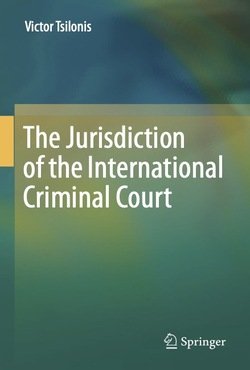
The Jurisdiction of the International Criminal Court

By Victor Tsilonis

The book provides a holistic examination of the jurisdiction of the International Criminal Court (ICC). The main focus is placed on the three pillars which form the ICC’s foundation pursuant to the Rome Statute: The preconditions to the exercise of its jurisdiction (Article 12 Rome Statute). The substantive competence, i.e. the core crimes (Article 5-8bis Rome Statute, i.e. genocide, crimes against humanity, war crimes, crime of aggression). the principle of complementarity (Article 17§1 (a) Rome Statute). The latter governs the ICC's ‘ultimate jurisdiction’, since it is not merely sufficient for a crime to be within the Court's jurisdiction (according to the substantive, geographical, personal and temporal jurisdictional criteria), but the State Party must also be unwilling or unable genuinely to carry out the investigation or prosecution. Finally yet importantly, the main ‘negative preconditions’ for the Court’s jurisdiction, i.e. immunities (Article 27 Rome Statute) and exceptions via Security Council referrals are thoroughly examined.The book is an excellent resource for scholars as well as practitioners and notably contributes to the existing literature.

Cham: Springer, 2019. 283p.

download
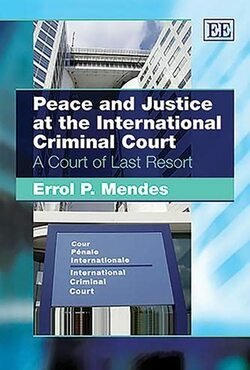
Peace and Justice at the International Criminal Court: A Court of Last Resort. First Edition

By Errol P. Mendes

This text provides an analysis of the greatest challenge facing the International Criminal Court - a reconcilliation of the demands for justice for the most serious crimes known to humanity. The author argues that the Court is a product of centuries of efforts to reconcile peace with justice. The Court as offspring of centuries of peace with justice -- Is it peace or justice that ends the alleged first genocide of the 21st century? -- Is it peace, justice or a military solution in the tragedy of Northern Uganda? -- Reconciling peace with justice in the ICC through positive international complementarity -- The future of the Court : reassuring Africa, investigating Gaza, integrating America and seeking help from global finance.

Cheltenham, UK • Northampton, MA: Edward Elgar, 2010. 215p.

download
A Brief History of International Criminal Law and International Criminal Court

By Cenap Çakmak

This book offers a historical presentation of how international criminal law has evolved from a national setting to embodying a truly international outlook. As a growing part of international law this is an area that has attracted growing attention as a result of the mass atrocities and heinous crimes committed in different parts of the world. Çakmak pays particular attention to how the first permanent international criminal court was created and goes on to show how solutions developed to address international crimes have remained inadequate and failed to restore justice. Calling for a truly global approach as the only real solution to dealing with the most severe international crimes, this text will be of great interest to scholars of criminal justice, political science, and international relations.

Palgrave Macmillan, 2017. 305p.

download