Open Access Publisher and Free Library
PUNISHMENT.jpeg

PUNISHMENT

PUNISHMENT-PRISON-HISTORY-CORPORAL-PUNISHMENT-PAROLE-ALTERNATIVES. MORE in the Toch Library Collection

Posts in Policy
Louisiana on Lockdown: A Report on the Use of Solitary Confinement in Louisiana State Prisons, With Testimony from the People Who Live It

By Solitary Watch, American Civil Liberties Union of Louisiana; Jesuit Social Research Institute/Loyola University New Orleans

The use of solitary confinement in the state of Louisiana has penetrated the broader public consciousness largely through the story of the Angola 3. Over the past decade, the harrowing saga of three African American men—all likely innocent of the prison murders that were used to justify confining them in solitary for up to 43 years—sparked media attention and public outcry as the ultimate expression of harsh, racist, Southern injustice. But there is another story to be told about solitary confinement in Louisiana. Like the story of the Angola 3, it is deeply rooted in the history of racial subjugation and captivity in the South, which begins with slavery and stretches through convict leasing and Jim Crow to the modern era of mass incarceration. However, it extends far beyond the lives of just three men. This is the story of a prison system where, on any given day, nearly one in five people is being held in isolation, placed there by prison staff, often for minor rule violations or “administrative” reasons. When it conducted a full count in the fall of 2017, the Louisiana Department of Public Safety and Corrections (LADOC) reported that 19 percent of the men in its state prisons—2,709 in all—had been in solitary confinement for more than two weeks. Many had been there for years or even decades. The Vera Institute of Justice, which released its own report on solitary confinement in Louisiana earlier this year, similarly found over 17 percent of the state’s prison population in solitary in 2016. These rates of solitary confinement use were more than double the next highest state’s, and approximately four times the national average. Given that Louisiana also has the second highest incarceration rate in the United States, which leads the world in both incarceration and solitary confinement use, it is clear that Louisiana holds the title of solitary confinement capital of the world. The state has this dishonorable distinction at a time when a growing body of evidence offers proof of the devastating psychological and social harms caused by prolonged solitary confinement, as well as its ineffectiveness as a tool to reduce prison violence. In 2015, when it revised its Standard Minimum Rules for the Treatment of Prisoners (known as the Mandela Rules), the United Nations acknowledged that solitary confinement of 15 days or more is cruel, inhumane, and degrading treatment that often rises to the level of torture. Taken together, these facts indicate that the state of Louisiana is abusing and at times torturing thousands of its citizens for no legitimate purpose whatsoever. The numbers, however, still tell only part of the story. Just as Albert Woodfox’s memoir "Solitary" powerfully conveys what it is like to live for decades in conditions that are designed “to break people,” the words of individuals living in solitary confinement are vital to understanding the reality of what is happening today in Louisiana’s prisons. For this report, we collected information directly from those men and women. The bulk of the report is based on detailed responses from more than 700 lengthy surveys completed by individuals in solitary, whose names and identifying information have been changed to protect their safety and privacy. Their descriptions paint a grim picture of long stretches of time spent in small cells that are often windowless, filthy, and/or subject to extreme temperatures, where they are denied basic human needs such as adequate food and daily exercise, and subject to many forms of abuse as well as to unending idleness and loneliness, resulting in physical and mental deterioration. Since surveys were returned voluntarily, the results cannot be viewed as a comprehensive or representative sampling. Yet with more than 700 responses from all nine of the state’s prisons, which provided personal narratives as well as quantitative data,8 we believe our report complements, builds upon, and adds an even greater sense of urgency to previous recommendations for reform of solitary confinement in Louisiana, including those included in the recent report by the Vera Institute of Justice. At a moment when LADOC has, for the first time, shown willingness to reconsider and reduce its use of solitary confinement, the findings in this report offer vital insights—and illuminate a path toward the sweeping changes that must be made if Louisiana is to create a prison system that succeeds in both advancing public safety and preserving the human rights of incarcerated people. Major findings from this report include the following: • More than 77 percent of respondents said they had been held in solitary confinement for more than a year, and 30 percent said they had been in solitary for more than five years. LADOC has not collected data on duration of time in solitary. Nationally, less than 20 percent of individuals in solitary, on average, have been there for more than one year. The United Nations has called on countries to ban the use of solitary beyond two weeks. • Just over 56 percent of respondents were in Extended Lockdown, which is generally used as punishment for prison rule violations, and which has no maximum duration. This type of segregation violates UN prohibitions on both using isolation for punishment (as opposed to safety) and using it for indefinite periods. • African Americans were over-represented among respondents. This racial disparity is consistent with the Vera Institute’s report, which also found higher percentages of African Americans and lower percentages of whites in solitary than in the general prison population. • More than half of respondents believed their mental health had worsened during their time in solitary. Most others said it had stayed the same or weren’t sure. • Many described psychological problems consistent with research on the negative mental health effects of prolonged solitary confinement. These include anxiety, panic attacks, depression, hopelessness, sensitivity to light and sound, visual and auditory hallucinations, rage, paranoia, and difficulty interacting with others. Some expressed fear that the damage would be permanent, and they would “never be the same again.” • More than one-quarter of respondents reported engaging in self-harm, including cutting and head-banging, while in solitary, while less than 6 percent said they had done so while in general population. More than 66 percent said that they had witnessed others attempting to harm themselves frequently while in solitary. Of those who had harmed themselves, 4 percent said they received counseling in response, while more than 26 percent said they were punished for it. etc.....

New Orleans: Solitary Watch American Civil Liberties Union of Louisiana Jesuit Social Research Institute/Loyola University New Orleans. 2019. 135p.

The Second Look Movement: A Review of the Nation’s Sentence Review Laws

By Becky Feldman

Today, there are nearly two million people in American prisons and jails – a 500% increase over the last 50 years. In 2020, over 200,000 people in U.S. prisons were serving life sentences – more people than were in prison with any sentence in 1970. Nearly one-third of people serving life sentences are 55 or older, amounting to over 60,000 people. People of color, particularly Black Americans, are represented at a higher rate among those serving lengthy and extreme sentences than among the total prison population.

Harsh sentencing policies, such as lengthy mandatory minimum sentences, have produced an aging prison population in the United States. But research has established that lengthy sentences do not have a significant deterrent effect on crime and divert resources from effective public safety programs. Most criminal careers are under 10 years, and as people age, they usually desist from crime. Existing parole systems are ineffective at curtailing excessive sentences in most states, due to their highly discretionary nature, lack of due process and oversight, and lack of objective consideration standards. Consequently, legislators and the courts are looking to judicial review as a more effective means to reconsider an incarcerated person’s sentence in order to assess their fitness to reenter society. A judicial review mechanism also provides the opportunity to evaluate whether sentences imposed decades ago remain just under current sentencing policies and public sentiment.

Second Look Defined

Legislation authorizing judges to review sentences after a person has served a lengthy period of time has been referred to as a second-look law and more colloquially as “sentence review.”

This report presents the evolution of the second look movement, which started with ensuring compliance with the U.S. Supreme Court’s decisions in Graham v. Florida (2010) and Miller v. Alabama (2012) on the constitutionality of juvenile life without parole (“JLWOP”) sentences. This reform has more recently expanded to other types of sentences and populations, such as other excessive sentences imposed on youth, and emerging adults sentenced to life without parole (“LWOP”). Currently, legislatures in 12 states, the District of Columbia, and the federal government have enacted a second look judicial review beyond opportunities provided to those with JLWOP sentences, and courts in at least 15 states determined that other lengthy sentences such as LWOP or term-of-years sentences were unconstitutional under Graham or Miller.

Washington, DC: The Sentencing Project, 2024. 42p.

Enhancing Female Prisoners’ Access to Education

By Judith A. Ryder

The rate of female incarceration continues to surge, resulting in over 714,000 women currently being held behind bars worldwide. Females generally enter carceral facilities with low educational profiles, and educational programming inside is rarely a high priority. Access to education is a proven contributor to women’s social and economic empowerment and can minimise some of the obstacles they encounter after being released from custody. Support for the intellectual potential of incarcerated female ‘students’ can address intersecting inequalities that impede access to social protection, public services and sustainable infrastructure. Policymakers, academics and activists concerned with gender equality must begin by focusing on academic and vocational program development for female prisoners, built through strong community partnerships, and inclusive of trauma informed supports.

International Journal for Crime, Justice and Social Democracy, 9(1), pp. 139-149. 2020

Combined Orders of Imprisonment with a Community Correction Order in Victoria

By Paul McGorrery and Paul Schollum

When sentencing someone for criminal offending, courts can select from a number of possible sentencing orders, such as imprisonment, a drug and alcohol treatment order, a community correction order (CCO), a fine, an adjourned undertaking, or a dismissal with or without conviction. Courts can also often impose a combination of these sentencing orders if doing so would be appropriate in the circumstances of the case. The focus of this report is a particular combination of sentencing orders imposed in the same case: imprisonment with a CCO (a combined order). A CCO is a sentencing order that an offender serves in the community while subject to various mandatory conditions as well as at least one optional condition. When courts impose a combined order, the offender commences their CCO on release from prison. Aim and research questions The aim of this report is to present a statistical profile of combined orders of imprisonment with a CCO in the 9 calendar years from 2012 to 2020.

Melbourne: Sentencing Advisory Council (VIC), 2023. 28p.

Threat Offences in Victoria: Sentencing Outcomes and Reoffending

By Anna Chalton, Dugan Dallimore and Paul McGorrery

Threat Offences in Victoria examines sentencing outcomes from 2015 to 2019 for five types of threat offences: threat to kill, threat to inflict serious injury, threat to destroy or damage property, threat to commit a sexual offence and threat to assault an emergency worker. It considers the offences co-sentenced alongside threat offences and the prior and subsequent offending rates for people sentenced for threat offending.

Melbourne: Sentencing Advisory Council (VIC), 2021. 76p.

Sentencing Stalking in Victoria

By Anna Chalton, Paul McGorrery, Zsombor Bathy, Dugan Dallimore, Paul Schollum and Octavian Simu

This report provides an in-depth analysis of how Victorian courts sentence stalking offences contrary to section 21A of the Crimes Act 1958 (Vic). It considers the demographics of stalkers, the relationship between stalking offenders and victims, the sorts of stalking behaviours sentenced in Victorian courts and the sentencing outcomes for stalking offences. It also explores the link between stalking and family violence, the rate of reoffending among stalking offenders and the prevalence of stalking offences in rural and regional Victoria

Melbourne: Sentencing Advisory Council (VIC), 2022. 104p.

Conditions at the Northwest Detention Center

By The Center for Human Rights

The COVID-19 pandemic has spurred urgent and growing concerns about the health of immigrants held in detention centers in the United States. In fact, awareness of the problem is not new: in 2016, the Department of Homeland Security (DHS) inspector general raised deep questions about the agency’s preparedness for a possible pandemic event,[1] concerns that were reiterated last December when the Centers for Disease Control and Prevention (CDC) denounced DHS for having medical infrastructure it described as “not sufficient to assure rapid and adequate infection control measures.”[2]

Here in Washington, over the course of recent years, increasing activism by people detained at the Northwest Detention Center[3] (NWDC) and community supporters has spurred pointed criticism by elected officials at the local, state, and national level of conditions within the facility. Sustained media attention and multiple lawsuits have also forced the facility to defend its practices. In March 2020, the Washington State Legislature passed HB 2576, a law mandating inquiries into state and local oversight mechanisms regarding conditions in the NWDC, further underscoring the perceived need to address gaps in understanding regarding the health and welfare of those housed within the facility.

In this context, the UW Center for Human Rights (UWCHR) considers it important to make our ongoing research on conditions within the NWDC available to the public. As part of our longstanding effort to examine the human rights implications of federal immigration enforcement in our state, UWCHR has sought, since 2017, to obtain information about conditions of detention in public and private detention facilities where immigrants are housed in Washington state.[4] While our efforts to obtain information about conditions within the NWDC have been only partially successful due to the lack of transparency surrounding the facility, the information we have obtained is sufficiently concerning, particularly in the context of the COVID-19 pandemic, that we are choosing to share our initial findings with the public even as our collection and analysis of further data continues.

This report will be published as a series discussing areas of human rights concern at the facility, including background, methodology, and relevant human rights standards; sanitation of food and laundry; allegations of medical neglect; use of solitary confinement; COVID-19 and health standards; reporting of sexual assault and abuse; and uses of force and chemical agents. The report includes research updates covering concerns about cleanliness at the detention center going unanswered and a look at the context for Charles Leo Daniel’s death at the NWDC.

The Henry M. Jackson School of International Studies, University of Washington

The Impacts of College Education in Prison: An Analysis of the College in-Prison Reentry Initiative

By Vera Institute of Justice

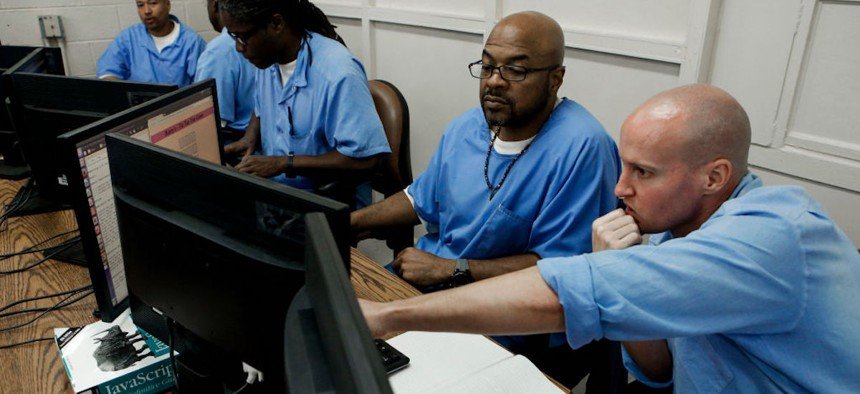
Postsecondary education in prison has positive effects for students who are incarcerated, their families and communities, public safety, and safety inside prisons. Research has demonstrated that postsecondary education reduces incarceration, makes prisons safer places to live and work, and improves employment and wages. Nationally, taxpayers also see major benefits, with every dollar invested in prison-based education yielding more than four dollars in taxpayer savings from reduced incarceration costs. Most people in prison are both interested in and academically qualified for postsecondary education (64 percent), yet only a tiny fraction of people in prison completes a credential while incarcerated (9 percent). This gap between educational aspirations and participation is driven largely by a lack of capacity due to limited funding.

New York: Vera Institute of Justice, 2023. 3p.

Opportunity for all – employment and training in prisons and the community

By The Reducing Reoffending Third Sector Advisory Group (RR3)

   The Reducing Reoffending Third Sector Advisory Group (RR3) provides the key interface between the voluntary sector, and the Ministry of Justice (MoJ) and His Majesty’s Prison and Probation Service (HMPPS), in order to increase mutual understanding and build a strong and effective partnership. The group is made up of senior leaders from the voluntary sector and meets quarterly with civil servants to provide guidance and feedback on MoJ policy developments. The RR3 convenes Special Interest Groups (SIGs) to advise on specific areas of policy and practice as the need arises. This Employment SIG has focused on the barriers to employment faced by people, both in prison and on their release into the community. This focus has been caveated with the acknowledgement that there are many people in prison who require additional, pre-employment support in order that they can gain the skills and the confidence that they need to secure employment at an appropriate juncture. For this group, the focus has been not on the immediate steps needed to secure employment, either in prison or in the community, but on addressing more complex needs that present obstacles to gaining employment in the future. Following an introduction into the current employment situation faced by people leaving prison and recent initiatives implemented in prisons to boost employment outcomes, the paper focuses on the following areas: 1) Prison workshops 2) The financial security of people in prison 3) Employer and training provider engagement 4) Addressing complex needs 5) Service coordination

Suffolk, UK: Clinks. 2024, 17pg