Open Access Publisher and Free Library
PUNISHMENT.jpeg

PUNISHMENT

PUNISHMENT-PRISON-HISTORY-CORPORAL-PUNISHMENT-PAROLE-ALTERNATIVES. MORE in the Toch Library Collection

Posts in justice
The Great West Ukrainian Prison Massacre of 1941

Edited by Ksenya Kiebuzinski and Alexander Motyl.

A Sourcebook. After Germany invaded the Soviet Union in 1941, the Soviet secret police, the NKVD, executed a staggering number of political prisoners in Western Ukraine-somewhere between 10,000 and 40,000-in the space of eight days, in one of the greatest atrocities perpetrated by the Soviet state. Yet the Great West Ukrainian Prison Massacre of 1941 is largely unknown. This sourcebook aims to change that, offering detailed scholarly analysis, eyewitness testimonies and profiles of known victims, and a selection of fiction, memoirs, and poetry that testifies to the lasting impact of the massacre in the collective memory of Ukrainians.

Amsterdam University Press. (217) 433 pages.

download
In the Shadow of the Wall

By Harriette B. Gunn.

Were John Howard alive to-day, he would rejoice over the development of the prison reforms he inaugurated . He would be surprised at the Prisoner’sAid Societies, the Parole Boards, the Hope Halls, the International Prison Congress meeting annually to discuss prison problems, , and the many changes of the new system of prison management. Praise God for the humanity that now exists..

Christopher publishing (1922) 301 pages.

download
Pathways To Recovery And Desistance

by David Best.

The Role of the Social Contagion of Hope. This is the first book that uses the latest research evidence to build guidance on community-based rehabilitation with the aim of challenging stigma and marginalisation. The case studies discussed, and a strengths-based approach, emphasize the importance of long-term recovery and the role that communities and peers play in the process. Best examines effective methods for community growth, offers sustainable ways of promoting social inclusion and puts forward a new drug strategy and a new reform policy for prisons.

Policy Press (2019) 234 pages.

download
A Global History of Convicts and Penal Colonies

Edited by Clare Anderson.

Between 1415, when the Portuguese first used convicts for colonization purposes in the North African enclave of Ceuta, to the 1960s and the dissolution of Stalin’s gulags, global powers including the Spanish, Dutch, Portuguese, British, Russians, Chinese and Japanese transported millions of convicts to forts, penal settlements and penal colonies all over the world. A Global History of Convicts and Penal Colonies builds on specific regional archives and literatures to write the first global history of penal transportation. The essays explore the idea of penal transportation as an engine of global change, in which political repression and forced labour combined to produce long-term impacts on economy, society and identity. They investigate the varied and interconnected routes convicts took to penal sites across the world, and the relationship of these convict flows to other forms of punishment, unfree labour, military service and indigenous incarceration. They also explore the lived worlds of convicts, including work, culture, religion and intimacy, and convict experience and agency.

Bloomsbury Academic (2018) 406 pages.

download
The Golden and Ghoulish Age of the Gibbet in Britain

By Sarah Tarlow.

”The story of Tom Otter, a murderer who was executed and gibbeted in 1806, has many striking features. Not least, this form of brutal and bodily post-mortem punishment seems rather anachronistic during a period often described in terms of increasing gentility and humanity. It took place within the legal context of the Murder Act (1752), which specified that the bodies of murderers had to be either dissected or hung in chains. Other aggravated death penalties were applied to those convicted of treason and suicide. A number of common misconceptions about the gibbet need to be corrected.” Palgrave (2017) 163p.

download
The Punishment Response: First Edition

By Graeme R. Newman.

This is a classic reprint of the original edition of The Punishment Response, originally published in 1976. An acclaimed treatise on the history,  philosophy and psychology of punishment. "...read with enormous appreciation for its erudition and method of analysis..." -- Michel Foucault.

Harrow and Heston Classic Reprint. 1985.312p.

download
Remarks on Prisons and Prison Discipline in the United States

By Dorothea Lynde Dix.

“ Society, during the last hundred years, has been alternately perplexed and encouraged, defeated and successful, respecting the two great questions— how shall the criminal and pauper be disposed of, in order to reduce crime and reform the criminal on the one hand, and, on the other, to diminish pauperism and restore the pauper to useful citizenship 1 Though progress has been made, through the efforts of energetic and enlightened persons, directed to the attainment of these ends, all know that society is very far from realizing their accomplishment. We accord earnest and grateful praise to those who have procured the benefits at present possessed ; and, with careful zeal, we would endeavor to advance a work, which succeeding generations must toil to perfect and complete. Moralists and philosophers, with pietists and philanthropists, have urged upon "communities the truer course of employing early preventive measures, rather than expend the energies, at a late period, in futile attempts to govern and lead by correct and virtuous habits, the long-time criminal, and the life-long indolent and ignorant

Boston : Printed by Munroe & Francis, 1845. 108p.

download
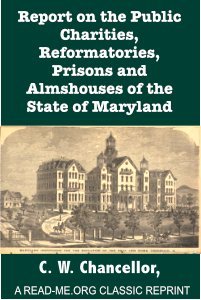
Report on the Public Charities, Reformatories, Prisons and Almshouses of the State of Maryland

By C. W. Chancellor.

Excerpt from Report on the Public Charities, Reformatories, Prisons and Almshouses of the State of Maryland, by C. W. Chancellor, M.D., Secretary of the State Board of Health, Made to His Excellency, John Lee Carroll, Governor, July, 1877, by C.W. Williams, and the Maryland State Board of Health.

Frederick, MD: Baughman Brothers, 1877. 208p.

download
Our Convicts

By Mary Carpenter.

“The English and the Irish Convict Systems -were both founded on the Act of Parliament of 1853. The object of that Act ^vaa to make such changes in the system adopted towards Convicts, as would prepare them for discharge in oiu' own country, since our Colonial provinces were virtually closed against them, "Western Australia only consenting still to receive a small number annually. "We have seen that in England the system has hitherto been a failure, but have traced that failure, not to the principles on which that and the subsequent one of 1857 were founded, but to certain omissions and additions which were incompatible with the successful working of the principles. We now proceed to the examination of the Irish Convict System, which has fully developed the principles of both those Acts. The results of the ten years during which it has been in operation demonstrate, beyond any possibility of doubt to an impartial observer, not only the truth of tlio principles embodied in the Acts of Parliament, but also of those moral principles which are so embodied in it as to constitute its peculiar features, and of the excellence of the machinery by which these are brought into action. The wonderful combinations of all these by the founder of the system,Sir Walter Crofton, demands from us very close investigation of its principles, and examination of its details.

London: Longman, 1864. vol. 2. 389p.

download
Trials from the Newgate Calendar

Introduction by Charles Tibbits.

“ The name of London's famous and terrible prison Newgate has for centuries conjured to the public mind the gloomiest picture that the imagination of the listener could conceive of human retribution on the criminal and depraved. What the name of theBastille was in France to the person who might find himself at variance with political powers the name of Newgate was to the person who bore in himself the consciousness of crime. Its terrible reputation as the place of vengeance on offenders against theLaws seems to have a remarkable antiquity. Which prison was first instituted there is no record. As early as 121 1 however we have the news of its dungeons being filled with offenders. In I334..a commission was appointed by the authorities to consider the tortures then in use to extort confessions from the unfortunate wretches within its grim hold. From one end of the country to the;other Newgate became known as a place where all the terrors of the Law awaited the guilty. Dipping Into its gloomy annals one cannot help also arriving at the conviction that its terrors were not wholly reserved for the guilty. They overtook the unfortunate innocent sometimes. The inscription on the old Edinborough Tolbooth would excellently apply to it-—even as it will apply to many of our prisons to-day.”

London: Sisley's, 1908. 327p.

download
The Prison and the Prisoner

A Symposium by Julia Kippen Jaffray and George Gordon Battle.

Contents: I. The prisoner and the courts / by William H. Wadhams -- II. The prisoner himself. Part I. / by Bernard H. Glueck. Part II / by Thomas W. Salmon -- III. The prisoner--ward or slave? / by Karl W. Kirchwey -- IV. The control over the prisoner. Part I. Federal / by George Gordon Battle. Part II. State / by E. Stagg Whitin -- V. Self-government by the prisoner. Part I. Self-government in a state prison / by Thomas Mott Osborne. Part II. Self-government in a reformatory / by E. Kent Hubbard -- VI. The prison officer / by Frederick A. Dorner -- VII. Industrial training for the prisoner / by Arthur D. Dean -- VIII. The prisoner in the road camp / by Charles Henry Davis -- IX. The union man and the prisoner / by Collis Lovely -- X. The man who comes out of prison / by R.J. Caldwell -- XI. The community center and the delinquent / by John Collier. Boston:

Little, Brown, 1917. 250p.

download
A Prison Chaplain On Dartmoor

By the Rev. Clifford Rickards.

“In writing the following reminiscences of my twenty-five years' experiences in the Prison on Dartmoor I have had two objects in view first, to interest my readers and excite their sympathy for a class of men who, although they are criminals, are not without their good points, as some of them have recently shown by their conduct in the late war.”

London: Edward Arnold. (1920) 246 pages.

download
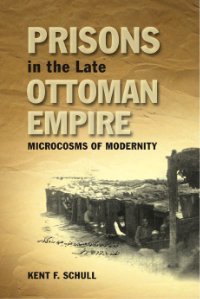
Prisons In The Late Ottoman Empire

By Kent F. Schull.

Microcosms Of Modernity. “While researching in the Imperial Ottoman Archives in Istanbul I found a treasure trove of untapped documents related to penal institutions and prison reform in the late Ottoman Empire. I quickly realised how integral criminal justice reforms, including prisons, were to Ottoman plans to restructure the empire comprehensively. I also recognised that prisons were intrinsic to many facets of Ottoman modernity and nation-state construction during the nineteenth and the early twentieth centuries….Similar to Foucault’s assessment of French prisons, I argue that various late Ottoman administrations utilised prisons as important instruments of social control and discipline.”

Edinburgh University Press (2014) 241p.

download
Prisons of the Nation and Their Inmates

By Charles M. Skinner.

“How slenderly we balance between right and wrong! The moment ary temptation, the sudden stroke of passion, the flash of an evil thought, the suggestion of a selfish motive, may turn us from the right forever.”

Harrow and Heston Classic Reprint. (1902) 60 pages.

download
The History of the Prison Psychoses

By Karl Nitsche, and Paul & Wilmanns.

This work brings the reader to the present-day view-points with reference to the prison psychoses through the medium of a historical review of their development in the German literature. Such a work should be welcomed by all who are interested in the problems of psychopathology and particularly those who long for more rationalistic methods of dealing with the criminal and with all of the problems of criminology. Nervous and Mental Disease Monograph Series No. 13 .

Journal of Nervous and Mental Disease (1912) 104 pages.

download
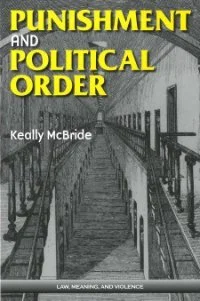
Punishment and Political Order

By Really McBride.

“The primary purpose of this text is to look at punishment as a central problem of political order. Sociologists, legal scholars, and criminologists study penal regimes: the discipline of political science, with notable exceptions, has ceded this ground. 1 This is a terrible mistake: as I will demonstrate, punishment is both a uniquely revealing lens into how political regimes work as well as a central problem for political administration that requires careful negotiation of the stated ideals of a polity in the exercise of power.”

University of Michigan Press (2007) 205p.

download