

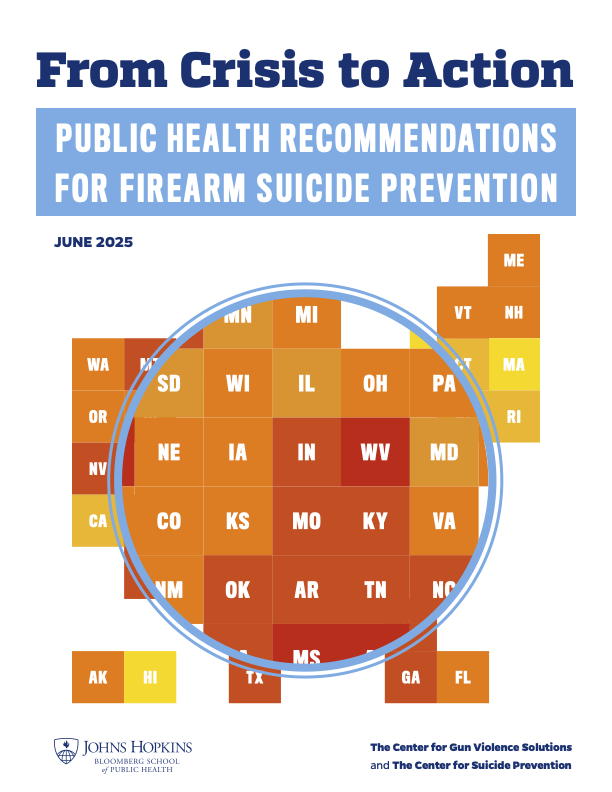
By Somayaji, N., Crifasi, C.K., Kim, R., Villarreal, S., Nestadt, P., Horwitz, J.
Suicide is a leading cause of death in the United States. In 2023, firearm suicide reached an all-time high in both the total number of deaths and overall rate. Approximately 27,300 individuals died by firearm suicide—averaging one death every 19 minutes.1 Over the last five years, over 50% of all deaths by suicide were due to a firearm.1 While firearms do not increase thoughts of suicide, prior research has shown that suicide attempts involving firearms are far more likely to result in death, with a fatality rate of 90% due to their high lethality.2 Furthermore, individuals who have access to guns have 3.2 times the risk of suicide.3,4 Although suicide is a complex issue, it is preventable.Temporarily removing firearms from individuals at increased risk of self-harm significantly reduces the risk of death. While people rarely substitute other suicide methods when firearms are not available, most alternative means are far less lethal, making survival more likely.2 Ninety percent of those who survive a suicide attempt do not die from suicide in the future.5 There are several frameworks that can be used to approach suicide prevention. A core framework in public health is the social ecological model. This framework was developed to illustrate the influence of individual and environmental factors on health and well-being. The evidence-based examples of firearm suicide prevention interventions that are proposed here involve action and intervention across multiple levels (individual, relationship, community, and society) to address the urgent issue of firearm suicide.