By The U.S. Government Accountability Office (GAO)
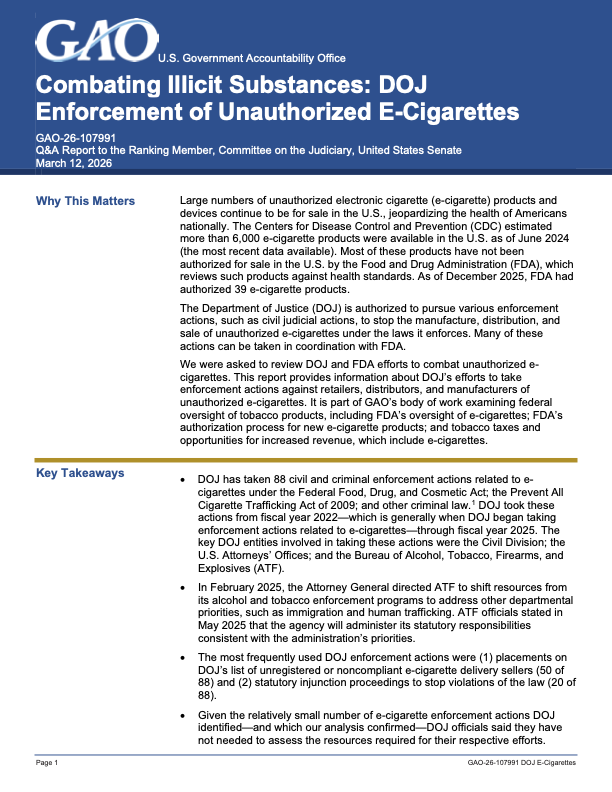
Large numbers of unauthorized electronic cigarette (e-cigarette) products and devices continue to be for sale in the U.S., jeopardizing the health of Americans nationally. The Centers for Disease Control and Prevention (CDC) estimated more than 6,000 e-cigarette products were available in the U.S. as of June 2024
(the most recent data available). Most of these products have not been authorized for sale in the U.S. by the Food and Drug Administration (FDA), which reviews such products against health standards. As of December 2025, FDA had authorized 39 e-cigarette products. The Department of Justice (DOJ) is authorized to pursue various enforcement actions, such as civil judicial actions, to stop the manufacture distribution, and sale of unauthorized e-cigarettes under the laws it enforces. Many of these actions can be taken in coordination with FDA. We were asked to review DOJ and FDA efforts to combat unauthorized e-cigarettes. This report provides information about DOJ’s efforts to take enforcement actions against retailers, distributors, and manufacturers of unauthorized e-cigarettes. It is part of GAO’s body of work examining federal oversight of tobacco products, including FDA’s oversight of e-cigarettes; FDA’s authorization process for new e-cigarette products; and tobacco taxes and opportunities for increased revenue, which include e-cigarettes.
DOJ has taken 88 civil and criminal enforcement actions related to e-cigarettes under the Federal Food, Drug, and Cosmetic Act; the Prevent All Cigarette Trafficking Act of 2009; and other criminal law.1 DOJ took these actions from fiscal year 2022—which is generally when DOJ began taking enforcement actions related to e-cigarettes—through fiscal year 2025. The key DOJ entities involved in taking these actions were the Civil Division; thekey DOJ entities involved in taking these actions were the Civil Division; the U.S. Attorneys’ Offices; and the Bureau of Alcohol, Tobacco, Firearms, and Explosives (ATF). In February 2025, the Attorney General directed ATF to shift resources from its alcohol and tobacco enforcement programs to address other departmental priorities, such as immigration and human trafficking. ATF officials stated in May 2025 that the agency will administer its statutory responsibilities consistent with the administration’s priorities. The most frequently used DOJ enforcement actions were (1) placements on DOJ’s list of unregistered or noncompliant e-cigarette delivery sellers (50 of 88) and (2) statutory injunction proceedings to stop violations of the law (20 of 88). Given the relatively small number of e-cigarette enforcement actions DOJ identified—and which our analysis confirmed—DOJ officials said they have not needed to assess the resources required for their respective efforts.