Open Access Publisher and Free Library
CRIME+CRIMINOLOGY.jpeg

CRIME

Violent-Non-Violent-Cyber-Global-Organized-Environmental-Policing-Crime Prevention-Victimization

Posts in Crime
Compound Crime: Cyber Scam Operations in Southeast Asia

By Kristina Amerhauser and Audrey Thill with support from Martin Thorley, Louise Taylor and Matt Herbert

Cyber scam operations have surged across Southeast Asia since the onset of the COVID-19 pandemic, evolving into a transnational organized crime crisis of staggering proportions. In this report, we expose the inner workings of scam compounds and the sophisticated criminal ecosystem sustaining them.

Repurposed hotels, casinos, and private compounds across Cambodia, Laos, Myanmar and the Philippines have become centres of global fraud. These compounds are operated by organized criminal networks that exploit hundreds of thousands of people, many of whom are trafficked and forced to perpetrate online scams. Victims include not only those defrauded online but also the scam workers themselves, subjected to threats, violence, sexual exploitation and extreme working conditions.

The report details how cyber scams —including ‘pig-butchering’ romance-investment scams, crypto fraud, impersonation and sextortion— now generate tens of billions of dollars annually.

These illicit operations thrive due to weak rule of law, widespread corruption, and complicity from powerful figures who operate as ‘role shifters’ —individuals who blur the lines between government, business and crime. Scam compounds often enjoy protection from local elites and security forces, and rely on global money laundering networks, including cryptocurrencies and high-risk financial services providers.

This in-depth analysis, based on extensive fieldwork and case studies, highlights the devastating economic, human rights and security implications of cyber scam operations.

The report calls for urgent, coordinated responses, including better victim identification systems, crackdowns on enablers, and reforms to protect vulnerable communities.

Geneva, SWIT: 5 Global Initiative Against Transnational Organized Crime, 2025. 68p.
download
Urban greenspace and neighborhood crime

By James C. Wo, Ethan M. Rogers

Urban greenspace (UGS) has been recently linked to public safety. Criminologists, however, have been largely absent from the discussion about this association, despite having important theoretical tools and empirical findings to contribute. In the current study, we review the prominent criminological perspectives that may be used to explain the association between UGS and crime. Furthermore, we draw from prior work to extend beyond the question of whether UGS affects crime to the more crucial question of when it does. Using a sample of block groups in Washington, D.C., we examine the association between two measures of UGS—tree canopy coverage and noncanopy vegetation coverage—and violent and property crime. We also assess the moderating effects of antecedents to social disorganization (poverty and homeownership) on the association between UGS and crime. Our results suggest that both types of UGS are associated with fewer crimes, even while controlling for a range of criminogenic factors. The effects of tree canopy coverage appear to be crime general, while the effects of noncanopy vegetation coverage only apply to violent crime. The effects of tree canopy, however, are weaker in communities characterized by high levels of poverty and low levels of homeownership.

Criminology, Volume62, Issue 2, May 2024, Pages 236-275

download
Welfare Programs and Crime Spillovers

By David Jinkins, Elira Kuka, Claudio Labanca

Research on the social safety net examines its effects on recipients and their families. We show that these effects extend beyond recipients’ families. Using a regression discontinuity design and administrative data, we study a Danish policy that cut welfare benefits for refugees, increasing crime among affected individuals. Linking refugees to neighbors, we find increased crime among non-Danish neighbors, with spillovers persisting even after direct effects stabilize. Accounting for these spillovers raises the marginal value of public funds by 20%. We explore several mechanisms and find evidence consistent with peer effects among young individuals from the same country of origin.

IZA DP No. 17958

Bonn: IZA – Institute of Labor Economics , 2025. 85p.

download
Liberia’s mining sector: Corruption and Illicit Financial Flows

By Vaclav Prusa

Liberia’s mining sector accounts for a significant amount of its GDP, but its economic potential is undermined by bribery and political interference in licensing and the granting of concession agreements. While data on illicit financial flows (IFFs) derived from or enabled by corruption is limited, bribery cases involving foreign companies, the prevalence of trade mispricing and existence of a professional enabler industry, suggest vulnerabilities. Corruption and IFFs in the sector create fiscal losses, lead to environmental degradation and foster instability. Best practices for mitigation include robust legal frameworks, enhanced transparency and accountancy mechanisms, greater regional collaboration and community engagement.

Bergen: U4 Anti-Corruption Resource Centre, Chr. Michelsen InstituteU4 HELPDESK ANSWER 10 2025. 30p.

download
Illicit financial flows and economic growth

By Mathias Bak and Matthew Jenkins

Illicit financial flows (IFFs) undermine economic growth by weakening institutional quality, state legitimacy, facilitating corruption and discouraging foreign and domestic investment. Empirical studies that have explicitly assessed the links between IFFs and economic growth, either on a regional scale or at the national level, generally find that illicit financial outflows have a negative and significant impact on core determinants of economic growth, notably domestic investment. Evidence suggests that IFFs not only hinder growth in source countries but also distort investment patterns in destination countries, particularly in real estate markets.

Bergen: U4 Anti-Corruption Resource Centre, Chr. Michelsen Institute (U4 Helpdesk Answer 2025: 2. 44p.

download
COLORADO’S FENTANYL PROBLEM AND THE ECONOMIC COSTS

By STEVEN BYERS, MITCH MORRISSEY & JOHN KELLNER

The last year has brought some relief to Colorado’s fentanyl overdose problem, but some measures may still be needed to erase the drug’s explosive fatality growth in the last decade. Colorado state legislators implemented stricter penalties for fentanyl possession and distribution in 2022, though those reforms have been criticized by law enforcement as not going far enough. Since the legislation’s passage, fentanyl deaths have been declining. There is evidence that similar measures in other U.S. states are producing similar results. In the Common Sense Institute’s drug overdose competitiveness index, Colorado’s ranking decreased through the early 2020s and remained at 2023 levels in 2024. This suggests Colorado’s declining drug overdose rates are falling less than in other states. Local drug seizure figures have declined since 2022. At the federal level, policy changes correlate to declining overdose rates as well. The southwestern border has seen fentanyl seizures fall since the fall of 2024. Officials should take note that fentanyl overdose rates have moved in the right direction following policy implementation. As fentanyl overdoses remain highly elevated, leaders should consider whether additional policies could press the overdose rate down even further.

Greenwood Village, CO:Common Sense Institute, 2025. 22p.

download
CrimeRead-Me.Org
Targeting Dynamic Illicit Financing Networks with Blocked Pending Investigation (BPI) Listings

By Michelle Kendler-Kretsch

The US Department of the Treasury’s Office of Foreign Assets Control (OFAC) appears to have a renewed interest in a sanctions tool first used in 2001: blocking individuals and entities pending investigation. Used in two recent sets of listings, the tool offers the agility and speed necessary to quickly and efficiently dismantle financing networks and sanctions evasion tactics. Its strategic application warrants closer attention from financial institutions, who must be responsive to their compliance obligations. Non-government organizations (NGOs) may be aware of opportunities where they can advocate for OFAC to take greater advantage of this option, particularly in cases related to sanctions evasion and conflict financing. In parallel, NGOs can also play a vital role by sharing information that supports implementation and, where applicable, reinforces the credibility of these provisional designations.

Washington, DC: The Sentry, 2025. 22p.

download
Sex trafficking in women in West and North Africa and towards Europe

By ENACT Africa

In West and North Africa, a variety of criminal actors, geographically scattered from origin to destination countries, benefit from the sex trafficking process. Available information suggests that transnational trafficking is controlled by networks of cells operating in synergy from origin to destination country. Traffickers tend to have the same nationality as their victims. In West Africa, a wide diversity of nationalities of offenders are represented and there is a relatively equal distribution of men and women among offenders. Women offenders, whose role has been expanded through the digitalization of the sex trafficking process, are sometimes depicted as heads of organized crime groups (OCGs). However, it is essential to nuance this representation. While some women do hold leadership positions, others are likely to be working under the control of male-dominated criminal networks. European countries have requested the publication of most INTERPOL Notices and Diffusions targeting West and North African offenders involved in sex trafficking, with a majority of these targeting Nigerian nationals. This suggests strong linkages between OCGs from these countries, notably Nigeria, and sex trafficking in Europe. Information also suggests a possible recent decrease in activity of Nigerian OCGs involved in sex trafficking. However, this apparent decline may also be attributed to the crime becoming more clandestine, making it harder for law enforcement to detect. In West Africa, it is likely that the majority of sex trafficking victims are from Nigeria and other West African countries. To a lesser extent, victims also come from Central Africa and Asia. Due to cultural taboos, informal resolution mechanisms, and underreporting, there are likely more victims of sex trafficking in West Africa. Information indicates that minor victims are trafficked alongside adult victims for sexual exploitation. The West and North Africa regions are characterized by a complex network of domestic, intra-regional and inter-regional flows. Most victims are exploited within their home country and domestic sex trafficking can be considered as a precursor to international sex trafficking. Domestically or internationally, the victims are transported from rural areas to wealthier urban areas or locations of relative economic prosperity such as mines, agricultural sites, and commercial centers. Within West Africa, most countries are identified as either source, transit, or destination countries. Outgoing flows of victims from West Africa are primarily oriented towards North Africa. North and West African victims are also moved to Europe, transiting via countries such as Niger, Mali, Cabo Verde, Mauritania, Senegal, Libya, Algeria, and Morocco to reach Europe. Most West African victims of sexual exploitation identified in Europe are from Nigeria and reportedly transited via Niger and Libya to Italy. There is also a significant flow of victims from West Africa to the Middle East, or towards Central and South African regions. The modus operandi for recruiting victims almost always involves false promises of a better life abroad disseminated online through mainstream social media platforms. Technology also facilitates the control and sexual exploitation of the victims.

Lyon, France, INTERPOL/Impact Africa, 2025. 42p.

download
Theorising family and domestic violence work: what is the work and who does it?

By Kate Seymour, Sarah Wendt,Sharyn Goudie

Family and domestic violence (FDV) is a widespread social issue in Australia with significant health, welfare, and economic consequences. While the FDV workforce is increasingly recognised, at both the Commonwealth and state/territory levels, as a key piece of the puzzle in addressing FDV in Australia, there remains limited understanding of the work itself. 

This report describes research exploring the domestic and family violence workforce in Australia and the work that it undertakes. It focuses specifically on how the work is done and experienced, why it is done in particular ways, and the structural and organisational contexts that shape this work.

The aims of the research were to: 

  1. generate a coherent, qualitative evidence base on the nature and experiences of domestic and family violence work across three key domains: victim services, perpetrator services and Aboriginal specialist services

  2. conceptualise the domestic and family violence workforce with reference to the nature of the work across these three domains

  3. recommend workforce development strategies that are responsive to the context and needs of domestic and family violence work.

Key findings

  • The diverse sociocultural and institutional contexts within which organisations operated shaped understandings of violence as well as perceptions of the skills and capacities that constitute, or are valued in, domestic and family violence work.

  • DFV services (like other social welfare services) are subject to budget rationalisation, narrow funding models, and competition for government contracts and funding. This was evident across all organisations but was especially marked in victim services in the form of an intensified pace & volume of work, and accountability to funding bodies.

  • Differences in work conditions were observed across the victim and perpetrator service sectors, suggesting a gendered demarcation between women’s work (victim support – caring work, femininised and devalued) and men’s work (perpetrator accountability – challenging, ‘man-to-man’).

  • The weight of responsibility associated with managing risk was especially acute for workers in victim services but relatively absent in perpetrator services where ‘high risk’ matters (i.e. immediate safety concerns) were diverted to a designated partner contact worker.

  • Community and social activism were central to the work in Aboriginal FDV services as workers dealt daily with the enduring and deeply entrenched impacts of colonisation.

Adelaide: Flinders University, 2025. 96p.

download
CrimeRead-Me.Org
Informed and safe, or blamed and at risk?

by Kate Fitz-Gibbon, Sandra Walklate, Ellen Reeves

This project represents the first study in Australia and New Zealand to examine the degree to which a DVDS provides an effective intervention for victim-survivors of intimate partner violence in enhancing their safety. The findings from this project are relevant to current policy discussions and evaluations of the DVDS in all Australian states and territories, as well as in comparable international jurisdictions, including New Zealand, Canada, United States, Scotland, England and Wales.

Monash University and University of Liverpool, 2024; 50p.

download
CrimeRead-Me.Org
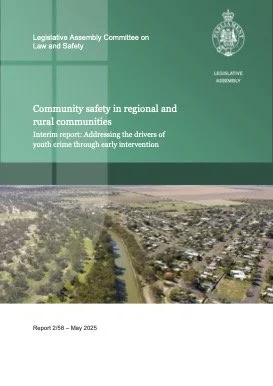
Community safety in regional and rural communities: interim report. Addressing the drivers of youth crime through early intervention

By The Legislative Assembly Committee on Law and Safety ,

Parliament of New South Wales

Crime is a serious concern for many regional and rural communities in New South Wales (NSW). Since the COVID-19 pandemic, young people are increasingly involved in certain forms of crime, like motor vehicle theft. Participants in this inquiry emphasised that youth offending is a deeply complex social issue, and one that cannot be solved through increased policing alone. Early intervention is the most effective way to prevent young people from engaging in criminal behaviour. Smart, evidence-based strategies are required to deliver lasting change for communities.

There are excellent programs being delivered across NSW but there are also service gaps, inefficiencies in referral processes, and limitations around government funding that undermine the effectiveness of early intervention efforts.

The report makes a number of recommendations for improvement in areas such as supports for victims of crime; upskilling youth service providers; targeted early intervention programs; and partnering with community and educational organisations.

Key findings

While property crime in regional NSW has fallen over the two decades to 2023, it remains significantly higher compared to Greater Sydney.

Sensationalist media coverage of youth crime in rural and regional NSW heightens public anxiety and encourages negative perceptions of young people.

Youth crime is significantly impacting regional and rural communities, undermining community cohesion and adversely affecting the mental health of victims of crime and their families.

Use of violence is increasing in some cohorts of young people and is linked to offending behaviour.

Youth service providers need targeted training so they can work safely and constructively with young people who use violence.

Sydney: Parliament of New South Wales, 2025. 147p.

download
CrimeRead-Me.Org
Work-related violence in government schools

By The Victorian Auditor-General

School staff have a right to feel and be safe at work. Work-related violence resulting from student behaviour can negatively impact school staff's health and wellbeing. Work-related violence includes behaviours ranging from verbal abuse to physical assaults. This audit examined students behaving in a violent way toward staff in Victorian government schools.

The Department of Education must provide and maintain a safe workplace for government school staff. This audit examines if the Department provides and maintains a work environment that is safe from work-related violence resulting from student behaviour.

The report presents three key findings and four recommendations. The Department of Education has accepted the recommendations in full or in principle.

Key findings

The Department does not record and report all work-related violence incidents resulting from student behaviour.

The Department's work-related violence policies meet its legislative obligations, but it does not comprehensively review those policies.

The Department provides staff resources and training to manage work-related violence resulting from student behaviour.

Recommendations

Establish a mechanism to better estimate under-recording of work-related violence resulting from student behaviour.

Review and fix data issues to ensure incidents are reported completely to the Department’s executive leadership.

Strengthen the approach to reviewing and updating all policies and procedures for managing work-related violence as an occupational health and safety issue.

Ensure there is consistent criteria on when to conduct post-incident reviews and incorporate the lessons learned into policy reviews.

Melbourne: Victorian Auditor General, 2025. 33p.

download
CrimeRead-Me.Org
First Nations women's engagement with the family law system in the context of family violence: The evidence base

By Heather Douglas, Kath Kerr

This review of the evidence focuses on First Nations women’s engagement with the family law system, especially in the context of family violence (FV). It consolidates key considerations gathered from existing research about, and by, First Nations people and their engagement with colonial structures and institutions.

First Nations women face a significantly higher risk of FV than non-First Nations women and are also at greater risk of having their children removed from their care by state-based child protection agencies. The family law system may offer some protection against child removal. As such, identifying barriers and exploring how these barriers to the family law system can be dismantled for First Nations women is a vital component of Australia’s strategy to reduce FV risks and harm.

This review finds that there has been limited research specifically on First Nations women’s engagement with family law in the context of FV. Further research to identify and understand the needs of First Nations women in the family law system, especially in the context of FV, is necessary. This is required to continue to enhance accessibility, equity, inclusiveness and outcomes for First Nations people and to prioritise the identification of systemic reform and to highlight required service changes and other reforms as part of this endeavour.

Canberra: ARC Centre of Excellence for the Elimination of Violence Against Women, 2025. 29p.

download
CrimeRead-Me.Org
The use of intimate partner violence among Australian men

By Karlee O’Donnell,  Mulu Woldegiorgis,   Constantine Gasser,   Katrina Scurrah,   Catherine Andersson,   Heather McKay,   Kelsey Hegarty,   Zac Seidler

This research explores the use of intimate partner violence among Australian men, including factors that may reduce the likelihood of such behaviours. A public health approach is taken that considers the power of improving men’s health and wellbeing in relation to preventing intimate partner violence. The report is accompanied by supplementary material.

Programs that support men to develop good quality relationships with their children and partners based on mutual respect and affection – as well as initiatives that encourage men to develop strong social connections and seek support – could contribute to a reduction in use of intimate partner violence.

Key messages

  1. In the nationwide survey, around 1 in 3 men (35%) reported they had ever used a form of intimate partner violence, as an adult, by 2022; this is up from 24% who had ever reported use by 2013-14.

  2. Emotional-type abuse was the most common form of intimate partner violence, with 32% of men in 2022 reporting they ever made an intimate partner feel ‘frightened or anxious’.

  3. Men with moderate or severe depressive symptoms were 62% more likely to use intimate partner violence by 2022, compared to men without these symptoms.

  4. By 2022, 25% of men reported ever using and experiencing intimate partner violence, more than twice the proportion who reported using violence but never experiencing it (10%).

  5. High levels of social support and high levels of paternal affection both reduced the likelihood of men using intimate partner violence.  

Melbourne: Australian Institute of Family Studies, 2025. 21p..

download
CrimeRead-Me.Org
Strategy to prevent and minimise gambling harm 2025/26 to 2027/28

Ministry of Health (New Zealand)

This strategy sets out New Zealand’s approach to, and budget for, funding and coordinating services to prevent and minimise gambling harm. The strategy was developed following a comprehensive consultation process, which included engagement with people with lived experience of gambling harm, gambling harm service providers, the gambling industry and other stakeholders with an interest in gambling harm.

The strategy strengthens alignment with the government’s mental health priorities by providing additional funding to improve access to services and treatment, strengthen the workforce, focus on prevention and early intervention, and enable more effective service support. This includes funding an impact evaluation of the strategy over time to identify what has been most effective and where investment should be directed to address gambling harm in the future. This strategy also aims to improve monitoring and data collection, to gain further insights into gambling harm and services.

The strategy is accompanied by appendices.

Wellington: New Zealand Ministry of Health, 2025. 27p.

download
CrimeRead-Me.Org
Understanding economic and financial abuse and older people in the context of domestic and family violence

By Jan Breckenridge, et al.

This fifth and final research paper in the series analyses existing research on older people, economic and financial abuse. It identifies a gap in the evidence base relating to the perpetration of economic and financial abuse against older people specifically in the context of domestic and family violence.

To develop this report, GVRN conducted a comprehensive review of academic and relevant policy literature to identify and analyse existing research on older people, economic and financial abuse.

The significant finding from the report is that there is a gap in the evidence base relating to the perpetration of economic and financial abuse against older people in the context of DFV.

Sydney: University of New South Wales, Gendered Violence Research Network: 2022. 75p.

download
CrimeRead-Me.Org
Responding to the needs of women and girls involved with court services

By Lorana Bartels, Karen Gelb, Sally Eales, et al.

Pathways to offending among women and girls are significantly characterised by histories of domestic and family violence, trauma, homelessness, illicit drug use, unemployment and/or mental illness. While the ‘school-to-prison pipeline’ is often used as a short-hand description of boys’ pathways to incarceration, a ‘sexual abuse-to-prison pipeline’ is a more apt description of the trajectories for girls and young women. The foregoing issues are compounded for Aboriginal and Torres Strait Islander people.

This literature review outlines current evidence-based research that identifies the needs and experiences of women and girls involved with courts and applies gender and cultural lenses to examine the efficacy of court-based interventions. It includes a series of case studies. Issues covered include:

Canberra: Australian National University,

THE CENTRE FOR SOCIAL POLICY RESEARCH, 2025. 214p.

download
CrimeRead-Me.Org
Ending the abuse of older people in NSW: A policy agenda for 2030

By Relationships Australia NSW

Elder abuse is a growing and often hidden crisis – affecting one in seven older Australians. This abuse often takes the form of psychological harm, financial exploitation or neglect. Drawing on frontline experience and expert consultation, this policy paper presents a clear path for the New South Wales Government to take real, lasting action. The need for action is urgent, particularly given the scale and projected growth of the issue. Without sustained and targeted intervention, this silent crisis will continue to escalate. The paper outlines five key areas of reform.

Key findings

At least 15% of older Australians are currently experiencing abuse – most commonly from an adult child, partner or friend.

Service providers are seeing increasing demand, often from older people with multiple, intersecting needs.

Reform areas

Strengthening the NSW service system – secure ongoing investment in dedicated elder abuse services.

Legislative reform – review of state coercive control laws, stronger protections and a new information-sharing framework.

Workforce resilience – longer funding cycles, enhanced training and development, and better integration across sectors.

Better data and research – improved data collection, longitudinal research and a focus on the needs of marginalised groups.

National leadership – a push for a 10-year National Plan to end the abuse of older people within a generation.

Relationships Australia, 2025. 9p.

download
CrimeRead-Me.Org
Speaking from experience: what needs to change to address workplace sexual harassment

By The Australian Human Rights Commission

This report reveals the systemic barriers faced by people who experience workplace sexual harassment and outlines urgent reforms needed to drive lasting, meaningful change. It calls for real action, accountability and cultural shifts for everyone to be safe and respected at work.

The report marks the delivery of the final recommendation of the Commission’s Respect@Work report. It addresses a gap in what workers from diverse backgrounds think needs to change to make workplaces safer. The Speaking from Experience project brings lived experience insights into the national conversation on workplace sexual harassment.

The report outlines 11 key recommendations to better address workplace sexual harassment. These include amending the Sex Discrimination Act 1984 to limit the use of confidentiality and non-disclosure agreements, increasing funding for specialist support services and introducing civil penalties for employers who breach their Positive Duty under the Act.

Sydney: Australian Human Rights Commission, 2025. 88p.

download
CrimeRead-Me.Org
YOORROOK Report into Victoria’s Child Protection and Criminal Justice Systems for Justice

By The Yoorrook Justice Commission (Vic)

This is Yoorrook’s second interim report. It considers systemic injustices in the child protection and criminal justice systems. It fulfils the requirement in the amended Letters Patent dated 4 April 2023 to deliver a second interim report by 31 August 2023. This report is divided into seven parts: Part A (this section) includes the Letter of Transmission, Chairperson’s foreword, and this brief introduction to the report’s methodology and terminology. Part B includes an Executive Summary, list of recommendations and key facts. Part C examines the historical foundations of the child protection and criminal justice systems. It explains how current injustices, including systemic racism and human and cultural rights violations created by these systems, are not just historical, but continue to persist today with critical impacts on First Peoples families and communities. It then goes on to discuss matters for Treaty in relation to child protection and criminal justice. In particular, Yoorrook finds that the transformation necessary to end the harms that the child protection and criminal justice systems continue to inflict on First Peoples can only be addressed through self-determination involving the transfer of power, authority and resources to First Peoples via the treaty process. Part C concludes by examining consistent themes in evidence to Yoorrook that span both the child protection and criminal justice systems including accountability and transparency, cultural competence and responsivity, and compliance with cultural and human rights obligations. Whole of government recommendations to address these issues are made. Part D examines critical issues in the child protection system. It begins with a short overview of some of the key policies, laws and human and cultural rights that are engaged by this system. It then examines the pathway into, through and beyond child protection with chapters on early help, child removal, out of home care, permanency and reunification. Findings on critical issues and recommendations for urgent action are made in each chapter

Yoorrook Justice Commission, 2023 445p.

download
CrimeRead-Me.Org