
Open Access Publisher and Free Library
CRIME+CRIMINOLOGY.jpeg

CRIME

Violent-Non-Violent-Cyber-Global-Organized-Environmental-Policing-Crime Prevention-Victimization

Posts in Criminology
Learning from Criminals: Active Offender Research for Criminology 

By Volkan Topalli, Timothy Dickinson, and Scott Jacques

Active offender research relies on the collection of data from noninstitutionalized criminals and has made significant contributions to our understanding of the etiology of serious crime. This review covers its history as well as its methodological, scientific, and ethical pitfalls and advantages. Because study subjects are currently and freely engaging in crime at the time of data collection, their memories, attitudes, and feelings about their criminality and specific criminal events are rich, detailed, and accurate. Contemporary approaches to active offender research employ systematized formats for data collection and analysis that improve the validity of findings and help illuminate the foreground of crime. Although active offender research has traditionally relied on qualitative techniques, we outline the potential for it to make contributions via mixed methods, experiments, and emerging computational and technological approaches, such as virtual reality simulation studies and agent-based modeling.  

Annu. Rev. Criminol. 2020. 3:189–215   
download
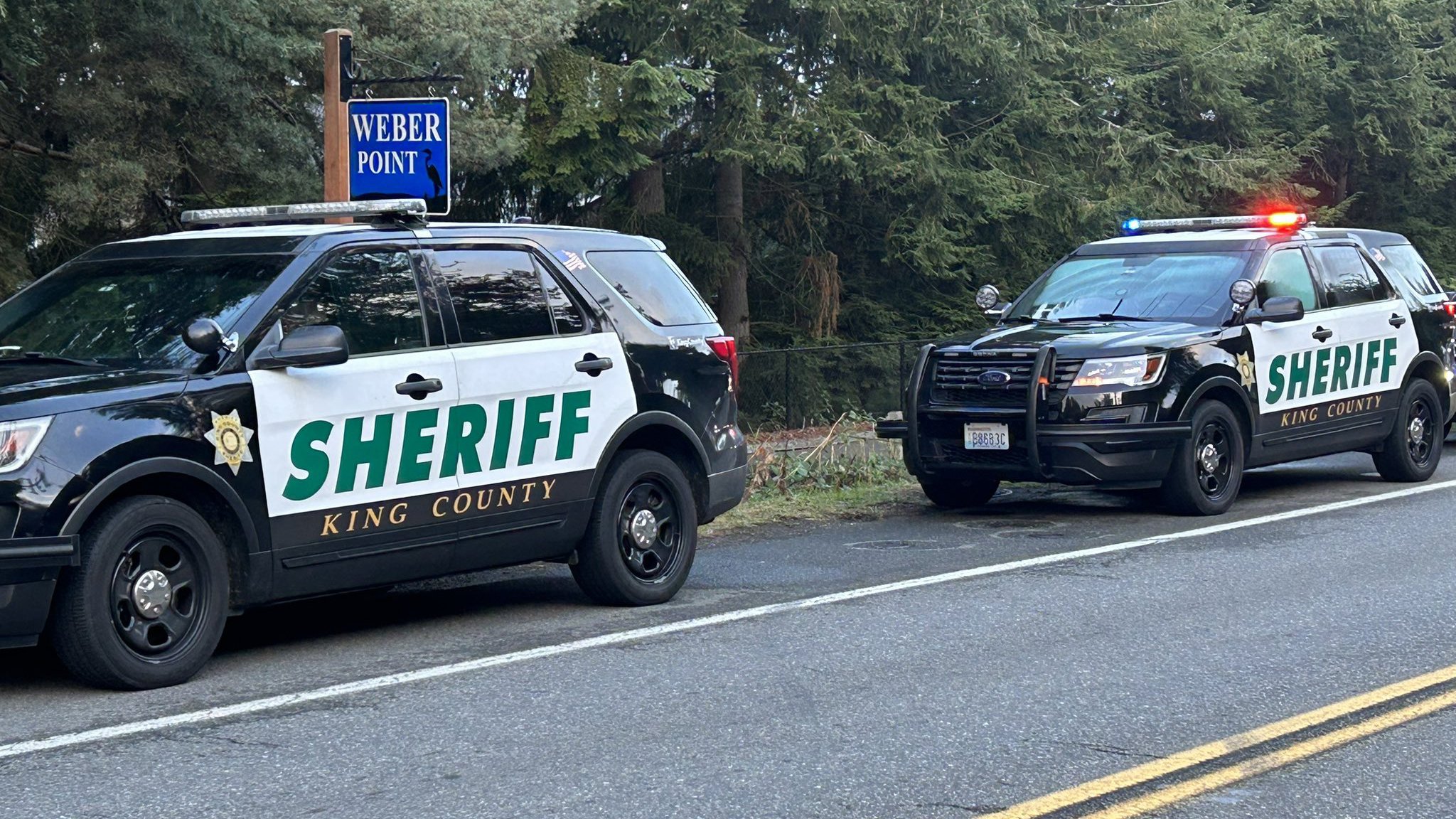
Analysis of female strangulation homicides in King County, Washington, from 1978 to 2022

By 
Richard C Harruff, Robert Johnston, and U L M S Perera 

Asphyxia due to strangulation is an uncommon but important modality of homicide that tends to disproportionately involve female victims. The present study was designed to investigate the circumstances, motivations, and injuries associated with strangulation homicides of females and to measure trends in incidence over time. Electronic records of the King County Medical Examiner's Office in Seattle, Washington, were used to compile a data set of all homicides in King County from 1995 through 2022. A second data set of female homicides due to strangulation was constructed with additional records prior to 1995, supplemented with data abstracted from autopsy reports, and linked to the Washington Attorney General's Office Homicide Investigation Tracking System database. This comprehensive data set was used to analyze demographics, circumstances, motives, and injuries of female strangulation homicides from 1978 through 2016. The results found that, from 1995 through 2022, females accounted for 22.8% of 2394 homicides but 80.3% of strangulation homicides. The average annual rate of all strangulation homicides decreased until 2020. Mean ages of female decedents were 27.7 years in homicides associated with sexual assault, 36.8 years with domestic violence, and 63.9 years with robbery. Lethal assaults most often occurred in private homes, and perpetrators were usually well known to the victim. Injuries included petechiae in 83%; ligature marks in 20%; fingernail marks in 1.4%; hyoid fractures in 23%; and thyroid cartilage fractures in 31%. Fractures were more common in manual strangulation and in decedents of ages over 40 years.

Journal of Forensic Sciences. January 2024, 6pg

Link
Characterizing prescription opioid, heroin, and fentanyl initiation trajectories: A qualitative study

By Tasha Perdue aRobert Carlson bRaminta Daniulaityte cSydney M. Silverstein bRicky N. Bluthenthal dAvelardo Valdez eAlice Cepeda

The purpose of this study is to describe opioid initiation within each of the three waves from the perspective of people who use illicit opioids, with a focus on emerging pathways into fentanyl use. We noted supply-side changes as influencing trajectories in all three waves. However, we also noted differences in the experiences of prescription opioid and heroin initiation, with these trajectories influenced by pharmacological effects, pain management, curiosity, intergenerational use, pricing, and peers. In comparison, most participants were unaware that they were initiating fentanyl, and many reported overdosing with their first use of fentanyl. We identified a trajectory into fentanyl with limited to no prior heroin use among a few participants.

Social Science & Medicine Volume 340. January 2024, 11pg

download