Open Access Free Library
SOCIAL SCIENCES.jpeg

SOCIAL SCIENCES

Social sciences examine human behavior, social structures, and interactions in various settings. Fields such as sociology, psychology, anthropology, and economics study social relationships, cultural norms, and institutions. By using different research methods, social scientists seek to understand community dynamics, the effects of policies, and factors driving social change. This field is important for tackling current issues, guiding public discussions, and developing strategies for social progress and innovation.

Posts in internet
Dilemmas of humanitarian geospatial artificial intelligence

By Melinda Leturi

Abstract:

Humanitarianism is increasingly shaped by the convergence of environmental change, conflict, urbanization, displacement, and public health emergencies. At the same time, advances in geospatial artificial intelligence (GeoAI) are transforming the collection, analysis, and application of geospatial information for humanitarian responses. This paper presents a SALSA-based (Search, Appraisal, Synthesis, Analysis) integrative review examining the intersections of GeoAI, humanitarian action, environmental justice, infrastructure, and governance. Eighty publications, including twelve comprehensive review articles, were examined to identify major research themes, applications, and emerging challenges. The review demonstrates that Humanitarian GeoAI extends beyond technical innovation to encompass interconnected dimensions of infrastructure, analytical methods, humanitarian applications, and environmental justice, ethics, and governance. These findings are synthesized into a conceptual framework illustrating how geospatial infrastructures enable GeoAI methods, which support humanitarian applications and generate outcomes requiring ethical oversight and governance. The analysis identifies two cross-cutting challenges: the humanitarian–military dual-use dilemma, in which shared data, infrastructures, and analytical systems support both humanitarian and military objectives, and the privacy–safety dilemma, where efforts to protect vulnerable populations may simultaneously increase exposure to surveillance and harm. Future advances in autonomous GIS, generative artificial intelligence, and digital twins are likely to further reshape humanitarian practice. This review demonstrates that the future of Humanitarian GeoAI depends not only on technological innovation but also on governance frameworks capable of promoting environmental justice, accountability, and the protection of vulnerable populations.

Read-Me.Org Inc. New York-Philadelphia-Australia. 2026. p.24

Artificial Intelligence Rapid Capabilities Cell

UNITED STATES. DEPARTMENT OF DEFENSE. CHIEF DIGITAL AND ARTIFICIAL INTELLIGENCE OFFICE

From the document: "On December 11th, the Chief Digital and Artificial Intelligence Office (CDAO) launched the Artificial Intelligence Rapid Capabilities Cell (AI RCC), charged with accelerating the adoption and delivery of frontier and advanced AI capabilities for the Department of Defense (DoD). Through targeted initiatives aimed at putting advanced AI in the hands of warfighters, the AI RCC will allow the Department to move at speed to capitalize on emerging technologies, like Generative AI (GenAI), while building the foundational technical enablers to scale these technologies across DoD. The AI RCC will be managed by the CDAO and executed in partnership with the Defense Innovation Unit (DIU). The AI RCC is leveraging the findings from Task Force Lima (TFL) [hyperlink] to accelerate and scale the deployment of cutting-edge AI-enabled tools across 15 use cases for Generative AI covering warfighting and enterprise management."

UNITED STATES. DEPARTMENT OF DEFENSE.. 2024. 3p.

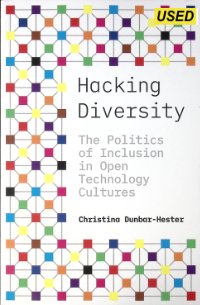
Hacking Diversity: The Politics of Inclusion in Open Technology Cu!tures

Christina Dunbar-Hester

"Hacking Diversity: The Politics of Inclusion in Open Technology Cultures" delves into the complex dynamics of diversity within the realm of open technology. The book critically examines the challenges and opportunities surrounding inclusivity, offering insights into how diversity can be effectively navigated and embraced in these fast-paced, innovation-driven environments. Through a blend of research, analysis, and real-world case studies, this book serves as a valuable resource for individuals and organizations seeking to cultivate more diverse and inclusive open technology cultures.

PRINCETON. PRINCETON UNIVERSITY PRESS. 2020. 283p.