Open Access Publisher and Free Library
SOCIAL SCIENCES.jpeg

SOCIAL SCIENCES

Social sciences examine human behavior, social structures, and interactions in various settings. Fields such as sociology, psychology, anthropology, and economics study social relationships, cultural norms, and institutions. By using different research methods, social scientists seek to understand community dynamics, the effects of policies, and factors driving social change. This field is important for tackling current issues, guiding public discussions, and developing strategies for social progress and innovation.

Posts tagged brazil politics
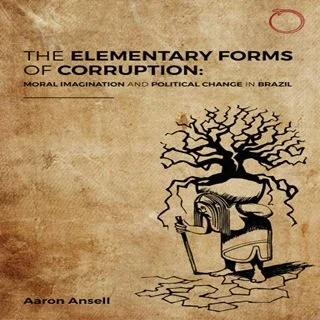
The Elementary Forms of Corruption: Moral Imagination and Political Change in Brazil

By Aaron Ansell

Seeks to better understand the nature of corruption through a case study of a rural Brazilian community’s response to the country’s political fraud. The Elementary Forms of Corruption is an ethnographic history of rural Brazilians’ shifting moral imagination in the context of their country’s recent corruption scandals and political crises. The book explores how Brazil’s cosmopolitan models of corruption, both left-wing and right-wing varieties, found their way to a small sertanejo (hinterland) municipality in the northeast, where people understood corruption very differently. Reckoning with both the leftist Workers’ Party, which sought to liberate sertanejos from patron-client relations, and the New Right populists who sought to stamp out the “communists” threatening the patriarchal family, the people of the sertanejo made recourse to older ideas about corruption—such as the betrayal of kinship obligations and communal trust—to decipher and shape national politics. Challenging the discipline’s current aversion to generalizable, analytic categories that are useful for comparison across cultures or historical periods, The Elementary Forms of Corruption posits a general framework for understanding corruption at its most elementary level: the degradation of a moral gradient through the transgressive rechanneling of those currencies (e.g., gifts, favors) that sustain communal bonds when properly directed.

Chicago: HAU Books, 2025.

download
The Digitalisation of Anti-Corruption in Brazil: Scandals, Reforms, and Innovation

By Fernanda Otilla

This book investigates how digital technologies, such as social media and artificial intelligence, can contribute to combatting corruption in Brazil. Brazil, with its long history of scandals and abundant empirical data on digital media usage, serves as a perfect case study to trace the development of bottom-up and top-down digital anti-corruption technologies and their main features. This book highlights the connections between anti-corruption reforms and the rapid implementation of innovative solutions, primarily developed by tech-savvy public officials and citizens committed to anti-corruption efforts. The book draws on interviews with experts, activists and civil servants, as well as open-source materials and social media data to identify key actors, their practices, challenges and limitations of anti-corruption technologies. The result is a thorough analysis of the process of digitalisation of anti-corruption in Brazil, with a theoretical framework which can also be applied to other countries. The book introduces the concept of “integrity techies” to encompass social and political actors who develop and facilitate anti-corruption technologies, and discusses different outcomes and issues associated with digital innovation in anti-corruption. This book will be a key resource for students, researchers and practitioners interested in technologies and development in Brazil and Latin America, as well as corruption and anti-corruption studies more broadly.

Oxford, UK: Routledge, 2025. 152p

download