Open Access Publisher and Free Library
SOCIAL SCIENCES.jpeg

SOCIAL SCIENCES

Social sciences examine human behavior, social structures, and interactions in various settings. Fields such as sociology, psychology, anthropology, and economics study social relationships, cultural norms, and institutions. By using different research methods, social scientists seek to understand community dynamics, the effects of policies, and factors driving social change. This field is important for tackling current issues, guiding public discussions, and developing strategies for social progress and innovation.

Posts in social sciences
Reconciling Impact and Ethics: An Ethnography of Research in Violence Online Political Extremism

By  Dounia Mahlouly

Gathering empirical evidence from interviews and focus groups, this study highlights some of the ethical dilemmas faced by the academic community tasked with developing new methodological tools and conceptual frameworks for the study of violent online political extremism. At the same time, it examines how academics position themselves in relation to a broad range of non-academic stakeholders involved in the public debate about where violent extremism, terrorism and the Internet intersect. It argues that these external actors are introducing a multisectoral ‘market’ for research on online violent extremism, which creates both opportunities and limitations for the academic community. Finally, it analyses how academics from across a range of disciplines will be able to secure access to data and competitive research tools, while also engaging in a critical reflection about the ethical considerations at stake.

Dublin: VOX-Pol Network of Excellence, Dublin City University, 2019. 35p.

download
How Extreme Is The European Far Right? Investigating Overlaps n the German Far-Right Scene on Twitter

By Reem Ahmed and Daniela Pisoiu

Violent right-wing extremism is a growing threat to Western liberal democracies. At the same time, radical right-wing populist parties and figures across Europe are succeeding electorally by way of increased representation in national parliaments. These gains have been achieved against a backdrop of anti-refugee sentiment, austerity, and disillusionment with the European project, with populists on the left and right promising to deliver an alternative and using effective slogans and ‘people’ politics. Ordinarily, we differentiate between the extreme right and radical right: the former posing a threat to the democratic system with their fascist links and overt racism; the latter respecting the democratic system whilst offering a ‘sanitised’ version of far-right politics – namely, adopting a ‘new master frame’ that emphasises culture rather than race. Recent analyses of the far right, however, have indicated social and discursive overlaps between the ‘extreme’ and ‘radical’ right-wing parties and groups. The findings reported herein challenge this traditional separation within the far-right spectrum, and potentially have deeper theoretical and methodological implications for how we study the far right. The Internet adds another dimension to this threat, as far-right discourse becomes more visible on social media and messaging applications, potentially attracting more people to the cause as well as mainstreaming and legitimising particular narratives prominent in the scene.

  • Existing literature has specifically examined the online sphere, and social media in particular, and these scholars have communicated interesting findings on how the social networks and discourses overlap, for example identifying the co-occurrences of certain hashtags or analysing retweets and transnational cooperation. The aim of this report is to determine the overlaps apparent in the far-right scene on Twitter, and specifically, to ascertain the extent to which different groups on the scene are indeed talking about the  same issues in the same way, in spite of apparent differences in tone and underlying ideologies. We utilise a mixed-methods approach: first, gaining a cursory insight into the extreme right-wing scene on Twitter across Europe; and then applying a detailed frame analysis to three selected groups in Germany to determine the implicit and explicit overlaps between them, thus complementing the quantitative findings to offer an in-depth analysis of meaning.   

Dublin: VOX-Pol Network of Excellence, Dublin City University, 2019  209p.

download
Violent Extremism, Organised Crime and Local Conflicts in Liptako-Gourma

By William Assanvo, Baba Dakono, Lori-Anne Théroux-Bénoni and Ibrahim Maïga  

This report analyses the links between violent extremism, illicit activities and local conflicts in the Liptako-Gourma region. Addressing regional instability in the long term requires empirical data that helps explain the local dynamics that fuel insecurity. This is the first of two reports, and is based on interviews conducted in Burkina Faso, Mali and Niger. The second report assesses the measures aimed at bringing stability to the region.

Pretoria, South Africa: Institute for Security Studies, 2019. 24p.

download
Racial Disparities and COVID-19

By Len Engel, Joanna Abaroa-Ellison, Erin Jemison, and Khalil Cumberbatch

People of color in the United States, especially poor people of color, are disproportionately affected by crime, the criminal justice system, and COVID-19. More than seven months into the pandemic, data remains scarce. COVID-19 – in its impact as well as in approaches to try to curb its spread – has exposed and may have exacerbated existing racial imbalances in the criminal justice and healthcare systems. This report reviews racial disparities in health and criminal justice outcomes and explores, as well as possible, how those same disparities have been affected by the COVID-19 pandemic. It also highlights the need for clear, consistent data regarding the impacts of COVID-19 on justice populations in order to inform decisions about how to address racial disparities during and after this health crisis.

Washington, DC: Council on Criminal Justice, 2020. `1p. 

download
Pandemic and Human Security: The Impact of COVID-19 on communities in Medellín and proposals to address it

By Alexandra Abello Colak (and others)

More than a year on from the declaration of the pandemic in Colombia, COVID-19 has claimed more than 100,000 lives. Of these, 12.9% have been recorded in Antioquia1, the department with the second highest number of confirmed cases, and more than 5,000 people have died in its capital, Medellín, the second largest city in the country. But while the loss of life is one of the most horrific direct consequences of the pandemic, it is certainly not the only one. The global health crisis and the measures implemented to contain the spread of the virus have had profound economic, social and institutional impacts which need to be analysed in each context in order to understand the magnitude of the challenge that an appropriate, proportionate response to the pandemic in each city supposes. This report examines the impacts of the COVID-19 pandemic on some of the most populated and most vulnerable communities in Medellín. Monitoring conducted between April 2020 and February 20212 provides the basis for a contextualised analysis of what, to date, the pandemic has meant for broad sectors of the population. On the strength of this analysis, we argue that the public health crisis caused by COVID-19 has not only deepened and exacerbated historical problems which affect the lives and well-being of people; it has also led to a progressive and generalised surge in human insecurity in the city, which calls for a concerted, comprehensive, multidimensional, participatory strategy which acknowledges the differential impacts that the pandemic has had on different groups and can help mitigate the rise in threats and risks to human security.  

London: London School of Economics, 2021. 39p.

download
Left Out and Locked Down: Impacts of COVID-19 for marginalised groups in Scotland

By Sarah Armstrong and Lucy Pickering

This study was funded by the Chief Scientist Office, Scottish Government, as part of its Rapid Research in Covid-19 Programme and was conducted between July and December 2020. The study was completed by a team of researchers at the University of Glasgow and supported by 20 partners from the third sector. The research focused on the impact of Covid-19 restrictions (‘lockdown’) for four groups already experiencing exclusion, isolation and marginalisation: people having a disability or long-term health condition (DHC); People involved in criminal justice (CJS); Refugees and people seeking asylum who were at risk of destitution (RAD); People surviving domestic abuse or sexual violence (DASV). As a rapid research project, the study aims to understand and report on the impacts of Covid-19 restrictions as they are happening, in order to contribute to better responses to it; the analysis presented may be further developed and modified. It has been recognised that social research is needed alongside medical and health research to understand the effects of this pandemic on individual and collective wellbeing. Already evidence has established that social inequalities are shaping Covid-19 risk and impact, but the evidence base is not yet well-established for Scotland.  

Glasgow: University of Glasgow, 2020. 167p.

download
Skin for Skin: Death and Life for Inuit and Innu

By Gerald Sider

Since the 1960s, the Native peoples of northeastern Canada, both Inuit and Innu, have experienced epidemics of substance abuse, domestic violence, and youth suicide. Seeking to understand these transformations in the capacities of Native communities to resist cultural, economic, and political domination, Gerald M. Sider offers an ethnographic analysis of aboriginal Canadians' changing experiences of historical violence. He relates acts of communal self-destruction to colonial and postcolonial policies and practices, as well as to the end of the fur and sealskin trades. Autonomy and dignity within Native communities have eroded as individuals have been deprived of their livelihoods and treated by the state and corporations as if they were disposable. Yet Native peoples' possession of valuable resources provides them with some income and power to negotiate with state and business interests. 

Durham, NC: Duke University Press, 2014. 309p.

download
The Religion of White Rage: Religious Fervor, White Workers and the Myth of Black Racial Progress

Edited by Stephen C. Finley, Biko Mandela Gray, and Lori Latrice Martin

Critically analyses the historical, cultural and political dimensions of white religious rage in America, past and present

  • Argues that religion and race – not economics – are the primary motivating factors for the rise of white rage and white supremacist sentiment in the USA

  • Makes key interventions in labour studies and American religious studies

  • Examines the mythological and sociological construct of the 'white labourer'

  • Uncovers the sociological and religious origins of white anxiety

  • Uses the perspectives of theory and method in religious studies, affect studies and critical whiteness studies

  • Shows that white rage is a phenomenon that moves in and through the institutional legitimation of certain forms of white expression and engagement, both 'liberal' and 'conservative'

This book sheds light on the phenomenon of white rage, and maps out the uneasy relationship between white anxiety, religious fervour, American identity and perceived black racial progress. Contributors to the volume examine the sociological construct of the 'white labourer', whose concerns and beliefs can be understood as religious in foundation. They uncover that white religious fervor correlates to notions of perceived white loss and perceived black progress.

Edinburgh: Edinburgh University Press, 2020. 360p.

download
Race and Wrongful Convictions in the United States 2022

By Samuel R. Gross, Maurice Possley, Ken Otterbourg, Klara Stephens, Jessica Paredes and Barbara O'Brien

Black people are 13.6% of the American population but 53% of the 3,200 exonerations listed in the National Registry of Exonerations as of August, 2022. Judging from exonerations, innocent Black Americans are seven times more likely than white Americans to be falsely convicted of serious crimes. We see this racial disparity, in varying degrees, for all major crime categories except white collar crime. This report examines racial disparities in the three types of crime that produce the largest numbers of exonerations: murder, sexual assault, and drug crimes. For both murder and sexual assault, there are preliminary investigative issues that increase the number of innocent Black suspects: for murder, the high homicide rate in the Black community; for rape, the difficulty of cross-racial eyewitness identification. For both crimes, misconduct, discrimination and racism amplify these initial racial discrepancies. For drug crimes, the preliminary sorting that increases the number of convictions of innocent Black suspects is racial profiling. In addition, the Registry lists 17 “Group Exonerations” including 2,975 additional wrongfully convicted defendants, many of whom were deliberately framed and convicted of fabricated drug crimes in large-scale police scandals. The overwhelming majority are Black.

Irvine, CA: National Registry of Exonerations , 2022. 55p.

download
The Study of Violent Crime: Its Correlates and Concerns

By Scott Mire and Cliff Roberson

Violence is a complex subject that is rooted in a multitude of disciplines, including not only criminology but also psychology, sociology, biology, and other social science disciplines. It is only through understanding violence as a concept that we can hope to respond to it appropriately and to prevent it. The Study of Violent Crime: Its Correlates and Concerns is a comprehensive text that provides a current analysis of violence and violent crime in the United States.

Boca Raton; New York: London: CRC Press, 2010. 244p.

download
Begging, Charity and Religion in Pre-Famine Ireland

By Ciarán McCabe

Beggars and begging were ubiquitous features of pre-Famine Irish society, yet have gone largely unexamined by historians. This book explores at length for the first time the complex cultures of mendicancy, as well as how wider societal perceptions of and responses to begging were framed by social class, gender and religion. The study breaks new ground in exploring the challenges inherent in defining and measuring begging and alms-giving in pre-Famine Ireland, as well as the disparate ways in which mendicants were perceived by contemporaries. A discussion of the evolving role of parish vestries in the life of pre-Famine communities facilitates an examination of corporate responses to beggary, while a comprehensive analysis of the mendicity society movement, which flourished throughout Ireland in the three decades following 1815, highlights the significance of charitable societies and associational culture in responding to the perceived threat of mendicancy. The instance of the mendicity societies illustrates the extent to which Irish commentators and social reformers were influenced by prevailing theories and practices in the transatlantic world regarding the management of the poor and deviant. Drawing on a wide range of sources previously unused for the study of poverty and welfare, this book makes an important contribution to modern Irish social and ecclesiastical history.

Liverpool: Liverpool University Press, 2018. 320p.

download
Social Theory of Fear: Terror, Torture, and Death in a Post-Capitalist World

By Geoffrey R. Skoll

Fear has long served elites. They rely on fear to keep and expand their privileges and control the masses. In the current crisis of the capitalist world system, elites in the United States, along with other central countries, promote fear of crime and terrorism. They shaped these fears so that people looked to authorities for security, which permitted extension of apparatuses of coercion like police and military forces. In the face of growing oppression, rebellion against elite hegemony remains possible. This book offers an analysis of the crisis and strategies for rebellion.

New York: Houndmills, Basingstoke, Hampshire: Palgrave Macmillan, 2010.  247p.

download
Race and America's Immigrant Press: How the Slovaks were Taught to Think Like White People

By Robert M. Zecker

Race was all over the immigrant newspaper week after week. As early as the 1890s the papers of the largest Slovak fraternal societies covered lynchings in the South. While somewhat sympathetic, these articles nevertheless enabled immigrants to distance themselves from the "blackness" of victims, and became part of a strategy of asserting newcomers' tentative claims to "whiteness." Southern and eastern European immigrants began to think of themselves as white people. They asserted their place in the U.S. and demanded the right to be regarded as "Caucasians," with all the privileges that accompanied this designation. Immigrant newspapers offered a stunning array of lynching accounts, poems and cartoons mocking blacks, and paeans to America's imperial adventures in the Caribbean and Asia. Immigrants themselves had a far greater role to play in their own racial identity formation than has so far been acknowledged.

New York; London: Bloomsbury Academic, 2011. 360p.

download
Cast Out: Vagrancy and Homelessness in Global and Historical Perspective

Edited by A. L. Beier and Paul Ocobock

Throughout history, those arrested for vagrancy have generally been poor men and women, often young, able-bodied, unemployed, and homeless. Most histories of vagrancy have focused on the European and American experiences. This is the first book to consider global laws, homelessness, and the historical processes they accompanied. Vagrancy and homelessness are used to examine the migration of labor, social and governmental responses, poverty through charity, welfare, and prosecution. Cast Out includes discussions of the lives of the underclass, strategies for surviving and escaping poverty, the criminalization of poverty by the state, the rise of welfare and development programs, the relationship between imperial powers and colonized peoples, and the struggle to achieve independence after colonial rule.

Athens, OH: Ohio University Press, 2008. 409p.

download
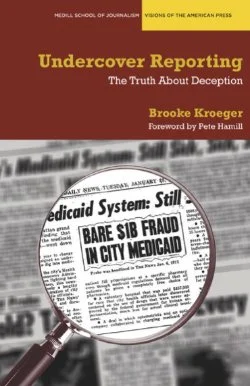
Undercover Reporting: The Truth About Deception

By Brooke Kroeger

In her provocative book, Brooke Kroeger argues for a reconsideration of the place of oft-maligned journalistic practices. While it may seem paradoxical, much of the valuable journalism in the past century and a half has emerged from undercover investigations that employed subterfuge or deception to expose wrong. Kroeger asserts that undercover work is not a separate world, but rather it embodies a central discipline of good reporting—the ability to extract significant information or to create indelible, real-time descriptions of hard-to-penetrate institutions or social situations that deserve the public’s attention. Together with a companion website that gathers some of the best investigative work of the past century, Undercover Reporting serves as a rallying call for an endangered aspect of the journalistic endeavor.

Evanston, IL: Northwestern University Press. 2012. 518p.

download
All in the Game: The Wire; un campo di ricerca sociologica

Edited by Marco Castrignanò, Carolina Mudan Marelli and Teresa Carlone

Analyzing with an ethnographic approach The Wire, one of the most important TV series on American ghettos, to understand and question the sociological perspective that emerges from the series, positioning it into the broader scientific debate. This is, in a nutshell, the work presented in the book It's all in the Game, the outcome of a laboratorial research activity carried out in 2020 by students and teachers of the Sociology of Communities and Urban Neighborhoods class, at the University of Bologna. The text is structured into four chapters, resulting from the four topics used to analysis the TV series: forms of social capital, the relationship between structural forces- culture of poverty and individual agency, neighborhood effects mechanism and the relationship between statistics and political action. Four subjects that are the core of many neighborhood- studies related researches and on which the TV series makes a clear stand. We analyzed those topics through a critical perspective, not considering them as a truth about ghettos, but as a very precise way of thinking about life in the American suburbs.

Milan: FrancoAngeli, 2022. 158p.

download
Violent Times Rising Resistance: An Interdisciplinary Gender Perspective

Edited by Dominique Grisard, Annelise Erismann, Janine Dahinden

Violence is a persistent element of modern history and it always has been gendered. Today’s violent times have politicized and mobilized new publics, generated creative forms of resistance, incited the most unlikely coalitions, and emboldened to live life differently. The systemic use of rape as a strategy in war fare, nationalism, and settler colonialism, the persistency of intimate partner violence, and the increasingly open racist, sexist, transphobic, and homophobic discrimination are just a few examples of violence’s omnipresent gender dimension. The contributions of this volume analyse violence and multiple forms of resistance from an interdisciplinary gender perspective. They show that violence is not just a central and powerful structuring principle of gender, sexuality, ethnicity, race, and class, but that it is also part of the fabric of nation states and structures all social relations. In addition, the contributions depict manifold strategies and tactics of confronting gendered violence.

Zurich: Swiss National Science Foundation (SNSF), 2022. 155p.

download
Vox: The Revival of the Far Right in Spain

By Jason Xidias 

In the past two years, Spain’s far-right party Vox has gone from no representation in the Spanish parliament to 52 seats, making it the third most representative political force nationally behind the People’s Party (PP) and the Socialist Party (PSOE). This has radically transformed Spanish politics, leading to a level of polarization not seen since the Spanish Second Republic (1931-9). Until Vox’s recent electoral success, Spain was considered immune to the far right because of its Francoist past and relatively favorable attitude toward globalization, the EU, and immigration. However, as this article shows, Franco has never completely gone away—Vox is both a modernized version of Spain’s ultraconservative past and a condition and manifestation of international neoliberal and authoritarian trends. The article analyzes Vox’s ideological roots, emergence, political program, voter base, and influence in Spanish politics in relation to key events—notably the Great Recession, the success of far-left party Podemos, corruption scandals in mainstream politics, and Catalonia’s pursuit of independence—and speculates about the party’s future against the backdrop of COVID-19.   

 London, UK: Centre for Analysis of the Radical Right, 2020. 23p.

download
From Franco to Vox: Historical Memory and the Far Right in Spain

By Jason Xidias

While 85 years have now passed since the end of the Spanish Civil War, and 46 since the end of the Franco Dictatorship, historical memory continues to be a great source of political and social tension in Spain today. In comparison to nations such as Germany and Greece, the country remains an outlier insofar as it transitioned to democracy without ever achieving legal justice. This is due to deeply-embedded myths of reconciliation and equal accountability created and maintained by the ruling class, the royal family, the education system, the judiciary, and the mainstream media. Since the 1990s, the Socialist Party, motivated by political opportunism and pressure from the far left, regional parties, and domestic and international human rights organizations, has fractured “the pact of forgetting”; however, as the article argues, its own ideological shortcomings and institutional constraints have prevented a full rupture. As such, while the newly-proposed Law of Democratic Memory, which the current leftist coalition government (PSOE-Unidas Podemos) foresees passing this year, does represent significant progress, the Socialist Party’s own limitations prevent justice—in the form of an independent truth commission and the prosecution of Francoist crimes—and contribute to promoting a cultural of impunity, which is one of Spain’s principal deficiencies in terms of democracy.

 London, UK: Centre for Analysis of the Radical Right, 2021. 29p

download
Identifying and Exploiting the Weaknesses of the White Supremacist Movement

By Daniel L. Byman and Mark Pitcavage

White supremacists have been a leading source of terrorist violence in the United States in the last decade, responsible for 40 plots or attacks from 2011 to 2020. We argue that the threat is dangerous but also that the white supremacist movement as a whole has many weaknesses, some of which can be exploited. In contrast to jihadist groups like al-Qaida at its peak, American white supremacists lack a haven from which to operate; their international ties are also weaker than those of jihadist organizations. The white supremacist movement is also highly divided, and members disagree as to who their primary enemies are and how they should attack them. In addition, they enjoy little public support, and their violence usually backfires, making the movement less popular. Overall, the movement’s capabilities are low, unable to match its grandiose ambitions. These weaknesses hinder recruitment and operations, make movement members vulnerable to prosecution and disruption, and otherwise limit their strength. Many of these weaknesses stem from existing counterterrorism and civil society pressure; continued and at times increased efforts by government, technology companies, and civil society officials is vital. Political leaders of both parties must also consistently condemn white supremacy, ensuring that the movement remains marginalized.  

Washington, DC: Foreign Policy at Brookings, 2021. 12p.

download