Open Access Publisher and Free Library
HUMAN RIGHTS.jpeg

HUMAN RIGHTS

Human Rights-Migration-Trafficking-Slavery-History-Memoirs-Philosophy

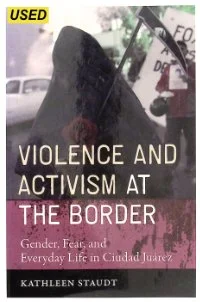
Violence and Activism at the Border : Gender, Feat, and Everyday Life in Ciudad Juárez

By Kathleen Staudt

Focus on Violence and Activism: The book examines violence against women in Ciudad Juarez, highlighting the gruesome murders and the activism that arose in response.

Gender and Fear: It explores the impact of gender and fear on everyday life in the border city, emphasizing the role of cultural and institutional factors.

Research and Activism: The author combines research with activism, detailing workshops and community efforts to address and prevent violence.

Government and Institutional Responses: The book critiques theresponses of government and institutions to violence against women, comparing the situations in the U.S. and Mexico.

University of Texas Press, 2008, 184 pages

read
Strategies of Slaves & Women : Life-Stories from East/Central Africa

By Marcia Wright

This book explores life stories from East/Central Africa, focusing on the experiences of ex-slaves and women, their strategies during times of peril, and their consciousness and changing circumstances before World War I. It is divided into two parts, with the first part titled "Women in Peril" featuring narratives of individual women, and the second part "History at the Turn"providing essays that contextualize the narratives within broader historical settings. The work reflects interdisciplinary research, drawing from feminism, African social history, and studies on slavery, aiming to uncover the history of women and slaves in Africa's internal and external history. It also discusses the challenges of interpreting personal narratives within historical contexts. Finally, the book highlights the need for further research and interdisciplinary exchange to deepen the understanding of the subject matter.

Lilian Barber Press, 1993, 238 pages

read
Slavery and the Politics of Liberation 1787-1861

By Johnson U. J. Asiegbu

British Anti-Slavery Policy: The book explores the development ofBritish anti-slavery policy from 1787 to 1861, focusing on the SierraLeone settlement and the emigration of liberated Africans.

Emigration Challenges: It discusses the challenges and controversies surrounding the 'voluntary' emigration of liberated Africans under government control.

Labour Recruitment: The book examines the techniques used for labor recruitment, including the role of the Coastal Squadron and Vice-Admiralty Courts

Historical Context: It provides a detailed historical context, referencing various primary sources and documents related to the British anti-slavery movement and liberated African emigration

Africana Publishing Corporation, 1969, 231 pages

read
Slavers in Paradise : The Peruvian Slave Trade in Polynesia, 1862-1864

By H. E. Maude

Peruvian Slave Trade: The document details the Peruvian slave raids inPolynesia during 1862-1864, highlighting the impact on various island communities

Routes and Voyages: It describes the main routes taken by ships from Callao, Peru, to different Polynesian islands, including the Northern, Southern, and Central routes.

Polynesian Experience: The narrative includes personal accounts and the experiences of Polynesian islanders who were kidnapped or deceived into servitude.

Historical Context: The document provides a broader historical context, linking the events to the wider history of Pacific and Latin American interactions.

Stanford University Press, 1981, 244 pages

read
Sinews of Empire : A Short History of British Slavery

By Michael Craton

British Slave Trade: The British slave trade evolved from state-granted monopolies to free trade, with significant state involvement throughout.

African Companies: Various companies, such as the Company of Adventurers and the Royal African Company, played key roles in the trade, facing challenges from interlopers and European rivals.

Trade Goods: The trade involved a variety of goods, including textiles, metals, and liquor, which were exchanged for slaves.

Impact on Africa: The slave trade had profound effects on West African societies, including demographic changes and increased warfare.

Anchor Press, 1974, 413 pages

read
The Art of Riot in England and America

By Ronald Paulson

Art and Riot: The book explores the relationship between art and riot, using James Ensor's painting "The Entry of Christ into Brussels in 1889"as a model for the art of riot

Historical Context: It delves into various historical riots in England andAmerica, including the Gordon Riots and the Peterloo Massacre, and their representations in art and literature.

Literary Analysis: The book examines how riots are depicted in literature, with examples from authors like Charles Dickens, Charlotte Bronte, and John Steinbeck.

Theoretical Perspectives: It discusses the aesthetics and politics of riot, including the role of spectators and the concept of the sublime in the representation of riots.

Owlworks, 2010, 176 pages

read
Battling Terrorism in the Horn of Africa

Edited by Robert I. Rotberg

Regional Focus: The book examines governance and terrorism in theHorn of Africa and Yemen, including countries like Djibouti, Eritrea,Ethiopia, Kenya, Somalia, Sudan, and Yemen.

Terrorism Threat: It discusses thetransnational threat of terrorisminthe region, highlighting the activities of groups like Al Qaeda and theneed for coordinated efforts to combat them.

Governance Issues: The document emphasizes the importance of good governance and political stability in reducing terrorism, suggesting that improved governance can help mitigate the threat.

U.S. Engagement: There are suggestions for more effective U.S.engagement in the region, including diplomatic, intelligence, and military initiatives to support local governments in their fight against terrorism.

World Peace Foundation Brookings Institution Press, 2005, 210 pages

read
Democracy and America's War on Terror

By Robert L. Ivie

Central Theme: The book critiques the rhetoric surrounding America'swar on terror, focusing on the intersection ofdemocracy, fear, andwar.

Historical Context: It draws parallels between the rhetoric used during the Vietnam War and the post-9/11 era.

Rhetorical Analysis: The author examines how democratic ideals are used to justify war and how rhetoric shapes public perception.

References: The book includes numerous references to previous works and lectures by the author, providing a comprehensive background on the topic.

University of Alabama Press, 2005, 251 pages

read
Global Justice

Edited by Ian Shapiro & Lea Brilmayer

Globalization and Justice: The document discusses the impact of globalization on justice, highlighting that globalization has not significantly promoted justice, especially in terms of wealth redistribution.

Cosmopolitanism vs. Nationalism: It explores the debate between cosmopolitanism, which emphasizes individual well-being and global redistribution, and nationalism, which focuses on the autonomy and interests of nation-states.

Special Responsibilities: The text examines the tension between general responsibilities to humanity and special responsibilities to specific groups, suggesting that balancing these is crucial for global justice.

Philosophical Perspectives: Various philosophical arguments are presented, including those by Brian Barry, Debra Satz, and Samuel Scheffler, each offering different views on global justice and the role ofnation-states.

NYU Press, 1999, 122 pages

read
God's Assassins State Terrorism In Argentina in the 1970S

By Patricia Marchak

State Terrorism in Argentina: The book explores the period of state terrorism in Argentina from 1976 to 1983, where an estimated 30,000 people disappeared, many were imprisoned illegally, and thousands went into exile.

Historical Context: It delves into the historical origins of violence in Argentina, including the rise of guerrilla organizations and the military's response, leading to widespread fear and repression.

Personal Accounts: The book includes autobiographical accounts from various individuals, providing a rich understanding of the conditions and experiences during the period of state terrorism.

Methodology: The authors used interviews and historical records toconstruct an explanation of why and how state terrorism occurred in Argentina, focusing on the experiences and perceptions of those wholived through it.

McGill-Queen's Press, 1999, 393 pages

read
Just War Against Terror

By Jean Bethke Elshtain

Just War Theory: The book explores the concept of a just war, particularly in the context of the War on Terror, and questions whether the war against terrorism can be considered just.

Critique of Humanism: The author critiques the naivety of "humanists" who believe in endless negotiation and fail to recognize the existence of evil.

American Responsibility: The book discusses America's role and responsibility in the world, emphasizing the need to defend its principles of freedom and democracy.

Misdescription of Terrorism: The author argues against them is description of terrorism and stresses the importance of accurately describing events to maintain moral clarity.

Basic Books, Aug 4, 2004, 240 pages

read
Liverpool, the African Slave Trade, and Abolition

Edited by Roger Anstey and P.E.H.Hair

Historical Context: The document explores the history of the Atlantic slave trade, focusing on Liverpool's significant role in the trade duringthe 18th century.

Economic Impact: It discusses the economic organization of the slavetrade, including the goods exchanged and the profits made bymerchants.

Abolition Movement: The document highlights the efforts and debates surrounding the abolition of the British slave trade, particularly the role of Liverpool abolitionists.

Research and Sources: It emphasizes the importance of historical records and recent research in understanding the complexities of the slave trade and its abolition.

Cambridge University Press ,1977 , 244 pages

read
Sporting Events, the Trafficking of Women for Sexual Exploitation and Human Rights

By Jayne Caudwell

This chapter explores the possibilities of applying a human rights framework to sexual exploitation, sex work and sporting events. Human rights perspectives are emerging as useful ways to interrogate a range of global social injustices. However, defining sexual exploitation is not straightforward. First, I focus on how sexual exploitation and sex work are understood within human rights instruments. Second, I provide a vivid illustration of the trafficking of women for sexual exploitation. Through this case study, I demonstrate the conditions and mechanisms of supply of, and demand for, women for sexual exploitation. Finally, I return to the existing sport-related literature to elucidate the state of current knowledge of sexual exploitation, sex work and international sporting events. In doing so, I highlight the potential of adopting a human rights framework for future feminist research.

In: The Palgrave Handbook of Feminism and Sport, Leisure and Physical Education. 2017. Pp.537-556.

download
Undercurrents: Blue Crime on the Danube

By Walter Kemp and Ruggero Scaturro

  The Danube is Europe’s second longest river, flowing through 10 countries between Germany and Ukraine, from the Black Forest to the Black Sea. Throughout history, it has been the belt of Mitteleuropa, linking the countries of western, central and eastern Europe. The Danube took on new strategic importance after Russia’s full-scale invasion of Ukraine in February 2022. Danube ports in Romania, Moldova and Ukraine became a lifeline for the trans-shipment of key exports such as grain and fertilizers. Major investment in the infrastructure of ports (such as cranes and warehouses) was made during this period to support increased trade flows. However, experience shows that a rapid increase in licit activity without corresponding improvements in security can increase the risks of illicit activity. Nevertheless, the Danube’s vulnerability to organized crime has received little attention from policymakers or researchers. This may be for good reason: evidence of the risk is scarce. The last organized crime threat assessment (carried out by Europol) dates from 2011. There have been few seizures of contraband along the Danube in the past decade and, although a 2022 Global Initiative Against Transnational Organized Crime (GI-TOC) report on trafficking through ports in south-eastern Europe1 flagged isolated cases of organized crime on the Danube, these fell outside the scope of that study. Is the current lack of reported criminal activity an indication of a low-risk inland waterway, or is it a reflection of limited attention and resources? After all, as the saying goes, ‘you do not find what you do not seek’. The GI-TOC, which has been monitoring the impact of the war in Ukraine on illicit economies, is well positioned to investigate this question. In September 2023, the United Kingdom commissioned this study to examine the vulnerability of the Danube to trafficking. One of the main findings of this report is a concerning lack of law enforcement cooperation among the Danube riparian states even though most of them are co-members or partners of the European Union. This study found little evidence of trafficking on the river, due in part to a lack of data on seizures, which points to a potential security gap. However, it did discover several vulnerabilities that create a permissive environment for different kinds of illicit activity on some sections of the river. Furthermore, the increased relevance of Danube ports – particularly in Romania, Moldova and Ukraine – because of Russia’s aggression against Ukraine creates new opportunities and relevance for the river but also new challenges, including a heightened risk of organized crime. As a result, part of this report is devoted to assessing the potential risk of organized crime in the tri-border region along the lower Danube. The report concludes with a number of recommendations to reduce vulnerabilities to illicit flows of fuel, cigarettes, smuggling of migrants and other forms of organized crime along the river, and to improve cooperation between law enforcement bodies in different countries.

Geneva, SWIT: The Global Initiative Against Transnational Organized Crime, 2024.2024. 40p  

Download
Read-Me.Org
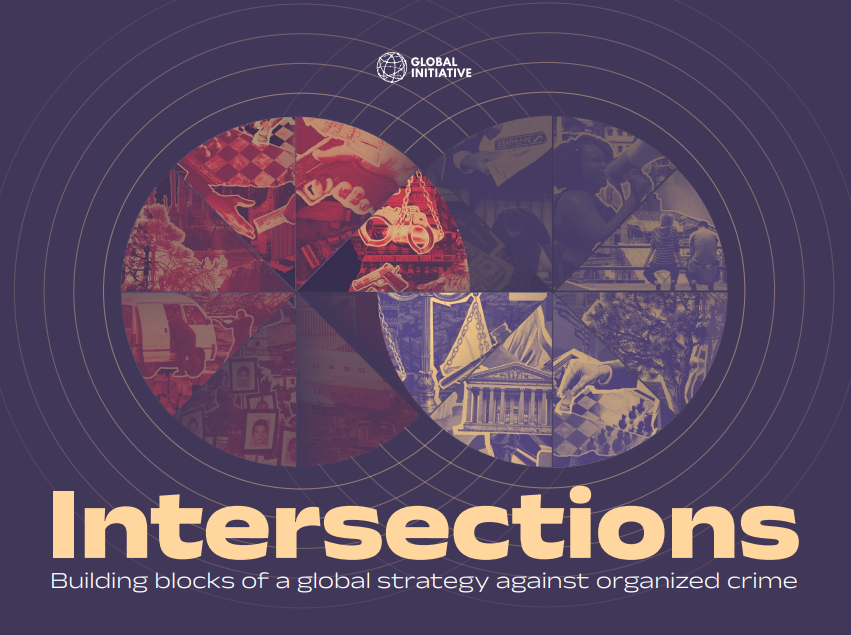
Intersections: Building blocks of a global strategy against organized crime

By The Global Initiative Against Transnational Organized Crime

  Organized crime has become a threat to international peace and security . It harms so many fundamental aspects of our lives – from governance to the environment and from health and safety to our online activities . As demonstrated by the Global Organized Crime Index 2023, more than 80 per cent of the world’s population live in countries with high levels of criminality, and the problem is getting worse, as the figure below shows. Indeed, over the past few decades the geographical reach, diversity of markets and impact of illicit economies have increased dramatically . Organized crime is manifesting itself in places and ways never seen before . And the omens for the future are menacing.

Currently, there is no global strategy against organized crime. To reduce the harm to our communities and future generations, this needs to change.

Organized crime should not be looked at as an isolated phenomenon. It intersects with global megatrends as well as violent conflict and terrorism. It thrives in a blurry ‘mezzosphere’ – that often ignored zone at the intersection between the criminal underworld and the upperworlds of business and politics.

Since organized crime operates within an ecosystem, it is important to use systems thinking to analyze it and to identify pressure points to disrupt it. It is vital to change the conditions in which illicit economies operate, rather than just pursue criminal actors. Therefore, in addition to changing market forces and drying up the pool of potential offenders it is important to change attitudes and behaviours.

This report builds on the successes – and failures – of past interventions aimed at countering organized crime and reducing its negative impacts on communities and states. Much that is in the report may not be new to some readers, but what is new is the intersections it seeks to highlight in the responses to organized crime. Additionally, the report seeks to open up the debate, so that voices of other stakeholders – civil society, law enforcement, local communities and the private sector – are also included to work together to counter and strengthen resilience to organized crime.    

Geneva, SWIT: The Global Initiative Against Transnational Organized Crime, 2024. 102p.

Download
Read-Me.Org
“ Beyond the Battlefields: Practical Strategies to Halving Global Violence in our Homes, Streets, and Communities,”

By  The Halving Global Violence (HGV) Task Force

  Violence is a universal challenge. Although commonly associated with conflict zones or marginalized sectors of society, violence is present in all regions, and its effects impact people of all demographics. 80 to 90% of all violence happens outside of armed conflicts, and has a direct impact on the daily lives of people around the world. Communities everywhere expect their leaders—local, national, and international—to reduce violence and create conditions for peaceful co-existence. Too often, however, these leaders fail to deliver on the promise of creating peaceful societies. Violence impacts people in a variety of ways and poses a challenge to development goals in communities worldwide. It is not only an issue of men killing men. For each homicide, there are thousands of instances of assault; up to 1 billion children will experience violence in their lives, and one third of all women will suffer violence at the hands of an intimate partner. In fact, by some estimates, the share of women who are victims of intimate partner violence (IPV) is higher than the share of the total population that is a victim of assault or homicides. In addition to the loss of human lives and physical suffering, violence manifests itself by making people feel unsafe in their homes, fearful on their streets, vigilant in schools and public spaces, and unable to access markets, the workforce, economic development opportunities, or social services and healthcare:The impacts of violent crime and interpersonal violence have intergenerational dimensions and victimization as a child can lead to consequences throughout a lifetime. Against this backdrop, violence reduction is a cornerstone of the 2030 Sustainable Development Agenda. Sustainable Development Goal (SDG) 16.1 directly calls for the reduction of all forms of violence, and thirteen other targets also refer to it—recognizing that violence must be prevented and reduced wherever it exists. The SDG targets are an acknowledgment that violence—especially against women, children, and marginalized groups—is not inevitable and that achieving substantial and measurable progress is possible. Imbued with this confidence, the Halving Global Violence Task Force was set up to outline the ways leaders across the world can achieve significant reductions in the most serious forms of violence. While armed conflict understandably receives a substantial amount of the world’s attention and investment, the work of the Task Force is focused on interpersonal violence—violence between people in the home and on the streets—which is too often overlooked. More than its prevalence, what makes interpersonal violence a compelling focus and target for the work of the Task Force is its amenability to change. Cities like Palmira in Colombia, Pelotas in Brazil, and many others around the world have achieved upwards of a 60 percent reduction in violence rates by combining localized action, targeted investments, and the smart use of data. Experts have suggested it is like a disease that can be controlled, managed, and eventually eradicated. This report reflects the Task Force’s substantial efforts over the past three years to better understand the costly nature of interpersonal violence and develop concrete recommendations to address it, and to prove that Halving Global Violence is more than an aspiration or a talking point. It is achievable and an imperative that leaders and policymakers at every level of governance and across sectors can advance. Failing to act on the evidence makes us complicit in the deaths and suffering that occur and the damage that violence causes both present and future generations. We have the knowledge and tools to achieve radical reductions in violence globally  

New York: New York University Center on International Cooperation, July 2024, 108p.

Download
Read-Me.Org
The Impact of Russia’s Full-Scale Invasion on Illicit Cigarette Trafficking from Ukraine to the European Union

By Yulia Krylova

Abstract

Criminal networks engaged in the illicit cigarette trade exhibit remarkable resilience in the face of external threats and the evolving landscape brought about by the Russia-Ukraine war. They adeptly navigate these challenges by swiftly altering smuggling routes, modifying their methods of operation, broadening their array of activities, collaborating with other criminal enterprises, and implementing innovative tactics. The financial recession and inflation in Europe provide additional incentives for smugglers to predate on increasing demand for cheap illicit goods due to the worsened economic conditions experienced by many households. Russia’s full-scale invasion of Ukraine has had a significant impact on cigarette smuggling activities both in Eastern Europe and the European Union, disrupting some of the previously popular routes, including land routes for smuggling illicit cigarettes from Belarus and sea routes for smuggling tobacco products from the United Arab Emirates, China, Turkey, and other countries through Ukraine’s seaports to the European Union. Similarly, the war has affected cigarette production capacities in Ukraine. With internal production sites under pressure, illicit cigarette manufacturing has been moving to other European countries beyond Ukraine’s borders, with criminal groups trying to overtake its market share. The current trend related to an increase in the number of illicit tobacco factories in the European Union demonstrates how fast criminal networks adjust their modus operandi to a new environment.

  Journal of Illicit Economies and Development, 6(2): pp. 1–18..   2024.

download
Read-Me.Org
Holding ISIL Accountable: Prosecuting Crimes in Iraq and Syria

Edited by Sareta Ashraph, Carmen Cheung Ka-Man, and Joana Cook

  Beginning in 2013 and accelerating throughout 2014, the armed group, the Islamic State in Iraq and the Levant (ISIL or Islamic State, also known by its Arabic acronym, Da’esh), seized large swathes of territory in a relentless campaign across Iraq and Syria. By August 2014, the Islamic State had declared its caliphate, with an estimated ten million people living under its control. Between 2013 and its territorial defeat in Syria in March 2019, ISIL committed numerous atrocity crimes, including genocide, murder, enslavement, sexual violence, torture, and forced displacement. Thousands of men, women, and children from more than 80 countries travelled to join ISIL during its reign. Many did so willingly, others were trafficked. Since the collapse of the self-declared caliphate, tens of thousands of suspected ISIL members or individuals linked to ISIL remain in custody in eastern Syria. Many are held without charge in makeshift prisons or camps notorious for substandard living conditions and precarious security. The vast majority of the detainees are women and children. Though ISIL is no longer considered capable of large-scale attacks within Iraq and Syria, its influence remains through its approximately 2,500 to 3,500 members and the risk of radicalization and recruitment within the camps is high. To address this difficult and dangerous situation and to advance accountability for IS crimes, some NGOs, the UN and some countries have urged the rapid repatriation of foreign detainees to their home countries. Many countries remain reluctant, however, to bring individuals back. For those countries that have repatriated and, in some cases, prosecuted ISIL-linked individuals, criminal charges have largely focused on terrorism-related offences without addressing the core international crimes–including genocide, crimes against humanity, and war crimes–committed by the group. Thus, such prosecutions fall short of accountability for the full breadth and depth of ISIL’s crimes. Despite significant information relating to ISIL’s commission of crimes, investigators and prosecutors seeking to build criminal cases against individuals face multiple challenges, including linking crimes to specific individuals and understanding the why and how of ISIL operations, and the ideologies and systems that made these atrocities possible. It is only by developing a more comprehensive and nuanced understanding, that prosecutions of ISIL-linked individuals will render into the evidential and historical records the full dimensions of ISIL crimes. Recognizing this challenge, the Center for Justice and Accountability (CJA) engaged in consultations with UN mechanisms, national prosecution units, and other stakeholders to identify specific knowledge gaps, particularly when it comes to proving elements of core international crimes committed by ISIL. From these conversations, CJA put out a call for papers, ultimately engaging eight experts on ISIL across various research disciplines to produce research addressing some of these evidentiary gaps. Each chapter is self-contained and may be read on its own. The resulting papers, now presented here as a book, examine many aspects of ISIL structure, ideologies, policies, and operations, ranging from its approach to the treatment of religious minorities, women, and children to an analysis of how its sophisticated and complex propaganda machine was used to incite violence. A resource for investigators and prosecutors, the papers aim to support the building of cases that reflect the full scope of the crimes committed by ISIL, beyond terrorism offences, and in so doing, carve a path to justice for victims, survivors, and their families.  

The Hague: ICCT Press 2024. 212p.

Download
Read-Me.Org
Sports and Human Rights

Edited by Véronique Boillet Sophie Weerts Andreas R. Ziegler 

Based on a series of themes and case studies, this book aims to illustrate the impact of sports policies and practices on individuals and their identities, and to analyze the potential solutions offered by International human rights law (IHRL) for these infringements. It bridges the gap between IHRL and sports studies, and will be useful to scholars in both fields, especially those unfamiliar with each other’s work. Furthermore, by investigating the context of sport and its governance, this collection offers a series of valuable insights, enabling the development of an interpretation of ‘law in context’ for legal scholars in the field of human rights. As the governance and regulation of sport are seen as illustrations of other forms of normativity, this book also contributes to the conversation about the transnational dimension of law and legal orders. In this respect, it illustrates that normative autonomy in the field of sport, associated with the idea of lex sportiva, tends to be relative regarding IHRL. The sporting environment is not disconnected from major contemporary social issues: it constitutes a public space in which injustices can be denounced, but also the theater in which prejudices are perpetuated against various parties, such as athletes or workers. IHRL commonly addresses attacks on individual dignity and social justice issues by guaranteeing rights to individuals and offering them protection mechanisms. In this context, can IHRL solve the problems encountered in the sporting environment? This is the question that animates this volume. 

OA. Open. Cham: Springer Nature.2024....355p..  

Download
Read-Me.Org
Justice and Recovery for Victimised Children: Institutional Tensions in Nordic and European Barnahus Models

Editors: Susanna JohanssonKari StefansenElisiv BakketeigAnna Kaldal

This open access book contributes to ongoing discussions about how societies should respond to children who have experienced violence and abuse by delving into the Barnahus model: a multidisciplinary and co-located model whose aim is to provide both justice and recovery to victimised children. The promising model was first implemented in the Nordic region and is currently being diffused across Europe, although scientific knowledge about the model remains scarce: the Barnahus model’s potential for delivering holistic services, the various tensions and dilemmas involved in the model, and how dual mandate of Barnahus can be managed all require further research. Continuing from the volume Collaborating Against Child Abuse (2017) which examined the process of Barnahus’ diffusion in the Nordic countries, the current book digs deeper into the intrinsic institutional tensions of the model, as well as those that might arise during collaboration, in order to advance our understanding of what can be achieved through the model and thus improve the situation of child victims of violence and abuse. An institutional perspective is used in the book which is structured in four parts. The first three parts explore different types of institutional tensions –legal, organisational, and professional-ethical, while the fourth focuses on how these tensions may be balanced. The book’s authors chart this new phase in the diffusion and translation of the Barnahus model. Their analyses will provide valuable guidance to countries that are currently considering or are already implementing the model.

OA. Open. Cham: Springer Nature, 2024. 

Download
Read-Me.Org