Open Access Publisher and Free Library
HUMAN RIGHTS.jpeg

HUMAN RIGHTS

Human Rights-Migration-Trafficking-Slavery-History-Memoirs-Philosophy

Posts in Violence & Oppression
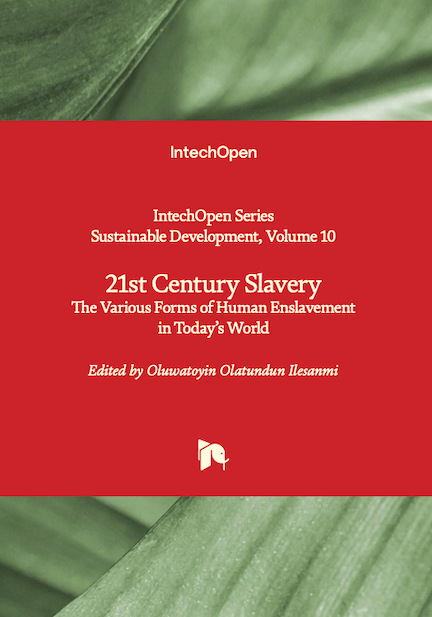
21st Century Slavery:  

The Various Forms of Human Enslavement in Today's World

By Usha Iyer-Raniga (Editor), Oluwatoyin Olatundun Ilesanmi (Editor)

More than 46 million people are currently victims of 21st-century slavery globally, most of whom are women and children. This book, 21st Century Slavery - The Various Forms of Human Enslavement in Today’s World provides a comprehensive overview of modern-day slavery, also known as contemporary slavery, neo-slavery, institutional slavery, and numerous other terms. It includes eight chapters that highlight human trafficking and explain and explore the act of recruiting, harbouring, transporting, providing, or obtaining a person for compelled labour or commercial sex acts using force, fraud, or coercion. The book discusses the recruitment, transportation, transfer, harbouring, and receipt of persons by improper means (such as force, abduction, fraud, or coercion) for an improper purpose including forced labour or sexual exploitation. It concludes that the world must not accept slavery in the 21st century. This volume is a useful resource on modern slavery for all academics interested in humanitarian and development studies across the globe and to all policymakers and governments of nations who are pushing for the elimination of all forms of slavery in their nationhood.

Strategies Against Human Trafficking: The Role of the Security Sector

By Cornelius Friesendorf (Ed.)

In 2000, the international community adopted the United Nations Convention against Transnational Organized Crime and the Protocol to Prevent, Suppress and Punish Trafficking in Persons, especially Women and Children. Since then, 124 countries have ratified the Protocol, and many of these have adopted legal instruments to help them in the fight against trafficking. Yet the scourge persists. Millions of people worldwide—men, women and children—continue to be exploited for their labour, for sexual purposes, for their organs. Security sector personnel are well-placed to assist in the fight against human trafficking: by identifying victims; investigating networks; disrupting operations; and prosecuting traffickers. Moreover, trafficking, like many crimes, flourishes where the rule of law is weak, such as in post-conflict situations. Restoring security based on the rule of law can reduce vulnerability to human trafficking and other types of organised crime. Strategies Against Human Trafficking: The Role of the Security Sector provides practical guidance on how practitioners in the security sector can take measures against modern-day slavery. Two points stand out. First, policy and intervention depend on evidence. Thus far, the fight against human trafficking has been handicapped by a lack of data. UNODC is working with governments and social scientists to fill this void. In 2009 we published the first Global Report on Trafficking in Persons. But the picture remains impressionistic. Security sector professionals can provide the information needed to profile victims and identify traffickers. The second major point highlighted in this study is the need for cooperation. This fight is a shared responsibility. It requires inter-agency cooperation among law enforcement personnel as well as trans-national cooperation. It also depends on effective joint work among a wide range of stakeholders, including criminal justice experts, the private sector, civil society, and concerned citizens. Disjointed efforts—however well-meaning—will have little impact on sophisticated criminal networks. This publication offers strong recommendations on how to make cooperation work. 

Vienna and Geneva, National Defence Academy and Austrian Ministry of Defence and Sports Rossauer Lände 1, 1090 Wien in co-operation with Geneva Centre for the Democratic Control of Armed Forces September 2009. 514p.   

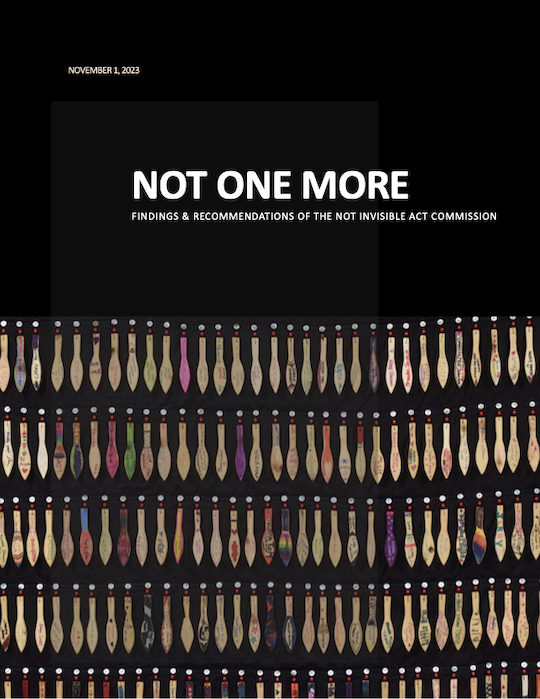
Not One More: Findings and Recommendations of the Not Invisible Act Commission

By The Not Invisible Act Commission

There is a crisis in Tribal communities. A crisis of violence, a crisis of abuse, and a crisis of abject neglect affecting Indian Women & Men, Indian Children, and Indian Elders. The federal government must act now; not tomorrow; not next week; not next month; and not next year. Once and for all, the federal government must end its systematic failure to address this crisis and react, redress, and resolve this. We call on the federal government to declare a Decade of Action & Healing to address the crisis of missing, murdered, and trafficked Indian people. -- The Not Invisible Act Commissioners _____________________________________________________________________________ With each passing day, more and more American Indian and Alaska Native (AI/AN) persons are victimized due to inadequate prevention and response to the MMIP and HT crisis. Our recommendations encompass actions that must be undertaken without delay to provide AI/AN people and communities with the same sense of safety and security that other communities in the United States take for granted. The United States government’s failure to fulfill its trust responsibilities to Tribal nations, coupled with historic policies that sought to disconnect AI/AN people from their land, language, and culture, have given rise to a public health, public safety, and justice crisis in Tribal communities. The crisis is most notably reflected in the federal government’s failure to effectively prevent and respond to the violence against AI/AN people, particularly in the context of missing, murdered, and trafficked AI/AN people. Despite the best efforts of many individuals across law enforcement (LE), the judiciary, and social services, long-standing institutional failures must be acknowledged and addressed. Calls for action and funding to address these issues have been made repeatedly.1 Although there has been a growing awareness of the high rates of missing, murdered, and trafficked AI/AN people in recent years, and several federal initiatives have been launched,2 addressing the needs in Tribal communities continues to generally be underprioritized by the federal government. Until this changes, violence against AI/AN individuals and on Indian and Alaska Village lands will persist. The Commission believes that the circumstances that have created the crisis of MMIP and HT are not intractable. In fact, to see them so is to continue the unjust past. With resolve and an appropriate investment of resources, these issues can, and must, be effectively addressed. While it is imperative that the federal government take immediate and concerted action, thescale and severity of this issue, and the need for long-term healing and justice, also demand a comprehensive and sustained response. Therefore, we call upon the federal government to declare a Decade of Action and Healing dedicated to addressing this crisis effectively for future generations. Such a declaration would underscore the urgency of the matter and signify a long-term commitment to combatting the deeply rooted issues that perpetuate continued violence against AI/AN individuals and supporting individuals and communities in their healing as they seek justice. This Decade of Action and Healing must involve partnership with Tribal communities, Tribal governments, and relevant organizations, focusing on improving safety, prevention, justice, support services, and healing for AI/AN communities through increased funding, policy reform, action-oriented programs, and training and technical assistance.

Washington, DC: U.S. Department of the Interior and the Department of Justice, 2025. 212p.

Gross Human Rights Violations in Washington State: Enforced Disappearance and Refoulement

By The Center for Human Rights, The Henry M. Jackson School of International Studies, University of Washington,

This report reviews local involvement in gross human rights abuses against immigrants, focusing on forced disappearance and refoulement. Its findings reveal that the connections between Washington state and these crimes are broader and deeper than has been previously known.

They are broader because there are many more cases of Washingtonians being subjected to forced disappearance at the hands of the U.S. federal government than was previously known. Thus far we have documented:[1]

  • seven migrant Washingtonians who were expelled by U.S. Immigration and Customs Enforcement (ICE) to El Salvador’s notorious megaprison CECOT, in violation of a federal court order;[2]

  • six Washingtonians who were sent by ICE to Guantánamo Bay without access to counsel or information to their families;[3]

  • one Washingtonian who was expelled by ICE to South Sudan, where he had no personal ties, following attempts to remove him in violation of a federal court order;[4]

  • two families who were held incommunicado in Customs and Border Protection (CBP) facilities for weeks within our own state;

  • and a very broad—so broad as to be unmeasurable under current conditions—universe of migrants who are being deported daily without access to any real form of due process, under conditions which may constitute refoulement.

And they are deeper because many more of our institutions, public and private, are involved in facilitating the forced disappearances of our neighbors than was previously known. These include:

  • Seattle-Tacoma International Airport and King County International Airport (Boeing Field), both of which provide the infrastructure through which deportations happen daily;

  • Washington State’s Department of Corrections, which collaborates with ICE in the detention of migrants completing a prison sentence;

  • Signature Aviation, a private company providing fuel and support to private charter flights operating for ICE at King County International Airport;

  • and the Washington State Investment Board (WSIB), which invests the retirement funds of our public employees in the very businesses that brutalize our neighbors.

Complicity in forced disappearance is not a minor matter. When committed systematically against a civilian population, forced disappearance is considered a crime against humanity under international law. All institutions—federal, state and local; public and private—and all individuals are called to take active measures to avoid complicity in the networks that produce such violations. Our central purpose in publishing this report is to make all Washingtonians witness to what is happening on our watch, in the hopes that we might come together in new ways to stop these abuses.

Seattle:  Center for Human Rights, The Henry M. Jackson School of International Studies, University of Washington,, 2025. 

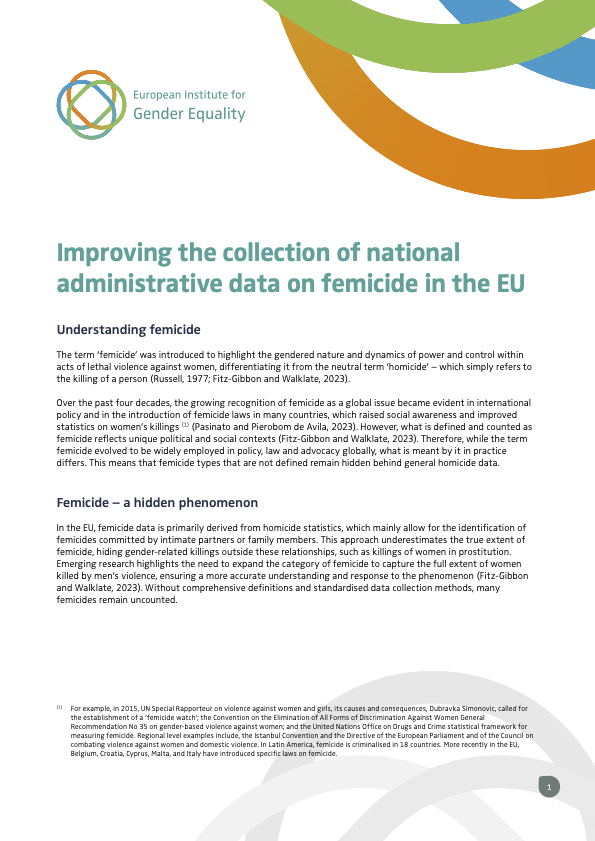
Improving The Collection Of National Administrative Data On Femicide In The EU

By The European Institute for Gender Equality

EIGE’s research on femicide has focused on the definition and measurement of femicide as a specific crime, due to the gendered nature of the killings and dynamics of power imbalance between women and men.

EIGE supports Member States in collecting administrative data on femicides within the context of intimate-partner relationships, domestic relationships or any relationships. 

This policy brief presents the data on femicide from the latest EU-wide collection of national administrative data on intimate partner violence and domestic violence.

The brief maps MS’ progress in data collection on femicide in the period between 2014 to 2022 and their ability to disaggregate the data by sex and relationship type between victim and perpetrator. 

The policy brief highlights several findings: women are disproportionately affected by intimate partner homicide, in which women represent 87 % of all victims and 60 % of victims in domestic homicides versus 42 % of all homicide victims. 

It further encourages MS to establish common legal definition of femicide and collect data disaggregated by sex and relationship and advocates for an expanded collection of data related to the context and circumstances of the killing to support improved understanding of femicide and enable improvements in development and use of risk assessment tools. 

2025. 9p.

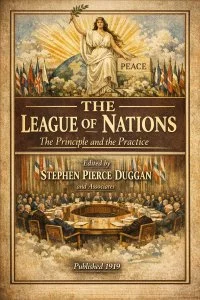
THE LEAGUE OF NATIONS: The Principle and the Practice

Edited by Stephen Pierce Duggan. Introduction by Graeme R. Newman

A Landmark Vision of International Order at the Dawn of the Modern World

Published in 1919 at the very moment when the post–First World War settlement was taking shape, The League of Nations: The Principle and the Practice, edited by Stephen Pierce Duggan, is one of the most authoritative and illuminating contemporary statements of the ideas that sought to prevent another global catastrophe. Written as the Covenant of the League of Nations moved toward ratification, this volume captures the urgency, optimism, and hard-headed realism of thinkers grappling with the central political question of the twentieth century: how can peace be made durable in a world of sovereign states?

Bringing together leading scholars, jurists, historians, and policy practitioners, the book moves beyond slogans to examine how an international organization must actually function. It explains not only the moral and historical foundations of the League idea, but also its practical machinery—arbitration, sanctions, international administration, and continuous cooperation across borders. Readers are guided through the institutional logic of collective security, the limits of national sovereignty, and the challenges posed by armaments, small nations, and postwar reconstruction.

Distinctive for its clarity and documentary richness, the volume includes key historical texts and the full Covenant of the League itself, allowing readers to engage directly with the constitutional framework of early international governance. Written in accessible but rigorous prose, it was intended for educated citizens as well as specialists—an informed guide for public debate at a decisive historical moment.

Today, The League of Nations: The Principle and the Practice stands as an indispensable primary source for understanding the intellectual foundations of modern global governance. It reveals how the ambitions and anxieties of 1919 shaped later institutions, including the United Nations, and it remains strikingly relevant in an era once again marked by questions of collective security, international law, and global cooperation. For historians, political scientists, legal scholars, and readers interested in the origins of the contemporary international order, this book is both a historical document and a continuing challenge to think seriously about how peace is organized.

The Atlantic Monthly Press. BOSTON. 1919. Read-Me.Org Inc. New York-Philadelphia-Australia. 2025. p.253.

Essays And Addresses In War Time

By The Right Hon. Viscount Bryce

When Essays and Addresses in War Time appeared in December 1918, the Great War had not yet fully settled into memory. The armistice was scarcely a month old; the dead lay uncounted; the maps of Europe were still provisional, and new nations were appearing almost daily. It was into this unsettled moral and political landscape that Viscount James Bryce (1838–1922) published this set of reflections — part justification, part analysis, and part moral plea — for what he regarded as one of civilization’s defining struggles.

Bryce was no ordinary commentator. Historian, jurist, diplomat, and moral philosopher, he had served as British ambassador to the United States (1907–1913) and was known across Europe and America as one of the most lucid defenders of democratic government. His monumental works — The Holy Roman Empire (1864) and The American Commonwealth (1888) — had already secured his international reputation. Yet Essays and Addresses in War Time reveals another dimension: a statesman confronting the collapse of Enlightenment ideals under the strain of modern total war, and seeking to explain to neutral nations why the conflict could not be reduced to a mere clash of power or empire, but must be seen as a moral contest over the principles of civilization itself.

Read-Me.Org Inc. New York-Philadelphia-Australia. 2025. 156p.

Civilisation: Its Cause And Cure

By Edward Carpenter

“Civilisation” is a word that evokes triumph — of human ingenuity, collective organisation, rising standards of living, the unfolding of arts and sciences, the building of cities, bridges, empires. And yet, as Edward Carpenter’s 1889 work Civilisation: Its Cause and Cure; and Other Essays demonstrates, civilisation can also be approached as a problem: as a state of society marked by dis-ease, alienation, and unsustainability. Carpenter, a socialist, poet, philosopher and social reformer, treats civilisation not simply as the progress of humankind but as a complex and ambivalent phenomenon — one that may require “cure” as much as celebration.

In this volume Carpenter brings together his earlier lectures and essays — including the eponymous essay “Civilisation: Its Cause and Cure,” along with essays on science, morality, custom, and society.The book thus serves as both a diagnosis of modern Western society and an expression of an alternative vision for humanity’s social and moral development.

In the following pages we will consider: first, the intellectual and historical context of the work; second, the major themes and arguments set out by Carpenter; third, the structure of the essays and the particular significance of the titular essay; fourth, an evaluation of the work’s place in the history of social thought; and fifth, pointers for contemporary reading, criticism and further research.

Read-Me.Org Inc. New York-Philadelphia-Australia. 2025. 164p.

History Of Political Thought

By RAYMOND G. GETTELL (Author), Colin Heston (Introduction)

First published in 1924, this book emerged at a time when the study of politics was being transformed from a largely historical and moralistic pursuit into a more rigorous, analytical discipline within American universities. Gettell’s work bridged the gap between the classical humanistic tradition of political reflection and the emerging political science of the early twentieth century, providing a lucid narrative of the major thinkers, schools, and debates that shaped Western political ideology.
The early decades of the twentieth century saw increasing professionalization in the social sciences, especially in fields like economics, sociology, and political science. Within political science, there was a tension between the empirical study of institutions and behavior (what would later be called "positivist" approaches) and the normative-historical approach that emphasized values, ideologies, and the moral purposes of politics. Gettell’s work traces the development of political ideas chronologically, beginning with the classical thinkers of ancient Greece—particularly Plato and Aristotle—whose inquiries into justice, the ideal state, and the nature of citizenship set the stage for centuries of political reflection. He then moves through the Roman period, early Christian thought, medieval scholasticism, Renaissance humanism, the rise of early modern political theory (with Hobbes, Locke, and Rousseau), and onward to the nineteenth century, examining liberalism, socialism, nationalism, and other emergent ideologies.
For the modern reader, returning to Gettell’s work can serve as both a foundation and a springboard—a foundation for understanding the grand narrative of Western political thought, and a springboard for questioning, expanding, and diversifying that narrative to include new voices, global perspectives, and contemporary concerns. In it is an invitation to reflect critically on the ideas that continue to shape our political world. In an era marked by resurgent nationalism, territorial conflict, and the weakening of multilateral institutions, History of Political Thought retains a sobering relevance. Across the globe, from Ukraine and Russia, to Israel and Palestine, to China and Taiwan, we witness conflicts fueled by competing historical narratives, divergent political ideologies, and the enduring potency of the concept of sovereignty. These disputes often invoke deeply rooted claims to land, culture, and legitimacy, echoing ideas that can be traced back to the very thinkers Gettell profiles—whether it is Hobbes' notion of authority and order, Rousseau's theories of collective will, or the romantic nationalism that pervaded 19th-century political philosophy.
The idea of a world governed by shared norms—what Kant envisioned as a “perpetual peace” based on republicanism and international cooperation—remains elusive. States remain the final arbiters of their own security, often dismissing international judgments when they conflict with national interest or identity. Gettell’s text unintentionally underscores the fragility of systems that depend on consensus and voluntary compliance. Just as no political theory he surveys offers a perfect formula for reconciling liberty with order or equality with authority, no international institution can entirely overcome the foundational dilemma of political life: how to balance the need for collective restraint with the desire for self-rule. The UN, lacking coercive power over its most powerful members and constrained by veto politics in the Security Council, reflects this unresolved tension.
As global politics once again teeter between cooperation and confrontation, Gettell’s work calls us back to the deeper philosophical questions that must underlie any lasting peace: What is legitimate authority? Who decides? And how can competing visions of justice coexist in a shared political space?

Read-Me.Org Inc. New York-Philadelphia-Australia. 2025. 433p.

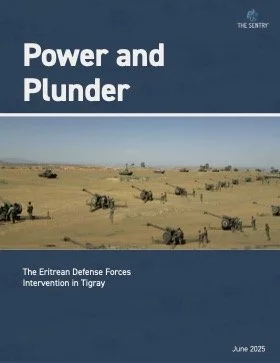
Power and Plunder: The Eritrean Defense Forces Intervention in Tigray

By The Sentry

In November 2018, the United Nations lifted sanctions on Eritrea, including a two-way arms embargo banning both the import and export of arms, after a successful campaign by Eritrea’s longtime rival, Ethiopia. As Eritrean President Isaias Afwerki and Ethiopian Prime Minister Abiy Ahmed Ali began to reestablish ties, having signed a formal peace agreement in September 2018, hope was high that this reset of regional relations would provide long-term security. That hope quickly faded as increasingly secret talks resulted in the military encirclement of Ethiopia’s Tigray region.

In the absence of the UN’s two-way arms embargo, the Eritrean Defense Forces (EDF) reequipped and rearmed, while its senior officers conspired with the newly configured Ethiopian security apparatus to launch the Tigray War in late 2020. The EDF played a prominent and highly problematic role in that conflict, committing atrocities in a campaign of collective punishment against the people of Tigray, at great human cost.

The Tigray War resulted in a humanitarian crisis of immense proportions. War crimes were perpetrated by all parties to the conflict, but the nature of atrocities and war profiteering carried out by the EDF was unmatched in scale and premeditation. The EDF engaged in massacres, widespread sexual violence, and systematic looting, including of Tigrayan factory machinery, medical supplies and equipment, and cultural antiquities.

Since the signing of the 2022 Pretoria Agreement that marked the end of the Tigray War, the EDF has continued to occupy territory within Ethiopia. Eritrean military commanders and their agents within Ethiopia continue to profit from a conflict economy, including through human trafficking, kidnapping, and illicit gold mining.

In the meantime, Eritrean President Isaias Afwerki has emerged as the clear winner of the new status quo, as Ethiopia’s fragile federal coalition continues to struggle with widespread disorder. With Russia emerging as a key military ally in the post-embargo landscape, the EDF now has few constraints on its continued rearmament. For Eritrea’s leadership, the new state of “no war, no peace” is proving advantageous.

Key recommendations

As a matter of urgent conflict prevention, the United States, European Union, United Kingdom, and other like-minded jurisdictions need to send a clear message to the Ethiopian government, the Eritrean government, the Tigrayan People’s Liberation Front (TPLF), and the Tigray Interim Administration (TIA) that they will face an escalated international response and sanctions if there is a resumption of conflict.

The US, the EU, and the UK should consider designating Eritrean Defense Forces Brigadier General Eyob Fessehaye (aka Halibay), Brig. Gen. Simon Oqbu (aka Riesi Mirak), and Maj. Gen. Romadan Osman Awliya for their responsibility for human rights violations in Tigray.

The UN Security Council should determine that Ethiopia-Eritrea border issues—including unimplemented components of the November 2, 2022, Pretoria peace agreement—constitute a threat to international peace and security, and it should thus establish a panel of enquiry with a Chapter VII mandate to monitor and report on the situat

Washington, DC: The Sentry, 2025. 45p.

All I Know Is I Want Them Home

By The Human Rights Watch

This 86-page report describes how authorities in Western Australia have been quick to remove children from Aboriginal mothers fleeing domestic violence and from Aboriginal parents without adequate housing, rather than providing appropriate services to address these issues.

Human Rights Watch, March 26, 2025, 86p.

They’re Putting Our Lives at Risk

By Human Rights Watch

The 69-page report, “‘They’re Putting Our Lives at Risk’: How Uganda’s Anti-LGBT Climate Unleashes Abuse,” documents the actions by Ugandan parliament members, government institutions, and other authorities that culminated in the enactment of the 2023 Anti-Homosexuality Act. Human Rights Watch found that the law has ramped up already existing abuse and discrimination against LGBT people to unprecedented heights. They also detailed the rights violations enabled by the law and the devastating impact it has had on the lives of LGBT people, activists, allies, and their families in Uganda.

Human Rights Watch, May 26, 2025, p. 69

The Letters of Robert Louis Stevenson, Parts XI-XIV: Works of R.L.S Vol. 24

By  Robert Louis Stevenson. Edited by Sidney Colvin and Colin Heston

“The Letters of Robert Louis Stevenson, Parts XI–XIV”, collected in Volume XXV of the Swanston Edition of Stevenson’s works, brings to a close one of the most remarkable collections of literary correspondence in the English language. Edited with meticulous care and deep personal insight by Sidney Colvin, this final volume continues the chronicle of Stevenson’s life through his own words, offering readers a profound and intimate view of the author’s final years and enduring legacy.

These concluding parts of Stevenson’s letters span the last phase of his life, primarily focused on his time in Samoa, where he had settled permanently in 1890. Despite his ongoing battle with chronic illness, Stevenson remained intellectually and creatively active, producing some of his most mature and reflective work. His letters from this period are rich in philosophical insight, literary commentary, and political observation, particularly concerning the colonial tensions in the South Pacific and his advocacy for the Samoan people.

The correspondence in this volume is addressed to a wide and varied circle: family members, literary peers, publishers, and political figures. These letters reveal a man who, though physically isolated, remained deeply engaged with the world. They are filled with Stevenson’s characteristic wit, warmth, and eloquence, but also with a growing sense of urgency and introspection as he approached the end of his life.

Sidney Colvin’s editorial contributions are especially valuable in this volume. As Stevenson’s close friend and literary executor, Colvin provides detailed introductions, annotations, and contextual commentary that illuminate the personal and historical background of each letter. His work ensures that readers not only follow the narrative of Stevenson’s life but also understand the broader cultural and political forces at play during this period.

The Swanston Edition presents these letters with scholarly precision and literary sensitivity, making Volume XXV an essential resource for anyone interested in Stevenson’s life, Victorian literature, or the art of letter writing. The collection as a whole—spanning Volumes XXIII to XXV—offers a comprehensive and deeply human portrait of Stevenson, capturing his evolution from a restless young writer to a mature and morally engaged literary figure.

“The Letters of Robert Louis Stevenson, Parts XI–XIV” is more than a conclusion to a correspondence—it is a culmination of a life lived with passion, intellect, and integrity. Through these final letters, Stevenson’s voice continues to resonate, offering insight, inspiration, and a lasting connection to one of literature’s most enduring spirits.

Read-Me.Org Inc. New York-Philadelphia-Australia. 2025. 296p.

Strange, Inhuman Deaths Strange, Inhuman Deaths: Murder in Tudor England

By John G. Bellamy

Murder in the sixteenth century, which to English men and women of that time meant planned slaying, usually with an element of stealth or with the victim taken unawares, was not then a common crime; rather the reverse. For example, Sir Thomas Smith, the knowledgeable Tudor legal commentator, tells us that murder by poisoning was virtually unknown in his day. Also writing in the reign of Elizabeth I was William Harrison, who, in a contribution to Holinshed's Chronicles that dealt with the criminal law, its penalties and its impact on society, stated that, although manslaughter and "bloudie robberies" occurred "now and then," "we do not often heare of horrible, merciless, and wilfull murthers."1 Nor do other writers of the period who touch on criminal law or on crime and public order indicate anything different. These brief indications of a relatively low murder rate are borne out by statistics to be garnered from the extant assize records of the late sixteenth century. Because of the existence of victims' corpses, murder may well have been among the most reported of felonies (that is, reported to officers of the law), yet in Sussex and Cheshire in Elizabeth's reign only about 5 percent of all persons put on trial for felony were suspected murderers, while the relatively high rate of 8 percent in Kent has to be set against the trivial 1 percent in Essex. The overall impression is that probably about 1 in every 20 indicted felons was believed to be a murderer.

History Press Limited, Dec 1, 2008, 212 pages

Polyarchy: Participation and Opposition

By Robert A Dahl

Given a regime in which the opponents of the government cannot openly and legally organize into political parties in , order to oppose the government in free and fair elections, • what conditions favor or impede a transformation into IF ! regime in which they can? That is the question with which \ this book is concerned. j Concepts Since the development of a political system that allows for opposition, rivalry, or competition between a government and its opponents is an important aspect of democratization, this book is necessarily about one aspect of democratization. But the two processes—democratization and the development of public opposition—are not, in my view, identical. A full description of the differences could lead us into a tedious exploration of a semantic bog. To avoid this detour, I hope I may be allowed to indicate rather summarily some of my assumptions without much in the way of defense or elaboration. I assu

New Haven and London, Yale University Press, 1971

The Letters of Robert Louis Stevenson, Parts VII-X: Works of R.L.S Vol. 24

By Robert Louis Stevenson. Edited by Sidney Colvin and Colin Heston

“The Letters of Robert Louis Stevenson, Parts VII–X”, collected in Volume XXIV of the Swanston Edition of Stevenson’s works, continues the extensive and illuminating correspondence begun in Volume XXIII. Edited with scholarly care and personal insight by Sidney Colvin—Stevenson’s close friend, literary executor, and biographer—this volume brings readers deeper into the final and most prolific years of Stevenson’s life, offering a vivid and intimate portrait of the author as both a public figure and a private man.

These later letters, written primarily during Stevenson’s residence in the South Pacific, particularly in Samoa, reflect a period of creative intensity, political engagement, and personal reflection. They reveal Stevenson not only as a master of prose but also as a keen observer of colonial politics, a devoted family man, and a figure of growing international literary stature. His correspondence from this time is rich with commentary on his ongoing literary projects—including The Ebb-TideSt. Ives, and Weir of Hermiston—as well as his thoughts on morality, justice, and the responsibilities of the writer.

The letters are addressed to a wide range of recipients: family members, literary peers, publishers, and political figures. They are filled with Stevenson’s characteristic wit, warmth, and eloquence, but also with moments of vulnerability and philosophical depth. His reflections on illness, exile, and mortality are especially poignant, as he continued to write and correspond despite the increasing toll of his chronic health conditions.

Sidney Colvin’s editorial work is essential to the value of this collection. His introductions to each section, along with detailed footnotes and contextual commentary, provide readers with the necessary background to fully appreciate the historical and personal significance of the letters. Colvin’s close relationship with Stevenson lends the edition a unique authority and emotional resonance, as he was not only a literary scholar but also a trusted confidant of the author.

“The Letters of Robert Louis Stevenson, Parts VII–X” is more than a supplement to his published fiction—it is a living document of a writer’s mind and spirit, capturing the voice of Stevenson in all its complexity: humorous, passionate, reflective, and profoundly human.

The Swanston Edition presents these letters with scholarly rigor and literary sensitivity, making them an indispensable resource for students, researchers, and admirers of Stevenson’s work. Together with Volume XXIII, this volume completes one of the most comprehensive and engaging collections of literary correspondence from the Victorian era.

Read-Me.Org Inc. New York-Philadelphia-Australia. 2025. p.279p.

The Pentland Rising: A Page of History, 1666. Works of R.L.S. Vol. 22

By  Robert Louis Stevenson

“The Pentland Rising: A Page of History, 1666” is one of Robert Louis Stevenson’s earliest published works, first appearing in 1866 when he was just sixteen years old. Included in Volume XXII of the Collected Works of Robert Louis Stevenson, this historical narrative offers a vivid and dramatic account of the Pentland Rising, a significant episode in Scottish history that marked the beginning of the Covenanter uprisings against the Stuart monarchy.

The Pentland Rising refers to the Battle of Rullion Green, fought on November 28, 1666, in the Pentland Hills near Edinburgh. It was the culmination of a brief but intense rebellion by Scottish Presbyterians—known as Covenanters—who opposed the imposition of episcopacy and sought to defend their religious freedoms against the authoritarian policies of Charles II. Stevenson’s account, though written in his youth, is notable for its clarity, narrative energy, and early signs of the literary talent that would later define his career.

In this work, Stevenson blends historical fact with dramatic storytelling, reconstructing the events leading up to the uprising, the motivations of the Covenanters, and the brutal suppression that followed. He draws on historical sources and family lore—his own ancestors were connected to the events—to create a compelling portrait of religious conviction, political resistance, and tragic heroism.

Though brief, The Pentland Rising is rich in historical detail and emotional resonance. It reflects Stevenson’s early interest in Scottish history, identity, and moral conflict, themes that would recur throughout his later works. The narrative captures the tension between loyalty to conscience and obedience to authority, making it both a historical document and a meditation on civil disobedience.

The Swanston Edition (Volume XXII) presents this early work with scholarly annotations and contextual commentary, situating it within Stevenson’s development as a writer and the broader historical landscape of 17th-century Scotland. For readers interested in Scottish history, religious conflict, or the formative writings of one of the 19th century’s most beloved authors, The Pentland Rising offers a fascinating and poignant glimpse into the past.

Read-Me.Org Inc. Australia-New York-Philadelphia. 2025. 202p.

A Footnote to History: Eight Years of Trouble in Samoa: The Works of R. L. Stevenson. Vol. XVII

By R. L. Stevenson. Edited by Colin Heston

“A Footnote to History” is a powerful and politically charged historical narrative by Robert Louis Stevenson, first published in 1892 and included in the Swanston Edition, Volume XVII. This work stands apart from Stevenson’s more widely known fiction by offering a firsthand account of the complex and often tragic political turmoil in Samoa during the late 19th century—a conflict in which Stevenson himself became deeply involved.

Written during Stevenson’s residence in the South Pacific, the book chronicles the events between 1882 and 1890, a period marked by intense rivalry among Germany, Britain, and the United States for control over the Samoan Islands. These imperial powers, each supporting different local factions, contributed to a prolonged and destabilizing civil conflict. Stevenson, living in Vailima on the island of Upolu, witnessed the unfolding crisis and used his literary voice to document and critique the actions of foreign governments and their representatives.

The narrative is both historical and personal. Stevenson combines detailed political analysis with vivid descriptions of the people, landscapes, and cultural dynamics of Samoa. He portrays the Samoan chiefs and communities with empathy and respect, while sharply criticizing the incompetence, arrogance, and moral failures of the colonial powers. His tone is often impassioned, reflecting his frustration with the injustices he observed and his desire to influence public opinion in Europe and America.

“A Footnote to History” is notable for its journalistic clarity, moral urgency, and literary elegance. It is not merely a chronicle of events but a reflection on the broader consequences of imperialism and the human cost of political ambition. Stevenson’s involvement in Samoan affairs—both as an observer and as an advocate—gives the work a rare authenticity and immediacy.

The Swanston Edition presents this important text with scholarly annotations and historical context, situating it within Stevenson’s broader body of work and the geopolitical realities of the time. As both a historical document and a literary achievement, A Footnote to History remains a compelling and insightful exploration of colonial entanglements and the responsibilities of witness.

Combating coercive control and psychological violence against women in the EU Member States

By Blandine Mollard, Julia Ochmann, Davide Barbieri andJolanta Reingardė

This report developed by the research and statistics team of EIGE presents evidence on coercive control and psychological violence against women in EU Member States.

The study analyses the causes and consequences of coercive control and psychological violence against women, assesses the criminalisation of psychological violence and coercive control in EU Member States and identifies and analyses promising practices and the main hurdles in preventing coercive control and psychological violence against women in EU Member States.

Coercive control and psychological violence against women instil fear and insecurity in women's lives and undermine their well-being and dignity. In many cases, violence against women and girls occurs in the family, where violence is often tolerated, goes unreported and is difficult to detect. Even when such violence is reported, there is often a failure to protect victims or punish perpetrators.

The overall objective of this study is to strengthen the institutional capacity to combat coercive control and psychological violence against women in EU Member States.

The specific objectives of the study are to:

analyse the causes and consequences of coercive control and psychological violence against women;

assess the criminalisation of psychological violence and coercive control in EU Member States;

identify and analyse promising practices and the main hurdles in preventing coercive control and psychological violence against women in EU Member States.

This work will serve as a key addition to the European Institute for Gender Equality (EIGE)'s evidence base for a better understanding of gender-based violence, and will directly inform EIGE's support for the French Presidency of the Council of the European Union to ensure ongoing implementation of the Beijing Declaration and Platform for Action (BPfA; UN Women, 1995). More broadly, this research will contribute to the EU's strategic priority to end gender-based violence in all its forms, as enshrined in the EU gender equality strategy.

Vilnius LITHUANIA : European Institute for Gender Equality (EIGE), 2022. 170p.

Trends in addressing femicide in the OSCE region

By Elisabeth Duban,

The OSCE participating States have agreed to several commitments that specifically mandate the Organization’s structures to assist participating States with developing programmes aimed at preventing all forms of gender-based violence, as outlined in the 2004 Action Plan for the Promotion of Gender Equality, and OSCE Ministerial Council decisions from 2005, 2014 and 2018 which emphasize the importance of collecting and disseminating reliable, disaggregated data on violence against women, alongside efforts to criminalize gender-based violence. Femicide, the gender-related killing of women and girls, is a global phenomenon and represents the most extreme manifestation of violence against women. This report aims to assess the response to femicide across the 57 OSCE participating States, focusing on three key areas: the criminal justice response, the collection of comparable data, and the reporting and analysis of femicide.

Prague: The Organization for Security and Co-operation in Europe (OSCE), 2025. 50p.