Open Access Free Library
JUVENILE JUSTICE.jpeg

JUVENILE JUSTICE

JUVENILE JUSTICE-DELINQUENCY-GANGS-DETENTION

Adultifying youth custody: Learning lessons on transition to adulthood from the use of youth custody for young adults

By Alliance for Youth Justice

Young people turning 18 while in the secure estate face a tumultuous transition between youth custody and adult prisons. The secure estate for children is, in theory, focussed on meeting the distinct needs of under 18s. The vast majority of young adults on the other hand are held in adult establishments where there is very little evidence of any provision designed with their distinct needs in mind. Young people transferring from youth to adult custody face a frightening cliff edge, and getting the transition right is critical to ensuring the safety, wellbeing, and rehabilitation of young people entering adulthood. The children’s secure estate has had long-standing arrangements to retain some young people aged 18 and over to finish out their sentence or aid smooth transitions. Two years ago, however, an interim policy change in response to a capacity crisis in adult prisons led to a rapid and significant increase in the number of over 18s held in the children’s secure estate, with concerning impacts on children, young adults, and the establishments themselves. The children’s secure estate has spent years stumbling from crisis to crisis, struggling to cope with the children in its care, and it was unprepared for this policy change imposed on it without due notice. The government’s decision to temporarily shift the presumed date a young person transitions from youth to adult custody from the 18th birthday to 19th birthday led to over a third of those held in the majority of Young Offender Institutions (YOIs) being over 18s, for the majority of 2023/24. Alongside the implementation of this policy, conditions in YOIs have been dire, putting the safety and wellbeing of children and young people at risk. Guard dogs and stun grenades have been used against children, a fifth Urgent Notification in five years was issued, a failing YOI has now been closed, and both the previous and current Government have been labouring over a decision to rollout PAVA incapacitant spray to staff. The Ministry of Justice carried out a review of the interim policy to determine its end date, focussed on tangible short-term impacts on areas like violence and safeguarding. The review has yet to be published but its findings led Ministers to confirm the policy would end from October 2024 in order that the children’s estate can “return to maintaining an unwavering focus on the specific needs and vulnerabilities that children present.” Beyond the short-term impact explored by the Ministry of Justice review, and its immediate implications for the policy’s end date, there is also a need to consider the full longer-term impact and implications. Learning must be gathered with regards to the adultifying of a children’s estate that already struggles to treat children as children, and how policy decisions have impacted children’s rights to a distinct youth justice system and ensured young adults’ needs are met. This briefing seeks to take a broad view of the impacts, on children and young adults, of the significant change in the population of YOIs. It aims to illustrate not just the impacts here and now, but consider wider implications and risks. These include the opportunity cost of the positive change that could have been achieved during this time, and the potential for a slippery slope towards the government increasingly adultifying youth custody and viewing the children’s system as back-up for a failing adult justice system. It considers the vital need for distinct treatment of children, and raises concerns that despite policymakers agreeing that a specific approach for young adults in custody is clearly needed, change is happening in the wrong direction. Rather than implementing much-needed improvements and distinct support for young adults, conditions and treatment in the children’s estate are at risk of being dragged closer to that in adult prisons. By bringing together perspectives from both the youth and adult justice systems, this briefing carefully considers what recent developments mean for the future of custody for children, and what lessons can be learnt for improving custody for young adults. A new government has an important opportunity to set out ambitious visions and plans for both.

London: Alliance for Youth Justice, 2025. 52p.

Harmful, Expensive and Criminogenic: The Case for Abolishing Detention and Training Orders in England and Wales

By Kathy Hampson, Anne-Marie Day

Children who offend generally receive community sentences, to help them overcome difficulties whilst naturally addressing offending behaviour; however, children can also receive custody, which has a plethora of known harms. Children’s rights instruments call for custody to be reserved as a ‘last resort’ response to extremely serious offending. However, in England and Wales this is demonstrably not the case, meaning that children still receive short custody orders (in the form of a Detention and Training Order [DTO]) for relatively minor offences. We argue that legislative change should abolish the DTO because of the harms custody wreaks, from several different perspectives (their rights, moral treatment of children, sentencing guidelines, practical and financial considerations), to leave the use of custody only possible for very serious offending, and thus reaching the goal of ‘last resort’.

The British Journal of Criminology, 2025, XX, 1–18p.

Juvenile Injuries and Deaths From Shootings by Police in the United States, 2015–2020

By Dylan B. Jacksondylan.jackson@jhu.edu ∙ Alexander Testa∙ Daniel C. Semenza ∙ Cassandra K. Crifasi ∙ Julie A. Ward

Purpose -

The present study describes juveniles injured in fatal and nonfatal shootings by the police from 2015 to 2020, compares characteristics of juvenile victimizations to adult victimizations, and estimates the odds of a shooting victim being a juvenile v. adult, given known characteristics.

Methods -

From July 2021 to April 2023, we manually reviewed publicly available records on all 2015–2020 injurious shootings by the US police, identified from Gun Violence Archive. We first calculated counts and proportions of victim, incident, and response characteristics among juvenile and adult injured people, then estimated the odds of juvenile (vs. adult) victimization associated with each characteristic in multilevel logistic regression models with random intercepts to account for state- and incident-level correlation.

Results -

97 percent of shootings involved presumed on-duty officers and victims whose categorical age status (i.e., juvenile or adult) was reported (n = 10,382). Included among these injured people were 317 juveniles, 33% of whom were fatally injured (mean reported juvenile age = 15.5 years). Several patterns differentiated juveniles from adult police shooting victims, including multiple demographic characteristics (e.g., race or ethnicity and gender) and the outcomes of and circumstances surrounding these events (e.g., fatality, victim weapon status, and single-officer response).

Discussion -

Findings point to a critical need to identify and implement public health and policing strategies that greatly reduce the number of juveniles shot by the police every year, so that all children have the opportunity to thrive into adulthood.

Journal of Adolescent Health, Volume 76, Issue 2 February 2025

Examining Racial and Ethnic Disparities in the Juvenile Justice System in Indiana: Survey Analysis

By Christine Reynolds, Lisa Moore, Rylee Screeton, Adam Winkle

In September 2022, the ICJI conducted a statewide juvenile justice survey to evaluate local juvenile justice systems in terms of equity and to identify risk factors that influence youth involvement in the justice system. The primary focus of the survey is to better understand juvenile arrest and referral data collected at the local level that is used to analyze racial and ethnic disparities within the juvenile justice system. The results of this study will allow counties to better understand racial and ethnic disparities data and identify methodologies for understanding these data more comprehensively.

 Indianapolis: Indiana Criminal Justice Institute, 2024. 28p.

Examining Racial and Ethnic Disparities in the Juvenile Justice System in Indiana: A Comprehensive Analysis

By  Christine Reynolds, Lisa Moore, Rylee Screeton, Adam Winkle

Executive Summary This report aims to delve into the landscape of racial and ethnic disparities within the juvenile justice system, specifically in Indiana, shedding light on the extent and consequences of these inequities. Indiana, like many states, grapples with a complex set of factors that contribute to differential treatment and outcomes for minority youth involved in the juvenile justice system. Understanding and addressing these disparities is imperative for ensuring the development of appropriate policies and interventions that safeguard the rights and futures of all juveniles. The ICJI was awarded funding for a multi-year project to address the following elements: 1. Enhancing the racial/ethnic disparities data collection environment by a. Obtaining juvenile arrest incidences, and a. Acquiring data fields to better understand referral data; 2. Collaborating with the Indiana Office of Court Services (IOCS) to a. Deliver training to justice professionals who are responsible for entering racial/ethnic disparities data, and a. Build a system that safeguards against inaccurate reporting; 3. Reviewing the literature and assessing the state to a. Identify factors that influence and protect against youth justice system involvement, a. Explore social systems that both perpetuate inequity and lead to minority justice involvement, and a. Investigate methodologies for analyzing these data that include 3a and 3b; and 4. conducting a statewide analysis of counties’ disproportionality data in relation to identified contextual data. This report uses a mixed method approach of quantitative and qualitative findings. Quantitative data include court information and the relative rate index (RRI) for each county at each contact point. Qualitative data were obtained from a survey of criminal justice stakeholders and interviews with juvenile probation officers. This study sought to answer the following questions: 1. Is juvenile arrest data collected and able to be reported by probation officers? 2. Where do most referrals come from? 3. Where within the juvenile justice system does disproportionality exist? 4. What factors contribute to racial and ethnic disparities in the juvenile justice system? 5. How can stakeholders ensure better/more accurate data collection?  

 Indianapolis: Indiana Criminal Justice Institute, 2024. 60p.

An Evidence-Informed Model and Guide for Deffective Relational Working in Youth Justice

By Eóin O’Meara Daly, Jackie Dwane, Caitlin Lewis and Seán Redmond

HM Inspectorate of Probation is committed to reviewing, developing and promoting the evidence base for high-quality probation and youth justice services. Academic Insights are aimed at all those with an interest in the evidence base. We commission leading academics to present their views on specific topics, assisting with informed debate and aiding understanding of what helps and what hinders probation and youth justice services.

This report presents findings from a three-year top-down/bottom-up action research project undertaken in Ireland which examined effective relationship building between youth justice practitioners and crime-involved young people. Relational practice is at the heart of youth justice work, and the project has led to the co-creation of a Relationship Model (and accompanying guidance) which can be used as a reflective resource by practitioners and their managers. The model includes: (i) a base layer of creating safety; (ii) a core layer of ‘trust, time, support and being young person centred’; and (iii) seven grouped skills, attributes, and methods that can be applied at various points – these are approaches which encourage practitioners to ‘be fully committed, communicate with empathy, make connections and advocate, be flexible, practice use of self and reflection, be honest and challenge constructively’ and finally, ‘guide, inspire hope and build agency’. The model does not attempt to account for every eventuality, recognising that relationships by their nature are dynamic and diverse, but crucially it does provide evidence-informed signposts and pointers for youth justice practitioners to follow when trying to build successful and effective relationships.

Academic Insights 2025/01, Manchester: HM Inspectorate of Probation, 2025. 13p.

Children In Care and After

By Thomas Ferguson

“Just before their eighteenth birthday these young people were asked by the Officers of the Children's Department who had been looking after them while in care whether they would be willing to participate in a study designed to shed light on these questions, and all but g of the go5 approached, 1 1 o boys and 95 girls, expressed their willingness to do so. From the official files information was obtained about their home background and early history, the method of dealing with them while they were in care, changes of foster-parent, and so on. Head teachers of the schools which they had attended were invited to comment upon the school performance of the young people their scholastic ability, temperament, recreations, rela­ tions with other children-and to hazard an estimate of their prospects of future success. ”

The Nuffield Foundation, The Oxford Press, 1966, 139p.

Juvenile Court of Memphis and Shelby County System Assessment Report

By Jasmine J. Jackson, Amber Nogelmeier, and Erica Bower, with assistance from Valerie Meade and Amanda Coscia

The intended purpose of the youth justice system is to maintain public safety by balancing accountability with rehabilitation and provide youth with opportunities that foster positive development and long-lasting behavior change. Over the past two decades, youth justice systems across the country have shifted their approach, embracing community-based alternatives to more costly, harmful, and unavailing carceral responses to youth behavior. Increasingly, leaders recognize effective, evidence-based approaches to minimize justice system exposure by diverting young people from formal system involvement when possible, limiting out-of-home placement to only the most serious cases, and connecting young people

with resources, services, and supports in their own communities. To enhance staff-client interactions and reduce a youth’s likelihood to re-offend, youth-serving systems are leveraging research to incorporate evidence-based and data-driven practices into every aspect of the system. When used effectively, these practices establish the foundation for improving long-term success for the youth they serve. Using individualized approaches informed by research on adolescent development, tailored to a youth’s identified needs, emphasizing strengths, and holistically involving their family and community, as well as holding youth accountable in developmentally appropriate manners fosters a young person’s growth, and creates opportunities for positive behavior change. To effectively make this shift, youth justice systems are taking a comprehensive look at their policies, practices, and data to gain a better understanding of the youth being served and the impact of the various system responses. That information is then utilized to inform policy changes, training needs, and strategies for system improvement. Shelby County is Tennessee’s largest county in population and size. Its county seat, the City of Memphis, is the second most populated city, behind Nashville. According to the 2022 Census figures, the population estimate of Shelby County is 926,440 people,8 while Memphis makes up approximately 68 percent of the County’s population.9 The largest racial group, representing just over half of the population in Shelby County, is Black or African Introduction Background American (54%), followed by white (37%).10 Almost 25 percent of the population in Shelby County is under 18 years of age,11 with nearly 24 percent of the children in this age group living in households with incomes below the poverty level, higher than the percentage of children in poverty overall in Tennessee.12 During the last decade (2012 to 2022), Shelby County was among Tennessee’s 10 counties that saw the largest declines in the overall crime rate for youth under age 18, but the current rate is still higher than the Tennessee crime rate for the same group.13 In 2022, 3,301 Shelby County children ages 10 to 17 were referred to court for delinquent, status, and / or unruly offenses.14 According to the most up-to-date figures, the rate at which Black or African American children under the age of 18 were brought into court for the same offenses was significantly higher than the rate for white youth.15 It should be noted that the 2020 rate for Black or African American youth brought into court in JCMSC was 19.1 per 1,000 youth, while the rate for white youth was 6.1 from the same population. The mission of the Juvenile Court of Memphis and Shelby County (JCMSC) is to provide interventions that result in positive outcomes for families and children, by addressing family matters with dignity and respect, and when necessary, holding youth accountable in developmentally appropriate ways.16 In August 2022, after nearly a decade of his predecessor’s leadership, the Honorable Judge Tarik B. Sugarmon was elected to serve as the new juvenile court judge. A transition team was established to support Judge Sugarmon, his leadership staff, and their goals of having a more data-driven, trauma-informed court. To further support this transition, JCMSC established an implementation team (a subgroup of the transition team) and solicited the Crime and Justice Institute (CJI) for assistance. In October 2023, JCMSC requested CJI to conduct a comprehensive system assessment of their Court Services Division which encompasses the following Bureaus: Children’s Services, Youth Services, Evaluation and Referral, and Detention Services as well as the Youth Court Program. The Court Services Division serves the community by working with children under the age of 18 who are court-involved and alleged to be delinquent, unruly, and/or dependent and neglected. The purpose of this system assessment is to understand the Court Services Division’s current

practices, the impact of those practices, and inform recommendations for court improvement, as well as implementation strategies for meeting JCMSC’s mission and improving outcomes for justice-involved youth in Memphis and Shelby County. At the time of the system assessment, Shelby County Sheriff’s Office provided oversight to Detention Services; therefore, limited analysis was completed as it pertains to the interworking of this Bureau. System Assessment To better determine where the Court Services Division should focus its improvement efforts, CJI used a systematic, multi-pronged approach to perform a system assessment, including a qualitative assessment and quantitative data analysis. This process allowed CJI to thoroughly evaluate the Court Services Division’s policies and practices and their impact on outcomes relevant to the youth justice population, thus helping inform research-based considerations for system improvement in court processes, data collection practices, and supervision practices. The following sections describe CJI’s system assessment methodology.

Boston: Crime and Justice Institute, 2024. 52p.

The Impact of Raise the Age and Bail Reform on the City’s Juvenile Detention Facilities

By The City of New York Department of Investigation

This report examines the impact of Raise the Age (“RTA”) legislation and Bail Reform on the City Administration for Children’s Services’ (“ACS”) two juvenile detention centers: Horizon Juvenile Center in the Bronx and Crossroads Juvenile Center in Brooklyn, operated by ACS’s

Division of Youth and Family Justice (“DYFJ”). The Report explains that these legislative changes pose significant challenges for these juvenile facilities, including managing an older population facing more serious and violent charges; and describes some of the specific incidents that have occurred at Horizon and Crossroads that demonstrate the safety risks to both residents and staff. The Report also explores key issues that include a troubling pattern of resident misconduct, criminal activity and lack of staff control over the facilities since the implementation of RTA and Bail Reform, as well as deficiencies in the behavior management systems ACS uses. DOI issued 15 recommendations to ACS in key areas including behavior management and disciplinary systems in the facilities, and staff training. ACS has accepted seven of these recommendations, two have been already implemented; five are either partially accepted or partially implemented; and three recommendations were declined.

The Report examines three main areas of concern: 1: STRIVE – A Behavioral Management Tool Used by ACS STRIVE, which stands for Safety, Teamwork, Respect, Integrity, Values, and Engagement, is a tool used to manage and document resident behavior and maintain a safe environment. DOI determined that STRIVE is inadequate to deter behaviors such as youth-on-staff assaults, security breaches, and contraband possession. DOI also found flaws in the daily management of STRIVE documentation. 2: Safe Crisis Management When violence or misconduct occurs within the facilities, ACS seeks to restore order and maintain the safety of youth and staff in detention using the least intrusive and least restrictive intervention necessary. In response to an incident, staff employ Safe Crisis Management (“SCM”), a comprehensive crisis intervention behavior management system that promotes non-physical intervention. Based on DOI’s SCM training observations, as well as the incidents and discussions with staff described in the Report, DOI concludes SCM is insufficient to maintain order in the facility. 3: Staffing Challenges With the increase in the number of residents in juvenile detention facilities, ACS has worked to increase the number of YDS who are part of a team of direct care staff at the facilities. Despite this effort, staffing issues continue. DOI’s investigation indicated an urgent need for additional hires and better working conditions at both facilities, as under-staffing poses a significant challenge to order, morale, and safety. Staffing challenges are also due in part to the relatively high number of YDS who are unable to work as a result of an injury sustained on the job, resulting in a Workers’ Compensation claim. During this investigation, DOI also heard concerns from staff about a lack of control over resident behavior and a lack of support from DYFJ management. Nearly every staff member with whom DOI spoke consistently stated, in substance, that ACS was ill-prepared for the new demographics of the RTA population, particularly the residents’ age, physical size, and violent criminal history. Staff members have asserted that now, some five years later, ACS remains unable to properly assess and handle the RTA population. Staff consistently cited a lack of physical safety for staff and residents, facilities controlled by residents rather than by staff, a lack of consequences for violent behavior and a lack of support from facility and DYFJ management.

New York: The City of New York Department of Investigation , 2024. 75p.

School-to-Prison Pipeline

By Haley Walker,

This article explores the intersect between mentally ill youth and the juvenile justice system. Mentally ill youth are disproportionately represented at every stage in the juvenile justice system due to their symptoms being mistaken for delinquent behavior. This stems from the legislators

reforming the juvenile justice system from rehabilitative to punitive over the years in an attempt to hold delinquent youth accountable for their actions. Federal statutes have been enacted and federally funded programs have been implemented that seek to address the mental health crisis in today’s youth and keep mentally ill youth out of the juvenile justice system. This article discusses the goals, regulations, and guidelines set forth by these statutes and programs along with the shortcomings that are faced when they are actually put into practice. This article then gives suggestions to improve these statutes and programs based on current research that has proven to be successful

22(2) Marq. Ben & Soc. Welfare L. Rev. 147 (Spring 2021)

A Youth Empowerment Model Designed to Tackle School Violence in South Africa

By Dewan, Fathima

School-based violence is of major concern in the South African schooling system, particularly in secondary schools. School-based violence has a negative impact on the physical, social, cognitive and emotional well-being of learners and teachers. To compound matters, family and community environment also play a role in escalating school violence. There is a need to develop interventions that are evidence-based and developmental in nature to address the issue of reducing school-based violence. Youth empowerment can be used as a helpful strategy to address the issue of school-based violence. This scholarly book focuses on using the framework of youth empowerment to address the issue of school-based violence. Through sound research, the author proposes that schools should involve learners in decision-making around school policies and design strategies to address school violence to create safer schools and a better school climate. The author further posits using key aspects of youth empowerment in school violence campaigns and programmes to increase youth motivation to collectively influence changes within their school through a process of shared decision-making, collective vision, and partnership with young people.

Cape Town: Avarsity Books, 2024. 218p.

Child First? Examining Children's Perspectives of Their 'effective' Collaboration in Youth Justice Decision-making

By Stephen Case , Kathy Hampson and Andrea Nisbet

This Child First research project was commissioned by the Nuffield Foundation to gain a greater understanding of what children think about their collaboration in youth justice decision-making processes. Participation and engagement of children in youth justice processes and practice is vital, particularly since the Youth Justice Board’s adoption of Child First justice as its guiding principle and key strategic objective. Child First is an evidence-based framework for working with children incorporating four tenets: see children as children; develop pro-social identity for positive child outcomes; collaboration with children and promoting diversion away from the justice system. The focus for this project is the third tenet, ‘collaboration with children’. Purpose Children’s voices have traditionally been neglected within youth justice policy, practice and research, which have mainly been undertaken and developed by adults for adults. Consequently this project sought to readdress this imbalance with its child-focus of facilitating children to share their genuine perspectives and experiences of their involvement in decision-making processes. The study explored children’s collaboration in decisions affecting them at allstages of the Youth Justice System and focused on four interconnected research questions relating to: collaboration understandings, collaboration objectives, collaboration effectiveness and collaboration practise development. Methodology The qualitative methodological framework of Participatory Interpretivism was chosen, which prioritises coconstructing the research with justice-involved children to ensure child-centric, Child First, co-creation of all research elements. Two different sample groups of justice-involved children were identified from a range of community and custodial settings, in order to address the research questions through participatory and cocreated methods and analyses: Project Reference Group (PRG) of justice-experienced children (n= 22) collaborating together with researchers throughout the life of the project to co-create the project design (including exploring creative methods), implementation processes and interpretation of findings, recruited from one hosting Youth Justice Service (YJS). Research Participant Children (n = 66) recruited from six geographically and institutionally diverse research sites to take part in system journey interviews and complete digital/paper diaries for reflecting on involvement within- and between-stages

of the Youth Justice System (3 x youth justice services, 2 x youth offending institutions and 1 x secure children’s home).

Summary of Findings and Discussion Findings provided a rich description and interpretation of children’s views from the PRG sessions and interviews undertaken with participant children at the research fieldwork sites. PRG session observations highlighted the development of the project methodology throughout the fieldwork to: ✓ ensure child-friendly, child appropriate ways of communicating with children about the research concepts and questions ✓ trial creative activities/methods to neutralise power dynamics and encourage engagement ✓ interpret research findings from the participant sample to provide an opportunity for children to discuss, challenge and validate emerging themes and sub-themes ✓ disseminate research findings – children chose a pre-recorded rap backing track and, using quotes from participants and their own words, recorded a full rap song in a professional studio. Participant children sample findings in relation to the research questions: ✓ identified what children considered to be the essential elements of ‘collaboration’, summarised as being encouraged to engage in respectful conversations, being spoken to appropriately, being provided with clear information and having their views considered and taken into account ✓ revealed that children wanted professionals to ask them about their aspirations, listen to what they were saying and offer support to help them to achieve their goals so they could move forward with their life ✓ indicated that effective collaboration practice needs to be based around building authentic, positive, nonhierarchical relationships with professionals who cared about them, in a comfortable environment, to facilitate the development of effective and relevant support ✓ identified the main areas for practice development which they believed would improve Child First practice as: o wanting professionals to listen to children and their ideas for improvement o acknowledging and breaking down power imbalances by creating child-friendly environments o keeping children continually informed throughout their involvement with youth justice agencies o involving children in decision

trategic and practice levels to benefit their experience and improve outcomes across the whole of the Youth Justice System. Furthermore, findings revealed that children’s experiences of Child First collaboration practice are inconsistent, with some parts of the Youth Justice System better than others. For YJSs, collaboration experiences were generally positive; within custody, it varied depending on the establishment and incentive scheme level; whilst interactions and engagement with the police, courts and children’s social care services were mostly negative. A discussion of the findings provides an overview of the main themes/sub-themes developed and an exploration of how they consolidate and extend existing knowledge related to children's collaboration and youth justice decision making and children's views of effective youth justice collaboration practice.

Loughborough, UK: Loughborough University. 2024. 130p.

MARYLAND: A CASE STUDY AGAINST AUTOMATICALLY CHARGING YOUTH AS ADULTS

By Emily Mooney

Children are uniquely risk-loving, adaptive and vulnerable to outside influences. Their minds and bodies are still developing, and their identity has yet to be firmly defined. For these reasons, they are traditionally considered less culpable for poor decisions than adults and are more capable of behavior change as they mature. As one saying goes: “It is easier to build strong children than to repair broken men.” Yet, while our society broadly recognizes this truth—we mandate education, for example, and have a different system of justice for the young—we sometimes forget it when crafting policy. In Maryland, there is no clearer example of this than when youth are automatically charged in the adult system. Accordingly, this brief provides an overview of the current context of this issue in Maryland, as well as a short argument against the practice, and concludes with policy recommendations that can encourage positive change.

R STREET SHORTS NO. 76 October 2019

Washington, DC: R Street, 2019. .5p.

PROMOTING EQUITY WITH YOUTH DIVERSION 

By Nila Bala and Emily Mooney  

The youth justice system in the United States is rightly shrinking. And yet, the historic disproportionality between white youth and youth of color in the system remains. Indeed, when it comes to the arrest rate of youth of color relative to that of white youth, the gap has actually widened over time. For this reason, more reform is needed to further limit youth involvement in the justice system overall and to ensure that those of all racial and ethnic backgrounds are held accountable in the most equitable manner possible. For this reason, Congress closed 2018 with the reauthorization of the Juvenile Justice Delinquency Prevention Act  (JJDPA), a key piece of juvenile justice policy. One of its provisions guides states and localities to locate and address racial and ethnic disparities (RED) in the juvenile justice system, which according to the law, occur when: “Minority youth populations are involved at a decision point in the juvenile justice system at disproportionately higher rates than non-minority youth at that decision point.”5 Too often, the issue of addressing racial disproportionality in the juvenile justice system has become a partisan issue. But, the problem should concern us all, as it can directly affect the rule of law and procedural justice, and can undermine the efficacy of the system’s responses. Furthermore, disparities in how youth are treated at the beginning can compound into disparities further down the line, such as ultimate commitment to the juvenile justice system. And moreover, reforms to the juvenile justice system will not be meaningful unless we address the reasons youth of color are disproportionately involved in the system today and often face harsher outcomes. While RED can occur at many decision points in the system, a useful place to focus our attention is at the point of diversion. As shown by developmental research, many youth who make poor decisions today will naturally grow out of these patterns as they age. Given this reality and the potential negative effects of system involvement,8 diversion from the juvenile justice system altogether can be an effective solution both to reduce juvenile system involvement overall and to promote racial and ethnic equity. Indeed, even those who have committed more “serious” offenses can benefit from diversion.9 Accordingly, the present study will first consider diversion and its overall goals, and how—when best practices are followed—it can be an intervention that supports individual dignity, limited government and the preservation of community. It will then address the need to promote racial and ethnic equity and identify a few causes of disparities at the point of diversion. And finally, it concludes with policy solutions that aim to promote equity and the proper use of diversion. 

R STREET POLICY STUDY NO. 178 July 2019 

Washington, DC: R Street, 2019. 8p.

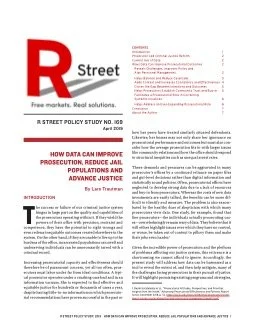
HOW DATA CAN IMPROVE PROSECUTION, REDUCE JAIL POPULATIONS AND ADVANCE JUSTICE

By Lars Trautman

The success or failure of our criminal justice system hinges in large part on the quality and capabilities of the prosecutors operating within it. If they wield the powers of their office with precision, restraint and competence, they have the potential to right wrongs and even redress inequitable outcomes created elsewhere in the system. On the other hand, if they are unable to live up to the burdens of the office, incarcerated populations can swell and undeserving individuals can be unnecessarily tarred with a criminal record. Increasing prosecutorial capacity and effectiveness should therefore be of paramount concern, yet all too often, prosecutors must labor under far from ideal conditions. A typical prosecutor operates under a crushing caseload and in an information vacuum. She is expected to find effective and equitable justice for hundreds or thousands of cases a year, despite having little-to-no information on which prosecutorial recommendations have proven successful in the past or how her peers have treated similarly situated defendants. Likewise, her bosses may not only share her ignorance on prosecutorial performance and outcomes but must also consider how the average prosecution fits in with larger issues like community relations and how the office should respond to structural inequities such as unequal arrest rates. These demands and pressures can be aggravated in many prosecutor’s offices by a continued reliance on paper files and gut-level decisions rather than digital information and statistically sound policies. Often, prosecutorial offices have neglected to develop strong data due to a lack of resources and buy-in from prosecutors. Whereas the costs of new data investments are easily tallied, the benefits can be more difficult to identify and measure. The problem is also exacerbated by the healthy dose of skepticism with which many prosecutors view data. One study, for example, found that line prosecutors—the individuals actually prosecuting cases—overwhelmingly remain wary of data. They believe that it will either highlight issues over which they have no control, or worse, be taken out of context to pillory them and make their jobs even harder. Given the incredible power of prosecutors and the plethora of problems afflicting our justice system, this reticence is a shortcoming we cannot afford to ignore. Accordingly, the present study will address how data can be harnessed as a tool to reveal the extent of, and then help mitigate, many of the challenges facing prosecutors in their pursuit of justice. It will highlight promising existing programs and strategies as well as suggest how these efforts could be expanded in the future for even greater gains. It will conclude with a short argument in favor of additional data investment.

R STREET POLICY STUDY NO. 169 April 2019

Washington, DC: R Street, 2019. 7p.

SHIFTING THE PARADIGM ON YOUTH PROBATION

By Emily Mooney and Jesse Kelley

Each year, hundreds of thousands of youth are referred to the justice system and placed on probation, which makes probation the most common sanction for young people. Yet despite its prevalence as a response to youth misbehavior, in its current form, probation is often an ineffective long-term intervention. For example, approximately 63 percent of Texas youth adjudicated delinquent and sentenced to probation in 2013 were rearrested within three years and 28 percent were re-adjudicated or convicted of a new offense within that same period. Similarly, in one study of Nebraska’s youth probation system, in the period between 2010 and 2015, one in four youth who successfully completed probation was adjudicated for a new offense within the following year. These trends are explained, in part, by the juvenile justice system’s failure to completely embrace the principles of adolescent development. Developmental research suggests that it is normal for young adults to make poor decisions during this period in life. Experimentation and risk-taking are often symptoms of a struggle to regulate one’s own emotions, anticipate the consequences of future actions or an attempt to impress one’s peers. In most cases, research also shows that adolescents will grow out of these habits on their own as they age. Thus, in many cases, youth currently placed on probation may do just as well or benefit more from local community-based interventions, such as diversion, or from dismissal from the justice system altogether. In contrast, formal justice interventions, such as probation or incarceration, may actually serve to increase the likelihood of future crime. For example, a 2013 report by the National Research Council notes: “[U] nduly harsh interventions and negative interactions between youth and justice system officials can undermine respect for the law and legal authority and reinforce a deviant identity and social disaffection.” In other cases, youth are appropriately served by youth probation but nonsensical probation practices, such as long lists of conditions or the use of incarceration as a response to technical violations, set them up for failure. Given the fact that youth are constantly developing, probation plans and services should be individualized and dynamic rather than stagnant. Further, incarcerating youth for actions that pose no substantial threat to public safety is a waste of time and resources, and jeopardizes the likelihood of future success. There have been some positive developments. Over the last decade, the total number of youth on probation has substantially declined. In 2008, approximately 540,000 youth cases led to the sanction of probation. By 2016, that number had decreased to approximately 282,000. And, in states like Virginia, the average daily youth probation population has decreased by more than half. While these trends, along with the decreasing number of youth behind bars overall, suggest positive movement away from “lock ‘em up” policies of old, there is more work to be done if we are to better serve our youth and their communities. Accordingly, the time has come for a new vision for youth probation. To achieve such a vision, states and localities must return to the core aims of juvenile justice involvement: namely, improved public safety and youth rehabilitation. They must also reassess the current paradigm regarding what probation looks like and whom it should serve. Accordingly, the present study provides an overview of the current state of youth probation and articulates a new paradigm, wherein localities limit government intervention, promote the role of families and—by better reflecting the principles found in developmental research—improve public safety; and finally, it presents a practical guide for how jurisdictions can improve their youth probation systems today.

R STREET POLICY STUDY NO. 168 April 2019

Washington, DC: R Street, 2019. 9p.

Child First? Examining Children's Perspectives of Their 'effective' Collaboration in Youth Justice Decision-making

By Stephen Case , Kathy Hampson and Andrea Nisbet

This Child First research project was commissioned by the Nuffield Foundation to gain a greater understanding of what children think about their collaboration in youth justice decision-making processes. Participation and engagement of children in youth justice processes and practice is vital, particularly since the Youth Justice Board’s adoption of Child First justice as its guiding principle and key strategic objective. Child First is an evidence-based framework for working with children incorporating four tenets: see children as children; develop pro-social identity for positive child outcomes; collaboration with children and promoting diversion away from the justice system. The focus for this project is the third tenet, ‘collaboration with children’. Purpose Children’s voices have traditionally been neglected within youth justice policy, practice and research, which have mainly been undertaken and developed by adults for adults. Consequently this project sought to readdress this imbalance with its child-focus of facilitating children to share their genuine perspectives and experiences of their involvement in decision-making processes. The study explored children’s collaboration in decisions affecting them at allstages of the Youth Justice System and focused on four interconnected research questions relating to: collaboration understandings, collaboration objectives, collaboration effectiveness and collaboration practise development. Methodology The qualitative methodological framework of Participatory Interpretivism was chosen, which prioritises coconstructing the research with justice-involved children to ensure child-centric, Child First, co-creation of all research elements. Two different sample groups of justice-involved children were identified from a range of community and custodial settings, in order to address the research questions through participatory and cocreated methods and analyses: Project Reference Group (PRG) of justice-experienced children (n= 22) collaborating together with researchers throughout the life of the project to co-create the project design (including exploring creative methods), implementation processes and interpretation of findings, recruited from one hosting Youth Justice Service (YJS). Research Participant Children (n = 66) recruited from six geographically and institutionally diverse research sites to take part in system journey interviews and complete digital/paper diaries for reflecting on involvement within- and between-stages of the Youth Justice System (3 x youth justice services, 2 x youth offending institutions and 1 x secure children’s home).

Summary of Findings and Discussion Findings provided a rich description and interpretation of children’s views from the PRG sessions and interviews undertaken with participant children at the research fieldwork sites. PRG session observations highlighted the development of the project methodology throughout the fieldwork to: ✓ ensure child-friendly, child appropriate ways of communicating with children about the research concepts and questions ✓ trial creative activities/methods to neutralise power dynamics and encourage engagement ✓ interpret research findings from the participant sample to provide an opportunity for children to discuss, challenge and validate emerging themes and sub-themes ✓ disseminate research findings – children chose a pre-recorded rap backing track and, using quotes from participants and their own words, recorded a full rap song in a professional studio. Participant children sample findings in relation to the research questions: ✓ identified what children considered to be the essential elements of ‘collaboration’, summarised as being encouraged to engage in respectful conversations, being spoken to appropriately, being provided with clear information and having their views considered and taken into account ✓ revealed that children wanted professionals to ask them about their aspirations, listen to what they were saying and offer support to help them to achieve their goals so they could move forward with their life ✓ indicated that effective collaboration practice needs to be based around building authentic, positive, nonhierarchical relationships with professionals who cared about them, in a comfortable environment, to facilitate the development of effective and relevant support ✓ identified the main areas for practice development which they believed would improve Child First practice as: o wanting professionals to listen to children and their ideas for improvement o acknowledging and breaking down power imbalances by creating child-friendly environments o keeping children continually informed throughout their involvement with youth justice agencies o involving children in decision-making about them at both strategic and practice levels to benefit their experience and improve outcomes across the whole of the Youth Justice System. Furthermore, findings revealed that children’s experiences of Child First collaboration practice are inconsistent, with some parts of the Youth Justice System better than others. For YJSs, collaboration experiences were generally positive; within custody, it varied depending on the establishment and incentive scheme level; whilst interactions and engagement with the police, courts and children’s social care services were mostly negative. A discussion of the findings provides an overview of the main themes/sub-themes developed and an exploration of how they consolidate and extend existing knowledge related to children's collaboration and youth justice decision making and children's views of effective youth justice collaboration practice.

Loughborough, UK: Loughborough University. 2024. 130p.

A Legislative Guide to Safely Reducing Out-of-Home Placements for Youth

By Noella Sudbury

The incarceration rate for youth is steadily declining, and so is youth crime. Over the past decade, the number of minors committing violent crimes and property offenses has dropped by over 50 percent. In 2019, the number of youth arrests throughout the country was at an all-time low. Combined, these statistics show us that it is safe for communities to keep youth in their homes and to effectively address youth behavior through community-based programs. While these figures show significant progress, the confinement of youth in costly, out-of-home placements is still far too common. On any given day, approximately 43,580 children are confined in detention centers and secure residential treatment programs across the United States. At an average annual price tag of $148,767 per child, the cost of this intervention to U.S. taxpayers is more than $6 billion per year. While juvenile justice stakeholders around the country uniformly express an intent to use out-of-home placements as a last resort, the data shows that the vast majority of children in out-of-home placements are there for relatively minor offenses. According to the most recent numbers, 72 percent of young people in out-of-home placements have a non-violent offense as their highest charge. Research demonstrates that in most of these cases, a costly out-of-home placement is not useful, and leads to more recidivism than community-based alternatives. The term “out-of-home placement” is used in this piece to refer to a situation in which a child is ordered to complete some type of residential programming outside of his or her home. Out-of-home placements can be publicly or privately run and broadly include juvenile detention centers, residential treatment facilities, long term secure facilities and other settings like diagnostic centers or boot camps. While these interventions vary widely in shape, size and programming, most are large—housing between 20 and 200 kids—and most are locked, meaning that those housed there are not free to leave. This paper argues that for states to reduce their reliance on out-of-home placements, policymakers need to take more direct legislative action to limit the use of these costly interventions. To accomplish this goal, this study recommends three actionable solutions that will cost states less money, keep kids with families and make communities stronger and safer for everyone.

R STREET POLICY STUDY NO. 233 June 2021, 7p.

A Child's Right to Counsel: Juvenile Public Defenders

By Jesse Kelley

Juvenile public defenders represent youth charged with crimes through the juvenile court system. Each state has a process to provide access to counsel for allegedly delinquent youth who are unable to pay for a hired private defense attorney. Indigent defense provides juveniles with the constitutionally mandated access to counsel, even if they cannot afford it. Court-appointed lawyers who work on delinquency matters in the juvenile justice field can be labeled as juvenile public defenders, indigent criminal defense attorneys, or contract or “panel” attorneys. While often interchanged, the key difference is that public defenders are part of an organized, professional office while contract attorneys are independent practitioners and usually have their own private firm. Enormous responsibility falls on each of these attorneys to diligently represent their young clients, but often these professionals are not adequately supported by the state. Supporting juvenile public defenders is necessary to ensure that justice and equitable outcomes are experienced by all young people in the juvenile court system. This policy study intends to highlight the many perils currently facing juvenile public defenders, how those disadvantages impact youth, what obstacles COVID-19 added and what solutions states can undertake to ensure that young people facing delinquency have the best resources available.

R STREET SHORTS NO. 95 October 2020, 5p.

Implementing Youth Violence Reduction Strategies. Findings from a Synthesis of the Literature on Gun, Group, and Gang Violence

By Andreea Matei ; Leigh Courtney; Krista White; Lily Robin; Paige S. Thompson; Rod Martinez; & Janine Zweig

In 2018, the Urban Institute received funding from the National Institute of Justice (NIJ) and the Office of Juvenile Justice and Delinquency Prevention (OJJDP) to develop a guide for using research-based practice to reduce youth gun and gang/group violence. The guide aims to translate research into actionable guidance on policy and practice. It is intended to inform local government, law enforcement, and community-violence-intervention stakeholders as they implement new strategies and refine existing ones to reduce youth gang/group and gun violence in their communities. The primary audience for the guide—and for this report—is the leadership of local government bodies (e.g., mayors, county executives, county commissioners, youth violence reduction task forces) because their decisions greatly influence whether violence reduction practices are successfully implemented and sustained. We frame the findings in this report with this audience in mind, although we hope and expect they will be of broader use and interest to any entity involved in designing and implementing violence reduction efforts—including community-based organizations serving youths and young adults—as well as community stakeholders, policymakers, professionals, and researchers working on youth gang and gun violence. We used a narrow scope for this project, focusing on strategies and approaches explicitly intended to reduce gun-related violence committed by young people between the ages of 10 and 25 who may also be associated with gangs/groups (box 1), including interventions that solely or primarily serve youth. 1 We did not focus on all strategies designed to reduce youth gun violence, nor on gang prevention and intervention efforts not expressly intended to reduce gun violence and homicide. Based on this framing, we focus on interventions that are immediate responses to an acute problem, rather than those that address risk factors associated with violence broadly. For this project, the Urban research team conducted the following two core tasks: ■ A review of literature on violence reduction strategies. Urban identified and synthesized research on the implementation and impact of relevant violence prevention, reduction, and control strategies. ■ A scan of practices designed to reduce violence. With input from a group of subject-matter experts advising the project, the NIJ, and the OJJDP, Urban identified 14 violence reduction interventions including focused deterrence, public health efforts, and the Spergel Model of Gang Intervention and Suppression/OJJDP Comprehensive Gang Model. Urban worked with leadership from each intervention to collect program materials, observe activities, and interview intervention leadership and staff, community partners, law enforcement and justice system personnel, and program participants. These activities resulted in the practice guide, a scan of practices, and this research synthesis, in which we lay the groundwork for the practice guide by reviewing and synthesizing the state of research about youth gun and gang/group violence.

Washington, DC: Urban Institute, 2022. 51p.