Open Access Publisher and Free Library
PUNISHMENT.jpeg

PUNISHMENT

PUNISHMENT-PRISON-HISTORY-CORPORAL-PUNISHMENT-PAROLE-ALTERNATIVES. MORE in the Toch Library Collection

Posts in Social Sciences
Suicide and Probation: A systematic review of the literature

By Coral Sirdifield, Charlie Brooker, Rebecca Marples 

A narrative systematic review was undertaken of the literature concerning the health of people on probation. In this paper, we provide an up-to-date summary of what is known about suicide and suicidal ideation and probation. This includes estimates of prevalence and possible predictors of suicide and suicidal ideation. Searches were conducted on nine databases from January 2000 to May 2017, key journals from 2000 to September 2017, and the grey literature. A total of 5125 papers were identified in the initial electronic searches but after careful double-blind review only one research paper related to this topic met our criteria, although a further 12 background papers were identified which are reported. We conclude that people on probation are a very high risk group for completed suicide, and factors associated with this include drug overdose, mental health problems, and poor physical health. There is a clear need for high quality partnership working between probation and mental health services, and investment in services, to support appropriate responses to suicide risk.

  Forensic Science International: Mind and Law Volume 1, November 2020,

download
The European Survey of Probation Staff's Knowledge of ,and Attitudes to, Mental Illness

By Charlie Brooker and Karen Tocque

There is a high prevalence of mental illness in probation including suicide. It is important for probation staff to recognise mental illness and to refer on to an appropriate agency once it is detected. Probation’s staff knowledge about mental illness was therefore examined across Europe in this study using a well validated measure – the Mental Health Literacy Scale (MHLS). Response rates within services and countries varied widely from 0-74%. Scores on the MHLS also varied considerably from 113-138 with an average score of 128. This overall average score is similar to other groups of the population such as university students and the clergy. There was a strong association between knowledge and confidence in working with people with a mental illness. The policy implications of these findings are discussed. It is clear there is a continuing role for CEP in this arena especially in the light of the Council of Europe’s recent White Paper on mental health in probation and in prisons.   

Utrecht: Confederation of European Probation, 2023. 33p.

download
The Severed Breast: The Legends of Saints Agatha and Lucy in Medieval Castilian Literature

By Andrew M. Beresford

From the preface: “ According To Popular Tradition, the Sicilian virgin, martyr, Aatha, died in Cantania at the height of the Decian persecutions (250-53). Desired by Quintianus, the low-born Roman consul, she spurned his advances and was imprisoned in a brothel, where its keeper, the appropriately named Aphrodisia, was charged with the responsibility of shattering her sexual resolve. When the attempt at coercion failed, Agatha was summoned once again before Quintianus, and after further interrogation, was subjected to a series of gruesome tortures -the most infamous being the severing of her breast. That night, while suffering in prison, Saint Peter appeared before her, and, in amiraculous act of intervention, healed her wounds and restored her breast. The following day, humiliated and enraged, Quintianus inflicted further pains upon her, and having borne her suffering with exemplary courage and steadfast devotion, she eventually yielded up her soul.

Newark, DE. Juan de la Cuesta-Hispanic Monographs. 2010. 259p.

read
Deterrence:The Legal Threat in Crime Control

By Franklin E. Zimring and Gordon .J Hawkins

From the Foreword: “Deterring future misconduct is probably the principal aim of criminal sanctions. Yet decisions are made by legislators, sentencing judges, and parole boards with virtually no knowledge and little analysis about the future effects which their actions will have. The authors have taken an important step in beginning to fil this gap. Their book is an authoritative and stimulating analysis of deterrence in criminal law.”

Chicago. The University Of Chicago Press. 1973. 385p.

read
Girolamo Savonarola

By E.L.S. Horsburgh

From the introduction: The life of Girolamo Savonarola was contained with-in the last fifty years of the fifteenth century (1452-98).. That is to say, he was exactly contemporary with a most brilliant, diversified and momentous epoch in the history of the world. He was himself very much the product of the influences which surrounded him, though in some respects he represented antagonism to them, and reaction against them. From whatever point of view he is to be regarded, it is essential first of all to understand something of the age in which he lived….

London. Methuen & Co. Ltd. 1911.

download
Virgin Martyrs: Legends of Sainthood in Late Medieval England

By Karen A. Winstead

From Amazon: Stories of the torture and execution of beautiful Christian women first appeared in late antiquity and proliferated during the early Middle Ages. A thousand years later, virgin martyrs were still the most popular female saints. Their legends, in countless retellings through the centuries, preserved a standard plot―the heroine resists a pagan suitor, endures cruelties inflicted by her rejected lover or outraged family, works miracles, and dies for Christ. That sequence was embellished by incidents emblematic of the specific saint: Juliana's battle with the devil, Barbara's immurement in the tower, Katherine's encounter with spiked wheels. Karen A. Winstead examines this seemingly static story form and discovers subtle shifts in the representation of the virgin martyrs, as their legends were adapted for changing audiences in late medieval England.

Ithaca. Cornell University Press. 1997. 209p.

read
Punishment

Edited by Richard H.Walters, J.Allencheyne And Robin K.Banks

From the cover: Progressive thought in education and childcare prefers to stress reward rather than punishment. Yet people do punish each other constantly in a multitude of subtle and sometimes not so subtle ways. What then are the occasions and effects of this persistent form of behaviour?

The work collected here explains the role of the concept in psychology and illuminates the cluster of ideas,acts and. emotions - fear, resistance, anxiety, masochism, self-criticism, obedience, socialization- that surrounds acts of punishment.

The editors move from laboratory to life and from theory to application throughout the book. 'This organization has led to a combination of both animal and human research and, when other considerations seemed about equal, to a preference for work at the human level.

read
Savonarola: His Life and Times

By Willam Clarke

From The Preface: The life and character of Savonarola Haw have been rightly supposed to present great difficulties in the historian.. From the day of his death – nay, morefrom the day of his power in Florence— up to our own times, opinions of the most diverse kind have been entertained…. The supporters of despotism, ecclesiastical and civil, have cherished a feeling of bitter enmity against the man who had such an ardent love of liberty; and they have joined the prophets of scepticism, who have had nothing but contempt and hatred for one who was so powerful a witness for religion and God. ..According to the sceptic style, he was a ridiculous and base imposter, who richly deserved the fate that befell him …

Chicago. A. C. MCCLURG & Co. I900. 342p.

read/download
The History of Persecution

By S. Chandler.

From the Preface by Charles Atmore.: This work comprises everything of importance connected with the dreadful persecutions which have disgraced human nature, both in ancient and modern times, both at home and abroad ; and is designed to prove that the things for which Christians have persecuted one another have generally been of small importance; that pride, ambition, and covetousness, have been the grand sourses of persecution; and that the religion of Jesus Christ absolutely condemns all persecution for conscience sake…..While this work was in the press, one of the most important events to Religious Liberty occurred, which has taken place the glorious area of The Revolution, in 1688 viz. the repeal of the Persecuting laws, and the passing of the New Toleration Act. This event is so closely connected with the subject matter of work, and reflects so much honour on the British government and nation that I feel highly gratified in affording the reader, a detail of the various steps which were taken to obtain that Act : which www effectually secures to every subject of the British Em.Empire all the Religious Liberty he can expect or desire. I willingly record this memorial, that we, and our children after us, may know how to appreciate our invaluable privileges ; and that the names of those nobleman and others who boldly stood forth in fthedefence and support of Religious Toleration, might be handed down to posterity, that “ our children may tell their children, and their children another generation.”

London. Longman Hirst et al. 1813.514p.

download
The Reformers: An Historical Survey of Pioneer Experiments in the Treatment of Criminals

By Torsten Eriksson

Translated from the original Swedish text by Catherine Djurklou. From the cover: Torsten Eriksson traces the history of reform experiments in criminal treatment in Europe and the United States from the sixteenth century to the present day. Experiments with separate and solitary confinements, self-government in institutions, and modern methods of treatment in psychiatric and psychological institutions are among the topics covered in Eriksson's d scription of the achievements and failures of pioneer reformers. The Reformers recounts ideas conceived, expressed, and executed throughout history which parallel our thoughts today, lending perspective to present-day attempts at prison reform. It is the first book of its kind that concentrates entirely on the develop- ment of treatment methods for criminals. This unique and scholarly volume should be essential reading for al those who take a serious interest in the treatment of offenders.

NY. Elsevier. 1976. 320p.

read/download
Persecution and Intolerance

By Mandell Creighton

From the introduction: ‘The existence of persecution in the Christian Church is a fact which is more frequently commented on than explained. Greater attention has been paid to the methods and extent of persecution than to the causes which produced it, or the causes which brought it to an end. It is indeed dificult to approach the subject in an impartial spirit. Those who write the history of any period of persecution tend either to exag- gerate or to apologise. On the one side, there is a desire to represent persecution as especially inherent in all religious systems, or it may be, as especially inherent in Christianity. On the other side, there is a tendency to plead the generally beneficent action of a particular form of religious organisation in relation to the world's progress as an extenuation of its particular misdoings. The history of persecution is a large subject…”

London. Longmans Green. 1906. 152p. Read-Me.Org classic reprint.

download
Foxe's Book Of Martyrs And The Elect Nation

By William Haller

From the Preface. My intention in these pages is to offer an account of the usually referred to as The Book of Martyrs, in what I conceive to be the context of its own time. The account is based primanly on a study of that book in the successive versions and editions published by the author in his lifetime and of the relevant contemporary literature ofProtestant edification and propaganda. Foxe published two preliminary versions of his book on the Continent in 1554 and 1559, the first English version in 1563. A much revised and greatly enlarged version in 1570, and two editions in 1576 and 138g with some further revisions and additions but no significant changes. In the century after his death five more editions, based on the text of 1583, appeared in 1596, 1610, 1631-2, 1641 and 1684. The same text, slightly bowdlerized and at certain points somewhat awkwardly conflated with the text of 1563, was again reproduced in an edition in eight volumes issued by S.R. Cattley in 1837, later revised by Josiah Pratt,and reissued with pagination unchangedi 1843-9, 1870 and 1877. Quotations from the book in the following pages correspond to the text as it appearsin the Cattley-Pratt edition, corrected as may be necessary according to theoriginal. Spelling and punctuation have been regulated according to present usage. Of the numerous other editions or versions of Foxe's book published subsequentlyto 1684. I have examined a considerable number but not all, and have found none to be complete and many to be grossly corrupt. Most of the stories ofthe Marian martyrs appeared for the first time in print in the pages of Foxe's book, but some were published separately on the Continent during Mary’s reign…”

London. Bayler and Son. 1963. 275p.

download
Martyrs Mirror, Abridged Edition.

By Thielman J. von Braght. Introduction by Graeme R. Newman

From the introduction: It is difficult to go one better than Foxe’s Book of Martyrs of the 17th century that contains endless illustrations of the dreadful tortures and deaths inflicted on the Christian martyrs. The book was so popular that it went through at least three editions in Foxe’s lifetime. Since then, various authors have reproduced aspects of Foxe’s classic, interspersed with some new prints and illustrations,  This book, compiled by Mennonites for Mennonites,  is one such book. The descriptions of the martyrs and their lives and deaths do become tiresome to the secular reader, and the lessons their editors presume to convey – those of the moral superiority, chastity and devotion to their faith – focus on the tenets of Christianity of course, but fail to make any attempt at under­standing the details, procedures, and choices of the tortures and horrible deaths inflicted upon the martyrs by their brutal captors.

download
Prisoner Lives Cut Short: The Need to Address Structural, Societal and Environmental Factors to Reduce Preventable Prisoner Deaths

By Róisín Mulgrew

The State duty to prevent preventable prisoner deaths is easy to state and substantiate. Yet prisoner death rates are increasing around the world and are often much higher than those in the community. To understand why this is happening, the findings and recommendations of the country reports of international oversight bodies and thematic reports from international rapporteurs are synthesised with contemporary rights-informed penal standards, multi-disciplinary scholarship, non-governmental organization reports and media extracts. On the basis of this knowledge, this reform-oriented article explores the impact of structural, societal and environmental factors on natural and violent prisoner deaths and how these factors operate cumulatively to create dangerous and life-threatening custodial environments. The paper makes recommendations to reaffirm and enumerate the positive obligation to protect prisoners’ lives, develop specialist standards, adopt a broader approach to prison oversight and create a specific United Nations mandate on prisoner rights.

Human Rights Law Review, 2023, 23, 1–25

download
Foxe's Book of Martyrs (abridged): An Edition for the People

Prepared by W. Grinton Berry

The Actes and Monuments (full title: Actes and Monuments of these Latter and Perillous Days, Touching Matters of the Church), popularly known as Foxe's Book of Martyrs, is a work of Protestant history and martyrology by Protestant English historian John Foxe, first published in 1563 by John Day. It includes a polemical account of the sufferings of Protestants under the Catholic Church, with particular emphasis on England and Scotland. The book was highly influential in those countries and helped shape lasting popular notions of Catholicism there. The book went through four editions in Foxe's lifetime and a number of later editions and abridgements, including some that specifically reduced the text to a Book of Martyrs. (Wikipedia)

London John Day 1563. NY. Abingdon Press. 1913. 413p.

download
Limits to Pain

By Nils Christie

Inflicting pain is a serious matter, often at variance with cherished values such as kindness and forgiveness. Attempts might therefore be made to hide the basic character of the activity, or to give various "scientific" reasons for inflicting pain. Such attempts are systematically described in this book, and related to social conditions. None of these attempts to cope with pain seem to be quite satisfactory. It is as if societies in their struggle with penal theories oscillate between attempts to solve an insoluble dilemma. Punishment is used less in some systems than in others. On the basis of examples from systems where pain is rarely inflicted, some general conditions for a low level of pain infliction are formulated. The standpoint is that if pain is to be applied, this should be done without a manipulative purpose and in a social form resembling that which is normal when people are in deep sorrow. Most of the material is from Scandinavia, but the book draws extensively on the crime control debate in the United Kingdom and USA.

Oxford. Martin Robertson. 1982. 117p.

download
Myth And Guilt : The Crime and Punishment of Mankind

By Theodor Reik

"What is the origin of the sense of collective guilt that plagues Western man? What is the crime for which man suffers an need for punishment? Dr. Theodor Reik, one of the world's leading psychoanalysts, became absorbed in this problem from many discussions with Freud. Over the years he has examined what he considers the basic myth of our civilization: the story of Adam's Fall culminating in the Passion of Christ. With the suspense of a detective story, he untangles the myth in its many expressions, tracing clues in the Bible, using the findings of psychologists and anthropologists as explanatory evidence for a startling conclusion: Man's crime, committed in prehistory, lingering in his motives and haunting him with inevitable remorse, is the sin of pride, of hybris: the killing of God, the ambition to be God.

MYTH AND GUILT opens new and suggestive avenues for understanding the religious and social motives of man and their expression in the human community."

NY. Grosset & Dunlap. 1970. 434p.

read
On Crimes and Punishments: 5th edition

Cesare Beccaria. Translation, Introduction and annotations by Graeme R. Newman and Pietro Marongiu.

Cesare Beccaria's influential treatise On Crimes and Punishments is considered a foundational work in the field of criminology. Three major themes of the Enlightenment run through the treatise: the idea that the social contract forms the moral and political basis of the work's reformist zeal; the idea that science supports a dispassionate and reasoned appeal for reforms; and the belief that progress is inextricably bound to science. All three provide the foundation for accepting Beccaria's proposals.

It is virtually impossible to ascertain which of several versions of the treatise that appeared during his lifetime best reflected Beccaria's thoughts. His use of many Enlightenment ideas also makes it difficult to interpret what he has written. While Enlightenment thinkers advocated free men and free minds, there was considerable disagreement as to how this might be achieved, except in the most general terms.

The editors have based this translation on the 1984 Francioni text, the most exhaustive critical Italian edition of Dei delitti e delle pene. This edition is the last that Beccaria personally oversaw and revised. This translation includes an outstanding opening essay by the editors and is a welcome introduction to Beccaria and the beginnings of criminology.

New Brunswick. Transaction. 2016. 191p.

read
One Day In The Life of Ivan Denisovich

By Alexander Solzhenitsyn. Translated from the Russian by Ralph Parker.

One Day in the Life of Ivan Denisovich is an undisputed classic of contemporary literature. First published (in censored form) in the Soviet journal Novy Mir in 1962, it is the story of labor-camp inmate Ivan Denisovich Shukhov as he struggles to maintain his dignity in the face of communist oppression. On every page of this graphic depiction of Ivan Denisovich's struggles, the pain of Aleksandr Solzhenitsyn's own decade-long experience in the gulag is apparent—which makes its ultimate tribute to one man's will to triumph over relentless dehumanization all the more moving.

An unforgettable portrait of the entire world of Stalin's forced-work camps, One Day in the Life of Ivan Denisovich is one of the most extraordinary literary works to have emerged from the Soviet Union. The first of Solzhenitsyn's novels to be published, it forced both the Soviet Union and the West to confront the Soviet's human rights record, and the novel was specifically mentioned in the presentation speech when Solzhenitsyn was awarded the Nobel Prize in Literature in 1970. Above all, One Day in the Life of Ivan Denisovich establishes Solzhenitsyn's stature as "a literary genius whose talent matches that of Dostoevsky, Turgenev, Tolstoy" (Harrison Salisbury, The New York Times).

This unexpurgated, widely acclaimed translation by H. T. Willetts is the only translation authorized by Solzhenitsyn himself.

NY. E.P. Dutton. Signet. 1963. 155p.

read
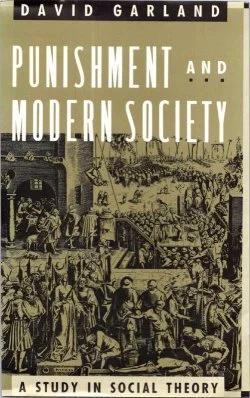
Punishment And Modern Society: A Study In Social Theory

By David Garland

This analysis of the punishment of offenders argues that the social meaning of punishment is poorly understood and needs to be explored if we are to discover ways of punishing that match our social ideals better than current punishments do.

The analysis emphasizes that the institutional framework of modern penology tends to narrow our perceptions of punishment and also to obscure its social ramifications. Thus, it is crucial to understand the major theoretical perspectives on punishment. These include Durkheim's emphasis on punishment's moral effects, Foucault's view that disciplinary punishments operate as power-knowledge mechanisms within broader strategies of domination, the cultural approach of Robert Elias, and the Marxist perspective. The analysis concludes that each approach represents an incomplete, but useful perspective on different aspects of punishment and that future discussions should consider punishment to be a complex social institution that should be analyzed as part of mainstream sociology.

Chicago. The University of Chicago Press, 1990. 308p.

read