Open Access Publisher and Free Library
PUNISHMENT.jpeg

PUNISHMENT

PUNISHMENT-PRISON-HISTORY-CORPORAL-PUNISHMENT-PAROLE-ALTERNATIVES. MORE in the Toch Library Collection

Posts in justice
Towards Race Equality: Exploring the effectiveness of Independent Monitoring Boards at monitoring outcomes for Black, Asian and minority ethnic women in prison

By Amal Ali and Hannah Pittaway

This ground-breaking project centres on the lived experiences of Black, Asian and minority ethnic women in prison, and comes at a time when there is increased attention on race and gender inequality in the criminal justice system, but the combination of these issues rarely receives any government attention. We received over 300 survey responses from women in prison, prison staff and IMBs, improving our understanding of the double disadvantage that women from minority ethnic backgrounds face. We are very grateful to the women with lived experience who co-designed the survey and all those in custody for their honesty and openness when completing it. Their accounts of direct and indirect racism and poor treatment are shocking and distressing. Even more upsetting is their sense of fatalism - they see it as part of their everyday lives. The women lack confidence in the complaints system, do not trust that they will be treated fairly and are often unaware of how the IMB can help. The impact of the pandemic has made this worse. There is an urgent need to address these issues nationally and locally. IMBs play an important role given their day-to-day presence in prisons. Community scrutiny is a vital tool to hold criminal justice agencies to account. The CJA has focused on improving community scrutiny for several years looking at police powers, police custody and now prison custody. We consistently see the same themes: the need for better and more consistent data collection and analysis, more effective equalities training and support, and for community volunteers to be more representative of the populations in the criminal justice system. The recommendations in these reports map out sensible steps Her Majesty’s Prison and Probation Service (HMPPS), the Ministry of Justice (MoJ) and IMBs can take to make positive change and I hope to see them being implemented with haste.  

London: Criminal Justice Alliance, 2022. 38p.

download
Effects of COVID-19 on Prison Operations

By Tammy Felix, David Pyrooz, Meghan Novisky, Jennifer Tostlebe, and Jessica Dockstader

The coronavirus disease 2019 (COVID-19) pandemic continues to pose a substantial problem for our country’s correctional agencies. Since the onset of COVID-19, practical information about effective responses for correctional agencies has been lacking. Correctional leadership has been forced to innovate to keep their staff and populations safe and ensure continuity of operations. Along with the need to make modifications, many state departments of corrections have faced drastically reduced budgets. After two years of these challenges, correctional leaders and staff as well as incarcerated populations have been severely affected. In addition to their normal responsibilities, staff have had to take on additional duties and adjust to major changes in their work environment. The National Institute of Corrections (NIC) recognizes the importance of understanding how correctional systems across the country continue to modify their operations. Studying the outcomes of these modifications is essential to assist the broader correctional system in reaching a new normal. CNA, the Correctional Leaders Association (CLA), and the National Sheriffs’ Association (NSA) worked with NIC to gather and synthesize fact-based, practical information regarding these modifications. CNA, CLA, and NSA, in conjunction with NIC, recruited individuals from jails and prisons from all 50 states to participate in a survey and focus groups to assess the effect of the COVID-19 pandemic on their operations. This report focuses on the effect of COVID-19 in state correctional systems, referred to as correctional facilities moving forward, by providing information on the modifications correctional facilities made in response to COVID-19, a summary of effects on operations, a discussion of themes that emerged during the focus groups, and highlights of the innovative responses that correctional facilities have taken. The following are our key findings.

Arlington, VA: CNA. 2023. 51p.

download
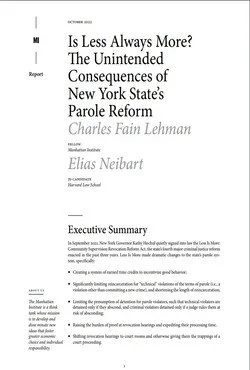
Is Less Always More? The Unintended Consequences of New York State's Parole Reform

By Elias Neibart

In September 2021, New York Governor Kathy Hochul quietly signed into law the Less Is More: Community Supervision Revocation Reform Act, the state’s fourth major criminal justice reform enacted in the past three years. Less Is More made dramatic changes to the state’s parole system, specifically: Creating a system of earned time credits to incentivize good behavior;Significantly limiting reincarceration for “technical” violations of the terms of parole (i.e., a violation other than committing a new crime), and shortening the length of reincarceration;Limiting the presumption of detention for parole violators, such that technical violators are detained only if they abscond, and criminal violators detained only if a judge rules them at risk of absconding;Raising the burden of proof at revocation hearings and expediting their processing time;Shifting revocation hearings to court rooms and otherwise giving them the trappings of a court proceeding. These changes, supporters argued, were necessary to minimize the unnecessary and counterproductive reincarceration of petty technical violators—the parolee who is on the straight and narrow but who nonetheless finds himself back in prison due to a minor slip-up. In making these changes, however, they also made it harder to detain many serious offenders, including serious criminal violators; evidence from NYC jails show that detention of even violent criminal violators fell in the wake of Less Is More. In addition, it created a greater burden on victThis, we argue, is due to the broad-reaching procedural changes enacted by Less Is More. The lost presumption of detention, heightened evidentiary standards, and constraints placed on the use of technical violations—all of which apply not only to petty technical violators but to more dangerous parolees—have defanged the supervision system. While reforms that reward good behavior and do not over-punish minor violations are desirable, we propose a series of changes to blunt the unintended effects on the more serious offender population. Specifically, we suggest several reforms of the reformims, who are often now involved in revocation hearings in addition to new criminal proceedings.

New York: Manhattan Institute, 2022. 28p.

download
Mental health and probation: A systematic review of the literature

By Coral Sirdifield, Charlie Brooker, Rebecca Marples

A narrative systematic review was undertaken of the literature concerning the health of people on probation. In this paper, we provide an up-to-date summary of what is known about the most effective ways of providing mental healthcare for people on probation, and what is known about the relationship between different systems and processes of mental healthcare provision, and good mental health outcomes for this population. A total of 5125 papers were identified in the initial electronic searches but after careful double-blind review only four papers related to mental health that met our criteria, although a further 24 background papers and 13 items of grey literature were identified which are reported. None of the included studies was a randomized controlled trial although one was quasi-experimental. Two of the other papers described mental health disorders in approved premises and the other described the impact and learning from an Offender Personality Disorder project. We conclude that the literature is bereft of evidence on how to effectively provide mental healthcare for people on probation.

Forensic Science International: Mind and Law Volume 1, (2020) 100003

download
Substance Misuse and Community Supervision: A systematic review of the literature

By Coral Sirdifield, Charlie Brooker, Rebecca Marples

A narrative systematic review was undertaken of the literature concerning the health of people on probation or parole (community supervision). In this paper, we provide an up-to-date summary of what is known about substance misuse in this context. This includes estimates of the prevalence and complexity of substance misuse in those under community supervision, and studies of the effectiveness of approaches to treating substance misuse and engaging and retaining this population in treatment. A total of 5125 papers were identified in the initial electronic searches, and after careful double-blind review only 31 papers related to this topic met our criteria. In addition, a further 15 background papers were identified which are reported. We conclude that internationally there is a high prevalence and complexity of substance misuse amongst people under community supervision. Despite clear benefits to individuals and the wider society through improved health, and reduced re-offending; it is still difficult to identify the most effective ways of improving health outcomes for this group in relation to substance misuse from the research literature. Further research and investment is needed to support evidence-based commissioning by providing a detailed and up-to-date profile of needs and the most effective ways of addressing them, and sufficient funds to ensure that appropriate treatment is available and its impact can be continually measured. Without this, it will be impossible to truly establish effective referral and treatment pathways providing continuity of care for individuals as they progress through, and exit, the criminal justice pathway.

Forensic Science International: Mind and Law 1 (2020) 100031

download
Suicide and Probation: A systematic review of the literature

By Coral Sirdifield, Charlie Brooker, Rebecca Marples

A narrative systematic review was undertaken of the literature concerning the health of people on probation. In this paper, we provide an up-to-date summary of what is known about suicide and suicidal ideation and probation. This includes estimates of prevalence and possible predictors of suicide and suicidal ideation. Searches were conducted on nine databases from January 2000 to May 2017, key journals from 2000 to September 2017, and the grey literature. A total of 5125 papers were identified in the initial electronic searches but after careful double-blind review only one research paper related to this topic met our criteria, although a further 12 background papers were identified which are reported. We conclude that people on probation are a very high risk group for completed suicide, and factors associated with this include drug overdose, mental health problems, and poor physical health. There is a clear need for high quality partnership working between probation and mental health services, and investment in services, to support appropriate responses to suicide risk.

Forensic Science International: Mind and Law, Volume 1, November 2020,

download
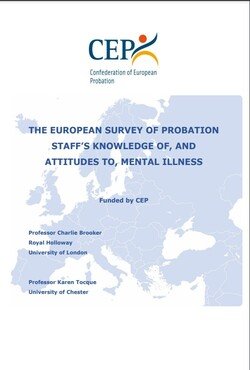
The European Survey of Probation Staff's Knowledge of ,and Attitudes to, Mental Illness

By Charlie Brooker and Karen Tocque

There is a high prevalence of mental illness in probation including suicide. It is important for probation staff to recognise mental illness and to refer on to an appropriate agency once it is detected. Probation’s staff knowledge about mental illness was therefore examined across Europe in this study using a well validated measure – the Mental Health Literacy Scale (MHLS). Response rates within services and countries varied widely from 0-74%. Scores on the MHLS also varied considerably from 113-138 with an average score of 128. This overall average score is similar to other groups of the population such as university students and the clergy. There was a strong association between knowledge and confidence in working with people with a mental illness. The policy implications of these findings are discussed. It is clear there is a continuing role for CEP in this arena especially in the light of the Council of Europe’s recent White Paper on mental health in probation and in prisons.

Utrecht: Confederation of European Probation, 2023. 33p.

download
Persons Under the Supervision of Probation Agencies SPACE II - 2021

By Marcelo F. Aebi and Yuji Z. Hashimoto

The main findings of the SPACE II 2021 report are presented in a separate booklet (Probation and Prisons in Europe, 2021: Key Findings of the SPACE reports), which includes analyses of the data collected and comparisons with the main results of the SPACE I 2021 report on prison populations. This section only provides a snapshot of the situation regarding the use probation in Europe. ➢ The participation rate in the SPACE II 2021 Survey was satisfactory: 48 out of the 52 countries or administrative entities of the 47 Council of Europe Member States answered the questionnaire. ➢ Probation agencies are usually placed under the authority of the National Ministry of Justice. In ten countries/administrative entities, the Ministry of Justice is neither responsible nor co-responsible for their functioning. ➢ Probation agencies are independent from the Prison Administrations in 26 countries/administrative entities, while in 15 there is a shared prison and probation administration. ➢ 25 of the 48 probation agencies which provided data use the person as the counting unit. Seven probation agencies do not use the person as the counting unit for neither stock nor flow, two do not use the person for flow and 12 use it partially, most often only for the total stock and the total flow. ➢ Stock of probationers: On 31 January 2021, there were 1 773 556 persons under the supervision of the 32 probation agencies that provided data on this item and use the person as the counting unit for their stock. The absolute number of persons on probation is much higher than in 2019 because the Russian Federation provided data for SPACE II 2021 but not for SPACE II 2020. ➢ Flow of entries to probation: During the year 2020, 1 860 352 were placed under the supervision of the 29 probation agencies which provided data on this item and use the person as the counting unit for their flow of entries. ➢ Flow of exits from probation: During the year 2020, 1 700 528 persons ceased to be under the supervision of the 29 probation agencies which provided data on this item and use the person as the counting unit for their flow of exits. ➢ Non-custodial sanctions and measures are seldom used as an alternative to pre-trial detention; only 14% of the probation population on 31 January 2021 corresponds to persons placed under supervision before trial in the 18 probation agencies which provided data on this item and use the person as the counting unit for their stock of probationers. ➢ On 31 January 2021, among the 28 probation agencies which provided figures on female probation clients and use the person as the counting unit, women represented 11% of the total probation population. ➢ Among the 20 probation agencies that provided figures on foreigners and use the person as the counting unit, foreigners represented 13% of the total probation population. ➢ Among the 20 probation agencies that provided figures on minors and use the person as the counting unit, minors represented 4.8% of the total probation population. ➢ Among the 27 probation agencies that provided figures on total stock and total staff and use the person as the counting unit, there are around 38 probationers for each probation staff member, but that ratio varies considerably across countries. ➢ Among the 32 probation agencies that provided figures on total staff and pre-sentence reports, there are around six (6) pre-sentence reports produced for each probation staff member across Europe. ➢ In 40 jurisdictions, probation is used for all of the major categories of criminal offences specified (against persons, against property, drug offences, road traffic offences).

Strasbourg: Council of Europe & University of Lausanne, 2022 . 149p.

download
Prisoner Lives Cut Short: The Need to Address Structural, Societal and Environmental Factors to Reduce Preventable Prisoner Deaths

By Róisín Mulgrew

The State duty to prevent preventable prisoner deaths is easy to state and substantiate. Yet prisoner death rates are increasing around the world and are often much higher than those in the community. To understand why this is happening, the findings and recommendations of the country reports of international oversight bodies and thematic reports from international rapporteurs are synthesised with contemporary rights-informed penal standards, multi-disciplinary scholarship, non-governmental organization reports and media extracts. On the basis of this knowledge, this reform-oriented article explores the impact of structural, societal and environmental factors on natural and violent prisoner deaths and how these factors operate cumulatively to create dangerous and life-threatening custodial environments. The paper makes recommendations to reaffirm and enumerate the positive obligation to protect prisoners’ lives, develop specialist standards, adopt a broader approach to prison oversight and create a specific United Nations mandate on prisoner rights.

Human Rights Law Review, 2023, 23, 1–25

download
Foxe's Book of Martyrs (abridged): An Edition for the People

Prepared by W. Grinton Berry

The Actes and Monuments (full title: Actes and Monuments of these Latter and Perillous Days, Touching Matters of the Church), popularly known as Foxe's Book of Martyrs, is a work of Protestant history and martyrology by Protestant English historian John Foxe, first published in 1563 by John Day. It includes a polemical account of the sufferings of Protestants under the Catholic Church, with particular emphasis on England and Scotland. The book was highly influential in those countries and helped shape lasting popular notions of Catholicism there. The book went through four editions in Foxe's lifetime and a number of later editions and abridgements, including some that specifically reduced the text to a Book of Martyrs. (Wikipedia)

London John Day 1563. NY. Abingdon Press. 1913. 413p.

download
On Crimes and Punishments: 5th edition

Cesare Beccaria. Translation, Introduction and annotations by Graeme R. Newman and Pietro Marongiu.

Cesare Beccaria's influential treatise On Crimes and Punishments is considered a foundational work in the field of criminology. Three major themes of the Enlightenment run through the treatise: the idea that the social contract forms the moral and political basis of the work's reformist zeal; the idea that science supports a dispassionate and reasoned appeal for reforms; and the belief that progress is inextricably bound to science. All three provide the foundation for accepting Beccaria's proposals.

It is virtually impossible to ascertain which of several versions of the treatise that appeared during his lifetime best reflected Beccaria's thoughts. His use of many Enlightenment ideas also makes it difficult to interpret what he has written. While Enlightenment thinkers advocated free men and free minds, there was considerable disagreement as to how this might be achieved, except in the most general terms.

The editors have based this translation on the 1984 Francioni text, the most exhaustive critical Italian edition of Dei delitti e delle pene. This edition is the last that Beccaria personally oversaw and revised. This translation includes an outstanding opening essay by the editors and is a welcome introduction to Beccaria and the beginnings of criminology.

New Brunswick. Transaction. 2016. 191p.

read
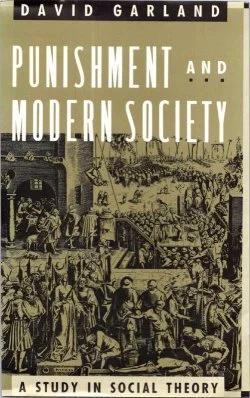
Punishment And Modern Society: A Study In Social Theory

By David Garland

This analysis of the punishment of offenders argues that the social meaning of punishment is poorly understood and needs to be explored if we are to discover ways of punishing that match our social ideals better than current punishments do.

The analysis emphasizes that the institutional framework of modern penology tends to narrow our perceptions of punishment and also to obscure its social ramifications. Thus, it is crucial to understand the major theoretical perspectives on punishment. These include Durkheim's emphasis on punishment's moral effects, Foucault's view that disciplinary punishments operate as power-knowledge mechanisms within broader strategies of domination, the cultural approach of Robert Elias, and the Marxist perspective. The analysis concludes that each approach represents an incomplete, but useful perspective on different aspects of punishment and that future discussions should consider punishment to be a complex social institution that should be analyzed as part of mainstream sociology.

Chicago. The University of Chicago Press, 1990. 308p.

read
The Roots of Evil: A Social History Of Crime And Punishment

By Christopher Hibbert

The Roots of Evil: A Social History of Crime and Punishment is a book written by Christopher Hibbert in 1963 which traces the development of the social justice system, mostly from an English perspective, though information about the continent and the United States is also included.

Cruel punishments have an inevitable tendency to produce cruelty...

— Sir Samuel Romilly 1813

With this conclusion, Hibbert traces the development and decline of cruel punishments, the guillotine in France and the modern prison in England, which still used hanging when the book was first published.[1] The chapter Causes and Cures contains the salient point that "There seems, indeed, no surer way of keeping a boy [or girl] from a life of crime than providing him with a happy and worthwhile childhood in a family which loves him and which he loves",[2] and suggests that while "a crime is only a crime when a law ... makes it so", pointing out that by the nineteenth century nine of the ten laws which Hebraic law punished with stoning "had ceased to be offences in civilized European societies".[3] Although "Drink and drugs and speed and sex are exciting, and so is crime and in cities the opportunity for crime are extensive and the rewards are high, the chances of escape are greater and most of the police are overworked and some of them may be corruptible."[4] While it is suggested that to change crime requires changing society, the last sentence of the chapter is "No completely satisfactory answers have yet been found."[5]

The last chapter, Progress and Palindrome, points out that "the solution lies not in making punishments more severe, but in making them more certain and in relating them to each individual criminal, so that if he is reformable he may be reformed."[6] Also, "there are germs of evil in the best of us and seeds of good in the worst",[7] and there are no quick and inexpensive solutions to the problem of crime, which requires changing the soil, more than changing the seeds.

Boston. Little Brown. 499p.1963.

read
Torture and the Law of Proof : Europe and England in the Ancien Régime

By John H. Langbein

In Torture and the Law of Proof John H. Langbein explores the world of the thumbscrew and the rack, engines of torture authorized for investigating crime in European legal systems from medieval times until well into the eighteenth century. Drawing on juristic literature and legal records, Langbein's book, first published in 1977, remains the definitive account of how European legal systems became dependent on the use of torture in their routine criminal procedures, and how they eventually worked themselves free of it.

The book has recently taken on an eerie relevance as a consequence of controversial American and British interrogation practices in the Iraq and Afghanistan wars. In a new introduction, Langbein contrasts the "new" law of torture with the older European law and offers some pointed lessons about the difficulty of reconciling coercion with accurate investigation. Embellished with fascinating illustrations of torture devices taken from an eighteenth-century criminal code, this crisply written account will engage all those interested in torture's remarkable grip on European legal history.

Chicago. he University of Chicago Press. 1976. 230p.

read
Civilization and Barbarism: Punishing Criminals in the 21st Century

By Graeme R. Newman

The practice of mass incarceration has come under increasing criticism by criminologists and corrections experts who, nevertheless, find themselves at a loss when it comes to offering credible, practical, and humane alternatives. In Civilization and Barbarism, Graeme R. Newman argues this impasse has arisen from a refusal to confront the original essence of punishment, namely, that in some sense it must be painful. He begins with an exposition of the traditional philosophical justifications for punishment and then provides a history of criminal punishment. He shows how, over time, the West abandoned short-term corporal punishment in favor of longer-term incarceration, justifying a massive bureaucratic prison complex as scientific and civilized. Newman compels the reader to confront the biases embedded in this model and the impossibility of defending prisons as a civilized form of punishment. A groundbreaking work that challenges the received wisdom of “corrections,” Civilization and Barbarism asks readers to reconsider moderate corporal punishment as an alternative to prison and, for the most serious offenders, forms of incapacitation without prison.

The book also features two helpful appendixes: a list of debating points, with common criticisms and their rebuttals, and a chronology of civilized punishments.

Albany NY. SUNY Press. 2019. 272p.

NOTE: This file is a prepublication proof and may contain occasional errors.

download
Broken Rules: Laws Meant to End Debtors' Prisons are Failing Nebraskans

By ACLU Smart Justice Nebraska


Fairness and freedom should not depend on how much money an individual possesses. Nebraskans who are struggling financially should have the same experience in the legal system as anyone else. Yet today, despite United States Supreme Court precedent and safeguards at the federal and state level, Nebraskans are still routinely confined simply because they lack the resources to pay fines or post bail or bond. This report reveals the findings of an intensive ACLU of Nebraska court watching project, the first of its scope in the state. ACLU staff and interns spent roughly three months in 2022 observing bail and sentencing hearings to document how recent reforms from the Nebraska Legislature — part of the nationwide movement to reform modern-day debtors’ prisons — are being implemented. What this project uncovered is a cause for concern. Observations from a combined 2,300+ bail and sentencing hearings show systemic disregard of laws meant to protect Nebraskans who are struggling financially. They also show continued reflexive practices that perpetuate a modern “debtors’ prison,” where Nebraskans are routinely confined simply because they cannot afford to post cash bail or pay fees or fines. This publication discusses the legal framework behind bail, fees and fines in Nebraska’s criminal legal system before detailing the court watching project’s findings and offering recommendations for reform. As readers progress through its pages, it is critical to remember that if the system were functioning as the Constitution and state law envision, in most cases, any person assigned cash bail or assessed a cou  


Lincoln, NE: American Civil Liberties Union - Nebraska, 2022. 36p.

Read / Download
Alternatives to Prosecution: San Francisco's Collaborative Courts and Pretrial Diversion

By Elsa Augustine, Slissa Skog, Johanna Lacoe and Steven Raphael


Criminal justice reform has gained bipartisan support at a national level in recent years. One common reform practice is to divert some defendants from traditional criminal justice proceedings to alternative programs that provide social services or attempt to address underlying drivers of criminal justice involvement. San Francisco referred over 16,000 individuals between 2008 and 2018 through the Collaborative Courts and Pretrial Diversion programs; overall one quarter of filed criminal cases were referred to diversion. A larger share of new filings were referred to diversion in recent years as San Francisco's filing rates decreased at a faster pace than the diversion referral rate. In keeping with the general criminal justice-involved population in San Francisco, individuals referred to diversion programs were more likely to be young men of color than the average San Franciscan. People who were referred to diversion programs had longer criminal justice histories than those whose cases were not referred, but were otherwise demographically similar. Referred cases had lower conviction rates than nondiverted cases, but referred individuals had higher rates of subsequent criminal justice contact, on average. Individuals who were re-arrested after a diversion referral were typically arrested on less severe offenses than the original offenses. While this paper does not present causal estimates of the effects of diversion programs, future research will estimate the impacts of a referral to diversion on case outcomes and subsequent criminal justice contact, among other outcomes.


Los Angeles: California Policy Lab, 2020. 36p

Read / Download
Does Cash Bail Deter Misconduct?

By Aurelie Ouss and Megan T. Stevenson


Dozens of jurisdictions across the country are engaging in bail reform, but there are concerns that reducing monetary incentives will increase pretrial misconduct. We provide new evidence on this question by evaluating a prosecutor-led bail reform in Philadelphia. In February 2018, Philadelphia’s district attorney announced that his office would no longer request monetary bail for defendants charged with certain eligible offenses. This was an advisory change; bail magistrates retained final say. Using a difference-in-differences approach we find that this policy led to a 22% increase in the likelihood a defendant will be released with no monetary or supervisory conditions, but had no impact on pretrial detention. This provides a unique opportunity to evaluate the primary justification for cash bail: that it provides incentive for released defendants to appear in court. We find no evidence that cash bail or pretrial supervision has a deterrent effect on failure-to-appear or pretrial crime. We argue that one explanation is that asymmetric reputational penalties cause magistrates to set bail higher than necessary. In addition, our study provides evidence on the role of discretion within criminal justice reform. We find that discretion led to racial disparities in implementation, and diluted the impacts of the reform.

Working Paper, 2022. 59p

Read / Download
The Efficacy of Prosecutor-Led, Adult Diversion for Misdemeanor Offenses

By Viet Nguyen


Criminal records can produce collateral consequences that affect access to employment, housing, and other outcomes. Adverse collateral consequences may be particularly acute for adults with limited professional capital and social networks. In recent years, there has been an expansion of prosecutor-led diversion programs that attempt to curb the effect of collateral consequences. However, the expansion of diversion programs may lead to net-widening if these programs simply substitute for cases that would have otherwise been dismissed. This study assesses the impact of an adult, misdemeanor diversion program on long-term recidivism outcomes and the future amount of court-imposed fees and sanctions. The misdemeanor diversion program reduced reconviction rates but produced a short-term net-widening effect by drawing in defendants whose cases would normally have been dismissed. The net-widening effects were curtailed over the longer term as the program significantly increased expungement rates. The results were driven by younger defendants. Implications of this study for theories of criminal desistance and policies around expunging criminal records are discussed.

Philadelphia: Working Paper, University of Pennsylvania, Criminology2022. 43p.

Read / Download
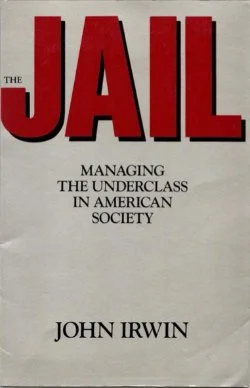
Jail: Managing The Underclass In American Society

By John Irwin

Combining extensive interviews with his own experience as an inmate, John Irwin constructs a powerful and graphic description of the big-city jail. Unlike prisons, which incarcerate convicted felons, jails primarily confine arrested persons not yet charged or convicted of any serious crime. Irwin argues that jail disorients and degrades and instead of controlling the disreputable, actually increases their number by helping to indoctrinate new recruits to the rabble class. In a forceful conclusion, Irwin addresses the issue of jail reform and the matter of social control demanded by society.

Los Angeles, California University of California Press, Ltd. 1985. 160p.

download