Open Access Free Library
TERRORISM.jpeg

TERRORISM

Terrorism-Domestic-International-Radicalization-War-Weapons-Trafficking-Crime-Mass Shootings

Posts in Crime & Criminology
Criminal Justice Interventions for Preventing Radicalisation, Violent Extremism and Terrorism: An Evidence and Gap Map

By Michelle Sydes | Lorelei Hine | Angela Higginson4 | James McEwan | Laura Dugan | Lorraine Mazerolle3

Background: Criminal justice agencies are well positioned to help prevent the radicalisation of individuals and groups, stop those radicalised from engaging in violence, and reduce the likelihood of terrorist attacks. This Evidence and Gap Map (EGM) presents the existing evidence and gaps in the evaluation research. Objectives: To identify the existing evidence that considers the effectiveness of criminal justice interventions in preventing radicalisation, violent extremism and terrorism. Search Methods: We conducted a comprehensive search of the academic and grey literature to locate relevant studies for the EGM. Our search locations included the Global Policing Database (GPD), eight electronic platforms encompassing over 20 academic databases, five trial registries and over 30 government and non‐ government websites. The systematic search was carried out between 8 June 2022 and 1 August 2022. Selection Criteria: We captured criminal justice interventions published between January 2002 and December 2021 that aimed to prevent radicalisation, violent extremism, and/or terrorism. Criminal justice agencies were broadly defined to include police, courts, and corrections (both custodial and community). Eligible populations included criminal justice practitioners, places, communities or family members, victims, or individuals/groups who are radicalised or at risk of becoming radicalised. Our map includes systematic reviews, randomised controlled trials, and strong quasi‐experimental studies. We placed no limits on study outcomes, language, or geographic location. Data Collection and Analysis: Our screening approach differed slightly for the different sources, but all documents were assessed in the systematic review software program DistillerSR on the same final eligibility criteria. Once included, we extracted information from studies using a standardised form that allowed us to collect key data for our EGM. Eligible systematic reviews were assessed for risk of bias using the AMSTAR 2 critical appraisal tool. Main Results: The systematic search identified 63,763 unique records. After screening, there were 70 studies eligible for the EGM (from 71 documents), of which two were systematic reviews (assessed as moderate quality), 16 were randomised controlled trials, and 52 were strong quasi‐experimental studies. The majority of studies (n = 58) reported on policing interventions. Limited evidence was found related to courts or corrections interventions. The impact of these interventions was measured by a wide variety of outcomes (n = 50). These measures were thematically grouped under nine broad categories including (1) terrorism, (2) extremism or radicalisation, (3) non‐terror related crime and recidivism, (4) citizen perceptions/intentions toward the criminal justice system and government, (5) psychosocial, (6) criminal justice practitioner behaviours/attitudes/ beliefs, (7) racially targeted criminal justice practices, (8) investigation efficacy, and (9) organisational factors. The most commonly assessed outcomes included measures of terrorism, investigation efficacy, and organisational factors. Very limited research assessed intervention effectiveness against measures of extremism and/or radicalisation. Authors’ Conclusions: Conducting high‐quality evaluation research on rare and hidden problems presents a challenge for criminal justice research. The map reveals a number of significant gaps in studies evaluating criminal justice responses to terrorism and radicalisation. We conclude that future research should focus attention on studies that consolidate sound measurement of terrorism‐related outcomes to better capture the potential benefits and harms of counter‐terrorism programs, policies and practices which involve criminal justice agencies.

Campbell Systematic Reviews, 19(4). 2023. 53p.

The Use of Artificial Intelligence in Countering Online Radicalisation in Indonesia

By Raneeta Mutiara

Digitalisation of the activities of Islamic State in Iraq and Syria (ISIS) has been a longstanding issue in Southeast Asia. In recent years, the nature of this threat has become more widespread and complex. In countries like Indonesia, where radicalisation is primarily offline, online platforms still play a role in spreading extremist ideas and maintaining ideological networks. The phenomenon of online radicalisation can erode social cohesion, highlighting the need for strategic measures to counter its destabilising impact.

Indonesia has made several attempts to combat online radicalisation. The National Counter Terrorism Agency of Indonesia (BNPT) initiated the Duta Damai Dunia Maya campaign to counter harmful content on the Internet. Other online initiatives, such as BincangSyariah and Islamidotco, have also been promoting Islamic literacy, moderating religious interpretations, and correcting misleading narratives.

Nevertheless, Indonesia still encounters online radicalisation cases. In July 2024, Indonesia’s elite counterterrorism unit, Densus 88, detained a 19-year-old student who had expressed allegiance to ISIS through social media and was believed to be planning attacks on religious sites before he was caught.

The swift progress of Artificial Intelligence (AI), especially in areas of machine learning (ML) and natural language processing (NLP), presents both opportunities and challenges in combating online radicalisation in Indonesia. AI, generally defined as machines mimicking human intelligence, enables systems to recognise patterns, analyse content, and produce outputs in text, images, and videos. Within this AI landscape, ML allows models to enhance themselves through data, while NLP, as a specific ML application, deals with understanding and generating human language. These advancements provide possibilities for creating early detection systems, content moderation tools, and sentiment analysis tools that can spot and counter extremist messages online.

For the research, the author conducted interviews with fifteen experts across different fields, including law enforcement officers, academics, representatives from civil society organisations (CSOs), and employees of AI start-ups in Indonesia. The qualitative data collected from this process have been analysed through thematic analysis, and the preliminary findings reveal that AI can indeed complement the conventional CVE (countering violent extremism) methods in the country, albeit not without challenges

S. Rajaratnam School of International Studies, NTU Singapore, 2025. 6p.

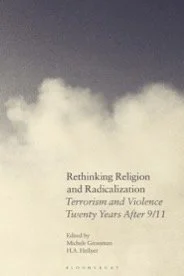
Rethinking Religion and Radicalization: Terrorism and Violence Twenty Years After 9/11

Edited by Michele Grossman

With contributions from a range of regions and disciplines, this open access volume offers theoretically compelling and empirically rich new insights on the relationship between religion and violent extremism. The role of religion and religiosity in processes of radicalisation to violence has been at the forefront of debates around terrorism and extremism for decades. The events of 9/11 gave new impetus to these debates, cementing assumptions about the role of Islam as the key driver for religiously inspired violent radicalisation, and defining the way in which radicalisation to violence is understood. The years since 9/11 have seen a striking diversification in the terrorist and violent extremist landscape, yet the treatment of how religious beliefs, concepts and histories are entangled with established and emergent violent ideologies and social movements has changed far less. By looking beyond Islamist-inspired or attributed terrorism, this volume explores how violent extremists instrumentalise religion and religiosity in unexpected ways, from Orthodox Christianity and Hindutva to ‘conspirituality’, far-right extremism, and single-issue social movements. The eBook editions of this book are available open access under a CC BY-NC-ND 4.0 licence on bloomsburycollections.com

London: Bloomsbury Academic, 2025. 312p.