Open Access Publisher and Free Library
CRIME+CRIMINOLOGY.jpeg

CRIME

Violent-Non-Violent-Cyber-Global-Organized-Environmental-Policing-Crime Prevention-Victimization

Posts in Policy
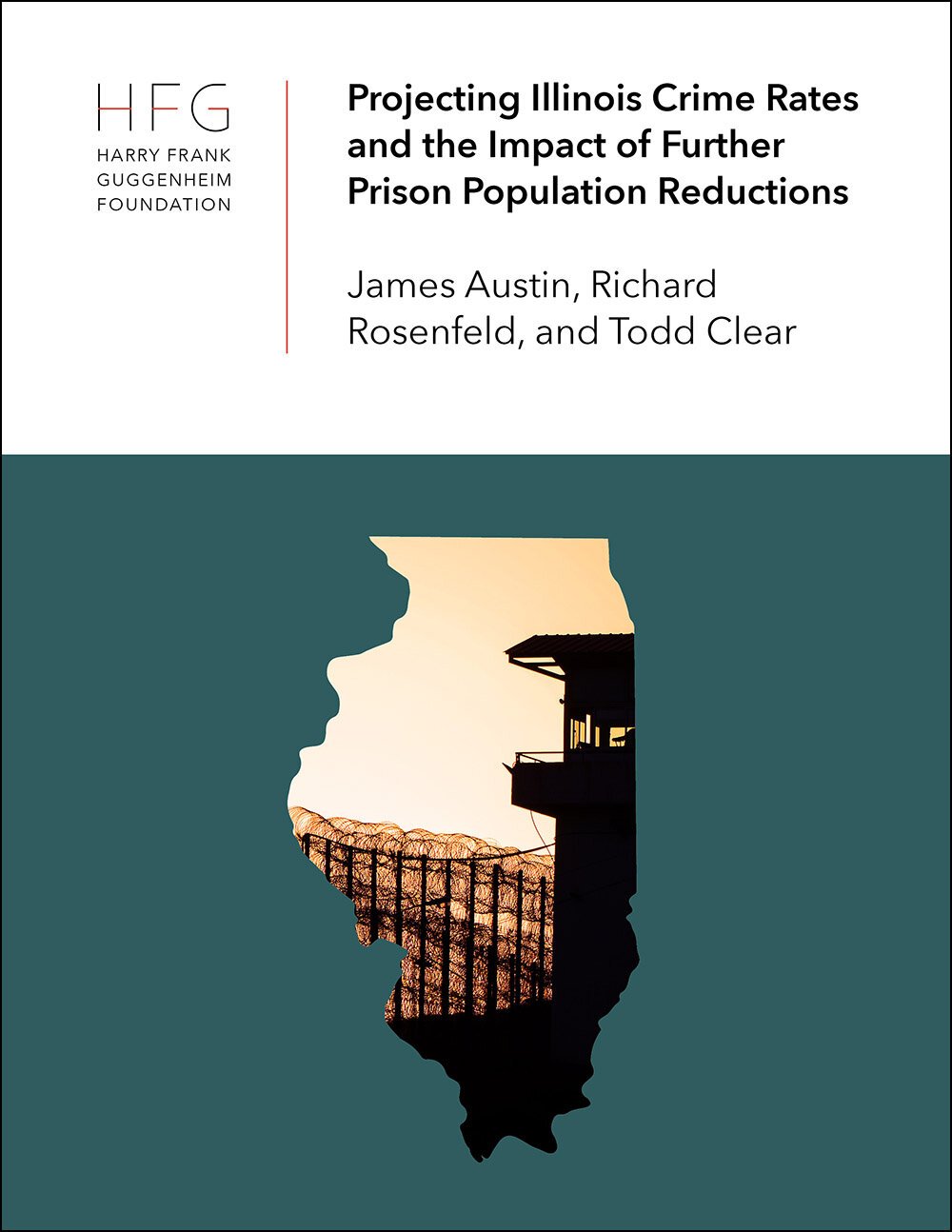
Projecting Illinois Crime Rates and the Impact of Further Prison Population Reductions

By James Austin, Todd Clear, and Richard Rosenfeld

Illinois is one of several states considering how to reduce its prison population amid the pandemic and calls for an end to mass incarceration. In recent years, the state has taken steps to reduce its prison population through judicial discretion, bail reform, and diversion programs. As Illinois’ prison population declines and policymakers, prosecutors, and courts consider alternatives to incarceration, what is the risk to public safety? Is crime likely to increase or decline in the state as those convicted of crimes are released or diverted to other programs? In this study, funded by The Harry Frank Guggenheim Foundation, the authors conclude that Illinois crime rates, which have been on the decline since the 1990s, will continue to decline in a fluctuating pattern, with moderate year-to-year changes. This will be true even if Illinois reduces its prison population by an additional 25% over five years. The authors reached this conclusion by constructing a quantitative model that accounts for Illinois crime trends over nearly four decades and provides a basis for predicting crime rates in the near future. This study is a companion to the 2020 Harry Frank Guggenheim Foundation report Explaining the Past and Projecting Future Crime Rates, which examined national crime trends and reached similar conclusions about crime rates in the near future.   

New York: Harry Frank Guggenheim Foundation. 2020, 23pg

download
Projecting Florida Crime Rates and the Impact of Prison Population Reductions

By James Austin, Richard Rosenfeld and Todd Clear

Florida has benefited from the national drop in crime that began in the early 1990s. Its growth in incarceration also paralleled the steady national imprisonment rise of the last forty-five years. Florida’s rate peaked around 2010 and has been declining ever since. Policy makers would benefit from defensible projections of future trends in crime, and especially from estimates of the effect that further reductions in the number of people in jail and prison might have on those trends. The authors of this study developed quantitative models—explained here in non-technical language—of the effects of various demographic and economic factors, as well as the imprisonment rate, on Florida’s past crime rates. They then used these models to project crime trends into the 2020s, both with and without the assumption of a substantial reduction in imprisonment.

New York: Harry Frank Guggenheim Foundation. 2021, 28pg

download
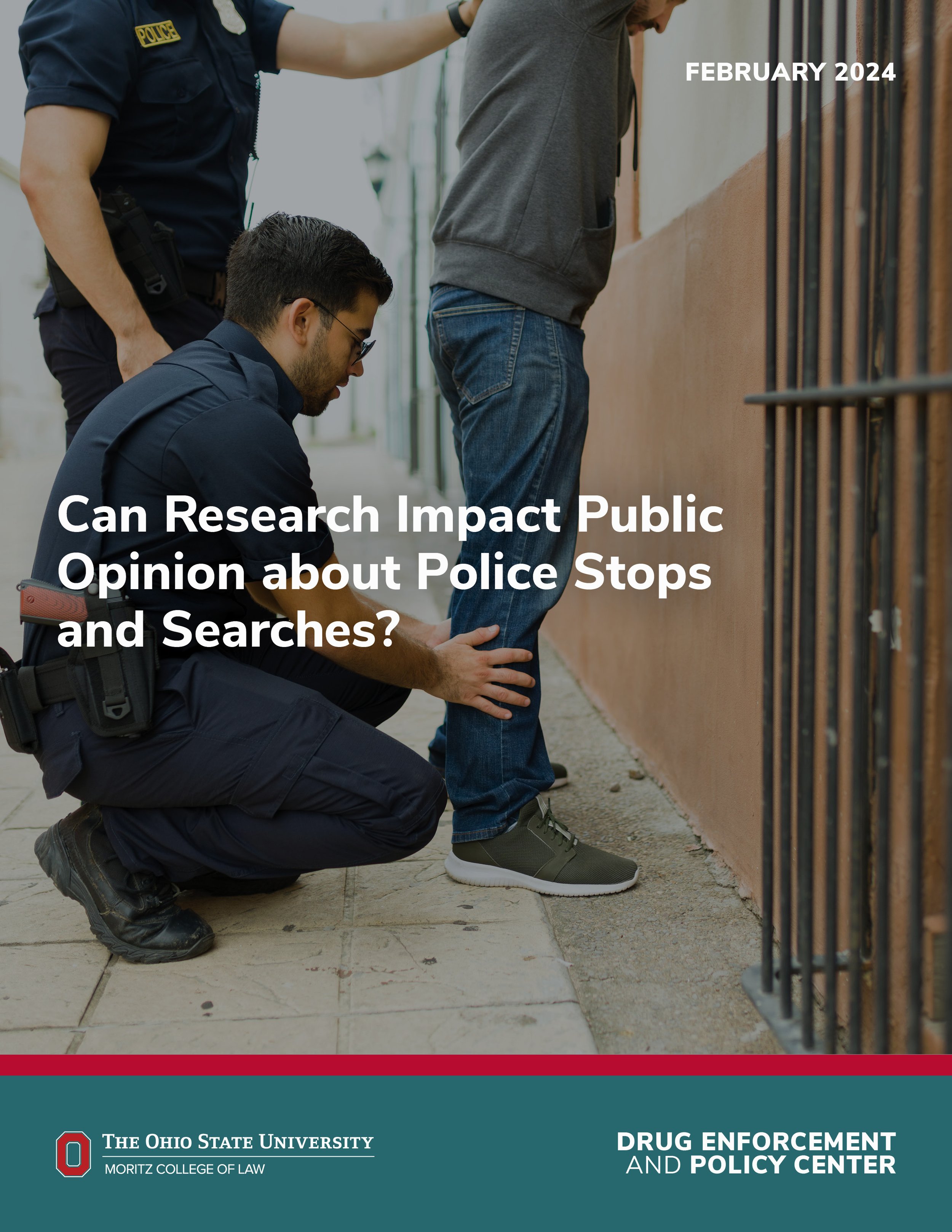
Can Research Impact Public Opinion about Police Stops and Searches?

By Peter Leasure and Hunter M. Boehme

This study examined whether public perceptions of police traffic stops and searches varied when participants were randomly assigned to receive various traffic stop and search statistics derived from research. We utilized an experimental information provision survey sent to head of households in South Carolina with an associated email address. Respondents were randomly assigned to one of three conditions: 1) a condition where respondents were presented statistics on contraband hit rates (i.e., rate at which contraband is found during a stop), 2) a condition where respondents were presented statistics on racial disparities in traffic stops, or 3) the control condition. Results from roughly 4,600 respondents indicated that research on traffic stops and searches could impact public opinion regarding whether the police should conduct more stops and searches. Statistically significant differences were found with the contraband versus the racial disparity conditions and with the racial disparity versus control conditions. Looking at the overall probabilities (without regard to the p-values for the differences), respondents who received the racial disparity condition were the least likely to agree that police should conduct more traffic stops and searches, while respondents who received the contraband condition were most likely to agree that police should conduct more traffic stops and searches. However, it should be noted that probabilities for all conditions ranged from approximately 32% to 38%, meaning that most respondents did not agree that more traffic stops and searches should be conducted.

Drug Enforcement and Policy Center. February 2024, 20pg

download
Drug Trafficking Deterrence Signs and Ohio Schools: A Survey of Ohio Principals

By Peter Leasure


Nearly all states, including Ohio, have laws increasing punishments for drug trafficking in or near schools, though there are long-standing concerns for how these laws function. With a novel inquiry of school leaders, the current study explores whether Ohio schools displayed signage that was viewable by the general public stating that drug traffickers could face enhanced penalties if the conduct occurred on or near school premises. The current study also sought to gauge school principal perception about the deterrence effectiveness of such signs and whether enhanced penalty laws should explicitly require that individuals know they are on or near school premises to receive a penalty enhancement. The results of this survey of Ohio school principals suggested that the vast majority of Ohio schools lack any signage seeking to notify individuals of enhanced penalties for drug trafficking or that generally seek to deter drug trafficking. The results also showed that a majority of Ohio principals believed that the Ohio Revised Code should require that individuals know they are on or near a school's premises to receive increased penalties for drug trafficking (e.g., selling drugs) on or near school premises. Policy recommendations informed by the above findings are discussed.

Drug Enforcement and Policy Center. March 2024, 11pg

download