Open Access Publisher and Free Library
CRIME+CRIMINOLOGY.jpeg

CRIME

Violent-Non-Violent-Cyber-Global-Organized-Environmental-Policing-Crime Prevention-Victimization

Posts in Psychology
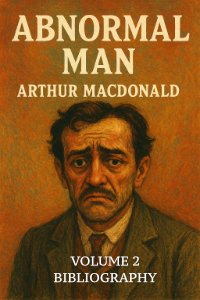
Abnormal Man : Volume 2 - Bibliography

By Arthur MacDonald.

The narrative in Volume 1 asks many pointed questions: What does it mean to be “abnormal”? Who decides? And how have these judgments shaped modern science, education, and criminal justice?

First published in 1893, Arthur MacDonald’s Abnormal Man is one of the earliest American attempts to systematically study human difference through the emerging tools of psychology, anthropology, and criminology. Drawing on international research—from European criminal anthropology to American child-study movements—MacDonald sought to classify the physical, mental, and moral traits considered “aberrant” in his era. His work reflects the hopes and anxieties of a society confronting rapid industrialization, immigration, social change, and new scientific approaches to crime and mental health.

To the modern reader, Abnormal Man reveals both the ambition and the pitfalls of nineteenth-century science. Its pages contain pioneering observations about child development, deviance, and social responsibility, alongside early theories—now discredited—about heredity, physiognomy, and race. What emerges is a vivid and sometimes unsettling portrait of a culture striving to understand human variation without the benefit of modern psychology or ethical safeguards.

The Read-Me.org edition Volume 1 presents Abnormal Man as both a historical artifact and a gateway to critical reflection. It illustrates how scientific thought evolves, how cultural bias can shape research, and how early debates about abnormality laid the groundwork for contemporary approaches to mental health, special education, criminology, and social policy. To make such work, much of it controversial then as it is today, minimally believable, requires extensive documentation. The voluminous Bibliography of Abnormal Man reproduced here in Volume 2, contains all that Macdnald referred to within his detailed exposition. To some, his arguments may seem unsupported, or lacking in evidence. But he left no stone untuned as this amazing bibliographical documentation of all relative contemporary research

A foundational text at the crossroads of science and society, Abnormal Man invites readers to explore the origins of modern debates about deviance, diversity, and the boundaries of the “normal.”

Read-Me.Org Inc. New York-Philadelphia-Australia. 2025. 240p.

download free
Paperback - $8.99
Abnormal Man : Volume 1 --Digest of Literature

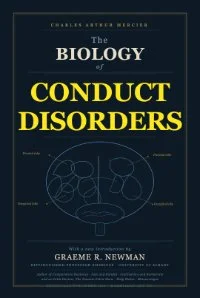
By Arthur MacDonald. Introduction by Graeme R. Newman

What does it mean to be “abnormal”? Who decides? And how have these judgments shaped modern science, education, and criminal justice?

First published in 1893, Arthur MacDonald’s Abnormal Man is one of the earliest American attempts to systematically study human difference through the emerging tools of psychology, anthropology, and criminology. Drawing on international research—from European criminal anthropology to American child-study movements—MacDonald sought to classify the physical, mental, and moral traits considered “aberrant” in his era. His work reflects the hopes and anxieties of a society confronting rapid industrialization, immigration, social change, and new scientific approaches to crime and mental health.

To the modern reader, Abnormal Man reveals both the ambition and the pitfalls of nineteenth-century science. Its pages contain pioneering observations about child development, deviance, and social responsibility, alongside early theories—now discredited—about heredity, physiognomy, and race. What emerges is a vivid and sometimes unsettling portrait of a culture striving to understand human variation without the benefit of modern psychology or ethical safeguards.

This new Read-Me.org edition presents Abnormal Man as both a historical artifact and a gateway to critical reflection. It illustrates how scientific thought evolves, how cultural bias can shape research, and how early debates about abnormality laid the groundwork for contemporary approaches to mental health, special education, criminology, and social policy.

A foundational text at the crossroads of science and society, Abnormal Man invites readers to explore the origins of modern debates about deviance, diversity, and the boundaries of the “normal.”

Read-Me.Org Inc. New York-Philadelphia-Australia. 2025. p.193.

download free
Kindle $2.99 -- paperback $9.99
Passion for guns and beliefs in a dangerous world: An Examination of defensive gun ownership

By Jocelyn J. Bélanger, N. Pontus Leander, Maximilian Agostini, Jannis Kreienkamp, Wolfgang Stroebe

This research examines the notion of defensive gun ownership using the Dualistic Model of Passion. We hypothesized that an obsessive (vs. harmonious)passion for guns would be associated with a belief in a dangerous world (BDW).We expected this relationship to intensify in threatening contexts, leading to a more expansive view on defensive gun ownership. We tested this hypothesis across three threat contexts: a gun‐control message (Study 1,N= 342), a live shooting simulation (Study 2,N= 398), and the aftermath of the Christchurch mass shootings (Study 3,N= 314). In the experimental Study 1, exposure to a gun‐control message increased the intention to purchase guns among those with an obsessive passion (OP) for guns. Study 2 revealed that BDW mediated the relationship between OP and assertive modes of protection, the desire to purchase high‐stopping‐power guns, and anti‐Black racial bias in a shooting task. Study 3 showed that knowledge of the Christchurch attack intensified thelink between OP and BDW, leading to increased support for gun access, willingness to act as a citizen‐protector, and prejudice against Muslims.Comprehending these dynamics can assist policymakers incrafting messaging campaigns for firearm regulation and public safety measures that are more effective.

Aggressive Behavior, Volume 50, Issue 3. May 2024, 17pg

download
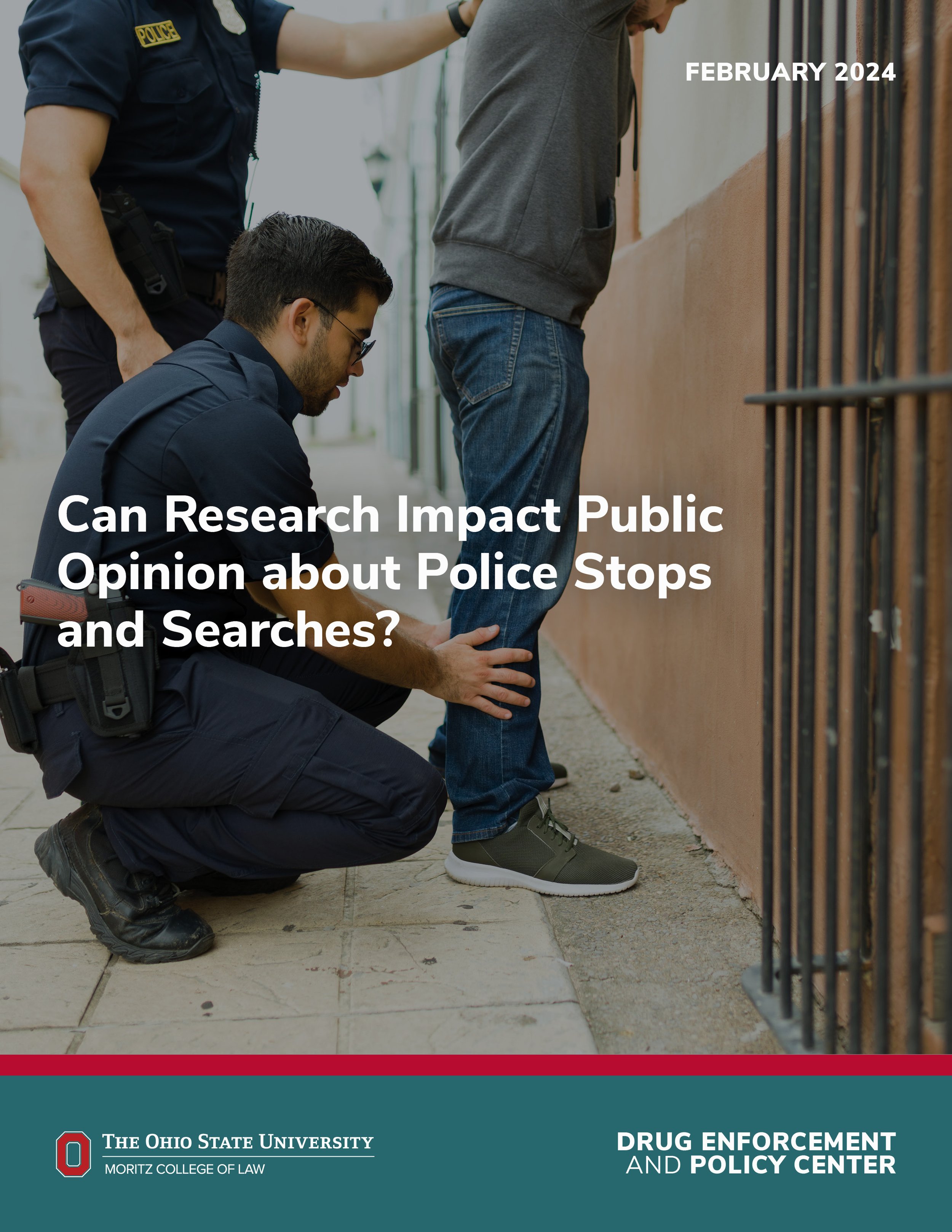
Can Research Impact Public Opinion about Police Stops and Searches?

By Peter Leasure and Hunter M. Boehme

This study examined whether public perceptions of police traffic stops and searches varied when participants were randomly assigned to receive various traffic stop and search statistics derived from research. We utilized an experimental information provision survey sent to head of households in South Carolina with an associated email address. Respondents were randomly assigned to one of three conditions: 1) a condition where respondents were presented statistics on contraband hit rates (i.e., rate at which contraband is found during a stop), 2) a condition where respondents were presented statistics on racial disparities in traffic stops, or 3) the control condition. Results from roughly 4,600 respondents indicated that research on traffic stops and searches could impact public opinion regarding whether the police should conduct more stops and searches. Statistically significant differences were found with the contraband versus the racial disparity conditions and with the racial disparity versus control conditions. Looking at the overall probabilities (without regard to the p-values for the differences), respondents who received the racial disparity condition were the least likely to agree that police should conduct more traffic stops and searches, while respondents who received the contraband condition were most likely to agree that police should conduct more traffic stops and searches. However, it should be noted that probabilities for all conditions ranged from approximately 32% to 38%, meaning that most respondents did not agree that more traffic stops and searches should be conducted.

Drug Enforcement and Policy Center. February 2024, 20pg

download