
How Fines and Fees in the Criminal Legal System Hinder Black Economic Mobility
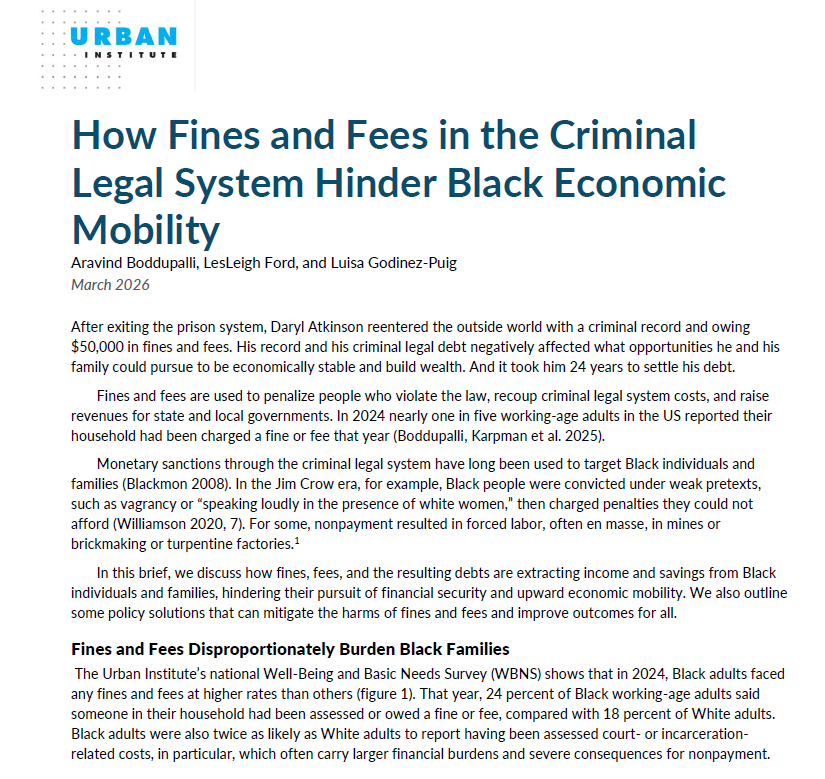
By Aravind Boddupalli, LesLeigh D. Ford, Luisa Godinez-Puig
Criminal legal system fines and fees disproportionately impact Black households, entrenching poverty and creating significant barriers to economic mobility and wealth-building. These financial burdens, often imposed without regard to ability to pay, frequently lead to driver's license suspensions, increased debt, and incarceration, disrupting employment and housing stability.
Urban Institute +3
Key Impacts on Black Communities:
Disproportionate Burden: Black households face criminal legal fines and fees at the highest rates compared to other racial groups.
Economic Mobility Barriers: These costs, often totaling hundreds or thousands of dollars, hinder the ability of Black families to build assets and improve their financial well-being.
Cycle of Debt and Punishment: Inability to pay can lead to driver's license suspensions, preventing individuals from traveling to work, as well as additional fines, interest, and jail time.
Family Well-being: As highlighted in this analysis by the Fines and Fees Justice Center, 57 percent of people with court debt reported food insecurity, while nearly 20 percent of those surveyed reported that they or a household member served time in jail due to an inability to pay.
Housing and Employment: Debt-related penalties, such as suspended licenses or a criminal record for nonpayment, make securing stable housing and employment more difficult.
Urban Institute +4
Washington, DC: Urban Institute, 2026. 7p.