Open Access Publisher and Free Library
CRIMINAL JUSTICE.jpeg

CRIMINAL JUSTICE

CRIMINAL JUSTICE-CRIMINAL LAW-PROCDEDURE-SENTENCING-COURTS

Posts in Crime Observatory
Research review of the overarching guideline for sentencing offenders with mental disorders, developmental disorders, or neurological impairments

By 

The Sentencing Council (UK)

The Sentencing Council for England and Wales was established in April 2010 (under s118, of the Coroners and Justice Act 2009) in order to promote greater transparency and consistency in sentencing, while maintaining the independence of the judiciary. The Sentencing Council is an independent, non-departmental public body which is part of the Ministry of Justice’s (MoJ’s) family of arm’s-length bodies. The Sentencing Council has statutory duties to: • develop and issue sentencing guidelines and monitor their use • assess the effect of guidelines on sentencing practice • promote awareness among the public regarding the realities of sentencing, and publish information about sentencing practice in magistrates’ courts and the Crown Court The majority of sentencing guidelines issued by the Sentencing Council are ‘offence specific’, providing a step-by-step framework for sentencing a particular offence or group of offences. This begins with an initial assessment of seriousness where the sentencer will arrive at a sentence starting point outlined within the relevant guideline. The guideline then outlines possible aggravating and mitigating factors in relation to the offence or offender that a sentencer should consider, consideration of which may move the sentence starting point up or down. The guideline then provides guidance on a reduction for a guilty plea. The guideline may then include any other considerations that should be taken into account and finally the final sentence outcome. An example of an offence specific guideline can be seen for arson. Where there is no relevant offence specific guideline, the general guideline: overarching principles provides a sentencer with step-by-step guidance. The Sentencing Council also produces ‘overarching’ guidelines, which address specific issues that may arise across many different offences. These overarching guidelines do not typically follow the same format as offence guidelines. They instead contain guidance that can be applied across a range of offences and are expected to be used in conjunction withany relevant offence specific guidelines. The overarching guideline for sentencing offenders with mental disorder, developmental disorder, or neurological impairments, hereafter referred to as ‘the guideline’, was issued by the Sentencing Council in 2020 and is an example of an overarching guideline. It applies to all offenders aged 18 and over sentenced by courts in England and Wales. In accordance with the Sentencing Council’s statutory duties to assess the effect of guidelines on sentencing practice, the Sentencing Council has conducted a research review of this guideline. This explores sentencers’ understanding and application of the guideline. The following section outlines the details of the guideline. 

The Sentencing Council for England and Wales, 2026. 63p
Wrongful convictions in Spain: Systematic analysis of judgments from 1996 to 2022

By Nuria Sánchez , Guadalupe Blanco-Velasco , Linda M. Geven , Jaume Masip , Antonio L. Manzanero 

A comprehensive analysis of wrongful convictions in Spain was conducted. Out of 447 Supreme Court judgments made between 1996 and 2022, 243 cases involving a successful appeal made by a person claiming their innocence were examined in terms of the characteristics of wrongfully convicted individuals, the crime types, and the factors contributing to these judicial errors. An average rate of nine wrongful convictions per year was found, mostly for crimes against public safety and property, with a significant overrepresentation of foreign citizens. Legal professionals’ misconduct was identified as the main factor contributing to these wrongful convictions. The mean time between the judgment and the conviction being overturned was around 4.5 years. More than half of the cases were reopened due to evidence indicating that the alleged crime never occurred. While new evidence was the primary reason for reopening cases, only 3 % were reopened based on DNA evidence. The systematic methodology used in this research may serve as a model for future studies on wrongful convictions in other countries. To reduce wrongful convictions in Spain, several key measures must be implemented. Legal representation should be mandatory for all individuals accused of crimes, without exception. Legal professionals must receive enhanced training to minimize judicial errors. Furthermore, stricter forensic protocols should be established, and forensic experts must be properly accredited to prevent the misapplication of scientific evidence in legal proceedings. Additionally, reforms are needed to ensure that plea bargains are subject to more rigorous scrutiny, and that minor crimes are properly investigated.

Journal of Criminal Justice

Volume 103, March–April 2026,

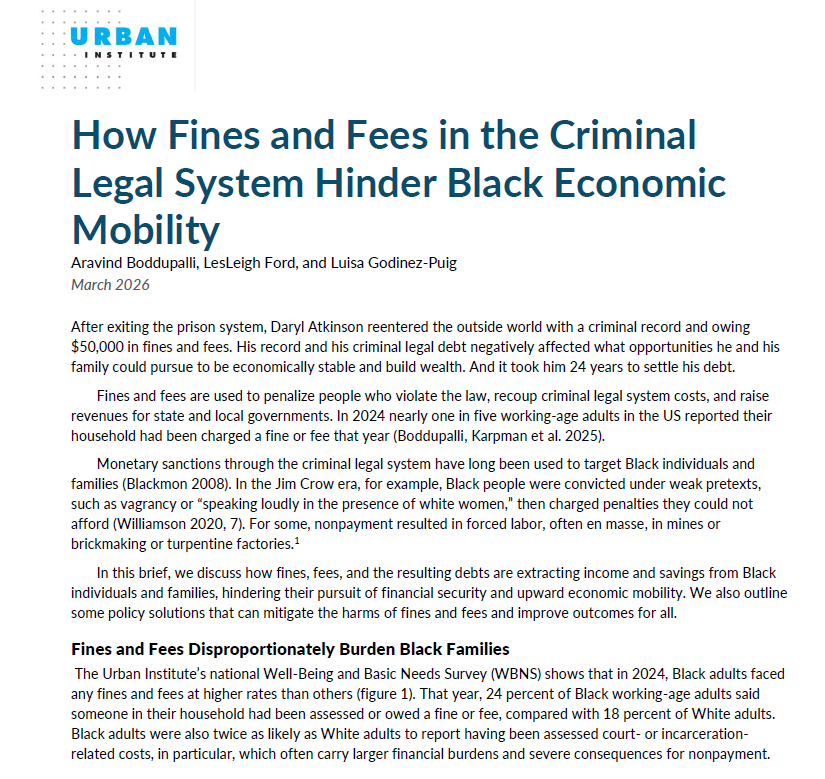
How Fines and Fees in the Criminal Legal System Hinder Black Economic Mobility

By Aravind Boddupalli, LesLeigh D. Ford, Luisa Godinez-Puig

Criminal legal system fines and fees disproportionately impact Black households, entrenching poverty and creating significant barriers to economic mobility and wealth-building. These financial burdens, often imposed without regard to ability to pay, frequently lead to driver's license suspensions, increased debt, and incarceration, disrupting employment and housing stability. 

Urban Institute +3

Key Impacts on Black Communities:

  • Disproportionate Burden: Black households face criminal legal fines and fees at the highest rates compared to other racial groups.

  • Economic Mobility Barriers: These costs, often totaling hundreds or thousands of dollars, hinder the ability of Black families to build assets and improve their financial well-being.

  • Cycle of Debt and Punishment: Inability to pay can lead to driver's license suspensions, preventing individuals from traveling to work, as well as additional fines, interest, and jail time.

  • Family Well-being: As highlighted in this analysis by the Fines and Fees Justice Center, 57 percent of people with court debt reported food insecurity, while nearly 20 percent of those surveyed reported that they or a household member served time in jail due to an inability to pay.

  • Housing and Employment: Debt-related penalties, such as suspended licenses or a criminal record for nonpayment, make securing stable housing and employment more difficult. 

    Urban Institute +4

Washington, DC:  Urban Institute, 2026. 7p.

Court Trends in Washington over the Past Two Decades

By Vasiliki Georgoulas-Sherry & Hanna Hernandez

Collecting and analyzing data is essential for understanding and evaluating the court trends in Washington in past decades — as well as, at times, demographic differences such as disparities and disproportionalities — within the criminal justice system. Gaining insight into these trends and disparities is crucial for identifying and addressing criminal trends and systemic inequities. This issue continues to draw significant attention from a wide range of sources, including local, state, and federal agencies; advocacy organizations; policymakers; researchers; scholars; and community members. Ongoing evaluation of these trends and disparities is vital for promoting fairness, ensuring accountability, and advancing equity within the justice system. To respond to these impacts, the Criminal Justice Research & Statistics Center - the Washington Statistical Analysis Center (SAC) applied for and received the 2023 State Justice Statistics (SJS) grant from the Bureau of Justice Statistics (BJS) to assess this work. Through data from the Washington State Patrol (WSP) maintains the Computerized Criminal History (CCH), this report evaluates the court trends in the U.S. over the past 25 years, and the underlying court trends and demographic differences that impact the criminal justice system.

Olympia: Washington State Statistical Analysis Center, 2025. 46p.

‘Everything is after sentencing’: The experiences of remand prisoners

By The HM Chief Inspector of Prisons (UK)

Court delays mean that prisoners are waiting an unacceptably long time for their trials. This has led to a dramatic increase in the number of prisoners stuck on remand or waiting to be sentenced, and has contributed to the ongoing capacity crisis in prisons. Many remand prisoners are held in crumbling, inner-city Victorian jails where conditions are some of the poorest in the estate. Suicide is more common among this group and in our surveys 67% say they have mental health difficulties. In many of the prisons named in this report, remand prisoners comprised a large proportion of their population, yet we found too little being done to help this particularly vulnerable group. Men and women described a lack of support in contacting family members when they first came into prison, and not enough was done for those being released from court. This report highlights some areas where prisons have begun to address the difficulties faced by these prisoners, but with the growth in this population now endemic, the prison service and individual jails must think more strategically about how they support men and women held on remand. 

London: HM Chief Inspector of Prisons, March 2026, 18p.

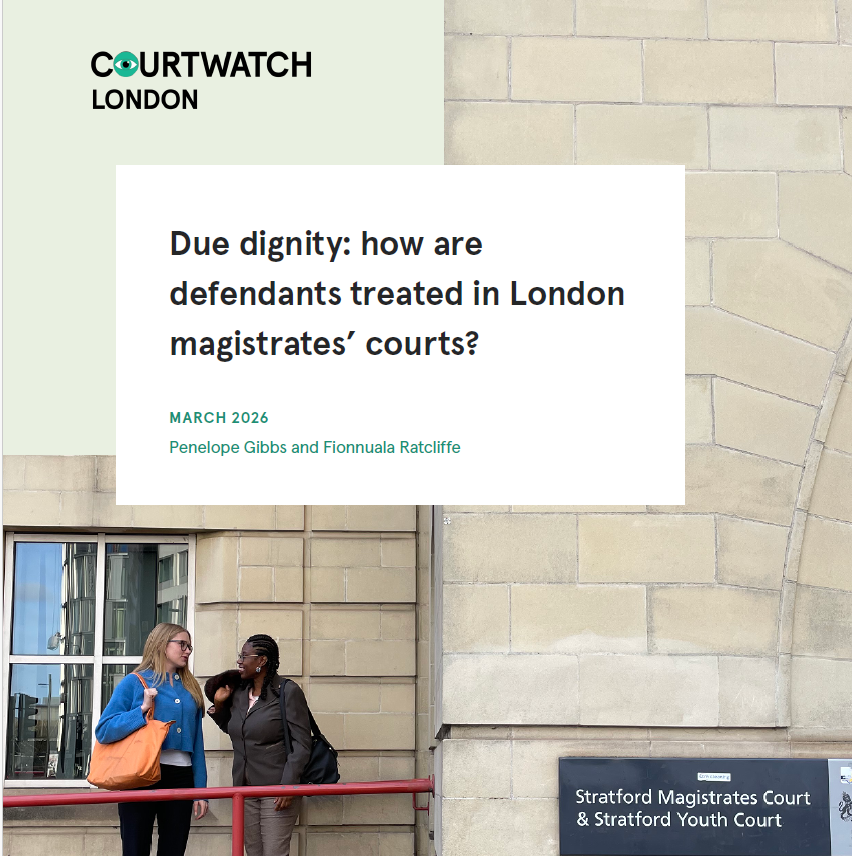
Due dignity: how are defendants treated in London magistrates’ courts?

By Fionnuala Ratcliffe and Penelope Gibbs

If they are to receive justice, defendants must be able to participate effectively in court proceedings. The principle of effective participation is at the heart of the right to a fair trial, guaranteed by Article 6 of the European Convention on Human Rights. Under Article 6, defendants’ minimum rights include the right to be informed about the nature and cause of the accusation against them; to have time and facilities to prepare their defence; to defend themselves in person or through legal assistance; to examine witnesses; and to receive free assistance from an interpreter where needed. Despite the central importance of effective participation, there are multiple aspects of everyday court practice that make it a struggle for defendants to participate actively in their case. This fifth report of the Transform Justice CourtWatch London project vividly conveys the extent and nature of these barriers to participation in London magistrates’ courts. At the most basic level, defendants often find it difficult to hear, let alone understand, what is going on at court – whether they are appearing via a shaky video link, or are physically present in the court but (as is most common) seated in the secure dock at the back of the room, behind a perspex screen. Courtroom language tends to be complex, convoluted and full of jargon: not easy for any lay person to understand, and more so for people who are anxious, tired, mentally unwell or otherwise vulnerable. For those whose first language is not English, obstacles to understanding are higher still, compounded by inadequate interpreting provision. And the large minority of defendants who are unrepresented face additional challenges as they seek to navigate the court process. Participation implies not only understanding the process, but also making oneself heard. Yet defendants’ voices are frequently silenced. Opportunities to speak during proceedings are limited, and again are impeded by the practical barriers imposed by the secure dock or remote attendance. There is an essential paradox that while criminal proceedings, at their core, are about the defendant – about what they have or have not done, and what is the appropriate penalty if they did commit the alleged offence – they are often pushed to the margins of the courtroom, more an absence than a presence.Closely linked to the theme of participation is the quality of treatment defendants receive at court. Most court professionals are conscientious and respectful. The courtwatchers observed judges, magistrates, lawyers and court staff who took time to explain proceedings; responded calmly and with compassion to displays of distress, confusion and anger; and offered extensive support to unrepresented defendants. Yet good treatment of defendants is by no means universal. Court professionals are working within an overloaded, creaking and under-resourced system. They are under pressure to complete cases quickly, in order to reduce the delays that permeate all stages of the criminal justice process. Consequences include an over-emphasis on speedy ‘processing’ of many cases and inadequate consideration of individuals’ specific circumstances and needs. And while the humanity of many court professionals shines through courtwatcher accounts, it is evident also that there are judges, magistrates, lawyers and court staff who are rude, dismissive and careless in their interactions with defendants. The treatment received by people in contact with the criminal justice system has significant repercussions. We know from existing research on procedural justice that people involved in legal processes are more likely to regard those processes – and indeed the wider justice system – as trustworthy and legitimate if they feel they have been treated with dignity and respect. Also essential to perceptions of good treatment is the experience of having a ‘voice’: that is, being acknowledged as an individual and being heard by those making the decisions. In other words, quality of treatment is integral to participation, and vice versa. The findings of the CourtWatch London project resonate with research that my colleagues and I have carried out over many years at Birkbeck’s Institute for Crime & Justice Policy Research. In our own work spanning the criminal (magistrates’, youth and Crown), family and coroners’ courts, we have repeatedly identified barriers to court users’ understanding of and engagement with legal processes. We have also seen how respectful, humane treatment can make a profound difference to people’s experience of justice. We have noted that seemingly small acts of kindness and attention can significantly enhance the sense of being supported and included; and, conversely, that professionals’ dismissive or thoughtless behaviour can be deeply damaging. What the courtwatchers have observed in magistrates’ courts across London should therefore be understood as one part of a much greater picture of how justice is delivered and experienced. There is much that can be done to strengthen participation, good treatment and fairness in court practice, and the recommendations in this report set out important steps for achieving this. 

London: Transform Justice, 2026. 41p.

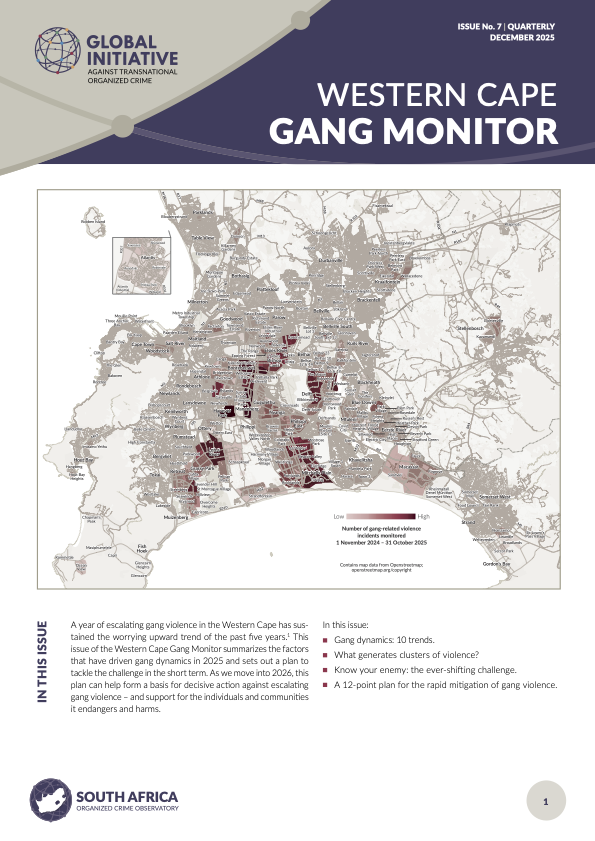
Western Cape Gang Monitor

By The Global Initiative Against Transnational Organized Crime

 Years of escalating gang violence in the Western Cape has sustained the worrying upward trend of the past five years. This issue of the Western Cape Gang Monitor summarizes the factors that have driven gang dynamics in 2025 and sets out a plan to tackle the challenge in the short term. 

 As we move into 2026, this plan can help form a basis for decisive action against escalating gang violence – and support for the individuals and communities it endangers and harms.

In this issue:

  • Gang dynamics: 10 trends.

  • What generates clusters of violence?

  • Know your enemy: the ever-shifting challenge.

  • A 12-point plan for the rapid mitigation of gang violence.

This is the seventh issue of the Global Initiative Against Transnational Organized Crime’s (GI-TOC) Western Cape Gang Monitor, an output of our South Africa Organized Crime Observatory. This series of bulletins tracks developments in Western Cape gang dynamics each quarter, to provide a concise synthesis of relevant trends to inform policymakers and civil society. This is a year-in-review issue, combining analysis published by the GI-TOC throughout the year with new research. The monitor draws on information provided by field researchers working in gang-affected communities of the Western Cape. This includes interviews with current and former gang members, civil society and members of the criminal justice system.