
By Kiril Sharapov, Heather Komenda
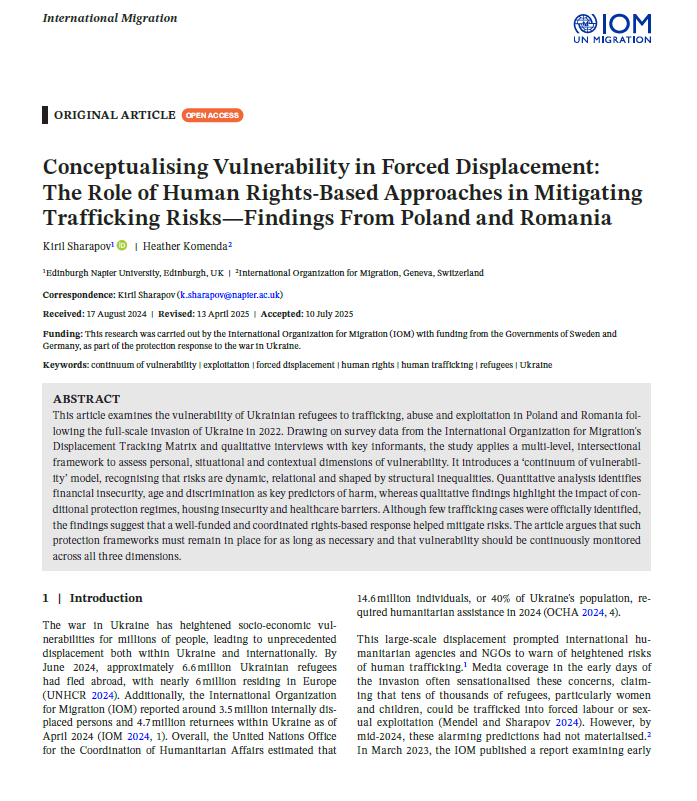
This article examines the vulnerability of Ukrainian refugees to trafficking, abuse and exploitation in Poland and Romania following the full-scale invasion of Ukraine in 2022. Drawing on survey data from the International Organization for Migration's Displacement Tracking Matrix and qualitative interviews with key informants, the study applies a multi-level, intersectional framework to assess personal, situational and contextual dimensions of vulnerability. It introduces a ‘continuum of vulnerability’ model, recognising that risks are dynamic, relational and shaped by structural inequalities. Quantitative analysis identifies financial insecurity, age and discrimination as key predictors of harm, whereas qualitative findings highlight the impact of conditional protection regimes, housing insecurity and healthcare barriers. Although few trafficking cases were officially identified, the findings suggest that a well-funded and coordinated rights-based response helped mitigate risks. The article argues that such protection frameworks must remain in place for as long as necessary and that vulnerability should be continuously monitored across all three dimensions.
International Migration
Volume 63, Issue 5
September 2025