
Open Access Publisher and Free Library
HUMAN RIGHTS.jpeg

HUMAN RIGHTS

Human Rights-Migration-Trafficking-Slavery-History-Memoirs-Philosophy

Posts in Conflict Resolution
An Examination of Public Benefit Enrollment Data in Minnesota Immigrant Households as Evidence of Public Charge Chilling Effect

By Ana Pottratz Acosta

A hallmark of the first Trump Administration was its pervasive attacks against immigrant communities. While President Trump often touts his efforts to ramp up immigration enforcement to secure the southern border, other policies aimed at limiting legal immigration to the U.S. through administrative action had a far greater impact on U.S. immigration policy during his first term. One such action, the promulgation of regulations setting forth more subjective standards to determine if an immigrant was subject to the public charge grounds of inadmissibility, led to the denial of many family-based permanent residence applications that were otherwise approvable under existing law.

In this Article, the Author will examine means tested benefit enrollment data for Minnesota immigrant households to see if this data supports existence of a chilling effect through decreased immigrant household enrollment in these programs following publication of the public charge regulations. Additionally, while several previous studies using survey data support existence of a public charge chilling effect, this Article will build on this previous work by analyzing primary enrollment data provided directly by the Minnesota Department of Human Services (MN-DHS), the agency administering these programs.

 (September 01, 2024).

Knowledge and Punishment: The Prison-industrial Complex and Epistemic Oppression

Epistemic Oppression 

By Lark Mulligan

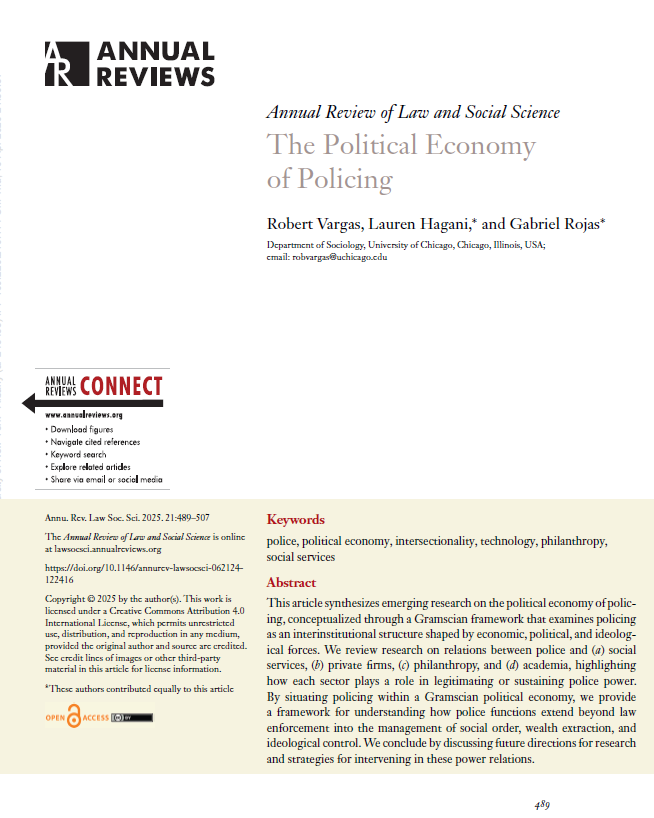
he police murdered Alton Sterling on camera.2 They also murdered Eric Garner, Laquan McDonald, and many others; the videos of their deaths garnered millions of views.3 Information about some horrors of the criminal legal system is spreading widely, yet White mainstream media outlets frequently dismiss, erase, or demonize Black, Indegenous, and People of Color (“BIPOC”) communities who protest and organize to demand justice through the abolition of or radical changes to the policing and prison systems.4 In response to these racist atrocities and within the broader context of criminal legal reform, activists and academics frequently craft ethical arguments such as: “Solitary confinement is immoral because it inflicts psychological and physical torture” or “Incarceration is unethical because prisons are inherently violent places.”5 Many ethical arguments centeron the racist injustices and harm that affronts human dignity and agency caused by prisons and police.6 Others critique the racist and retributive ethics of “law and order” rhetoric.7 Each argument is well-supported by accessible data that can be found in numerous studies, books, articles, and media.8 However, people often erroneously dismiss these data-driven, logical, ethical reasonings as factually inaccurate, or many respond with a deeply racist ethical-legal rationale, for example: “While there may be abuses in prisons, some people need to be put in solitary or prison and deserve it because [insert classical legal rationales for punishment: deterrence, retribution, rehabilitation, etc.].”9 Ethical and legal arguments are severely limited, however, when they lack an epistemological interrogation into the power structures that determine what qualifies as “knowledge” within the ethical-social conversation. This article demonstrates why anti-prison activists’ ethical arguments generally do not receive the due credibility and weight they deserve unless they pair critical liberatory epistemic practices with material, institutional, and social transformations. Abolitionists claiming to fight the confines of carceral epistemologies cannot merely sit back and point out the already-existing logical contradictions in the criminal legal system—it is not enough. ..continued 

St. Mary’s Law Review on Race & Social Justice , v. 27(2) 2025.

Policing after Slavery: Race, Crime, and Resistance in Atlanta

By Jonathon J. Booth

This Article places the birth and growth of the Atlanta police in context by exploring the full scope of Atlanta’s criminal legal system during the four decades after the end of slavery. To do so, it analyzes the connections Atlantans made between race and crime, the adjudication and punishment of minor offenses, and the variety of Black protests against the criminal legal system. This Article is based, in part, on a variety of archival sources, including decades of arrest and prosecution data that, for the first time, allow for a quantitative assessment of the impact of the new system of policing on Atlanta’s residents.

This Article breaks new ground in four ways. First, it demonstrates that rather than simply maintaining the social relations of slavery, Atlanta’s police force responded to the challenges of freedom: it was designed to maintain White supremacy in an urban space in which residents, theoretically, had equal rights. Second, it shows that White citizens’ beliefs about the causes of crime and the connections between race and crime, which I call “lay criminology,” influenced policing strategies. Third, it adds a new layer to our understanding of the history of order-maintenance policing by showing that mass criminalization for minor offenses such as disorderly conduct began soon after emancipation. This type of policing caused a variety of harms to the city’s Black residents, forcing thousands each year to pay fines or labor for weeks on the chain gang. Fourth, it shows that the complaints of biased and brutal policing that animate contemporary police reform activism have been present for a century and a half. In the decades after emancipation, Atlanta’s Black residents, across class lines, protested the racist criminal legal system and police abuses, while envisioning a more equitable city where improved social conditions would reduce crime.

University of Colorado Law Review Volume 96 Issue 1 Article 1 2025

The Long Arc of Justice: Forging a Convention for Crimes Against Humanity

By Leila N. Sadat

This Article presents a comprehensive overview of the development, challenges, and future prospects of creating and ultimately negotiating a global treaty for crimes against humanity. It honors pioneers in the field and acknowledges the contributions of various individuals and entities to the Crimes Against Humanity Initiative the author established in 2007. It traces the historical context of atrocities such as slavery and the slave trade, linking them to the modern concept of crimes against humanity. The Article reviews the evolution of international criminal law, particularly under the Rome Statute of the International Criminal Court (ICC), emphasizing the necessity of a new treaty to fill gaps left by existing frameworks. Highlighting contemporary examples like the Syrian Civil War, it underscores the preventive power of prosecuting crimes against humanity as a move towards preventing the commission of atrocity cascades, before the descent into armed conflict and genocide. The Article describes the multi-decade effort to draft and promote a new treaty, including significant milestones, such as the adoption of the International Law Commission’s (ILC) 2019 Draft Articles, and the protracted and ultimately successful advocacy within the UN General Assembly’s Sixth (Legal) Committee to achieve a consensus resolution in 2022 that allows the process to move forward. The 2024 adoption of GA Resolution 79/122, which authorizes convening a United Nations Diplomatic Conference for crafting a comprehensive legal instrument, was a critical achievement, setting the stage for negotiations over the next several years. The Article reflects upon the enduring struggle for justice and the imperative to adopt, ratify, and enforce a new treaty, drawing historical parallels with the abolition of the transatlantic slave trade. It concludes with a call for continued dedication to ending impunity for crimes against humanity globally.


Washington University Global Studies Law Review, 2025, Vol 25, Issue 2, p302

Rethinking Preventive Detention

By Ahilan Arulanantham

When can the government imprison people without trial?  That question lurks beneath many important civil rights issues of our time, from the federal government’s plans to jail and deport millions of non-citizens under the immigration laws, to the indefinite detention of people convicted of sex offenses, to the confinement of unhoused people in major American cities, and, most recently, the plan to summarily jail and deport “alien enemies” on national security grounds.  All of these involve forms of preventive detention—that is, imprisonment without trial to protect the public.

Under current doctrine, the legality of preventive detention schemes is governed by a substantive due process framework that requires courts to balance society’s interest in safety against the detained individual’s interest in liberty.  Although litigators, judges, and scholars often disagree about how to apply that framework, they have all generally assumed that it does apply.

But that framework is a modern invention.  Prior to World War II, the law took a very different approach to evaluating imprisonment without trial: the state could not preventively detain to stop conduct that could be punished under criminal law.  That framework reflected a basic normative constraint—that preventive detention should not be used to circumvent the criminal legal system.  If the conduct the state wanted to stop could be punished, the state was required to use the criminal law, rather than displacing it with a bespoke regime lacking the criminal law’s procedural and substantive protections.

That bedrock constraint began to erode during the Japanese American mass incarceration of World War II, and then disappeared over the next several decades as the Supreme Court upheld the preventive detention of non-citizen Communist Party members and then the pretrial preventive detention of people charged with federal crimes.  Since then, state power to imprison people outside the criminal legal system has grown rapidly in new ways, as the due process balancing framework has proven malleable enough to legitimate nearly every preventive detention scheme that governments have created.  As the federal government’s recent invocation of the “Alien Enemies” Act illustrates, more may soon be on the way.

In this Article, I uncover the origins of the common law doctrinal framework governing preventive detention, and then tell the story of its downfall, describing how today’s due process balancing framework took its place.  I then draw lessons from that doctrinal history for our present moment, as scholars, policymakers, litigators, and courts seek to chart the limits of preventive detention authority in the face of new demands for expanded state power.

73 UCLA L. Rev. ___ (forthcoming), UCLA School of Law, Public Law Research Paper No. 26-07

Sleep Deprivation in Prison

By Sharon Dolovich

This Article is the first scholarly work to identify and describe the experience of sleep deprivation in prison—an experience that, although an inherent feature of prison life, has gone almost entirely unnoticed even by those legal scholars, advocates, and policymakers committed to ensuring humane carceral conditions. Drawing on original data from interviews with people who served time in prisons all over the country, it maps the multiple overlapping conditions that routinely prevent the incarcerated from getting anything close to adequate sleep. Sleep is a basic human need, as fundamental to human survival and adequate human functioning as access to food, water, and shelter. Yet this Article’s findings are unambiguous: chronic sleep deprivation is an intrinsic part of prison life, as constitutive of the carceral penalty as are crowded conditions, grossly inadequate medical care, inedible food, and the ongoing risk of physical and sexual assault. After providing a brief overview of the sleep science, the findings of which make plain the physical and psychological damage caused by insufficient sleep, the Article provides a rich sociological account of the experience of trying to sleep in prison. Drawing on the accounts of interview subjects, it identifies ten distinct causes of sleep deprivation inside: five concrete conditions (fiercely uncomfortable beds, hunger, extremes of heat and cold, noise, and excessive light) and five “meta-conditions” (fear of violence, trauma, poverty, overly intrusive rules enforcement, and daily humiliation). This Article then considers some of the normative implications of the phenomenon explored here, including what the reality of sleep deprivation in prison means for our understanding of prisons and of carceral punishment, the prospects for Eighth Amendment conditions claims grounded in sleep deprivation, and the policy challenges likely to confront efforts to address this problem.

 96 S.Cal.L. Rev. 95, UCLA School of Law, Public Law Research Paper No. 26-06

Criminal convergence on Cameroon’s coast

By Raoul Sumo Tayo

This report explores current and emerging maritime piracy trends and the associated flow of criminal activities in Cameroon.

Maritime piracy has become one of the most urgent security issues in the Gulf of Guinea, which is currently the second-most affected region worldwide. Cameroon’s coastline is at the centre of these dynamics, with attacks, shifting routes and an expanding set of criminal activities that both accompany and sustain piracy. Understanding these trends is essential to analysing how violence is maintained at sea, in mangrove areas and on land.


This report provides an overview of current and emerging patterns of maritime piracy and the cohabitant flows that reinforce it. It tracks the evolution of incidents on and off the Cameroonian coast, describing the methods used by individuals commonly referred to as pirates, including timing of attacks, routes, targets and operational tactics. While vessel boardings, attempted attacks, hijackings and kidnappings have generally decreased, illegal activities that generate alternative income have increased, particularly hostage-taking, extortion and illegal taxation. These criminal flows sustain pirate economies and strengthen their resilience when groups are not directly involved in kidnapping-for-ransom operations.

PretoriaL  Institute for Security Studies, 2025. 42p.

Measures to prohibit slogans that incite hatred

By New South Wales. Legislative Assembly Committee on Law and Safety

Following the December 2025 Bondi terror attack, the NSW government is strengthening laws against hate speech, specifically targeting slogans like "globalize the intifada" and prohibited terrorist symbols in public. A January 2026 Parliamentary inquiry recommended legislation to ban this specific slogan and similar hate speech to combat violence, with proposals including amending the Crimes Act 1900.

NSW ParliamentNSW Parliament +3

Key Measures and Developments:

Targeted Slogans: The chant "globalize the intifada" is explicitly identified as inciting violence, with moves to prohibit it and similar hateful statements.

Legislative Action: The inquiry recommends amending the Crimes Act 1900 (specifically section 93ZAA) to further prohibit public acts that incite hatred on grounds including religion, race, and sexual orientation.

School Crackdown: Immediate, stricter conduct rules are in place across NSW schools (government, independent, and Catholic), with potential for dismissal for staff engaging in hate speech.

Symbol Prohibition: Legislation is being developed to outlaw the public display of symbols associated with proscribed terrorist organizations.

Inquiry Recommendations: The Parliamentary committee advised monitoring UK hate speech laws, ensuring new legislation is robust against constitutional challenges, and reviewing any new laws within 12 months.

Context: These actions follow the 2025 Bondi incident and focus on balancing anti-racism with existing legal frameworks.

Justice and Equity CentreJustice and Equity Centre +7

Parliament of NSW. 2026. 56p.

Progressive intolerance: the contemporary antisemitism landscape in Australia

By Philip Mendes

The paper describes the emergence of antisemitism as a defining characteristic of significant sectors of Australia’s self-described ‘progressive’ institutions. It argues that antisemitism is rife in institutions such as universities, schools, the arts, trade unions, human rights and civil liberties bodies and the media – and predominant among younger Australians.

The paper documents a systematic pattern of hostility toward Jews going far beyond legitimate criticism of Israeli government policy. It presents case studies of pro-racist groups and activities, and of a bystander approach. The paper outlines three steps towards a best practice anti-racist response of zero tolerance.

A combination of universal and targeted education among other strategies are needed to prevent antisemitism becoming embedded longer-term within key sections of Australian society. The paper identifies mandatory education is badly needed both within all secondary schools – public, private and faith-based – and universities to directly counter antisemitic arguments that are prevalent and currently uncontested.

Australian policymakers attempting to combat manifestations of antisemitic intolerance will need to take a long-term approach given the ingrained nature of the racist and illiberal views within sections of academia and the wider community.

Key findings

The levels of antisemitic incidents in Australia are unprecedented, reaching a high in 2024 rising sharply after the October 7 massacre of innocent Jews in southern Israel in 2023.

Incidents range from systemic vilification in universities and trade unions, to extreme acts of violence.

There is a major generational divide between older Australians who are less likely to hold antisemitic views, and younger Australians aged 18 to 24 years who are more likely to hold negative views concerning Zionism, Israel and Jews generally.

Key recommendations

Exclude antisemites from Australia's immigration admission processes.

Prevent hate speech.

Interventions within educational institutions to stop young Australians absorbing racist ideas.

Centre for Independent Studies, 2026. 30p.


People as ammunition. The structures behind Russian and Belarusian weaponized migration

By Mark Galeotti

Weaponized migration, which is sometimes called instrumentalized migration or coercive engineered migration, is by no means a new challenge, but it is one that is arguably easier to apply in the modern age of cheap and easy international travel and growing awareness of the wealth and security disparities across the globe. It is also more likely to have local and widespread political impacts within democratic governments with free media.

This report considers particular case studies from the Russian–Finnish border in 2015 and, especially, the Belarusian borders with Poland and Lithuania in 2021, and Russia’s with Finland and Norway in 2023/24. In subtly different ways, these were all examples of attempts to use weaponized migration to bring pressure to bear on the target countries, in the hope of influencing their leaderships by generating division, disruption and costs, both practical and political. They certainly all proved problematic and, although there is scope for serious debate as to whether they were ultimately effective or counter-productive, the consensus appears to be that both Minsk and Moscow were left with the sense that, in the short term at least, weaponized migration remained a viable tool within their ‘hybrid war’ toolbox.

Given the scope for the renewed use of this tool by Belarus and, especially, the Russian Federation, as well as its potential use by other nations such as Türkiye, which has already employed it, European societies in particular must consider the contexts in which it can be used against them in the future and potential responses. This report, therefore, concludes with future scenarios for the weaponization of migration, ranging from facilitating flows from North Africa to the online encouragement of would-be asylum seekers, as well as a range of recommendations for both the EU and individual states, ideally that do not simply depend on a dangerous ‘Fortress Europe’ approach.

Global Initiative against Transnational Organized Crime (GI-TOC) , 2026.

Chad: MOVEMENT OF SUDANESE REFUGEES DRIVES HIGH DEMAND FOR HUMAN SMUGGLING

By Alice Fereday

Chad’s role as a departure and transit country for northbound migration to North Africa and Europe is often overlooked, particularly in comparison to neighbouring Niger and Sudan. However, the country’s position at the crossroads of routes connecting central and eastern Africa to Libya and Niger makes it a significant transit corridor for regional migration, and its role as a bastion of relative stability in an increasingly volatile region has further increased its importance in recent years. Since 2023, the conflict in Sudan and a major influx of refugees into Chad have further shaped these mobility dynamics, making the country a major destination and transit point for Sudanese refugee displacement in the region. At the same time, Chad is navigating a fractious and contested political transition. Political violence escalated in 2024 and remains an important source of tension and political instability. The combination of these complex internal and regional dynamics, and their impact on human smuggling dynamics, make Chad a key country to monitor. A major component of human smuggling dynamics in Chad is internal movements to the country’s northern goldfields. These mobility patterns have typically been shaped by internal factors, including political instability, rebel activity and gold mining.1 This changed in 2023 with the outbreak of the conflict in Sudan and the massive influx of refugees and returnees into eastern Chad. Though northbound movements were temporarily hindered by this shift, which resulted in a relative decrease in demand for northbound travel from eastern Chad in the early months of the conflict, by the end of 2023 human smuggling had picked up again as many Sudanese began leaving refugee camps with the intention of travelling to northern Chad, Libya, Niger and Tunisia, often with the help of smugglers.2 In 2024, these movements escalated further and human smuggling between eastern and northern Chad saw significant growth, due in large part to increasing demand among Sudanese refugees for travel to northern Chad and Libya. However, the movement of Sudanese refugees through Chad also involved travel to Niger via N’Djamena or northern Chad. Northbound movements in Chad were also driven by increasing demand for travel to the Kouri Bougoudi goldfield. The flow of prospective gold miners, which began after the goldfield reopened at the end of 2022, was also facilitated by decreased restrictions on northbound travel as risks of rebel incursions in northern Chad remained contained in 2024. This encouraged the activities of passeurs, who catered to increasing demand for northbound travel, particularly from eastern Chad.Overall, Chad recorded progressively increasing movement levels in 2024 compared to previous years, presaging its emergence as an important space to watch for migrant and refugee movement, and associated protection risks. This is the latest GI-TOC monitoring report on human smuggling in Chad. It builds on a series of annual reports – issued since 2019 – which track the evolution of human smuggling in Chad and the political, security and economic dynamics that influence it

NATIONALISM and SĀDHANĀ: Introductions by Colin Heston

By Rabindranath Tagor

Rabindranath Tagore’s Nationalism is a profound and prophetic critique of the nationalist fervor that swept across the world in the early 20th century. First published in 1917, the book is a collection of essays based on Tagore’s lectures in Japan and the United States, where he examined the rise of nationalism and its impact on societies, particularly in the West and in colonial India. As a poet, philosopher, and humanist, Tagore viewed nationalism not merely as a political movement but as a force with the potential to both unite and divide humanity.
Tagore’s Sādhanā is not just a philosophical text—it is a guide for living with awareness, compassion, and harmony. In today’s fast-paced, often disconnected world, his message of spiritual realization, unity, and love remains as vital as ever. Whether through mindfulness, environmental consciousness, or a deeper appreciation of human relationships, *Sādhanā* offers timeless wisdom for navigating the complexities of modern life. Tagore’s vision challenges us to look beyond material success and societal divisions, urging us to embrace a life of inner fulfillment, interconnectedness, and profound respect for all forms of life. By revisiting *Sādhanā* in the context of contemporary challenges, we find a powerful and enduring message that calls us to rediscover the deeper truths of existence and live with greater purpose and harmony.

Read-Me.Org Inc. NY. Phila. Australia. 2025.