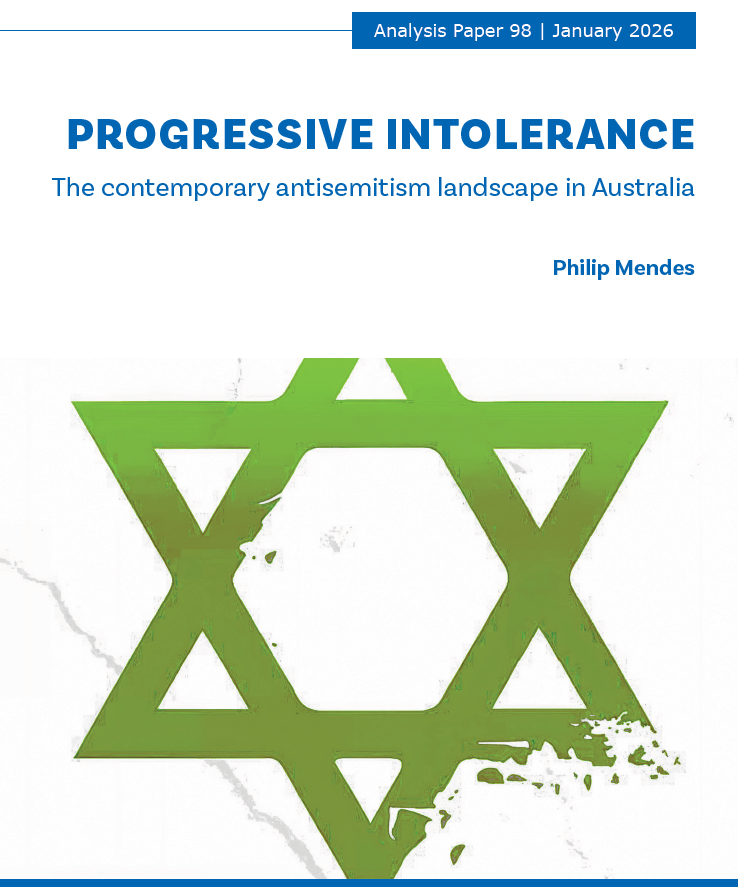
By Philip Mendes
The paper describes the emergence of antisemitism as a defining characteristic of significant sectors of Australia’s self-described ‘progressive’ institutions. It argues that antisemitism is rife in institutions such as universities, schools, the arts, trade unions, human rights and civil liberties bodies and the media – and predominant among younger Australians.
The paper documents a systematic pattern of hostility toward Jews going far beyond legitimate criticism of Israeli government policy. It presents case studies of pro-racist groups and activities, and of a bystander approach. The paper outlines three steps towards a best practice anti-racist response of zero tolerance.
A combination of universal and targeted education among other strategies are needed to prevent antisemitism becoming embedded longer-term within key sections of Australian society. The paper identifies mandatory education is badly needed both within all secondary schools – public, private and faith-based – and universities to directly counter antisemitic arguments that are prevalent and currently uncontested.
Australian policymakers attempting to combat manifestations of antisemitic intolerance will need to take a long-term approach given the ingrained nature of the racist and illiberal views within sections of academia and the wider community.
Key findings
The levels of antisemitic incidents in Australia are unprecedented, reaching a high in 2024 rising sharply after the October 7 massacre of innocent Jews in southern Israel in 2023.
Incidents range from systemic vilification in universities and trade unions, to extreme acts of violence.
There is a major generational divide between older Australians who are less likely to hold antisemitic views, and younger Australians aged 18 to 24 years who are more likely to hold negative views concerning Zionism, Israel and Jews generally.
Key recommendations
Exclude antisemites from Australia's immigration admission processes.
Prevent hate speech.
Interventions within educational institutions to stop young Australians absorbing racist ideas.
Centre for Independent Studies, 2026. 30p.