Open Access Publisher and Free Library
HUMAN RIGHTS.jpeg

HUMAN RIGHTS

Human Rights-Migration-Trafficking-Slavery-History-Memoirs-Philosophy

Posts in History
Of One Blood: A Short Study of the Race Problem

By Robert E. Speer

This book emphasizes that all races are part of one human family, created by God, and that racial distinctions are not biological but social constructs. It discusses the erroneous belief in racial superiority and the harm it causes, and argues that races can change and progress through education and environment, not just heredity. The ultimate solution to racial problems is presented as following the teachings of Jesus Christ, promoting love, peace, and unity among all races.

By Tiie Council of Women For Home Missions And Missionary Education Movement Of The United States And Canada. 1924. Read-Me.Org Classic Reprint 2024. .263p.

download
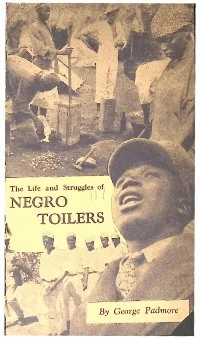
The Life and Struggles of Negro Toilers

BY GEORGE PADMORE

The document details the severe exploitation and oppression of Negro workers across various regions, including British, French, Belgian, Portuguese, Spanish, and Italian Africa. It discusses the conditions of black slaves in the United States, the West Indies, and Latin America, highlighting the brutal realities of slavery and its lasting impacts. The book describes the awakening and revolutionary movements among Negro workers in different regions, emphasizing their struggles for freedom and better living conditions, and outlines the role of imperialist powers in exploiting Negro workers and the economic and social challenges faced by these communities under imperialist rule.

R.I.L.U. Magazine for the International Union Committee of Negro Workers London, 1931. 125p.

download
Immigration Raids in Jackson, Mississippi, Five Years Later: An Evidence-Based Analysis to Dissuade Mass Deportation Policy and Promote a New Immigration Pathway

Christopher Ross,

FROM THE DOCUMENT: Immigration is one of, if not the, top voting priority for 2024 American voters [1]. Both political parties are poised to increase asylum restrictions but to disparate degrees. One policy under serious consideration is mass deportation [2]. It is not a novel American immigration policy concept [3]. But introspection from previous attempts should chill the notion of mass deportation being a viable solution worthy of serious consideration. The costs would be exorbitant. It would leave large swaths of American communities decimated. The local and national economies would take serious hits. Families and loved ones would be separated. Already backlogged immigration courts would be further overwhelmed as a matter of due process. Immigration must be addressed, and the rule of law is to be respected. But solutions must equally be practical. An August 2019 immigration raid in Jackson, Mississippi where 680 immigrants were arrested while working at nearby chicken processing plants provides a window to review how mass immigration enforcement, detention, and deportation affects an American community in the 21st century. This paper provides an analysis of the immigration raid and its effects on the local community, economy, and social services. It will also provide a scaled analysis of major metropolitan areas to show the deleterious effects of mass deportation and dissuade the consideration of mass deportation as viable policy. Finally, it will propose an alternative policy that may prove to be in the best interests of all parties involved.

Center for Migration Studies. .August 6, 2024. 63p.

download
Why Genocide? The Armenian and Jewish Experiences in Perspective

By Florence Mazian

Purpose of Study: The study aims to understand why genocide is chosen as a solution to problems, using a theoretical framework based on collective behavior.

Historical Context: It examines the Armenian Genocide and the Jewish Holocaust, detailing the social, political, and economic conditions that led to these events.

Theoretical Framework: The study develops a theory of genocide with six determinants, including the creation of "outsiders," internal strife, and powerful leadership with territorial ambitions.

Genocide Dynamics: It highlights how various factors interact dynamically to make genocide a "practical" solution, emphasizing the importance of understanding these dynamics to prevent future genocides.

Iowa State University Press, 1990, 291 pages

read
Strategies of Slaves & Women : Life-Stories from East/Central Africa

By Marcia Wright

This book explores life stories from East/Central Africa, focusing on the experiences of ex-slaves and women, their strategies during times of peril, and their consciousness and changing circumstances before World War I. It is divided into two parts, with the first part titled "Women in Peril" featuring narratives of individual women, and the second part "History at the Turn"providing essays that contextualize the narratives within broader historical settings. The work reflects interdisciplinary research, drawing from feminism, African social history, and studies on slavery, aiming to uncover the history of women and slaves in Africa's internal and external history. It also discusses the challenges of interpreting personal narratives within historical contexts. Finally, the book highlights the need for further research and interdisciplinary exchange to deepen the understanding of the subject matter.

Lilian Barber Press, 1993, 238 pages

read
Slavery and the Politics of Liberation 1787-1861

By Johnson U. J. Asiegbu

British Anti-Slavery Policy: The book explores the development ofBritish anti-slavery policy from 1787 to 1861, focusing on the SierraLeone settlement and the emigration of liberated Africans.

Emigration Challenges: It discusses the challenges and controversies surrounding the 'voluntary' emigration of liberated Africans under government control.

Labour Recruitment: The book examines the techniques used for labor recruitment, including the role of the Coastal Squadron and Vice-Admiralty Courts

Historical Context: It provides a detailed historical context, referencing various primary sources and documents related to the British anti-slavery movement and liberated African emigration

Africana Publishing Corporation, 1969, 231 pages

read
Slavers in Paradise : The Peruvian Slave Trade in Polynesia, 1862-1864

By H. E. Maude

Peruvian Slave Trade: The document details the Peruvian slave raids inPolynesia during 1862-1864, highlighting the impact on various island communities

Routes and Voyages: It describes the main routes taken by ships from Callao, Peru, to different Polynesian islands, including the Northern, Southern, and Central routes.

Polynesian Experience: The narrative includes personal accounts and the experiences of Polynesian islanders who were kidnapped or deceived into servitude.

Historical Context: The document provides a broader historical context, linking the events to the wider history of Pacific and Latin American interactions.

Stanford University Press, 1981, 244 pages

read
Sinews of Empire : A Short History of British Slavery

By Michael Craton

British Slave Trade: The British slave trade evolved from state-granted monopolies to free trade, with significant state involvement throughout.

African Companies: Various companies, such as the Company of Adventurers and the Royal African Company, played key roles in the trade, facing challenges from interlopers and European rivals.

Trade Goods: The trade involved a variety of goods, including textiles, metals, and liquor, which were exchanged for slaves.

Impact on Africa: The slave trade had profound effects on West African societies, including demographic changes and increased warfare.

Anchor Press, 1974, 413 pages

read
God's Assassins State Terrorism In Argentina in the 1970S

By Patricia Marchak

State Terrorism in Argentina: The book explores the period of state terrorism in Argentina from 1976 to 1983, where an estimated 30,000 people disappeared, many were imprisoned illegally, and thousands went into exile.

Historical Context: It delves into the historical origins of violence in Argentina, including the rise of guerrilla organizations and the military's response, leading to widespread fear and repression.

Personal Accounts: The book includes autobiographical accounts from various individuals, providing a rich understanding of the conditions and experiences during the period of state terrorism.

Methodology: The authors used interviews and historical records toconstruct an explanation of why and how state terrorism occurred in Argentina, focusing on the experiences and perceptions of those wholived through it.

McGill-Queen's Press, 1999, 393 pages

read
Liverpool, the African Slave Trade, and Abolition

Edited by Roger Anstey and P.E.H.Hair

Historical Context: The document explores the history of the Atlantic slave trade, focusing on Liverpool's significant role in the trade duringthe 18th century.

Economic Impact: It discusses the economic organization of the slavetrade, including the goods exchanged and the profits made bymerchants.

Abolition Movement: The document highlights the efforts and debates surrounding the abolition of the British slave trade, particularly the role of Liverpool abolitionists.

Research and Sources: It emphasizes the importance of historical records and recent research in understanding the complexities of the slave trade and its abolition.

Cambridge University Press ,1977 , 244 pages

read
United States, Slavery and the Slave Trade in the Nile Valley

By El-Bashir, Ahmed E.

The book discusses the history of slavery and the slave trade in the Nile Valley, focusing on the United States’ involvement. It examines public reactions, the role of American travelers in shaping opinions, and the official response to the issue. The author acknowledges the assistance of various individuals and institutions in conducting his research.

University Press of America, 1983, 189 pages

read
Negro Slavery In The Sugar Plantations of Veracruz And Pernambuco 1550-1680

By Gerald Cardoso

Certainly! Here are the key insights from the document:

Historical Context: The study examines the institution of slavery in the sugar plantations of Veracruz and Pernambuco between 1550-1680, comparing the Spanish and Portuguese colonial systems.

Economic Impact: Slavery was crucial for the economic development of the colonies, influencing labor practices and contributing to the prosperity generated by the sugar industry.

Cultural Influence: The interaction between the ruling and subservient groups, as well as between whites and people of color, shaped a multitude of cultural mores and attitudes[^1^][1].

Resistance and Rebellion: The document highlights the persistent struggle for freedom by enslaved individuals, including the formation ofquilombos (maroon communities) and the notable resistance led byfigures like Zumbi in Palmares.This summary captures the essence of the document's exploration of slavery'srole in colonial Latin America.

University Press of America, 1983, 211 pages

read
American Slaves in Victorian England

By Audrey Fisch

"American Slaves in Victorian England" by Audrey Fisch sheds light on the often overlooked history of American slaves who found themselves in England during the Victorian era. Through meticulous research and compelling narratives, Fisch explores the experiences, challenges, and triumphs of these individuals as they navigated a society far from home. This book provides a thought-provoking glimpse into a lesser-known aspect of both American and British history, offering a fresh perspective on the complexities of race, identity, and freedom in the 19th century.

Cambridge University Press, 2000, 139 pages

READ
The African Presence in Asia

By Joseph E. Harrris

The African Presence in Asia by Joseph E. Harris examines the historical interactions between Africa and Asia, shedding light on the often overlooked narratives of African presence and influence in Asian societies. Through meticulous research and compelling narratives, Harris uncovers the complexities of these cross-continental connections, challenging traditional perspectives on global history. This groundbreaking book is essential reading for anyone interested in understanding the interconnectedness of diverse cultures and the untold stories that have shaped our world.

Northwestern University Press, 1971 - 156 pagine

REAd
A Modern Slavery

A Modern Slavery By Henry W. Nevinson

This book, first published in 1906 provides a factual account of slavery in the Portuguese colony of Angola. Nevinson describes the brutal conditions of slavery, the slave trade routes, and the impact on African societies, emphasizing the inhumanity and suffering caused by the slave trade.The book mentions the work of missionaries in Africa, highlighting their efforts to provide education, medical care, and a message of peace, despite the challenges posed by colonial exploitation. The author  criticizes the Portuguese colonial system for perpetuating slavery and forced labor, particularly in the cultivation of cocoa on the islands of San Thome and Principe, leading to widespread suffering and death among the enslaved population.

Knopf Doubleday Publishing Group, 1968 - 252 pages

read
African Slaves and African Masters

By Christine E. Sears

The book examines the impact of African-American abolitionists in England during the 1850s, highlighting their efforts to present the slave experience and stimulate opposition to American slavery.It explores how the campaign intersected with various English issues such as Victorian literary market changes, class and gender tensions, and national identity questions.Despite its popularity, the abolitionist campaign inadvertently reinforced English nationalism, becoming a point of interest for students of African-American studies and 19th-century literature and history[^2^][2].

Springer, 2012, 240 pagws

Read
INDECENT EXPOSURE and the Court as Custodian of Morals

By Bruce Davis

This is the first comprehensive study of the history and evolution of American indecent exposure laws. The study informs a critical analysis of the role of courts as custos morum, or custodian of the morals. It contains a detailed constitutional analysis of legal management of morality.

The laws are a cornerstone of government regulation of morals, with roots tracing back to seventeenth century English and American cases, laws, and regulations. The state interests protected by indecent exposure laws focus on deterring public behaviors contrary to prevailing moral order and protecting the public from offense or alarm. As moral authority has shifted away from Christianity, the moral authority supporting maintenance of moral order have diminished and fragmented, leaving nuisance as the main justification. Most state statutes now define indecent exposure in terms of audience reaction, reflecting this dependence on nuisance theory. Supreme Court trends have weakened even this justification, raising questions about the viability of current indecent exposure laws.

Despite their fundamental role in moral regulation, indecent exposure laws have received little academic, political, or legal scrutiny. This analysis elucidates their origins, history, and effects, informing development of more effective policies on managing sexuality and nudity. The history of indecent exposure laws also provides insights into managing morals and church-state relations in secular societies. Legal, social, and political trends have created multiple complex jurisprudential dilemmas, exposing the laws to potential constitutional challenges based on the Establishment Clause, free exercise of religion, free speech, privacy, autonomy, overbreadth and vagueness, viewpoint restrictions, content-based restrictions, prior restraints, and equal protection precedent and doctrines. Changes in indecent exposure laws are likely but their costs and benefits remain unclear.

The book chronicles the origins and evolution of courts as custodian of morals. Aspects of Dobbs v. Jackson Women's Health abortion case decided in 2023 suggest that this regime may be nearing an end. Competing moral authorities are contributing to a worsening crisis in moral jurisprudence. The book proposes a public policy framework more aligned with our maturing Constitution that may be better suited to current conditions, based on an empirical approach to legal management of morals in a pluralistic liberal democracy.

New York. Read-Me.Org Inc. 2024. 313p.

download
SLAVERY AT THE CAPE OF GOOD HOPE.

MAY CONTAIN MARKUP

by Rev. William Wright.

The text discusses the state of slavery at the Cape of Good Hope, detailing the author's observations and experiences during his ten-year residence there. It mentions various laws and ordinances related to slavery at the Cape, including Lord Charles Somerset's Proclamation of 1823 and the Consolidated Order in Council for the Crown Colonies, dated February 2, 1830. The author also references efforts towards ameliorating enactments and the potential for a scheme for the extinction of slavery by the colonists themselves.

John Rodwell, London. 1831. Reprinted in 1969 by Negro Universities Press,., New York. 116p.

download
GREAT BRITAIN AND THE SLAVE TRADE 1839-1865

MAY CONTAIN MARKUP

BY WILLIAM LAW MATHIESON

This book provides an overview of the historical context and the measures taken to end the slave trade, emphasizing Great Britain's pivotal role and the international efforts to suppress this inhumane practice. It highlights the efforts to abolish the slave trade and the challenges faced, with reference to treaties with Spain and Portugal and describes Sierra Leone's significance as a base for anti-slavery operations and its challenges.

New York. OCTAGON BOOKS. INC.1967.

download
THE BRITISH ANTI-SLAVERY MOVEMENT

MAY CONTAIN MARKUP

Sir REGINALD COUPLAND

The book begins with a reference to James Stephen, a significant figure in the British anti-slavery movement.  Authored by Sir Reginald Coupland, the book provides a historical account of the British anti-slavery movement, with a new introduction by J. D. Fage.  The text delves into the origins and development of slavery, its practice in ancient civilizations, and the eventual involvement of Europe and America in the African slave trade. It discusses the moral implications of slavery and the economic factors that led to the rise of the slave trade, particularly in relation to the colonization of the Americas, thus setting the stage for a detailed exploration of the British efforts to abolish slavery and the slave trade.

FRANK CASS & CO LTD LONDON. 1933. 273p.

download