Open Access Publisher and Free Library
HUMAN RIGHTS.jpeg

HUMAN RIGHTS

Human Rights-Migration-Trafficking-Slavery-History-Memoirs-Philosophy

Posts in Human Rights
A Sword and a Shield: An Antidiscrimination Analysis of Academic Freedom Protections

By Apratim Vidyarthi

Academic freedom is an essential principle undergirding education in the United States. Its purpose is to further the freedom of thought and inquiry in the academic profession by advancing knowledge and the search for truth. Academic freedom goes back more than a century, and is now intertwined with First Amendment doctrine. Yet today’s academic freedom doctrine suffers from serious problems, some of which perpetuate discrimination in the classroom and systemically in educational institutions. The definition of academic freedom in theory is misaligned with that in case law. Courts have done little to analyze what protections academic freedom provides, and case law generally provides too much protection in some cases, and too little in others. Worse, academic freedom for universities and professors has been hotly debated and thus well-defined and protected in case law, whereas students’ academic freedom has received less attention, making it a “second-tier” academic freedom. Often, protecting university and professors’ academic freedom comes at the expense of students’ academic freedom, though courts have never truly struggled with multistakeholder academic freedom questions or tried to create a clear process to determine whose academic freedom prevails when the two conflict. This results in academic freedom being used as a sword to promote discriminatory behavior, and as a shield to protect acts of discrimination from being punished. Existing constitutional and statutory antidiscrimination protections do not provide adequate support against discrimination, especially for students’ academic freedom. Constitutional protections for students’ academic freedom often take the back seat to free speech doctrine, and antidiscrimination protections are often parried by using academic freedom to protect problematic behavior. A few solutions abound: first, the definition of academic freedom is nearly a century old, and needs to be redefined to incorporate antidiscrimination principles to be relevant for the present. Second, students’ academic freedom rights need to be understood and defined more clearly. Third, courts must find a way to balance competing stakeholders’ academic freedom interests, ultimately looking to the purpose of academic freedom to advance knowledge. Finally, universities must play their part by creating systems and structures to ensure that discrimination is remedied as early as possible, and that university processes help clarify the extent of academic freedom definitions and support application of antidiscrimination law.

JOURNAL OF CONSTITUTIONAL LAW [Vol. 26:2, 2024. . 79p.
Insecurity in Mindanao: Conflict and State-Sponsored Violence

By Jason Eligh

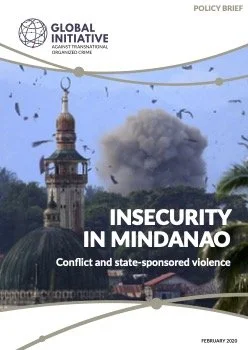
This brief provides an overview of the challenges facing the various autonomous government authorities of Mindanao, in the southern Philippines, in transitioning the region from conflict to peacebuilding, and to assess the response of the Philippine state to these challenges. Mindanao has long been fractured by a toxic mixture of political violence, identity-based armed conflict, and ethnic and clan divisions, and has been beset by sustained rebel and terrorist violence. These divisive factors have militated against regional political unity and social coherence, exacerbated by the area’s socioeconomic and development challenges. This context has also provided fertile ground for non-state armed groups involved in criminal enterprises to develop. When strongman Rodrigo Duterte was elected mayor of Davao, the capital of Mindanao, before he became president of the country, his approach to regional insecurity took the form of a highly securitized crackdown involving state-sanctioned and extrajudicial violence meted out by death squads. The methodology is qualitative and presents a narrative grounded in both primary and secondary data sets. These are supplemented by publicly available resources from news, research and civil-society organizations. Key points ■ State-sponsored violence has been deployed in Mindanao, and the Philippines more broadly, as a national policy. ■ Extrajudicial killings have continued in the war on drugs across the Philippines, following the same pattern as the earlier violence under Duterte’s Davao Death Squad. ■ The government implemented martial law in the Mindanao region for two years – purportedly for security, but conveniently hindering investigations of human-rights abuses by the state

has also provided fertile ground for non-state armed groups involved in criminal enterprises to develop. When strongman Rodrigo Duterte was elected mayor of Davao, the capital of Mindanao, before he became president of the country, his approach to regional insecurity took the form of a highly securitized crackdown involving state-sanctioned and extrajudicial violence meted out by death squads. The methodology is qualitative and presents a narrative grounded in both primary and secondary data sets. These are supplemented by publicly available resources from news, research and civil-society organizations. Key points ■ State-sponsored violence has been deployed in Mindanao, and the Philippines more broadly, as a national policy. ■ Extrajudicial killings have continued in the war on drugs across the Philippines, following the same pattern as the earlier violence under Duterte’s Davao Death Squad. ■ The government implemented martial law in the Mindanao region for two years – purportedly for security, but conveniently hindering investigations of human-rights abuses by the state. ■ Mindanao has seen a disproportionately high number of killings of human-rights advocates and activists. ■ Extremist and rebel groups in Mindanao are involved in criminal economies, deriving financing from drug and arms trafficking, kidnapping and extortion. ■ There is evidence that political elites in the region are involved in illicit drug markets. ■ A fundamental factor in promoting regional security and stability will be the need to support Mindanao in its transition to a peaceful, resilient post-conflict future

Geneva: Global Initiative against Transnational Organized Crime, 2020. 25p.

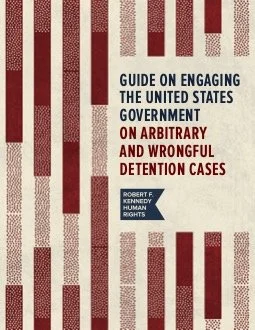
Guide on Engaging the United States Government on Arbitrary or Wrongful Detention Cases

By Robert F. Kennedy Human Rights Center

Addressing arbitrary and wrongful detention through advocacy and litigation is an area of extensive expertise and experience for RFK Human Rights. In the last decade, we have worked with families of arbitrarily and wrongfully detained individuals, including US persons, to facilitate their release and return home. A central reflection from our engagements with other practitioners and family members of arbitrarily or wrongfully detained persons is that the policy and legal architecture for the United States Government (USG) response to arbitrary and wrongful detention is complex and convoluted. Despite the successes in reuniting detained individuals with family members and the positive posture of the government toward negotiations, many stakeholders believe that clarity about the role each office or agency plays in the government’s response and uniformity in the government’s engagement with the families could facilitate even more positive outcomes.

In 2023, RFK Human Rights started a project aimed at steering USG and Congress towards more decisive action to address arbitrary and wrongful detention around the world and enhancing awareness around the government’s response architecture. Through the generous support from Open Society Foundations – United States, the project included advocacy engagements with the USG, litigation before the United Nations Working Group on Arbitrary Detention (UNWGAD), and publication of the Guide for Engaging the United States Government on Arbitrary and Wrongful Detention Cases.

About the Guide

The Guide on Engaging the United States Government on Arbitrary and Wrongful Detention Cases provides clear and concise information regarding advocacy strategies and engagement with the United States Government on arbitrary and wrongful detention cases. While every case is unique, this Guide aims to ease the burden of the engagement and advocacy process by shedding light on ways that the USG can engage on these cases and offering a set of best practices for advocating before the USG to secure the victim’s release. The Guide is based on RFK Human Rights’ institutional knowledge and experience working on arbitrary and wrongful detention cases, desk research, and a large number of interviews with experts and victims of arbitrary detention.

Washington, DC; New York: Robert F. Kennedy Human Rights, 2025. 68p.

Compliance Theater: The NWDC’s Unenforced Contract

By The Center for Human Rights, The Henry M. Jackson School of International Studies, University of Washington

The University of Washington Center for Human Rights's newest report, “Compliance Theater: The NWDC’s Unenforced Contract," looks at ICE’s use of enforcement mechanisms in its $700 million contract with GEO Group, Inc., the private company that runs the Northwest Detention Center (NWDC) in Tacoma, Washington.

How does ICE enforce the contract to operate the NWDC, and what happens if GEO fails to meet contract standards? Report findings include:

The contract between ICE and GEO Group for operation of the Northwest ICE Processing Center/NWDC expires in September 2025; it is likely to be renewed.

The contract includes extensive enforcement mechanisms and references to ICE standards, which are cited by ICE in response to criticisms of conditions at the facility.

UWCHR has filed multiple FOIA requests for various categories of records mandated under the facility’s contract, but in many cases ICE has responded that the required records do not exist; Members of Congress have also been unable to obtain records required under the contract.

Despite documented failures to uphold contract standards, GEO Group has never been sanctioned by ICE under the terms of the contract.

Seattle: Center for Human Rights, The Henry M. Jackson School of International Studies, University of Washington, 2025

The Human Right to Democracy in Multilevel Systems at a Time of Democratic Backsliding: Global, Regional and European Union Perspectives

By Thomas Giegerich

This open access book takes stock of the current situation of the human right to democracy in multilevel systems of government - at a time of renewed struggles with antidemocratic forces (democratic backsliding). It tries to answer three questions: (1) Is there a human right to democracy in contemporary global and regional international law as well as European Union law and what consequences does that have for the States’ governmental structure (top-down perspective on national democracy)? (2) Does the human right to democracy also extend to decision-making at the international and supranational level (bottom-up perspective on international/supranational democracy)? (3) What is the relation between national democracy and international democracy and the corresponding human entitlements (interdependence perspective)? The first part of an answer to these questions derives from the elements of democracy proclaimed by the United Nations as a universal value. The second part results from an investigation of the national and international democratic ingredients of the right of self-determination of peoples, whose recognition and codification is the mainstay of the human rights revolution since 1945. The third part is added by a survey and comparison of the various democratic rights included in the global and regional human rights treaties that constitute the subjective cornerstones of democracy. The fourth part is devoted to analysing the EU as exemplary but imperfect multilevel democracy. In all these parts, the enforcement of democratic entitlements are also discussed. In the fifth part, conclusions will be drawn. The book is addressed to international and EU law experts as well as political scientists.

Cham: Springer Nature, 2026.

Policing Same-Sex Relations in Eighteenth-Century Paris: Archival Voices from 1785

Edited by Jeffrey Merrick

Police in Paris arrested thousands of men for sodomy or similar acts in the eighteenth century. In the mid-1780s, they recorded depositions in which prisoners recounted their own sexual histories. These remarkable documents, curated and translated into English by Jeffrey Merrick, allow us to hear the voices of men who desired men and to explore complex questions about sources, patterns, and meanings in the history of sexuality. This volume centers on two cartons of paperwork from commissaire Charles Convers Desormeaux. Dated from 1785, the cartons contain 221 dossiers of men arrested for sodomy or similar acts in Paris. Merrick translates and annotates the police interviews from these dossiers, revealing how the police and those they arrested understood sex between men at the time. Merrick discusses the implications of what the men said (and what they did not say), how they said it, and in what contexts it was said. The best-known works of clergy and jurists, of enemies and advocates of Enlightenment, and of novelists and satirists from the eighteenth century tell us nothing at all about the lived experience of men who desired men. In these police dossiers, Merrick allows them to speak in their own words. This primary text brings together a wealth of important information that will appeal to scholars, students, and general readers interested in the history of sexuality, sodomy, and sexual policing.

University Park, PA: Penn State University, 2024.

Narrativity and Violence: Conceptual, Ethical and Methodological Challenges

Edited by Doris Reisinger, Christof Mandry, Sabine Andresen

Survivors' narratives are an invaluable source for the study of violence across academic fields. At the same time, they present several difficulties for academic research. Sources may be marked by the effects of trauma, the lasting impact of perpetrators' political power or blurred lines between reality and fiction. Ethical and legal problems, distances in time between a violent event and the moment of its narration, and the variation in linguistic phrasing chosen by survivors present additional problems. Based on several case studies, the contributors explore typical problems in the study of violence through survivors' narratives, and possible ways of dealing with them.

Bielefeld, Germany, transcript Verlag, 2024. 

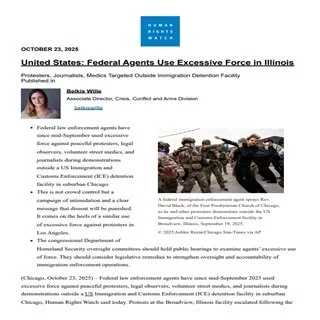
United States: Federal Agents Use Excessive Force in Illinois: Protesters, Journalists, Medics Targeted Outside Immigration Detention Facility

By Belkis Wille

Federal law enforcement agents have since mid-September 2025 used excessive force against peaceful protesters, legal observers, volunteer street medics, and journalists during demonstrations outside a US Immigration and Customs Enforcement (ICE) detention facility in suburban Chicago, Human Rights Watch said today. Protests at the Broadview, Illinois facility escalated following the start of ICE’s “Operation Midway Blitz” on September 8 and an increase in immigration raids and seizures throughout the Chicago area. 

Based on accounts by witnesses and videos that Human Rights Watch analyzed, Department of Homeland Security (DHS) agents—sometimes in the presence of state and local police, and other federal agents—repeatedly used excessive force against small groups of protesters who appeared to pose no threat to the agents or to public security, and against clearly identifiable journalists, legal observers, and volunteer street medics. They detained dozens of protesters, and at least one journalist and one volunteer street medic. The violent response comes on the heels of law enforcement’s use of excessive force against protesters opposing immigration raids in June in Los Angeles.

“This is not crowd control, but a campaign of intimidation,” said Belkis Wille, associate crisis and conflict director at Human Rights Watch. “Federal agents are using chemical irritants and firing projectiles at peaceful protesters, volunteer street medics, and journalists in broad daylight. The message is clear that dissent will be punished.”

Human Rights Watch interviewed 18 people who were present during the Broadview protests: 7 protesters, 4 journalists, 1 volunteer street medic, 2 immigration rights advocates, and a religious leader. Researchers also analyzed 17 videos recorded during the protests that were posted to social media or provided to researchers. On October 17, Human Rights Watch sent a letter to Homeland Security Secretary Kristi Noem summarizing these findings, posing questions, and offering the opportunity to comment, but has not received a response.

Witnesses and video confirm that DHS agents used tear gas and fired projectiles directly into groups of protesters, including from the detention facility roof, often without warning, and without protesters appearing to pose any risk to agents. Witnesses and verified footage show there were sometimes as few as 10 protesters and never more than 250. 

New York: Human Rights Watch, 2025.

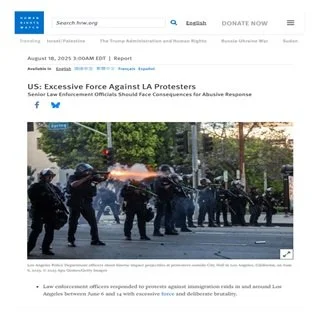
US: Excessive Force Against LA Protesters: Senior Law Enforcement Officials Should Face Consequences for Abusive Response

By Human Rights Watch

Law enforcement officers responded to protests against immigration raids in and around Los Angeles, California, between June 6 and 14, 2025, with excessive force and deliberate brutality, Human Rights Watch said today. 

Officers fired tear gas, pepper balls, hard foam rounds, and flash-bang grenades directly at protesters, journalists, and other observers, often at close range and often without sufficient warning or provocation. Scores of people suffered injuries, ranging from severe bruising and lacerations to broken bones, concussions, an amputated finger, and severe eye damage.

“Sweeping immigration raids have terrorized communities across Los Angeles and driven thousands of people to the streets in protest,” said Ida Sawyer, crisis, conflict and arms director at Human Rights Watch. “Local, state, and federal law enforcement’s aggressive response to these protests violently oppressed the public’s right to express outrage and the media’s right to report safely.” 

The protests were sparked by a dramatic escalation of immigration raids across Los Angeles and the surrounding area, following the Trump administration’s orders to the Immigration and Customs Enforcement (ICE) agency to increase daily arrests of undocumented immigrants. Heavily armed federal agents have stormed stores, warehouses, hotels, restaurants, farms, car washes, taco stands, and other workplaces and detained those they suspect of being undocumented with the aim of deporting them.

Human Rights Watch observed protests and visited locations of ICE raids in and around Los Angeles from June 10 to 14, and interviewed 39 people, including protesters, journalists, legal observers, volunteer street medics, immigration rights advocates and organizers, and others affected by the raids. Researchers analyzed lawsuits, documentation by the Los Angeles Press Club, media reports, and photos and videos recorded during the protests and posted on social media or shared directly with researchers. 

Human Rights Watch documented 65 cases in which law enforcement officers from various local, state, and federal agencies injured protesters, journalists, and other observers. The actual number is most likely much higher. In the three weeks following June 6, more than 280 people contacted the American Civil Liberties Union (ACLU) of Southern California, most reporting that they had been personally injured by law enforcement agents while engaged in protest activity.

New York: Human Rights Watch; 2025.

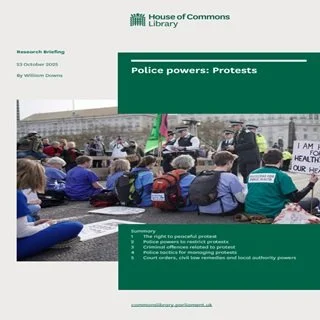
Police Powers: Protests. An Overview of Legislation, Guidance and Debates Related to the Policing of Protests

By William Downs

What are the current protest laws in the UK? An individual’s right to freedom of expression and assembly are protected by Articles 10 and 11 of the European Convention on Human Rights, which is enshrined in UK law. Together, the Articles safeguard the right to peaceful protest. However, these rights are not absolute, and the state can implement laws that restrict the right to protest to maintain public order or to protect the rights and freedoms of others. In the UK, several pieces of legislation provide a framework for the policing of protests. The Public Order Act 1986 provides the police with powers to place restrictions and conditions on protests. These powers were strengthened by part 3 of the Police, Crime, Sentencing and Courts Act 2022. The Public Order Act 2023 established several criminal offences in relation to protest, including causing serious disruption by locking on, being equipped to lock on, causing serious disruption by tunnelling underground, obstructing major transport works and interfering with key national infrastructure. There are several other criminal offences that could apply to a person’s conduct during a protest, despite not being offences that are specific to protests. These include wilful obstruction of a highway, public nuisance, and aggravated trespass. What other rules can apply to protests? There have been several examples of businesses and organisations applying for court orders against protesters to stop them from engaging in protest activity that affects their operations. The Public Order Act 2023 also gives the Home Secretary the power to request injunctions against protesters, though at the time of writing this provision has not been brought into force. Part 2 of the Public Order Act 2023 created Serious Disruption Prevention Orders (SDPOs). SDPOs are civil orders that enable courts to place conditions or restrictions on an adult (such as restrictions on where they can go and when) with the aim of preventing them from engaging in protest-related activity that could cause disruption. Breaching an SDPO is a criminal offence. How have protest laws changed? In recent years, the government has initiated major legislative reforms in response to concerns about peaceful but disruptive protests. The Public Order Act 2023 and the Police, Crime, Sentencing and Courts Act 2022 introduced new measures aimed at giving the police increased powers to respond to protests targeting major roads, transport networks, and other infrastructure. Taken as a whole, these reforms have increased the police’s power to intervene in disruptive protests, introduced a range of new protest-related criminal offences and increased penalties for people involved in organising and carrying out disruptive protests. This legislative agenda has been controversial and attracted strong opposition from campaigners who have questioned the compatibility of reforms with human rights legislation. For example, the Joint Committee on Human Rights said that the combined measures in the 2023 and 2022 acts would likely “have a chilling effect on the right to protest in England and Wales” (PDF). The government said that its legislation aimed to “protect the public and businesses from [the] unacceptable actions” of “a small minority of protestors”. It said that existing human rights legislation provides appropriate safeguards for the right to protest (PDF) and that the police and prosecutors will continue to be responsible for acting “compatibly with an individual’s Convention rights” when making any decisions about arrests and charges. What further changes are expected? If it becomes law, the Crime and Policing Bill 2024-25 will introduce further measures aimed at restricting certain behaviours at protests, including creating new offences of possessing pyrotechnics, climbing war memorials, and concealing identity. It would also allow the police to impose conditions on protests planned to pass sites of religious worship. In October 2025, the government announced it would introduce legislation that would allow the police to place conditions on protests that, due to their regularity, have a “cumulative impact” of disruption. This would replace legislation previously introduced via statutory instrument in June 2023 that was quashed following judicial review. The government said it would also review legislation “to ensure that powers are sufficient and being consistently applied.” 

London: House of Commons Library, 2025. 70p.

Searching for the Disappeared in Transitional Justice Settings: Norms, Context, and Shifting Priorities

By Cath Collins

This article considers historic and recent approaches to disappearance in transitional justice settings, identifying search, identification and restitution as a uniquely persistent cluster of needs and rights adhering after periods of past political violence. It examines how international and regional norm development, transitional justice dynamics, and needs on the ground have combined to elicit reinvigorated state action over unresolved disappearances in post-authoritarian and post-internal armed conflict Latin America. Dedicated state search offices are considered among various possible responses, but the continued importance of judicial and ‘resistant’ (victim-driven) search is underlined. The ‘forensic turn’ in human rights practice is examined, and aspects of its subsequent evolution – including the proliferation of non-state forensic teams – identified as a potential source of decoupling between the truth and reparations promise of search and identification, and justice imperatives.

The article examines upload and download between present-day search configurations, originating contexts and overarching norms, focusing on search principles adopted by the United Nations in 2019. It suggests that a transitional justice perspective can help assess whether and when apparently divergent or noncompliant approaches should be deemed acceptable – for example, where the fate of the disappeared may be knowable, but they may not be recoverable, or where the passage of time has rendered perpetrator prosecutions a virtual chimera. Finally, the case of Chile’s recent (2023) search office design is used to consider the interplay between norms and country-level diagnostics in creating workable search plans that complement (but without displacing) other important aspects of the struggle against disappearance.

Journal of Disappearance Studies1(1), 115-138. Retrieved Oct 6, 2025,

Enforced Disappearances in International Human Rights Law: Definitions, Violations and Remedies

By Nikolas Kyriacou

Enforced disappearance is a severe human rights violation with historical roots and global prevalence, perpetrated by state and non-state actors, leaving victims and families in a state of uncertainty. This article explores its legal dimensions in international human rights law. While definitions vary slightly across instruments, a core definition has emerged from the UN Declaration on the Protection of all Persons from Enforced Disappearance, the Inter-American Convention, the Rome Statute and the International Convention for the Protection of All Persons from Enforced Disappearance. Key elements include deprivation of liberty, state involvement or acquiescence, and state refusal to acknowledge the person’s fate, placing them outside of any legal protection.

Enforced disappearance is characterized as a multiple human rights violation. It inherently violates the right to liberty and security, and can involve the right not to be subjected to torture. It also frequently serves as a precursor to violations of the right to life. International human rights mechanisms have addressed these violations through various remedies. While the monetary compensation offered by the European Court of Human Rights (ECtHR) is noted as inconsistent and opaque, the Inter-American Court of Human Rights (IACtHR) has developed a broader system including monetary and diverse non-monetary measures, emphasizing the duty to investigate and the right to truth. The 2007 International Convention for the Protection of All Persons from Enforced Disappearance (CPED) offers the most comprehensive framework, explicitly recognizing the rights to justice and reparation, which includes compensation, restitution, rehabilitation, satisfaction and guarantees of non-repetition. Despite these advancements, challenges in implementation and enforcement persist, highlighting the ongoing need for global commitment to end impunity and ensure justice.

Journal of Disappearance Studies, v. 1, 2025.

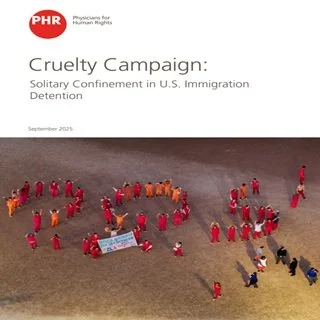
Cruelty Campaign: Solitary Confinement in U.S. Immigration Detention

By Physicians for Human Rights

The United States maintains the world’s largest immigration detention system, detaining an average daily population of nearly 60,000 people in immigration detention.¹ U.S. Immigration and Customs Enforcement (ICE) detains people in a network of facilities across the country where they often endure inhuman conditions, including solitary confinement.² Solitary confinement is the practice of isolating people in small cells without meaningful human contact for 22 hours or more per day.³

Over the past decade, the use of solitary confinement in immigration detention has risen at an alarming rate, with unprecedented numbers of immigrants held in isolation. Congress recently authorized a significant increase in funding to expand immigration detention, which will likely exacerbate this widespread, prolonged use of solitary confinement as detention capacity increases.

The effects of prolonged solitary confinement can be lethal, as in the case of Charles Leo Daniel, who died after spending more than 13 years of his life in solitary confinement in various detention settings, including almost four years in solitary confinement in ICE detention. The adverse health effects of solitary confinement are well-established, extensively researched, and thoroughly documented across decades of literature, including post-traumatic stress disorder, self-harm, elevated suicide risks, lasting brain damage, and hallucinations. These effects often persist beyond the confinement period, resulting in enduring physical and psychological disabilities, especially among people with preexisting medical and mental health conditions.⁹ Vulnerable populations, including those with medical and mental health conditions, are often subjected to solitary confinement at high rates despite ICE’s own directives mandating its use as a last resort.

New York: Physicians for Human Rights, 2025. 21p.

Portrait of Antisemitic Experiences in the U.S., 2024-2025

By The Anti-Defamation League

The attacks on October 7, 2023, and their aftermath have profoundly reshaped Jewish American life. This joint report by the Anti-Defamation League (ADL) and Jewish Federations of North America draws on two large, nationally representative surveys of Jewish Americans conducted earlier this year to illustrate the complex dynamics affecting them. The findings highlight both the widespread effects of antisemitism and the remarkable resilience of Jewish communities. 

Key Findings

Over half of Jewish Americans (55%) report experiencing some form of antisemitism in the past year.79% of all respondents are concerned about antisemitism.

Nearly one in five (18%) were either the victim of an assault, experienced threat of physical attack, or experienced verbal harassment due to their Jewish identity in the past year, while over one-third (36%) witnessed actual or threatened antisemitic violence.

Jewish Americans experienced antisemitism in many contexts, with the most common ones including online, public spaces, the workplace, and educational institutions.

Safety concerns are widespread among American Jews; over 50% are somewhat, very or always worried about personal safety, one-third have discussed with others what they would do in a “worst case” scenario, and 14% have developed a plan should they need to flee the country due to rising antisemitism. These rates are significantly higher for those that experienced direct antisemitic harm.

Jewish-Americans who experienced direct antisemitic harm or witnessed antisemitic acts within the past 12 months exhibited higher rates of symptoms used to screen for anxiety and depression.

One in five Jews who wore something distinctively Jewish before October 7 have since taken it off.

American Jews showed great resilience, with 84% of those who were directly harmed in the past year making some positive change because of the antisemitism they experienced.

What Jewish Federations terms “the Surge” - a marked increase in Jewish engagement - continues, though at slightly lower levels than in 2024, with nearly one-third of Jews reporting increased participation in Jewish life.

New York: ADL, 2025

Promotion and Protection of the Human Rights and Fundamental Freedoms of Africans and of People of African Descent

Against Excessive Use of Force and Other Human Rights Violations by Law Enforcement Officers Through Transformative Change for Racial Justice and Equality

Report of the United Nations High Commissioner for Human Rights

Pursuant to Human Rights Council resolution 47/21, in the present report, the United Nations High Commissioner for Human Rights examines calls for reparatory justice presented in his agenda towards transformative change for racial justice and equality, building on recommendations by the Secretary-General and United Nations human rights mechanisms. The High Commissioner highlights the role of States and others in confronting legacies of enslavement, the trade in enslaved Africans and colonialism, including dismantling structures and systems that perpetuate systemic racism at all levels. The High Commissioner reaffirms that reparatory justice requires a multi-pronged approach that is context-specific, intersectional, grounded in international human rights law and designed through meaningful consultation with and the participation of people of African descent. Building a reparatory justice momentum requires mobilizing all of society, the creation and reinforcement of existing networks and solidarity across equality movements. The High Commissioner calls for renewed leadership and vision, through creative, effective and comprehensive reparatory justice responses, as a critical component of dismantling systemic racism. 

United Nations, 2025. 18p

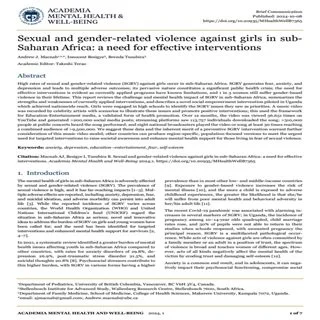
Sexual and Gender-Related Violence Against Girls in Sub-Saharan Africa: A Need for Effective Interventions

By Macnab, A. J., Besigye, I., & Tusubira, B

High rates of sexual and gender-related violence (SGRV) against girls occur in sub-Saharan Africa. SGRV generates fear, anxiety, and depression and leads to multiple adverse outcomes; its pervasive nature constitutes a significant public health crisis; the need for effective interventions is evident as currently applied programs have known limitations, and 1 in 3 women still suffer gender-based violence in their lifetime. This report reviews the challenge and mental health impact of SGRV in sub-Saharan Africa, summarizes the strengths and weaknesses of currently applied interventions, and describes a novel social empowerment intervention piloted in Uganda which achieved nationwide reach. Girls were engaged in high schools to identify the SGRV issues they saw as priorities. A music video was recorded by celebrity artists with scenarios to illustrate these issues and promote positive interventions; this used the framework for Education-Entertainment media, a validated form of health promotion. Over 12 months, the video was viewed 36,651 times on YouTube and generated >200,000 social media posts; streaming platforms saw 113,757 individuals downloaded the song; >310,000 people at public concerts heard the song performed; and eight national broadcasters played the video or song at least 30 times reaching a combined audience of >9,500,000. We suggest these data and the inherent merit of a preventive SGRV intervention warrant further consideration of this music video model; other countries can produce region-specific, population-focused versions to meet the urgent need for targeted interventions to raise societal awareness and enhance mental health support for those living in fear of sexual violence.

Academia Mental Health and Well-Being 2024;1.

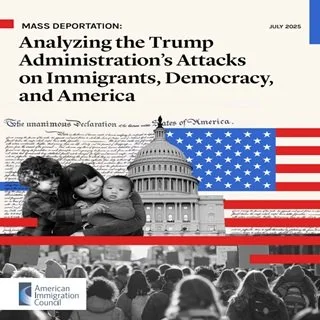
MASS DEPORTATION: Analyzing the Trump Administration’s Attacks on Immigrants, Democracy, and America

By The American Immigration Council

The first six months of the second Donald J. Trump administration have arguably seen the most significant changes to U.S. immigration policy in the nation’s history. Taken one by one, as they have been announced or revealed, the effect can be overwhelming: it seems impossible to even comprehend everything that has happened, much less to understand it in a systematic way or to anticipate what might come next. The purpose of this report is not to recapitulate the last six months of chronology. Nor is it to contextualize the last six months within the history of immigration policy. The administration is simultaneously continuing some policy trends in place under the previous administration; taking latent powers within immigration law and using them as a matter of course; reanimating laws whose enactment predates the modern immigration system; and asserting wholly new powers that have never existed in law before. Lists like these can make anyone feel as though they have no idea what is actually going on. We aim to do the opposite of that: to provide a framework for the American people to understand what has been done to noncitizens, the communities in which they live, and the entire U.S. immigration system since January 20, 2025. We hope this framework will remain useful as the Trump administration continues its effort to fundamentally transform the American government, character, and role in the world. Our report is organized as a survey of the immigration policy landscape as of mid-2025, seeking to answer three key questions: The first six months of the second Donald J. Trump administration have arguably seen the most significant changes to U.S. immigration policy in the nation’s history. Taken one by one, as they have been announced or revealed, the effect can be overwhelming: it seems impossible to even comprehend everything that has happened, much less to understand it in a systematic way or to anticipate what might come next. The purpose of this report is not to recapitulate the last six months of chronology. Nor is it to contextualize the last six months within the history of immigration policy. The administration is simultaneously continuing some policy trends in place under the previous administration; taking latent powers within immigration law and using them as a matter of course; reanimating laws whose enactment predates the modern immigration system; and asserting wholly new powers that have never existed in law before. Lists like these can make anyone feel as though they have no idea what is actually going on. We aim to do the opposite of that: to provide a framework for the American people to understand what has been done to noncitizens, the communities in which they live, and the entire U.S. immigration system since January 20, 2025. We hope this framework will remain useful as the Trump administration continues its effort to fundamentally transform the American government, character, and role in the world. Our report is organized as a survey of the immigration policy landscape as of mid-2025, seeking to answer three key questions.

Washington, DC: American Immigration Council, 2025. 74p.

Fantasies of Gender and the Witch in Feminist Theory and Literature

By Justyna Sempruch

In Fantasies of Gender and the Witch in Feminist Theory and Literature, Justyna Sempruch analyzes contemporary representations of the “witch” as a locus for the cultural negotiation of genders. Sempruch revisits some of the most prominent traits in past and current perceptions in feminist scholarship of exclusion and difference. She examines a selection of twentieth-century US American, Canadian, and European narratives to reveal the continued political relevance of metaphors sustained in the archetype of the “witch” widely thought to belong to pop-cultural or folkloristic formulations of the past. Through a critical rereading of the feminist texts engaging with these metaphors, Sempruch develops a new concept of the witch, one that challenges traditional gender-biased theories linking it either to a malevolent “hag” on the margins of culture or to unrestrained “feminine” sexual desire. Sempruch turns, instead, to the causes for radical feminist critique of “feminine” sexuality as a fabrication of logocentric thinking and shows that the problematic conversion of the “hag” into a “superwoman” can be interpreted today as a therapeutic performance translating fixed identity into a site of continuous negotiation of the subject in process. Tracing the development of feminist constructs of the witch from 1970s radical texts to the present, Sempruch explores the early psychoanalytical writings of Cixous, Kristeva, and Irigaray, and feminist reformulations of identity by Butler and Braidotti, with fictional texts from different political and cultural contexts.

West Lafayette, IN: Purdue University Press, 2008.

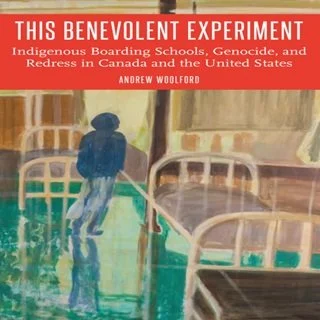
This Benevolent Experiment: Indigenous Boarding Schools, Genocide, and Redress in Canada and the United States

By Andrew Woolford

This Benevolent Experiment is a nuanced comparative history of Indigenous boarding schools in the United States and Canada. Because of differing historical, political, and structural influences, the two countries have arrived at two very different responses to the harm caused by assimilative education.

Lincoln: Nebraska University Press, 2015. 

Everyday Islamophobia

By Peter Hopkins

Available open access digitally under CC BY NC ND licence. Everyday experiences of anti-Muslim racism include accounts of Islamophobia in public spaces, in the school playground, on social media and on public transport. This book explores how Islamophobia pervades the daily lives of Muslims and those perceived to be Muslim, drawing upon work by the author and leading researchers. Everyday Islamophobia tends to be regarded as low level or trivial. This book considers the influence of organisations, agencies, and individuals on those who find themselves negotiating its significant harms in education, the community and online. It concludes by exploring strategies to challenge and resist Islamophobia.

Bristol UK: Bristol University Press, 2025.