Open Access Publisher and Free Library
HUMAN RIGHTS.jpeg

HUMAN RIGHTS

Human Rights-Migration-Trafficking-Slavery-History-Memoirs-Philosophy

Posts in Sociology
Understanding Secondary Immigration Enforcement: Immigrant Youth and Family Separation in a Border County

By Nina Rabin

Young people in immigrant families are often characterized as a separate population in debates over immigration reform, with distinctive claims and interests as compared to their parents. Bifurcating the undocumented population between children and parents over-simplifies how immigration enforcement impacts families. This article challenges the dichotomy between children and parents by studying how young people who are not direct enforcement targets are nevertheless impacted by immigration enforcement policies, regardless of their own immigration status. These impacts, which I call “secondary immigration enforcement,” often manifest as family separations. To render secondary immigration enforcement visible, I studied 38 young people in Arizona who are living on their own – without either biological parent – at least in part because of immigration enforcement policies. Drawing on in-depth interviews and self-assessments of psycho-social functioning, I describe what secondary immigration enforcement looks like and how it operates. I illustrate that deportation statistics alone fail to capture the extent of immigration enforcement because they do not encompass the complex impacts of secondary enforcement. In addition to the acute disruptions caused by deportations of family members, the young people in the study also experienced family separation as a result of immigration enforcement’s interaction with three other key factors: family dysfunction, extreme poverty, and educational aspirations.

Tucson: The University of Arizona, James E. Rogers College of Law, 2017. 37p.

download
Harm Reduction in Immigration Detention: A Comparative Study of Detention Centres in France, Germany, Norway, Sweden, and Switzerland

By Izabella Majcher and Michael Flynn

This Global Detention Project Special Report, commissioned by the Norwegian Red Cross, systematically compares conditions and operations at detention centres in five European countries to identify practices that may be used to develop “harm reducing” strategies in detention. The report, which the Norwegian Red Cross commissioned in an effort to identify possible reforms in Norway’s detention practices, addresses several key questions:

In Norway’s Trandum Detention Centre, multiple reports have highlighted an overzealously punitive and restrictive detention regime where detainees consider themselves to be “treated as criminals” even though they are not serving criminal prison sentences. Despite repeated recommendations from relevant experts, including the country’s Parliamentary Ombudsman, many important reforms have not been implemented.

The report highlights several key areas for promoting reforms, both at Trandum and in other facilities across Europe, including: placing immigration detainees in the custody of social welfare institutions rather than public security agencies; reforming operating rules on everything from food preparation to electronic communications; and shedding detention centres of carceral elements, including the aspect of guards and staff members and the internal layout and regime of detention centres.

Geneva: Global Detention Project, 2019. 86p.

download
Crime and Immigration: Do poor labor market opportunities lead to migrant crime?

By Brian Bell

Immigration is one of the most important policy debates in Western countries. However, one aspect of the debate is often mischaracterized by accusations that higher levels of immigration lead to higher levels of crime. The evidence, based on empirical studies of many countries, indicates that there is no simple link between immigration and crime, but legalizing the status of immigrants has beneficial effects on crime rates. Crucially, the evidence points to substantial differences in the impact on property crime, depending on the labor market opportunities of immigrant groups.

Bonn: Institute of Labor Economics (IZA), 2019. 11p.

download
The Exploitation of Trafficked Women

This guide begins by describing the problem of exploiting women who have been trafficked into the United States, and the aspects of human trafficking that contribute to it. Throughout the guide, the word “trafficked” shall mean internationally trafficked, unless otherwise stated. Additionally, the guide’s focus is on the final period inthe process of trafficking at which women are further exploited by those into whose hands they are passed. This is the poi nt at which human trafficking becomes a problem for local police and so the guide identifies a series of questions that can help analyze local problems related to trafficking. Finally, it reviews responses to the exploitation of trafficked women and examines what is known about the effectiveness of these responses from research and police practice.

download
Asylum, Migration and Community

By Maggie O'Neill

Issues of asylum, migration, humanitarian protection and integration/belonging are of growing interest beyond the disciplinary areas of refugee studies, migration, and social policy. Rooted in more than two decades of scholarship, this book uses critical social theory and participatory, biographical and arts based methods with asylum seekers, refugees and emerging communities to explore the dynamics of the asylum-migration-community nexus. It argues that inter-disciplinary analysis is required to deal with the complexity of the issues involved and offers understanding as praxis (purposeful knowledge), drawing upon innovative participatory, arts based, performative and policy relevant research.

Bristol, UK: Policy Press, 2010. 310p.

download
Undocumented Migrants and their Everyday Lives: The Case of Finland

By Jussi S. Jauhiainen and Miriam Tedeschi

This open access monograph provides an overview of the everyday lives of undocumented migrants, thereby focusing on housing, employment, social networks, healthcare, migration trajectories as well as their use of the internet and social media. Although the book’s empirical focus is Finland, the themes connect the latter to broader geographical scales, reaching from global migration issues to the EU asylum policies, including in the post-2015 situations and during the COVID-19 pandemic, as well as from national, political, and societal issues regarding undocumented migrants to the local challenges, opportunities, and practices in municipalities and communities. The book investigates how one becomes an undocumented migrant, sometimes by failing the asylum process. The book also discusses research ethics and provides practical guidelines and reflects on how to conduct quantitative, qualitative, and mixed methods research about undocumented migrants. Finally, the book addresses emerging research topics regarding undocumented migrants.

Cham: Springer Nature, 2021. 190p.

download
Illegal Migration and Gender in a Global and Historical Perspective

Edited by Marlou Schrover, Joanne van der Leun, Leo Lucassen and Chris Quispel

Two issues come to the fore in current debates over migration: illegal migration and the role of gender in illegal migration. This incisive study combines the two subjects and views the migration scholarship through the lens of the gender perspective, investigating definitions of citizenship and the differences in mechanisms of inclusion and exclusion for men and women, producing a comprehensive account of illegal migration in Germany, the Netherlands, Great Britain, the Soviet Union, Mexico, Malaysia, the Horn of Africa and the Middle East over the nineteenth- and the twentieth centuries.

Amsterdam: Amsterdam University Press, 2008. 196p.

download
MS-13 Resurgence: Immigration Enforcement Needed to Take Back Our Streets

By Jessica M. Vaughn

The Trump administration has declared war on MS-13, the notoriously brutal gang based in El Salvador. A similar initiative launched by the Bush administration in 2005 stifled the gang's activity after several years, but the gang has been able to rebuild itself here since 2012.

Center researchers reviewed more than 500 cases of MS-13 gang members arrested nationwide since 2012. We conclude that this resurgence represents a very serious threat to public safety in communities where MS-13 has rebuilt itself. The resurgence is directly connected to the illegal arrival and resettlement of more than 300,000 Central American youths and families that has continued unabated for six years, and to a de-prioritization of immigration enforcement in the interior of the country that occurred at the same time.

All criminal gangs are a threat to public safety, but MS-13 is a unique problem because of the unusually brutal crimes its members have committed, its success in using intimidation to victimize and control people in its territory, and its focus on recruiting young members, often in schools.

Nevertheless, because such a large share of MS-13 members are not citizens, they are especially vulnerable to law enforcement, and many can be removed from the communities they terrorize. Strategic use of immigration enforcement is a necessary element to disrupting and dismantling MS-13 gangs and any other transnational criminal organization operating in our communities.

The proliferation of sanctuary policies that interfere with cooperation between state and local law enforcement agencies threatens to hamper efforts to stifle MS-13 activity. The federal government must take steps to clarify how federal law permits such cooperation and also must set up consequences for those jurisdictions and officials who impose sanctuary policies.

Washington, DC: Center for Immigration Studies, 2018. 17p.

download
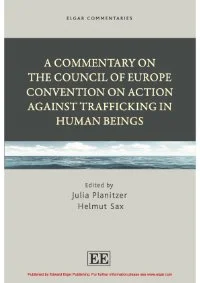
A Commentary on the Council of Europe Convention on Action against Trafficking in Human Beings

Edited by Julia Planitzer and Helmut Sax

This comprehensive Commentary provides the first fully up-to-date analysis and interpretation of the Council of Europe Convention on Action against Trafficking in Human Beings. It offers a concise yet thorough article-by-article guide to the Convention’s anti-trafficking standards and corresponding human rights obligations. This Commentary includes an analysis of each article’s drafting history, alongside a contextualisation of its provisions with other anti-trafficking standards and a discussion of the core issues of interpretation.

Edward Elgar. Cheltenham, UK + Northampton, MA, USA. 2020. 563p.

download
Irregular Migration, Trafficking and Smuggling of Human Beings: Policy Dilemmas in the EU

Edited by Sergio Carrera and Elspeth Guild

While the current migration and refugee crisis is the most severe that the world has known since the end of the Second World War (with over 60 million refugees worldwide, according to the UNHCR), it may turn into the norm, because the reasons to migrate keep on multiplying. These reasons range from long-lasting political crises, endemic civil wars, atrocities committed against ethnic or religious groups by extremist organisations to the lack of economic development prospects and climate change. The European Union has a duty to welcome some of these people – namely those who need international protection. With over a million irregular migrants crossing its external borders in 2015, the European Union has to engage in a deep reflection on the rationale underpinning its policies on irregular migration and migrant smuggling – and their effects. At such a strenuous time, the challenge before us is “to work closely together in a spirit of solidarity” while the “need to secure Europe’s borders” remains an imperative, to recall President Juncker’s words. Of particular relevance in this framework is the issue of migrant smuggling, or facilitation of irregular entry, stay or transit. Addressing migrant smuggling – located at the intersection of criminal law, which sanctions organised crime, the management of migration and the protection of the fundamental rights of irregular migrants – has become a pressing priority. But the prevention of and fight against migrant smuggling is a complex process, affected by contextual factors, including a high level of economic and social disparity between the EU and several third countries, difficult cooperation with source and transit countries and limited legal migration channels to the EU

Brussels: Center for European Policy Studies (CEPS), 2016. 112p.

download
The Security Sector Governance–Migration Nexus: Rethinking how Security Sector Governance matters for migrants’ rights

By Sarah Wolff

The main argument is that improving migrants’ rights and conceptual linkages between SSG/R and migration is best achieved, by decentring our gaze, namely going beyond the ‘national’ and ‘state-centric’ view that characterizes traditionally SSG/R and to consider the agency of both migrants and SSR actors. First from a migrants’ perspective, it is key for SSR actors to go beyond traditional legal classifications and to consider the diversity of personal situations that involve refugees, stranded migrants and asylum seekers, which might endorse different roles at different times of their journeys and lives. Second, the transnational nature of migration calls for a transnationalization of SSG/R too. For too long the concept has mostly been applied within the national setting of SSR institutions and actors. Migration calls for a clear decentring that involves a transnational dimension and more work among transnational actors and policymakers to facilitate a norm transfer from the domestic to the interstate and international level. As such, the ‘transnational’ nature of migration and its governance needs to be ‘domesticated’ within the national context in order to change the mindset of SSG/R actors and institutions. More importantly, the paper argues that poor SSG/R at home produces refugees and incentivizes migrants to leave their countries after being victims of violence by law enforcement and security services. During migrants’ complex and fragmented journeys, good security sector governance is fundamental to address key challenges faced by these vulnerable groups. I also argue that a better understanding of migrants’ and refugees’ security needs is beneficial and central to the good governance of the security sector. After reviewing the key terms of migration and its drivers in section 2, section 3 reviews how SSG is part of the implementation of the GCM. SSR actors play a role in shaping migratory routes and refugees’ incentives to leave, in explaining migrants’ and refugees’ resilience, in protecting migrants and refugees, and in providing security. Although it cautions against artificial classifications and the term of ‘transit migration’, section 4 reviews what the core challenges are in the countries of origin, transit and destination. Section 5 provides a detailed overview of the linkages between migration and each security actor: the military, police forces, intelligence services, border guards, interior ministries, private actors, criminal justice, parliaments, independent oversight bodies and civil society. Section 6 formulates some recommendations.

London: Ubiquity Press, 2021. 80p.

download
Mediated Bordering: Eurosur, the Refugee Boat, and the Construction of an External EU Border

By Ellebrecht, Sabrina

The external border of the EU remains under permanent construction. Sabrina Ellebrecht engages with two of its primary building sites – the European Border Surveillance System (Eurosur) and the Refugee Boat. She analyzes how the function and quality of the EU's current political border is crafted, shaped, produced and eventually stabilized through these two mediators. Eurosur and the Refugee Boat mediate a level of Europeanization which has hitherto – and would otherwise have – been impossible. While Eurosur mobilizes the limits of border policing in various ways, the Refugee Boat functions as the vacillating European Other to legitimize both control and humanitarian interventions. The study shows the specific, if not constitutive, ambivalences of EU border policies, and explores the emergence of viapolitics.

Bielefeld: transcript Verlag, 2020. 321p.

download
The Nexus between Human Security and Preventing/Countering Violent Extremism: Case Studies from Bosnia and Herzegovina, Niger, and Tunisia

By The Soufan Center

Preventing/Countering Violent Extremism (P/CVE) approaches are unlikely to succeed in the long term without addressing a range of structural factors, specifically political, economic and social drivers including public perceptions of policing; the socio-economic exclusion of particular communities and ethnic, race, religion or gender groups; and the lack of economic opportunities for young people, all of which create the sense of injustice on which violent extremism feeds.

Washington, DC: The Soufan Center, 2020. 64p.

download
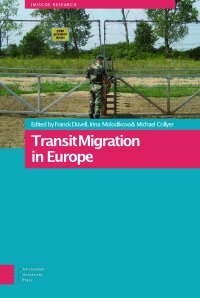
Transit Migration in Europe

Edited by Franck Düvell, Irina Molodikova & Michael Collyer

Transit migration is a term that is used to describe mixed flows of different types of temporary migrants, including refugees and labor migrants. In the popular press, it is often confused with illegal or irregular migration and carries associations with human smuggling and organized crime. This volume addresses that confusion, and the uncertainty of terminology and analysis that underlies it, offering an evidence-based, comprehensive approach to defining and understanding transit migration in Europe.

Amsterdam: Amsterdam University Press, 2014. 237p.

download
Spotlighting the Invisible: Justice for children in Africa

By African Child Policy Forum.

This publication is prepared both to advance our knowledge of the important but complex subject of child Justice in Africa and to inform the discussions at the 2nd Global Conference on Child Justice in Africa to be held in Addis Ababa in May 2018. This conference, organised by the African Child Policy forum (ACPF) and Defence for Children International (DCI) is a follow-up to the first such conference that took place in Kampala, Uganda, in November 2011. That conference resulted in the African Guidelines on Action for Children in Justice Systems in Africa which were endorsed by the African Committee of Experts on the Rights and Welfare of the Child at its March 2012 meeting. ACPF also published a continental study on children and justice systems in that year. The current study updates and extends that earlier study, seeking to examine the progress that has been made, and the challenges that remain, since the 2011 conference in achieving childfriendly justice in African justice systems. Given that children come in contact with justice system in different ways – through the formal and informal justice systems, in religious justice systems in some parts of the continent, and in both the criminal and civil justice systems – this study charts the continuum of experiences that children undergo in their contact with these systems.

Addis Ababa, Ethiopia" ACPF, 2018. 173p.

download
Go home?: The politics of immigration controversies

Edited by Hannah Jones, Yasmin Gunaratnam, Gargi Bhattacharyya, William Davies, Sukhwant Dhaliwal, Kirsten Forkert, Emma Jackson, and Roiyah Saltus.

In July 2013, the UK government arranged for a van to drive through parts of London carrying the message 'In the UK illegally? GO HOME or face arrest.' This book tells the story of what happened next. The vans were short-lived, but they were part of an ongoing trend in government-sponsored communication designed to demonstrate toughness on immigration. The authors set out to explore the effects of such performances: on policy, on public debate, on pro-migrant and anti-racist activism, and on the everyday lives of people in Britain. This book presents their findings, and provides insights into the practice of conducting research on such a charged and sensitive topic.

Manchester, UK: Manchester University Press, 2017. 204p.

download
Refugees and the Violence of Welfare Bureaucracies in Northern Europe

Edited by Dalia Abdelhady, Nina Gren, and Martin Joormann.

Given the significant similarities and differences between the welfare states of Northern Europe and their reactions to the perceived 'refugee crisis' of 2015, the book focuses primarily on the three main cases of Denmark, Sweden and Germany. Placed in a wider Northern European context – and illustrated by those chapters that also discuss refugee experiences in Norway and the UK – the Danish, Swedish and German cases are the largest case studies of this edited volume. Thus, the book contributes to debates on the governance of non-citizens and the meaning of displacement, mobility and seeking asylum by providing interdisciplinary analyses of a largely overlooked region of the world, with two specific aims.

Manchester University Press, 2020. 244p

download
Beyond Borders

Edited by Molly Land, Kathryn Libal, Jillian Chambers.

The human rights of noncitizens at home and abroad. Beyond Borders explores what obligations we owe to those outside our political community. Drawing on contributions from a broad variety of disciplines – from literature to political science to philosophy – the volume considers the failures of law and politics to guarantee rights for the most vulnerable and attempts to imagine new forms of belonging grounded in ideas of solidarity, empathy, and responsibility in order to identify a more robust basis for the protection of non-citizens at home and abroad.

Cambridge University Press. (2021) 300 pages.

download
Chicago's Black Traffic in White Girls

By Jean Turner-Zimmermann

An article on the Great “White Slave” Question by Jean Turner-Zimmermann, President of the Chicago Rescue Mission and Woman’s Shelter — and — The Department of Purity and Heredity of the Cook County W. C. T. U. “My sole aim in bringing this little pamphlet to you is to definitely call the attention of the men and women of the Central Western States, and especially those of the City of Chicago into whose hands it may come, to the vicious, thoroughly organized white-slave traffic of to-day, and its attendant, far-reaching, horrible results upon the young man and womanhood of our Land.” (1911) 64 pages.

download
The Prodigal Daughter: the white slave evil, and the remedy

By Clifford Griffith Roe.

There is not a life that this social evil does not menace. There is not a daughter, or a sister, who may not be in danger. The startling details with which this book must deal and tell the truth may seem revolting, and yet our unwillingness in the past to discuss these very things and our attempt at concealment has unwittingly allowed this horrible business to grow to monstrous proportions. In mentioning specific immoral places we have advisedly omitted their names and locations that such places may not be advertised through us. Likewise the surnames of girls who have been victims of the slave traders are omitted and fictitious given-names substituted for very obvious reasons. Therefore, earnestly believing that only through education can the procurers of girls be finally exterminated and the foulest slavery the world has ever known be blotted out, we have in the following pages written fearlessly and honestly the truth concerning the white slave traffic, and have brought out clearly and thoroughly the schemes and artifices of the panders.

Chicago: L.W. Walter, Co., 1911. 448p.

download