Open Access Publisher and Free Library
PUNISHMENT.jpeg

PUNISHMENT

PUNISHMENT-PRISON-HISTORY-CORPORAL-PUNISHMENT-PAROLE-ALTERNATIVES. MORE in the Toch Library Collection

Posts in equity
Releasing Authority Chairs: A Comparative Snapshot Across Three Decades

By Kaleena J. Burkes , Edward E. Rhine , Jason Robey and Ebony Ruhland

This report provides a comparative analysis of releasing authority chairs' views of the issues and challenges confronting them at two points in time: 1988 and 2015. Drawing from two surveys, one conducted during the tenure of an ACA Parole Task Force that functioned from 1986-1988, along with The Continuing Leverage of Releasing Authorities: Findings from a National Survey included above, this publication highlights both change and constancy relative to a wide range of comparative markers including, but not limited to, structured decision tools, prison crowding, and risk aversion, and the myriad factors considered in granting or denying parole.

Minneapolis: Robina Institute of Criminal Law and Criminal Justice, University of Minnesota. 2017. 38p.

download
Prisoners, Solitude, and Time

By Ian O'Donnell

Prisoners, Solitude, and Time by Ian O’Donnell is a major addition to the number of outstanding books on imprisonment already published in the Clarendon Studies in Criminology series. As the title indicates, its focus is on prisoners’ experience of solitary confinement, their handling of time, and the interface between these. Professor O’Donnell brings to bear on these issues a wealth of academic expertise, primarily as a psychologist and historian, as well as experience in penal reform, prison visiting, and as a magistrate. The result is an immaculately written book that is not only scholarly but also thought-provoking, moving, and ultimately inspiring about the potential of human beings to somehow and sometimes transcend even the most cruel and unusual deprivations and pains. Time is of the essence of prison as punishment, captured in the cliché ‘if you can’t do the time, don’t do the crime’. Yet the vast criminological literature scarcely focuses on the subjective experience of ‘doing time’.

Oxford, UK; New York: Oxford University Press, 2014. 353p.

download
Handbook on Prisons

By Yvonne Jewkes

This is the most comprehensive and ambitious book on prisons to have been published, a key text for anybody studying the subject and an essential work of reference for practitioners working in prisons and other parts of the criminal justice system. It is especially timely in view of the many changes and debates about the role of prisons and their future organisation and management as part of the National Offender Management Service. A key aim of the book is to explore a wide range of historical and contemporary issues relating to prisons, imprisonment and prison management, and to chart likely future trends. Chapters in the book are written by leading scholars in the field, and reflect the range and depth of prison research and scholarship. Like the Handbook of Policing and Handbook of Crime Prevention and Community Safety the Handbook on Prisons will be the essential book on the subject.

Cullompton, Devon, UK: Willan Publishing, 2011. 809p.

download
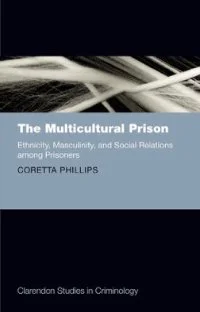
The Multicultural Prison: Ethnicity, Masculinity, And Social Relations Among Prisoners

By Coretta Phillips

The Multicultural Prison: Ethnicity, Masculinity, and Social Relations among Prisoners presents a unique sociological analysis of the daily negotiation of ethnic difference within the closed world of the male prison. At a time when issues of race, multiculture, and racialization inside the prison have been somewhat neglected, this book considers how multiple identities configure social interactions among prisoners in late modern prisoner society, whilst also recognising the significance of religion, age, masculinity, national, and local identifications. Contemporary political policies, which sees racialised incarceration together with penal expansion, has fostered the disproportionate incarceration of diverse British national, foreign, and migrant populations - all of whom are brought into close proximity within the confines of the prison.

Using rich empirical material drawn from extensive qualitative research in Rochester Young Offenders' Institution and Maidstone prison, the author presents vivid prisoner accounts from both white and minority ethnic participants, describing economically and socially marginalised lives outside. In turn, these stories provide a backdrop to the inside - the interior world of the prison where ethnicity still shapes social relations but in a contingent fashion. Addressing both the negotiation and tensions inherent in conducting such research, the central discussion evolves from a frank dialogue about ethnic, faith, and masculine identities, constituted through loose solidarities based on 'postcode identities', to a more startling comprehension of such divisions as, in some cases, a means for cultural hybridity in prison cultures. More commonly, though, these divisions act as a familiar fault line, creating wary, unstable, and antagonistic relations among prisoners. Providing an arresting insight into how race is written into prison social relations, <em>The Multicultural Prison adds a unique and outstanding voice to the challenging issues of discrimination, inequality, entitlement, and preferential treatment from the perspective of diverse groups of prisoners.

London; New York: Oxford University Press, 2012. 267p.

download
The Myth of Prison Rape: Sexual Culture in American Prisons

By Mark S. Fleisher and Jessie L. Krienert

The Myth of Prison Rape provides a nuanced glimpse into the complex sexual dynamics of the American prison. Drawing on results from the most comprehensive study of inmate sexuality to date, the authors analyze the intricacies of sexuality and sexual violence in daily inmate life. Dynamic case studies and interview excerpts enliven this cultural study of sexuality, safety, and violence in American prisons

Lanham, MD: Rowman & Littlefield, 2009. 219p.

download
Suicide in Prisons: Prisoners’ Lives Matter

By Graham J Towl and David A Crighton

The definitive guide from two leading authors central to developments in the field. An invaluable book which covers everything from theoretical and community research to precisely what is known about prisoners and the risk of their committing suicide. Covers the Harris Review and Government Response to it as well as the stance of politicians, reform groups and other leading experts on what in 2017 is an escalating problem for UK prisons. Contains analysis and data from over 30 years, bringing together key knowledge and information at a critical time of concern and attention.

Hook, UK: Waterside Press, 2017. 208p.

download
Jeremy Bentham and Australia: Convicts, utility and empire

Edited by Tim Causer, Margot Finn, and Philip Schofield

Jeremy Bentham and Australia is a collection of scholarship inspired by Bentham’s writings on Australia. These writings are available for the first time in authoritative form in Panopticon versus New South Wales and other writings on Australia, a volume in The Collected Works of Jeremy Bentham published by UCL Press.

In the present collection, a distinguished group of authors reflect on Bentham’s Australian writings, making original contributions to existing debates and setting agendas for future ones. In the first part of the collection, the works are placed in their historical contexts, while the second part provides a critical assessment of the historical accuracy and plausibility of Bentham’s arguments against transportation from the British Isles. In the third part, attention turns to Bentham’s claim that New South Wales had been illegally founded and to the imperial and colonial constitutional ramifications of that claim. Here, authors also discuss Bentham’s work of 1831 in which he supports the establishment of a free colony on the southern coast of Australia. In the final part, authors shed light on the history of Bentham’s panopticon penitentiary scheme, his views on the punishment and reform of criminals and what role, if any, religion had to play in that regard, and discuss apparently panopticon-inspired institutions built in the Australian colonies.

This collection will appeal to readers interested in Bentham’s life and thought, the history of transportation from the British Isles, and of British penal policy more generally, colonial and imperial history, Indigenous history, legal and constitutional history, and religious history.

London: UCL Press, 2022. 425p.

download
Out of the Shadows: Getting Ahead of Prisoner Radicalization.

By F. Cilluffo, G.B. Saathoff, et. al

The potential for radicalization of prison inmates in the United States poses a threat of unknown magnitude to the national security of the U.S. Prisons have long been places where extremist ideology and calls to violence could find a willing ear, and conditions are often conducive to radicalization. With the world’s largest prison population (over 2 million – ninety-three percent of whom are in state and local prisons and jails)1 and highest incarceration rate (701 out of every 100,000) , America faces what could be an enormous challenge – every radicalized prisoner becomes a potential terrorist recruit. Attorney General Alberto Gonzales recently stated that “[t]he threat of homegrown terrorist cells – radicalized online, in prisons and in other groups of socially isolated souls – may be as dangerous as groups like al Qaeda, if not more so. They certainly present new challenges to detection.” The London transit bombings of 2005 and the Toronto terrorist plot of 2006, to name just two incidents, illustrate the threat posed by a state’s own radicalized citizens. By acting upon international lessons learned, the U.S. may operate from a proactive position.

Washington, DC: Homeland Security Policy Institute, The George Washington University; Charlottesville, VA: The Critical Incident Analysis Group (CIAG) University of Virginia School of Medicine, 2006. 39p.

download
The Limits of Recidivism Measuring Success After Prison

By National Academies of Sciences, Engineering, and Medicine; Division of Behavioral and Social Sciences and Education; Committee on Law and Justice; Committee on Evaluating Success Among People Released from Prison; Richard Rosenfeld and Amanda Grigg, Editors

Nearly 600,000 people are released from state and federal prisons annually. Whether these individuals will successfully reintegrate into their communities has been identified as a critical measure of the effectiveness of the criminal legal system. However, evaluating the successful reentry of individuals released from prison is a challenging process, particularly given limitations of currently available data and the complex set of factors that shape reentry experiences.

The Limits of Recidivism: Measuring Success After Prison finds that the current measures of success for individuals released from prison are inadequate. The use of recidivism rates to evaluate post-release success ignores significant research on how and why individuals cease to commit crimes, as well as the important role of structural factors in shaping post-release outcomes. The emphasis on recidivism as the primary metric to evaluate post-release success also ignores progress in other domains essential to the success of individuals returning to communities, including education, health, family, and employment.

In addition, the report highlights the unique and essential insights held by those who have experienced incarceration and proposes that the development and implementation of new measures of post-release success would significantly benefit from active engagement with individuals with this lived experience. Despite significant challenges, the report outlines numerous opportunities to improve the measurement of success among individuals released from prison and the report’s recommendations, if implemented, will contribute to policies that increase the health, safety, and security of formerly incarcerated persons and the communities to which they return.

Washington, DC: The National Academies Press. https://doi.org/10.17226/26459.

download
Decarcerating Correctional Facilities during COVID-19: Advancing Health, Equity, and Safety

Edited by Emily A. Wang, Bruce Western, Emily P. Backes, and Julie Schuck

The conditions and characteristics of correctional facilities — overcrowded with rapid population turnover, often in old and poorly ventilated structures, a spatially concentrated pattern of releases and admissions in low-income communities of color, and a health care system that is siloed from community public health — accelerates transmission of the novel coronavirus (SARS-CoV-2) responsible for COVID-19. Such conditions increase the risk of coming into contact with the virus for incarcerated people, correctional staff, and their families and communities. Relative to the general public, moreover, incarcerated individuals have a higher prevalence of chronic health conditions such as asthma, hypertension, and cardiovascular disease, making them susceptible to complications should they become infected. Indeed, cumulative COVID-19 case rates among incarcerated people and correctional staff have grown steadily higher than case rates in the general population. Decarcerating Correctional Facilities during COVID-19 offers guidance on efforts to decarcerate, or reduce the incarcerated population, as a response to COIVD-19 pandemic. This report examines best practices for implementing decarceration as a response to the pandemic and the conditions that support safe and successful reentry of those decarcerated.

Washington (DC): National Academies Press ; 2020. 161p.

download
El Salvador Prisons and the Battle for the MS13’s Soul

By Steven Dudley and Juan José Martínez d’Aubuisson

El Salvador’s prison system is the headquarters of the country’s largest gangs. It is also where one of these gangs, the MS13, is fighting amongst itself for control of the organization.

Washington, DC: Insight Crime, 2017. 20p.

download
The Scandinavian Prison Study

By Stanton Wheeler , Hugh F. Cline , David J. Armor

This book presents the formerly-unpublished manuscript by Wheeler and Cline detailing the landmark, comparative prisons study they conducted in the 1960s which examined fifteen Scandinavian prisons and nearly 2000 inmates across four Nordic countries. At the time, it was the largest comparative study of prisons and inmate behavior ever undertaken and despite 15 years of analysis and write-up it was never published but it influenced many other important prison studies that followed. This book engages with the functionalist perspectives that were widespread in the 1960s, and tries to answer some of the classical questions of prison sociology such as how prisoners adapt to imprisonment and the degree to which prisoner adaptations can be attributed to characteristics of prisoners and prisons. It examines the nature and structure of prisons, the effect of that structure on individual prisoners and the other factors that may influence the way that they respond to confinement. It also includes discussion about the prisoners’ considerations of justice and fairness and a explanation of the study design and data which was highly unique at the time. The Scandinavian Prison Study brings Wheeler and Cline's pioneering work into the present context with a preface and an introduction which discuss the questions and claims raised in the book still relevant to this day.

Cham, SWIT: Palgrave Macmillan, 2020. 390p. 386p.

download
Prison And Social Death

By Joshua M. Price

The United States imprisons more of its citizens than any other nation in the world. To be sentenced to prison is to face systematic violence, humiliation, and, perhaps worst of all, separation from family and community. It is, to borrow Orlando Patterson’s term for the utter isolation of slavery, to suffer “social death.” In Prison and Social Death, Joshua Price exposes the unexamined cost that prisoners pay while incarcerated and after release, drawing upon hundreds of often harrowing interviews conducted with people in prison, parolees, and their families. Price argues that the prison separates prisoners from desperately needed communities of support from parents, spouses, and children. Moreover, this isolation of people in prison renders them highly vulnerable to other forms of violence, including sexual violence. Price stresses that the violence they face goes beyond physical abuse by prison guards and it involves institutionalized forms of mistreatment, ranging from abysmally poor health care to routine practices that are arguably abusive, such as pat-downs, cavity searches, and the shackling of pregnant women. And social death does not end with prison. The condition is permanent, following people after they are released from prison. Finding housing, employment, receiving social welfare benefits, and regaining voting rights are all hindered by various legal and other hurdles. The mechanisms of social death, Price shows, are also informal and cultural. Ex-prisoners face numerous forms of distrust and are permanently stigmatized by other citizens around them. A compelling blend of solidarity, civil rights activism, and social research, Prison and Social Death offers a unique look at the American prison and the excessive and unnecessary damage it inflicts on prisoners and parolees.

New Brunswick, NJ: Rutgers University Press, 2015. 2122p.

download
Prison Alternatives & Rehabilitation

By Craig Russell

The United States has almost three times as many prisoners as it did just twenty-five years ago. Although the cost of keeping people in prison is rising, there are less expensive alternatives that may also be more effective at keeping people from returning to jail after they are released. Recent changes in the U.S. criminal code allow judges more freedom to give sentences other than prison.

Broomall, PA: Mason Crest, 2018. 82p.

download
Prison or Exile: Cuba’s Systematic Repression of July 2021 Demonstrators

By Human Rights Watch

The 36-page report, “Prison or Exile: Cuba’s Systematic Repression of July 2021 Demonstrators,” documents a wide range of human rights violations committed in the context of the protests, including arbitrary detention, abuse-ridden prosecutions, and torture. The government’s repression and its apparent unwillingness to address the underlying problems that drove Cubans to the streets, including limited access to food and medicine, have generated a human rights crisis that dramatically increased the number of people leaving the country.

New York: HRW, 2022. 36p.

download
The Subjectively Experienced Severity of Imprisonment : Determinants and Consequences

By E.A.C. Raaijmakers

In thinking about punishment, and imprisonment in particular, the concept of severity plays a central role. After all, the severity of imprisonment is assumed to deter offenders from committing crime and is used as the vehicle to express a proportionate amount of blame and censure to the offender. Unfortunately, the concept of severity as it has been understood for the past three centuries, mostly pertains to the objective severity of imprisonment. Severity in this view is considered to be merely dependent upon objective properties of punishment, most notably its duration. A prison sentence for instance, is considered to be more aversive simply insofar as it is longer rather than shorter. The severity as experienced by inmates themselves, however, has barely been explored. This thesis assesses the determinants of the subjectively experienced severity of imprisonment, and its consequences for the remembered severity of imprisonment, and post-release offending behavior. The findings reveal that inmates differ markedly in their experienced severity of imprisonment. In addition, inmates’ experienced severity of imprisonment changes substantially over the course of incarceration. While the severity as experienced while being incarcerated is strongly related to the severity as remembered following release, it is not related to post-release offending behavior.

Leiden, Netherlands: Leiden University, 2017. 153p.

download
Targeting Recidivism : An evaluation study into the functioning and effectiveness of a prison-based treatment program

By A.Q. Bosma

This dissertation aimed to study the functioning and effectiveness of the Prevention of Recidivism Program, a prison-based rehabilitation program aimed to reduce the re-offending rates of program participants, by conducting a plan-, process and product evaluation. The results indicated that the Prevention of Recidivism program could be considered promising, since it applied methods that were considered effective based on theoretical and empirical knowledge. In practice however, it was shown that program-execution was severely hampered by a number of issues; the program had rather strict inclusion criteria; faced considerable non-participation and non-completion rates; and often allocated offenders to inappropriate treatment. In the end, the program reached a limited group of offenders, most of whom completed a standard program, with no specific treatment aimed to target the factors that initially caused their criminal behavior. Consequently, the program was only shown effective for a small group of offenders that completed a standard treatment program. The most vital program-component, criminogenic need-specific treatment modules, was not shown effective. It was therefore concluded that the Prevention of Recidivism Program had for the most part not been effective in reaching its goals.

Leiden, Netherlands: Leiden University, 2017. 229p.

download
Receiving Visits in Dutch Prisons: A study on the determinants and consequences of prison visitation

By M.L. Berghuis

Practically all prisoners eventually return to free society. Considering their high rates of subsequent recidivism, more insight into post-prison circumstances is vital. Such knowledge is scarce, and it also remained unclear thus far to what extent imprisonment caused these individuals to lose their integration with the community. Scholars, professionals and prisoners themselves note that the path to a successful reentry critically depends on the transition to employment. Yet, imprisonment bars offenders from employment during imprisonment and might also limit their post-prison employment prospects. Using data of the Prison Project – a longitudinal study of almost 2,000 prisoners – this thesis examines men’s labor market experiences before and after imprisonment and studies whether recidivism risks are lower among employed versus unemployed ex-prisoners. The results show that most prisoners face a severe human capital deficit even long before they enter prison. After release many remain unable to (re)integrate into the labor market. Only longer spells (exceeding six months) seem to further deteriorate the already poor employment prospects. Among working ex-prisoners, those who are able to return to a previous employer or hold down their job during the first half year following release recidivate significantly less.

One of the few ways individuals can have meaningful contact with the outside world while incarcerated is through prison visits. Prison visitation has steadily gained academic attention in the past decade as theoretical accounts highlight that receiving visits in prison is beneficial and empirical studies largely reinforce this, leading to increased calls for stimulating prison visits. Yet not all results lead to unequivocal conclusions, and little is known about whether, how often, and from whom individuals receive visits and under which circumstances visits affect behavior, especially across different contexts and populations. Work on this topic is complicated as visitation is a heterogeneous experience and the social and incarceration contexts in which visits take place are complex. By taking a comprehensive approach and using multifaceted measures of visitation from several sources, the current dissertation furthers our understanding of prison visitation, its impacts, and its likelihood across people. This dissertation demonstrates that a substantial number of individuals do not receive visits in Dutch prison. While some individuals are less likely to receive visits, this dissertation finds that prison policies can also enable or hinder the receipt of visits. Receiving visits is not always positive for life in prison, but receiving frequent visits, especially before release, seems important for reentry success.

Leiden, Netherlands: Leiden University, 2022. 263p.

download
Barred from Employment? A study of labor market prospects before and after imprisonment

By A.A.T. Ramakers

Practically all prisoners eventually return to free society. Considering their high rates of subsequent recidivism, more insight into post-prison circumstances is vital. Such knowledge is scarce, and it also remained unclear thus far to what extent imprisonment caused these individuals to lose their integration with the community. Scholars, professionals and prisoners themselves note that the path to a successful reentry critically depends on the transition to employment. Yet, imprisonment bars offenders from employment during imprisonment and might also limit their post-prison employment prospects. Using data of the Prison Project – a longitudinal study of almost 2,000 prisoners – this thesis examines men’s labor market experiences before and after imprisonment and studies whether recidivism risks are lower among employed versus unemployed ex-prisoners. The results show that most prisoners face a severe human capital deficit even long before they enter prison. After release many remain unable to (re)integrate into the labor market. Only longer spells (exceeding six months) seem to further deteriorate the already poor employment prospects. Among working ex-prisoners, those who are able to return to a previous employer or hold down their job during the first half year following release recidivate significantly less.

Leiden, Netherlands: Leiden University, 2014. 217p.

download
Andersonville

By John McElroy.

A Story of Rebel Military Prisons By John McElroy, late of Co.L. 16th III Can. 15 months a guest of the so-called Southern Confederacy. A Private soldiers experience in Richmond, Andersonville, Savannah, Millen Blackshear and Florence.

Harrow and Heston Classic Reprint. (1879) 675 pages.

download