
Open Access Publisher and Free Library
SOCIAL SCIENCES.jpeg

SOCIAL SCIENCES

Social sciences examine human behavior, social structures, and interactions in various settings. Fields such as sociology, psychology, anthropology, and economics study social relationships, cultural norms, and institutions. By using different research methods, social scientists seek to understand community dynamics, the effects of policies, and factors driving social change. This field is important for tackling current issues, guiding public discussions, and developing strategies for social progress and innovation.

Posts in Social Science
Gaming and Extremism: The Extreme Right on Steam 

By Pierre Vaux, Aoife Gallagher, Jacob Davey

Steam is a video game supply service, described as the “single largest distribution site for PC games”. At the start of February 2021, the platform set a new record as 26.4 million users signed into the platform simultaneously, breaking its previous record of 25.4 million set only the month before. In addition to its online store and game launcher, the Steam community feature allows users to find friends and join groups and discussion forums, while also offering in-game voice and text chat. These groups serve as a means to enable connectivity around a certain subject or game, forming hubs where users with shared interests can collaborate. Often, Steam groups facilitate interaction between groups of players known as ‘clans’ who play together in one or more multiplayer games. However, several groups have been created to allow networking between people supportive of right-wing extremism. In this chapter, we provide an analysis of 45 interconnected Steam community groups associated with the extreme right. This cohort is a sample of a larger network of potentially extremist groups on the platform, and as such should be seen as a snapshot indicating broader trends on the platform, rather than a comprehensive overview of extreme right activity. Key Findings • The extreme right uses Steam as a hub for individual extremists to connect and socialize. The Steam groups examined by ISD, which often have members in common, span the extreme right ideological spectrum. This network connects supporters of far-right political parties, such as the British National Party (BNP), with groups promoting neo-Nazi organizations, like the Misanthropic Division. • Steam seems to have an entrenched and long-lasting extreme right community. Many of the groups analyzed date back to 2016 or even earlier. Steam’s permissive attitude to this harmful activity means that these communities have a haven to promote and discuss extremist ideology and content. • In addition to connecting individuals who support the extreme right, some groups also provide off-ramps to ideological content and other social media platforms, suggesting that Steam is being used to recruit to specific movements. This includes links to far-right blogs, podcasts and articles, as well as invitations to join Telegram groups and vetted Discord servers. • Some groups provide platforms for groups of individuals to engage in trolling and harassment ‘raids’ against communities deemed to be political enemies. Users were seen naming target sites and asking fellow group members to join them in raiding or spamming them, with the result that these communities are making Steam a more toxic space for other users. • Our analysis suggests that gaming seems to be largely used as a means of community building rather than as a deliberate strategy for radicalization or recruitment. Individuals who are already engaged with the extreme right appear to use Steam as a platform to connect with like-minded individuals over a shared hobby. However, we also found examples of political games, such as ‘Feminazi 3000’ being used as a means of advertising political identity, as well as historical strategy games being used as a means of living out extremist fantasies, such as winning World War II for Germany.  

  Beirut; Berlin; London; Paris; Washington DC Institute for Strategic Dialogue (2021).  14p.

Addressing Key Risk Factors for Suicide at a Societal Level

By Jane Pirkis, Jason Bantjes, Rakhi Dandona, Duleeka Knipe, Alexandra Pitman, Jo Robinson, Morton Silverman, Keith Hawton 

 A public health approach to suicide prevention recognizes the powerful influence of social determinants. In this paper—the fifth in a Series on a public health approach to suicide prevention—we consider four major risk factors for suicide (alcohol use, gambling, domestic violence and abuse, and suicide bereavement) and examine how their influence on suicide is socially determined. Cultural factors and societal responses have an important role in all four risk factors. In the case of alcohol use and gambling, commercial entities are culpable. This Series paper describes a range of universal, selective, and indicated interventions that might address these risk factors and focuses particularly on key universal interventions that are likely to yield substantial population-level benefits

The Lancet Public Health Available online 10 September 2024 In Press, Corrected Proof

Restriction of Access to Means Used for Suicide 

 By Keith Hawton, Duleeka Knipe, Jane Pirkis 

 One of the most effective public health measures to prevent suicide is the restriction of access to means used in suicidal acts. This approach can be especially effective if a method is common and readily accessible. Suicide methods vary widely, and there have been several examples where means restriction has been applied, often with considerable success. Factors contributing to the availability of suicide methods can include access to physical means as well as cognitive awareness of methods. In this paper, which is the second in a Series on a public health approach to suicide prevention, we focus primarily on examples of restricting access to physical means of suicide, such as pesticides, firearms, and medication. We also discuss restricting the cognitive availability of means through attention to media and other representations of suicide methods. There are challenges associated with restricting access to means, including resistance to measures required to change the availability of some methods (which might, in part, be commercially determined) and method substitution, whereby one suicide method is replaced by another. Nevertheless, this means restriction must be an integral part of all national and local suicide prevention strategies

The Lancet, The Lancet Public Health, Volume 0, Issue 0, Online first, Sept. 2024.

Erased: The Impact of FOSTA-SESTA and The Removal of Backpage on Sex Workers

By Danielle Blunt and Ariel Wolf

This short article presents, in brief, the findings of a community-based, sex worker-led survey that asked sex workers about their experiences since the closure of Backpage and the adoption of FOSTA. It shows that the financial situation of the vast majority of research participants has deteriorated, as has their ability to access the community and screen clients. It concludes that FOSTA is just the latest example of the US government using anti-trafficking policy and restrictions on technology to police already marginalized people.

Anti-Trafficking Review, (14), 117–121

The Homelessness Prevention Unit: A Proactive Approach to Preventing Homelessness in Los Angeles County

By Brian Blackwell, Colin Capara, Janey Rounteer, Robert Santillino, Dana Vanderford, Claire Battis

Homelessness continues to be a major problem in California, and new approaches to addressing it are urgently needed. This report brings to light an innovative predictive model for homelessness prevention that is showing promising results. The data reveals that this approach — being used for the first time in California and the United States — reaches individuals who are outside of the usual preventive safety net at critical junctures in their lives. Timing is everything — and the Homelessness Prevention Unit connects at-risk people to crucial services and support that could help them avoid homelessness. Consider the scope of the problem: more than 75,000 people experience homelessness in Los Angeles County on any given night in 2024. This represents a 9% increase since 2022 and a 43% increase since 2018. Long-term solutions to homelessness require not just housing people experiencing homelessness but also preventing homelessness before it occurs. A statewide survey in California revealed that most people experiencing homelessness believe that a one-time payment of $5,000 to $10,000 would have resolved their rapidly escalating financial crises and prevented them from experiencing homelessness. Existing homelessness prevention programs typically include one-time cash assistance ranging on average between $1,000 to $5,000 and short-term direct services such as legal assistance. Several studies have found this approach to be effective at reducing homelessness. Yet research also highlights how difficult it is to ensure that scarce prevention resources primarily reach people who will experience homelessness if they do not receive this help. In partnership with Los Angeles County, the California Policy Lab (CPL) is researching strategies to address this challenge, including developing a data-driven predictive model that can proactively identify people at highest risk of experiencing homelessness.  In many prevention programs, participants self-identify as being at risk of homelessness and are then screened into programs based on eligibility criteria or surveys that ask questions about risk factors. CPL’s predictive model, however, analyzes de-identified data to proactively identify people at high risk of homelessness. Our research finds that people identified by the predictive model are not connected to typical prevention programs, indicating that both approaches are valuable and reach different people. To test whether this model could be used to better target prevention resources, in 2020, Los Angeles County created the Homelessness Prevention Unit (HPU) operating out of the Housing for Health division of the Department of Health Services (DHS) in close collaboration with the Chief Information Office (CIO) and Department of Mental Health (DMH). A County seed funding investment in the HPU made it possible to pilot an innovative approach to homelessness prevention that offers flexible cash assistance and tailored case management to individuals and families predicted by CPL’s model to be at the highest risk of experiencing homelessness. Because the HPU is located within the Los Angeles County health system, CPL’s model is focused on people who recently received DHS or DMH services and who are observed as stably housed in County administrative data. This group includes nearly 100,000 people over the course of a year (the “eligible population”). CPL uses the model to produce lists multiple times a year of people with the highest risk of homelessness. The lists are anonymized and rank-ordered from highest to lowest risk of homelessness. CPL sends the high-risk lists to the CIO, where County staff match each person’s anonymized record to a County medical record ID. The CIO then transfers the lists to the HPU so that they can identify names, addresses, and contact info of the patients listed. HPU staff then screen out some people on the risk lists that other data sources indicate are currently experiencing homelessness and are therefore ineligible. For eligible individuals, HPU staff attempt to contact them, and, if they are willing, enroll them in the intervention. The HPU serves between 400 to 600 people per year. The intervention includes rapidly delivered, flexible cash assistance, tailored case management, and referrals to other services, such as mental health care, workforce development, and legal services. This policy report provides an overview of: (1) CPL’s predictive model, including data sources and engineering; (2) the equity of the predictive model; (3) outreach and enrollment in the HPU; (4) the HPU’s design and service model; and (5) how CPL will evaluate the impact of the HPU program in a randomized control trial   

Los Angeles: The California Policy Lab, 2024. 50p.

The Smart Culture: Society, Intelligence, and Law 

By Robert L. Hayman, Jr.

What exactly is intelligence? Is it social achievement? Professional success? Is it common sense? Or the number on an IQ test? Interweaving engaging narratives with dramatic case studies, Robert L. Hayman, Jr., has written a history of intelligence that will forever change the way we think about who is smart and who is not. To give weight to his assertion that intelligence is not simply an inherent characteristic but rather one which reflects the interests and predispositions of those doing the measuring, Hayman traces numerous campaigns to classify human intelligence. His tour takes us through the early craniometric movement, eugenics, the development of the IQ, Spearman's "general" intelligence, and more recent works claiming a genetic basis for intelligence differences. What Hayman uncovers is the maddening irony of intelligence: that "scientific" efforts to reduce intelligence to a single, ordinal quantity have persisted--and at times captured our cultural imagination--not because of their scientific legitimacy, but because of their longstanding political appeal. The belief in a natural intellectual order was pervasive in "scientific" and "political" thought both at the founding of the Republic and throughout its nineteenth-century Reconstruction. And while we are today formally committed to the notion of equality under the law, our culture retains its central belief in the natural inequality of its members. Consequently, Hayman argues, the promise of a genuine equality can be realized only when the mythology of "intelligence" is debunked--only, that is, when we recognize the decisive role of culture in defining intelligence and creating intelligence differences. Only culture can give meaning to the statement that one person-- or one group--is smarter than another. And only culture can provide our motivation for saying it. With a keen wit and a sharp eye, Hayman highlights the inescapable contradictions that arise in a society committed both to liberty and to equality and traces how the resulting tensions manifest themselves in the ways we conceive of identity, community, and merit.

New York: NYU Press, 1997.

Class Unknown: Undercover Investigations of American Work and Poverty from the Progressive Era to the Present 

By Mark Pittenger

Since the Gilded Age, social scientists, middle-class reformers, and writers have left the comforts of their offices to "pass" as steel workers, coal miners, assembly-line laborers, waitresses, hoboes, and other working and poor people in an attempt to gain a fuller and more authentic understanding of the lives of the working class and the poor. In this first, sweeping study of undercover investigations of work and poverty in America, award-winning historian Mark Pittenger examines how intellectuals were shaped by their experiences with the poor, and how despite their sympathy toward working-class people, they unintentionally helped to develop the contemporary concept of a degraded and "other" American underclass. While contributing to our understanding of the history of American social thought, Class Unknown offers a new perspective on contemporary debates over how we understand and represent our own society and its class divisions.

New York: NYU Press, 2012. 

Does Banning The Box Help Ex-Offenders Get Jobs? Evaluating The Effects of a Prominent Example

By Evan K. Rose

This paper uses administrative employment and conviction data to evaluate laws that restrict access to job seekers’ criminal records. Convictions generate decreases in employment and earnings, partly due to shifts toward lower-paying industries less likely to check criminal histories. However, a 2013 Seattle law barring employers from examining job seekers’ records until after an initial screening had negligible impacts on ex-offenders labor market outcomes. The results are consistent with employers deferring background checks until later in the interview process or ex-offenders applying only to jobs where clean records are not required, a pattern supported by survey evidence.

Journal of Labor Economics, 2021

Analysis of The Health Conditions of Migrants and Asylum Seekers in Reception Centers: From Scene Investigation to The Evaluation of Signs of Torture

By Massimiliano Esposito, Monica Salerno, Mario Chisari, Francesco Sessa, Venerando Rapisarda, Cristoforo Pomara

The phenomenon of migration is an international issue that mainly concerns Europe. In Italy, because of its close proximity to Africa, there are many migrant landings, especially on the islands of Lampedusa and Sicily. Migrants and asylum seekers suffer torture on their journey to their destination country, however, most of the time the signs are not always recognizable. In the present study, a scene investigation was carried out in a reception center for level II immigrants in Sicily, in order to evaluate the hygiene conditions of the migrants and asylum seekers inside this center. Subsequently 26 migrants and asylum seekers, all minors and males, were examined in a clinic of the Department of Forensic Medicine of the University of Catania, with the help of a native speaker interpreter and applying the Istanbul Protocol. The scene investigation demonstrated the poor clinical conditions of the reception center and the failure to comply with emergency regulations. The physical examination of the migrants and asylum seekers demonstrated that all the torture reported had taken place in Libya. However, only 4 migrants and asylum seekers showed signs of violence consistent with torture, compatible with the Istanbul Protocol. Nine migrants and asylum seekers (34.6%) reported having  pathologies and asked to undergo a medical examination in a hospital but were not listened to by the reception center staff. Two migrants and asylum seekers reported having worn the same clothes for several weeks to the reception center staff. In particular, all the migrants and asylum seekers reported having suffered torture using blunt instruments, especially beatings with truncheons. One migrant and asylum seeker reported being detained for days without food, instead 1 migrants and asylum seekers reported being kidnapped-blindfolded-stripped naked for days, and 1 migrants and asylum seekers reported having contracted infections, including scabies, with electrical and thermal trauma. Despite the international commitment to the phenomenon of migration, migrants and asylum seekers continue to receive abuse and torture. Furthermore, most migrants and asylum seekersstudies primarily involve surveys, and few have applied the Istanbul Protocol to a sizable sample. An original aim of the study is the use of forensic tools to assess the sanitary and hygienic conditions of a migrant reception center, with the secondary aim of assessing alleged cases of torture.  

Forensic Science International, 4 November 2024, 112288

The Econometric Analysis of Time Series

May Contain Mark-Ups

By A.C Harvey

“The Econometric Analysis of Time Series”by A.C. Harvey is a comprehensive guide to understanding and applying econometric theory to time series data. The book is structured into several key sections, each addressing different aspects of econometric analysis. It Begins with an introduction to the importance of econometrics in estimating relationships suggested by economic theory, testing hypotheses, and making predictions. The book covers linear regression models, least squares estimation, properties of the ordinary least squares (OLS) estimator, generalized least squares (GLS), and prediction. It also delves into the method of maximum likelihood (ML) estimation, its properties, and its application to regression models, discussing sufficiency, the Cramer-Rao lower bound, and robustness of ML estimators. Further, the book explores numerical optimization techniques, including the Newton-Raphson method and two-step estimators, and discusses test procedures and model selection strategies. It addresses regression models with serially correlated disturbances, dynamic models, and simultaneous equation models, emphasizing the integration of recent advances in time series analysis into econometric theory.

The book also highlights the importance of understanding the dynamic aspects of econometric models and the challenges associated with specifying suitable models for time series data. Practical considerations such as the use of instrumental variables, handling heteroscedasticity, and constructing robust estimators are also covered, providing a thorough foundation for both theoretical and applied econometric analysis.

John Wiley & Sons, 1990, 384 pages

Independent Investigation & After-Action Review of Encampment-Related Events at the University of California, Los Angeles, April 2024 through May 6, 2024: Recommendations

By University of California, Los Angeles

Pursuant to this investigation’s findings and conclusions, the following describes a number of measures that UCLA should adopt and implement to address shortcomings, performance failures, systems breakdown, and campus safety issues that emerged from the campus events of April and May 2024. These recommendations are designed to ensure that UCLA’s response to acts of civil disobedience aligns with its commitments to freedom of expression and the protection of the health, safety, and well-being of the UCLA community. In addition to resulting in a more effective response to acts of civil disobedience, implementation of these recommendations will support a more effective response to a wide range of low-frequency, high-impact emergencies events on campus, including potential natural disasters or acts of mass violence. Finally, implementing these measures will better enable UCLA to deliver a range of public safety services in a manner that is effective, that aligns with changing conceptions of the meaning of public safety, and that reflects the UCLA community’s values and priorities. As described below, in the long-term, UCLA will need to address the possibility of making fundamental, structural changes to its public safety ecosystem, including by engaging in a community-driven process to define public safety objectives and goals and by making expanded resources available beyond law enforcement to support those goals. In the short-term, however, UCLA must make immediate changes and develop plans to effectively respond to campus disruptions using existing resources. We are encouraged that UCLA already has begun work to implement these immediate changes. 

Los Angeles: UCLA, 2024. 18p.

Gambling Away Stability: Sports Betting’s Impact on Vulnerable Households 

By Scott R. Baker,  Justin Balthrop,  Mark J. Johnson,  Jason Kotter,  Kevin Pisciotta 

We estimate the causal effect of online sports betting on households’ investment, spending, and debt management decisions using household transaction data and a staggered difference-in-differences framework. Following legalization, sports betting spreads quickly, with both the number of participants and the frequency of bets increasing over time. This increase does not displace other gambling or consumption but significantly reduces savings, as risky bets crowd out positive expected value investments. These effects concentrate among financially constrained households, as credit card debt increases, available credit decreases, and overdraft frequency rises. Our findings highlight the potential adverse effects of online sports betting on vulnerable households.  

Unpublished paper, 2024.

Historical Weapons Restrictions on Minors

By Robert J. Spitzer

Since the Supreme Court’s ruling in 2022 that recast the basis for judging the constitutionality of contemporary gun laws according to the existence of historical analogs, all manner of laws have been subject to court challenge, including those that restrict gun access to those under the age of twenty-one. To date, federal courts have split on this question. Given this new, history-based standard for judging the constitutionality of current weapons laws, this article examines the historical record pertaining to how the age of majority was defined in our past and how that pertains to the history of laws that restricted minors’ access to firearms and other weapons. This article offers the most extensive assessment of state laws and local ordinances from the eighteenth and nineteenth centuries to be found to date. In addition, it includes a new and extensive excavation of a wide range of college and university codes in the eighteenth and nineteenth centuries that limited or barred students from having weapons from that time period, the nature and extent to which has not been identified or reported before. All of this information supports the conclusion that the broadly accepted age of majority during this time period was twenty-one.

Rutgers Law Review, Vol. 76, 2024

Exploring The Intergenerational Continuity of ACEs Amongst A Sample of Welsh Male Prisoners: A Retrospective Cross-Sectional Study

By Kat Ford a, Mark A. Bellis b, Karen Hughes, Natasha Judd a, Emma R. Barton

The relationship between parent and child adverse childhood experience (ACE) exposure remains underexplored, particularly within justice-involved samples. Objective: The objective of the study was to examine the intergenerational continuity of ACEs within a UK prison population. Participants: 294 males aged 18–69 years in a Welsh prison, with father-reported data for 671 children they had fathered. Methods: A face-to-face ACE questionnaire measured exposure to 10 ACE types. For each child they had fathered participants were asked to report their child’s gender, age, and their exposure before the age of 18 to the same ACE types, except having a household member incarcerated. Findings: Paternal ACE exposure was found to increase the risk of child ACE exposure, both to multiple ACEs and individual ACE types. Compared to children of fathers with no ACEs, those of fathers with 4+ were almost three times more likely to have been exposed to 2–3 ACEs and six times more likely to be exposed to 4+ ACEs. The risk of a child residing in a household where mental illness was present was 7.4 times higher where their father had 4+ ACEs. Conclusion: Findings highlight the need for prevention interventions to break the intergenerational continuity of ACEs. Further research is needed to explore what protects against the intergenerational continuity of ACEs. Criminal justice systems and wider services need to ensure that they support those incarcerated alongside their families who are at high risk of ACEs and consequently poorer education, health, and criminal justice outcomes. 

Child Protection and Practice Volume 3, December 2024, 100053

Abduction, Marriage, and Consent in the Late Medieval Low Countries

By Delameillieure, Chanelle

The Middle Dutch term schaec referred to abduction with marital intent. This book explores this phenomenon to understand wider attitudes towards marriage-making in the fifteenth-century Low Countries. Whilst exchanging words of consent was all that was required legally, making marriage was a social process that evoked public concern and familial scrutiny. Abductions embodied contrasting evaluations of what mattered when selecting a spouse and resulted in polarized trials in which narratives on consent, coercion, and family strategy coincided and competed. Abduction, Marriage, and Consent draws from a wide range of legal records to assess how men, women, families, and authorities used, navigated, and dealt with abductions during this period. It contributes to debates on consent, family involvement, and women’s access to justice and demonstrates that abduction should be approached as a comprehensive social phenomenon, one that is crucial in the history of marriage and women’s social and legal status.

Amsterdam: Amsterdam University Press, 2024. 254p.

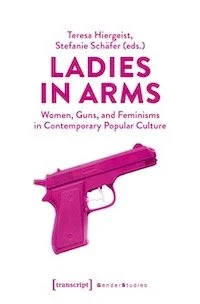
Ladies in Arms: Women, Guns, and Feminisms in Contemporary Popular Culture

Edited by Teresa Hiergeist, Stefanie Schäfer

In contemporary popular culture, armed women take center stage - but how can they be read from a feminist perspective? How do films, comics, and TV series depict the newly fashionable gunwomen between objectification and feminist empowerment? The contributions to this volume ask this question from different vantage points in cultural and literary studies, film and visual culture studies, history, and art history. They examine military and civic gun cultures, the rediscovery of historical armed women and revolutionaries, cultural phenomena such as gangsta rap, narcocultura and US politics, Bollywood and French cinema, and distinct genres such as the graphic novel, the romance novel, or the German police procedural Tatort.

Bielefeld: transcript Verlag, 2024. 322p.

Toxic Parliaments: And What Can Be Done About Them

By Marian Sawer and Maria Maley

This open access book shows how the #MeToo movement and revelations of sexual harassment and bullying have spurred on reform of the parliamentary workplace in four Westminster countries – Australia, Canada, New Zealand and the UK. Long-standing conventions included extreme power imbalances between parliamentarians and staff and a lack of professionalised employment practices. Codes of conduct and independent complaints bodies were resisted on grounds of parliamentary privilege: the ballot box was supposedly the best means of holding parliamentarians accountable for their conduct. The taken-for-granted status of adversarial politics and its silencing effects also rendered gendered mistreatment invisible. The authors examine the institutional backdrop and the different trajectories of reform in the four countries, with most detail on the dramatic developments in Australia after angry women marched on parliament houses in 2021. They show how the different parliaments have responded to escalating evidence of misconduct, the role of policy borrowing, and the possibilities of lasting institutional change.

Cham: Springer Nature, 2024. 125

Like a Dog

By Samblanet, Lauren

Taking its cues from the New Narrative writing movement, like a dog considers how sexual identity is morphed, hidden, and denied by cultural forces like film, pornography, rape culture, and sexual semiotics. The speaker of like a dog writes about her sexuality, sexual trauma, and relationships in the epistolary form to explore how the personal becomes collective and how overt sexuality is necessary for questioning dominant ideologies. The intimacy (or perhaps voyeurism) that is opened through the epistolary form is balanced with commentary on the films of Lars von Trier, primarily Nymphomaniac, as a way to move away from the speaker’s experiences and into the larger social forces that seek to define us. Amidst these letters are images from a handwritten journal where blood, hair, vaginal fluids, and other bodily residues are used to direct the shape and content of the writing surrounding them. The tactility of the journal delivers the reader to the body, not as an intellectualized object, but as the physical, messy, oozing force that it is. Neither fiction nor nonfiction, and inhabiting a realm between gossip and scholarly film analysis, like a dog exists in a liminal zone that offers the speaker a site to rip away the layers of cultural conditioning surrounding sexuality and relationships, and to peek at what lies beneath. This interrogation of identity may not lead to answers but the speaker of like a dog is able to finally hear her own voice and to begin the work of rebuilding an identity that blooms from within.

Brooklyn, NY: punctum books, 2024. 149p.

Rape at the Opera: Staging Sexual Violence

By Margaret Cormier

The most-performed operas today were written at least a hundred years ago and carry some outdated and deeply problematic ideas. When performed uncritically, the misogyny, racism, and other ideologies present in many of these works clash with modern sensibilities. In Rape at the Opera, Margaret Cormier argues that production and performance are vital elements of opera, and that contemporary opera practitioners not only interpret but create operatic works when they put them onstage. Where some directors explicitly respond to contemporary dialogues about sexual violence, others utilize sexual violence as a surefire way to titillate, to shock, and to generate press for a new production. Drawing on archival footage as well as attendance at live events, Cormier analyzes productions of canonic operas from German, Italian, and French traditions from the eighteenth to the early twentieth century, including Die Entführung aus dem Serail, Don Giovanni, La forza del destino, Un ballo in maschera, Salome, and Turandot. In doing so, Cormier highlights the dynamism of twenty-first-century opera performance practice with regard to sexual violence, establishes methods to evaluate representations of sexual violence on the opera stage, and reframes the primary responsibility of opera critics and creators as being not to opera composers and librettists but to the public.

Ann Arbor: University of Michigan Press, 2024. 211p.

Representations of Rape and Consent in Medieval English Laws and Literature

Edited by Mariah L. Cooper

How did legal, literary, and scientific discourses intersect to define sexual non-consent in the Middle Ages? How did popular cultural assumptions about sexuality and gender influence actual medieval criminal proceedings? And how far have we really come today? This book explores medieval English understandings of rape, consent, and the assumed mind-body dichotomy of rapists and rape victims. It demonstrates how laws, trial records, popular romance, and ecclesiastic and medical texts defined sexual consent and non-consent, and the consequences of such ideologies. By comparing episodes of rape and consent across diverse primary sources, it considers important medieval English rape myths and victim-blaming stereotypes. Significantly, it also highlights the cultural trepidation associated with believing women’s accusations of rape and questions how much “progress” we have made since then.

Leeds, Arc Humanities Press, 2024. 214p.