
Open Access Publisher and Free Library
TERRORISM.jpeg

TERRORISM

Terrorism-Domestic-International-Radicalization-War-Weapons-Trafficking-Crime-Mass Shootings

Posts in Equity
Targeting Civilians And The War In Flanders (Copy)

by A British Statesman (Author), Graeme Newman (Introduction) Format: Kindle Edition

Targeting Civilians and the War in Flanders brings E. Alexander Powell’s gripping eyewitness account of the First World War into sharp contemporary focus, reframing one of the earliest narratives of the conflict through the lens of civilian suffering and the ethics of modern warfare.

Written in 1914 at the very outbreak of hostilities, Powell’s Fighting in Flanders remains one of the most immediate and vivid journalistic records of the German invasion of Belgium and the rapid, chaotic campaigns that swept across Flanders. As an American war correspondent moving with Allied forces, Powell witnessed firsthand the destruction of historic towns, the flight of refugees, and the transformation of peaceful European landscapes into scenes of devastation. His reporting captures not only the movement of armies, but the profound human cost borne by civilians caught in the path of industrial war.

This new Read-Me.Org edition, retitled Targeting Civilians and the War in Flanders, highlights a central and enduring theme in Powell’s work: the deliberate and incidental targeting of civilian populations during wartime. From the burning of Louvain to the mass displacement of Belgian families, Powell documents events that helped shape early international outrage and contributed to the evolving laws of war. His account stands at the intersection of journalism, moral witness, and wartime narrative—revealing how the First World War blurred the boundaries between combatant and non-combatant in ways that continue to resonate today.

Carefully prepared for modern readers, this edition preserves Powell’s powerful prose while offering a clean, accessible text suitable for contemporary publication standards. It is an essential volume for readers interested in World War I history, the origins of total war, and the enduring question of how civilians become targets in conflicts across time.

A compelling blend of reportage and historical insight, Targeting Civilians and the War in Flanders invites readers to revisit the opening chapter of the Great War—not as distant history, but as a warning that remains urgently relevant

Read-Me.Org Inc. New York-Philadelphia-Australia. 2026. p.143.
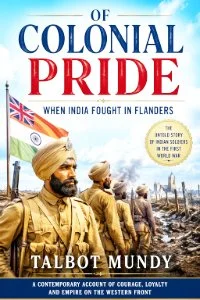
Of Colonial Pride: When India Fought In Flanders

by Talbot Mundy (Author), Graeme Newman (Introduction)

Of Colonial Pride: When India Fought in Flanders presents a vivid and compelling account of one of the most overlooked chapters of the First World War—the arrival and service of Indian troops on the Western Front. Originally published as When India Came to Fight in Flanders, Talbot Mundy’s work brings readers directly into the early months of the war, when soldiers from across the Indian subcontinent were deployed to the muddy, mechanized battlefields of Belgium and northern France.

Blending frontline observation with narrative intensity, Mundy captures the shock, endurance, and courage of these men as they confronted a new kind of warfare far removed from their homeland. From trench conditions to battlefield engagements, the book offers a rare contemporary perspective on the experiences of Indian regiments who played a critical role in holding the line during some of the war’s most desperate moments.

This newly titled edition, Of Colonial Pride, invites modern readers to reconsider the story within its broader historical context. It highlights not only the bravery of Indian soldiers, but also the complex realities of empire, identity, and loyalty that shaped their service. Mundy’s account reflects the attitudes of his time—admiring, yet often filtered through the lens of imperial thinking—making this volume both a gripping wartime narrative and an important historical document.

For readers of military history, colonial studies, and World War I, this book offers a powerful and thought-provoking look at the global dimensions of the conflict. It stands as a testament to the contributions of Indian soldiers whose role in the war deserves far greater recognition.

This Read-Me.Org edition has been carefully prepared for contemporary audiences, preserving the original text while presenting it in a clear, accessible format for today’s reader.

Read-Me.Org Inc. New York-Philadelphia-Australia. 2026. p.216..

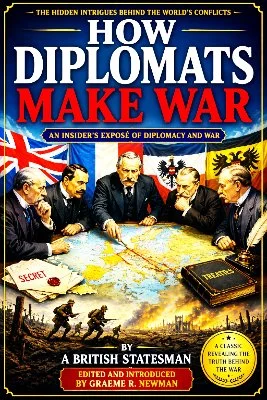
How Diplomats Make War

by A British Statesman (Author), Graeme Newman (Introduction) Format: Kindle Edition

Behind every war lies a story not told in headlines, speeches, or patriotic slogans. How Diplomats Make War lifts the veil on the hidden machinery of international conflict, exposing the calculated maneuvers, secret agreements, and political intrigues that turn disputes into devastation.

Written in 1915 by an anonymous insider known only as “A British Statesman,” this remarkable work offers a rare, unflinching examination of the diplomatic system at the height of the First World War. Drawing on deep knowledge of European politics, the author dismantles the comforting myths that wars are fought for the people, revealing instead how they are engineered by a small circle of officials, financiers, and power brokers operating far from public scrutiny.

With sharp wit and devastating clarity, the book traces the role of treaties, alliances, and the so-called “balance of power” across a century of European history—from the aftermath of Napoleon to the crises that plunged the world into modern industrial warfare. It exposes how secrecy, propaganda, and the relentless expansion of armaments create a self-perpetuating cycle in which preparation for war becomes its very cause.

This new Read-Me.Org edition, edited and introduced by Graeme R. Newman, situates the text within both its historical moment and its continuing relevance. More than a century later, its insights remain strikingly contemporary, challenging readers to reconsider the relationship between governments, diplomacy, and the human cost of global conflict.

At once a historical document and a powerful critique of political power, How Diplomats Make War is essential reading for anyone seeking to understand not just why wars happen—but who truly makes them.

Read-Me.Org Inc. New York-Philadelphia-Australia. 2026. p.257.

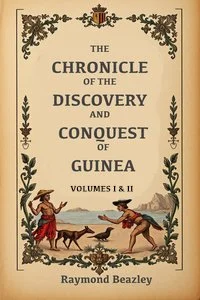
The Chronicle Of The Discovery And Conquest Of Guinea: Volumes 1 & 2

By Gomes Eannes De Azurara (Author), Colin Heston (Editor), Raymond Beazley (Translator)

The Chronicle of the Discovery and Conquest of Guinea is one of the most important early historical sources on the European Age of Discovery. Written in the mid-fifteenth century by Gomes Eannes de Zurara, the royal chronicler of Portugal, the work offers a detailed and vivid narrative of Prince Henry the Navigator’s sponsorship of voyages along the West African coast. Zurara’s chronicle records the systematic exploration of the Atlantic islands and the African shoreline, the capture and enslavement of Africans, and the establishment of the Portuguese presence south of Cape Bojador — a turning point that opened the way for European maritime expansion.

This English edition, translated and edited by historian Charles Raymond Beazley and lusitanist Edgar Prestage for the Hakluyt Society (published 1896–1899), makes Zurara’s text accessible to a modern audience. Their careful translation preserves the rich detail of the original, while their scholarly introduction and notes provide historical context about fifteenth-century Portugal, Prince Henry’s motives, and the wider significance of these early voyages.

Part narrative history, part celebration of Portuguese royal ambition, the chronicle reveals both the triumphs and moral ambiguities of the early encounters between Europe and Africa. It remains an essential source for historians of maritime exploration, Atlantic slavery, and global contact in the late Middle Ages.
This version has been carefully edited, removing unnecessary endnotes, footnotes and other distracting content that distract from a pleasant reading experience.

Read-Me.Org Inc. New York-Philadelphia-Australia. 2025. 267p.

The Rise of Radicalism in Bangladesh: What Needs to Be Done

By Iftekharul Bashar

In 2024, Bangladesh faces a growing threat of radicalism fuelled by political instability, security vacuums, and weakened counterterrorism infrastructure. Unless the interim government adopts a zero-tolerance policy and strengthens law enforcement and intelligence efforts, extremist groups may gain further ground, leading to long-term instability. COMMENTARY Bangladesh is facing an increasing threat of radicalism and terrorism. The political violence and instability of 2024 have worsened the situation, with extremist elements exploiting the security vacuum created by the regime change. Weakened law enforcement and intelligence agencies, along with the rise of armed groups and radical ideologies, pose a serious threat to the country’s stability. Bangladesh risks long-term insecurity with broader regional implications without swift and decisive action.

Singapore: S. Rajaratnam School of International Studies (RSIS), NTU , 2024. 4p.