
By FABIAN ZHILLA
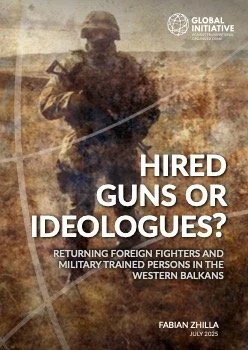
Returning foreign fighters and military-trained individuals in the Western Balkans often come from police, military or paramilitary backgrounds. Many use their skills for criminal activities, making them a potential security threat in the region. Their role in organized crime and violent extremism varies from country to country. In Albania and Bosnia and Herzegovina, these individuals are primarily engaged in transactional relationships with criminal networks, driven by mutual benefit. In Kosovo and Serbia, however, they have stronger connections to radical and extremist groups. Meanwhile, in North Macedonia and Montenegro, criminal activity often intersects with radical political rhetoric. This policy brief calls for a strategic, cooperative and integrated approach to tackling this issue.
Geneva, SWIT: The Global Initiative Against Transnational Organized Crime 2025, 31p.

