
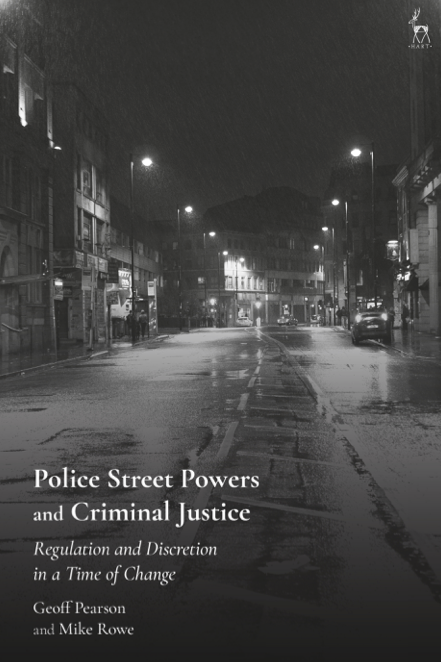
By Geoff Pearson and Mike Rowe
This open access book analyses the utilisation, regulation and legitimacy of police powers. Drawing upon six-years of ethnographic research in two police forces in England, this book uncovers the importance of time and place, supervision and monitoring, local policies and law. Covering a period when the police were under intense scrutiny and subject to austerity measures, the authors contend that the concept of police culture does not help us understand police discretion. They argue that change is a dominant feature of policing
and identify fragmented responses to law and policy reform, varying between police stations, across different policing roles, and between senior and frontline ranks.
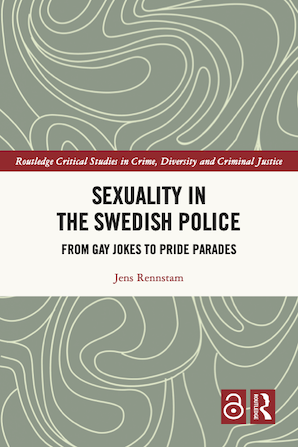
By Jens Rennstam
Sexuality in the Swedish Police is based on the experiences of lesbian, gay, and bisexual police officers and the author’s observations of police work. Written at the intersection of organizational, gender, and police studies, the book analyses how processes of exclusion and inclusion of LGB sexuality coexist in the Swedish police, how these processes are related to the culture and characteristics of police work, and how police management attempts to create an inclusive organization.
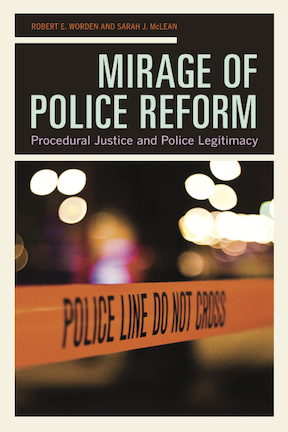
By Robert E. Worden and Sarah J. McLean
In the United States, the exercise of police authority—and the public’s trust that police authority is used properly—is a recurring concern. Contemporary prescriptions for police reform hold that the public would better trust the police and feel a greater obligation to comply and cooperate if police-citizen interactions were marked by higher levels of procedural justice by police.
In this book, Robert E. Worden and Sarah J. McLean argue that the procedural justice model of reform is a mirage. From a distance, procedural justice seemingly offers a relief from strained police-community relations. But a closer look at police organizations and police-citizen interactions shows that the relief offered by such reform is, in fact, illusory.