

By Price Nyland
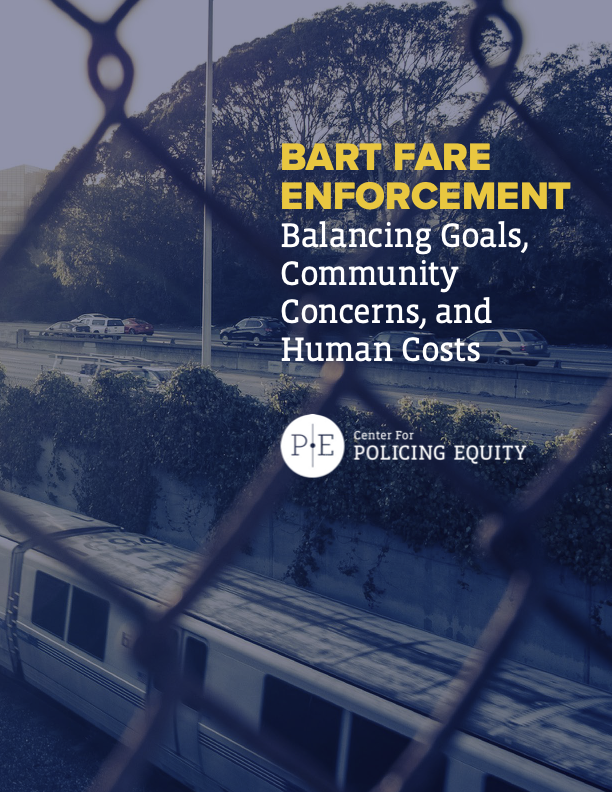
This month, the Center for Policing Equity (CPE) published a ne report, BART Fare Enforcement: Balancing Goals, Community Concerns, and Human Costs, in partnership with Bay Area Rapid Transit (BART). The team received additional support from Stout, a global advisory firm specializing in corporate finance, accounting and transaction advisory, valuation, financial disputes, claims, and investigations. The report is a comprehensive assessment of BART’s approach to enforcing its fares, and CPE hopes to see the recommendations contained in this report adopted for implementation.
CPE’s Research Team Contextualized Community Harm During Analysis Phase
Aiming to uplift the voices of those most impacted by BART’s practices, CPE’s qualitative research team conducted 14 focus groups composed of 95 Bay Area residents living in the five counties BART serves. The focus groups explored BART riders’ perceptions of safety, fare affordability, contact with BART police and fare enforcement, and factors influencing their decisions to ride BART. Community participants also offered input on ways to improve BART’s public safety responses.
In addition to this qualitative effort, CPE conducted a quantitative analysis of fare enforcement practices and outcomes using financial, ridership, and BART Police Department (BPD) data, including information on arrests, calls for service, proof of payment, and citations. CPE also used publicly available data collected as part of California’s Racial and Identity Profiling Act (RIPA)¹.
CPE Recommendations to Improve BART Operations
This project was a timely collaboration for both CPE and BART, as BART works to address revenue and public safety challenges while seeking a deeper understanding of community impacts and goals. CPE anticipates that the community input, financial, qualitative, and quantitative analyses and recommendations detailed in the report will improve outcomes for BART riders and the wider community BART serves, as well as the agency’s financial solvency.
CPE’s findings indicate that BART’s current fare enforcement strategy—which disproportionately affects marginalized groups, including Black and Brown riders, low-income individuals, people experiencing mental health crises, and individuals who are unhoused— has not resulted in significant revenue recovery or improved public safety. Instead, punitive measures have contributed to community mistrust. In addition to these human costs, CPE found that BART’s frequently cited $25 million annual revenue loss due to fare evasion is inflated and misrepresents the actual financial impact of fare evasion. Stout estimated that BART’s annual revenue loss as a result of fare evasion is $5.7 million – $9.5 million per year, far below the BART estimate.
Based on these analyses and findings, CPE developed recommendations for the BART Board of Directors to improve BART’s fare enforcement practices, policies, and impacts:
Expand BART’s Transit Ambassador and Crisis Intervention Team (CIT) personnel as non-police responses to public disorder and community concerns regarding unhoused individuals and people with mental health conditions. Clarify BPD’s warrant policy to eliminate discretion regarding arrests for misdemeanor warrants. The policy should mandate that officers arrest only for an outstanding misdemeanor warrant if required by California Penal Code § 827.1 or a specific BART policy and that officers must issue a citation in all other instances. Revise BPD policy to explicitly require warnings for individuals stopped for fare evasion for the first time. Additionally, update policies to mandate the use of civil proof-of-payment citations instead of criminal citations under California Penal Code § 640, except in specific circumstances. Improve access to discounted fares for low-income riders, youth, seniors, and people with disabilities by automating eligibility for and access to BART discounted cards for individuals with Medi-Cal Benefits Identification Card (BIC), Electronic Benefits Transfer (EBT) cards, Supplemental Security Income (SSI)/Social Security Disability (SSD) eligibility, and student or senior IDs. Discounted card availability should be expanded at BART stations, and more community partners should be formally engaged to assist with discounted card applications online. End the enforcement of fare evasion under California Penal Code § 640(c)(1) as a misdemeanor to reduce the human and fiscal harm incurred by BART riders, as well as the impact on social service and criminal legal systems.
As recommended in 2020, CPE also notes the need for improved data collection processes and implementation of data auditing measures to ensure all aspects of a BART Police Department interaction are
documented. All findings and recommendations can be found in the report and the executive summary.This project signals an opportunity for BART to dig deeper into its own practices and policies to ensure alignment, both within the agency and in partnership with the community it serves, on the quality of service being provided. CPE believes the voices of those most impacted by current fare enforcement practices must play a central role in shaping system reforms. The report offers BART a powerful opportunity to innovate and build on existing efforts to ensure the system is both safe and equitable.
This project signals an opportunity for BART to dig deeper into its own practices and policies to ensure alignment, both within the agency and in partnership with the community it serves, on the quality of service being provided. CPE believes the voices of those most impacted by current fare enforcement practices must play a central role in shaping system reforms. The report offers BART a powerful opportunity to innovate and build on existing efforts to ensure the system is both safe and equitable.
By Dustin Richardson, Jeremy Barnum, Meagan Cahill
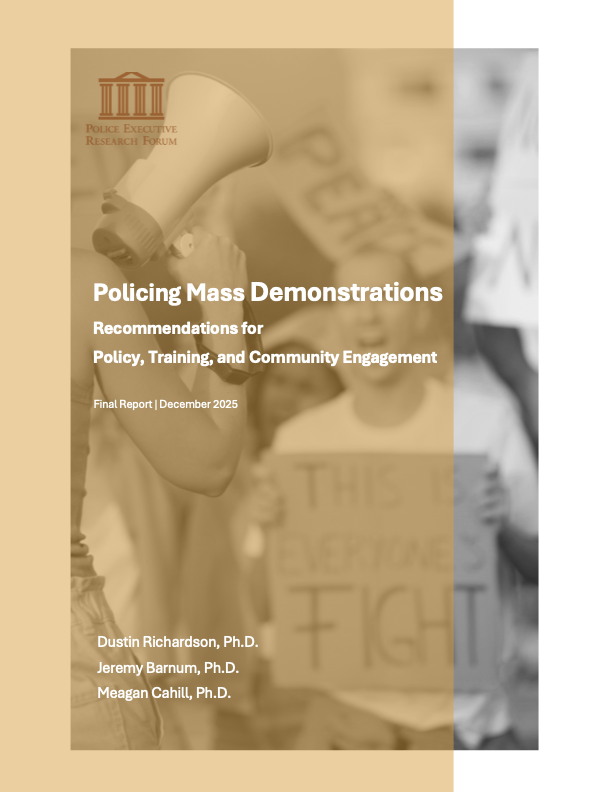
The police have a complex role in managing mass demonstrations, requiring them to balance competing priorities and obligations. On the one hand, they must uphold the fundamental right to free assembly and
expression guaranteed by the United States Constitution, while on the other hand, they must maintain safety and order. Although most mass demonstrations are peaceful, some can escalate into widespread civil
disturbances. The primary challenge for agencies, then, is to implement training, policies, and crowd management approaches that prepare officers to safely and effectively facilitate the vast majority of peaceful protests while also having plans and contingencies in place should property destruction or violence occur.
Too much focus on either outcome leaves agencies unprepared and can result in inappropriate responses that have unintended consequences
By Susannah Hickie
Police officers experience elevated rates of psychological ill-health relative to the general population (Syed et al. 2020). While operational trauma is an established risk, qualitative research on organizational stress, institutional support, and help-seeking remains limited. This qualitative study contributes to a growing body of research which identifies organizational stressors as possibly more corrosive than operational trauma (Newell et al. 2022). Drawing on 60 interviews with officers in the Police Service of Northern Ireland, this study examines how organizational stress, institutional support, help-seeking behaviours, and moral injury intersect. Five organizationally rooted themes emerged— fear of repercussions, stigma, performative wellbeing initiatives, inaccessibility, and a culture of mistrust—all of which acted as barriers to help-seeking and were described as more harmful than operational trauma. The article concludes by outlining context-specific reforms, including confidential, one-to-one follow-ups after traumatic events, annual psychological check-ins, clearer separation between wellbeing provision and operational risk management, and leadership accountability for fostering psychological safety.
By Ross Coomber; Charles Lloyd; Kate Brown: and Laura Bainbridge
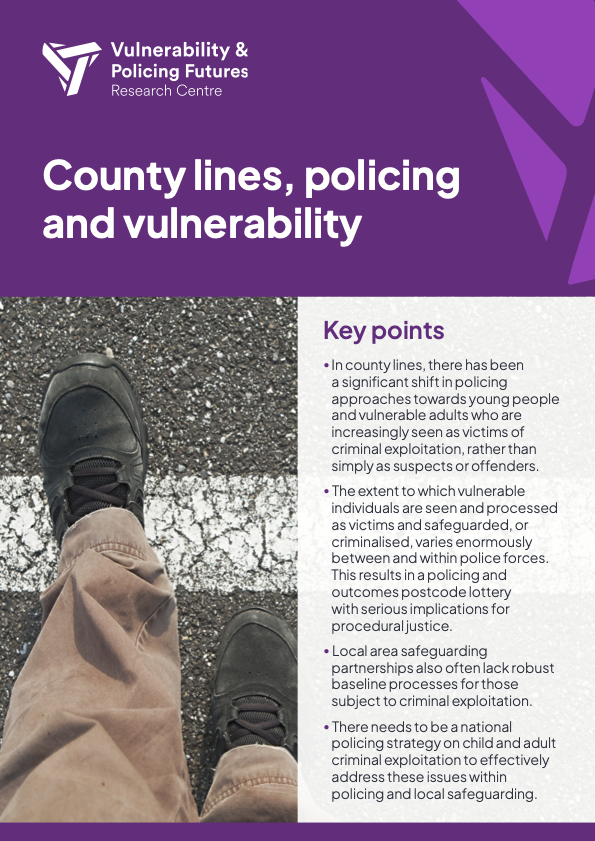
In county lines, there has been a significant shift in policing approaches towards young people and vulnerable adults who are increasingly seen as victims of criminal exploitation, rather than simply as suspects or offenders. The extent to which vulnerable individuals are seen and processed as victims and safeguarded, or criminalized, varies enormously between and within police forces. This results in a policing and outcomes
postcode lottery with serious implications for procedural justice. Local area safeguarding partnerships also often lack robust baseline processes for those subject to criminal exploitation. There needs to be a national policing strategy on child and adult criminal exploitation to effectively address these issues within policing and local safeguarding.
Summary : This is the UK’s first national study of police responses to county lines drug distribution and related child and adult criminal exploitation. The study examined how the police identify and process young people and vulnerable adults involved in drug distribution in cross-border and local drug markets. The findings show that police forces are changing how they consider and process young people and vulnerable adults involved in drug markets. However, while they increasingly recognize vulnerability and investigate possible criminal
exploitation, policing practice varies significantly between and even within forces. The findings suggest that to help establish an appropriate minimum baseline safeguarding response, consistent across all forces, there needs to be more detailed national guidance, policy, and centralized oversight in this area.
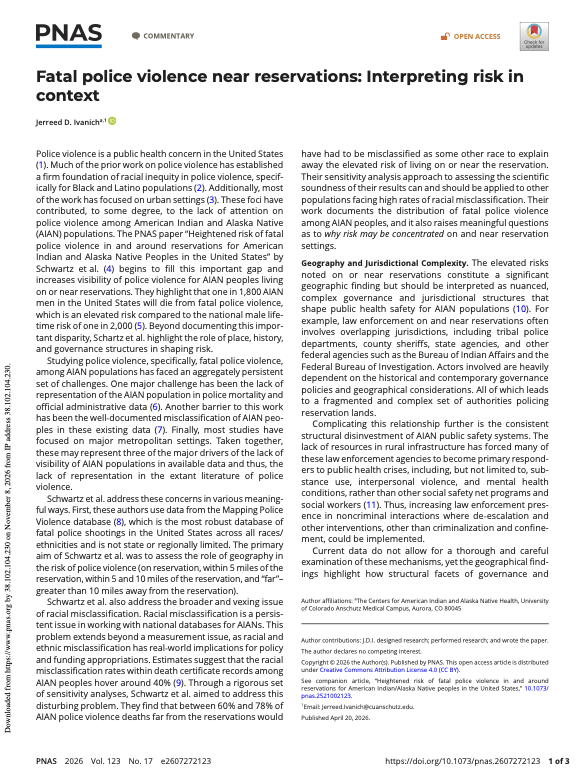
By Jerreed D. Ivanich
Police violence is a public health concern in the United States (1). Much of the prior work on police violence has established a firm foundation of racial inequity in police violence, specifically for Black and Latino populations (2). Additionally, most of the work has focused on urban settings (3). These foci have contributed, to some degree, to the lack of attention on police violence among American Indian and Alaska Native (AIAN) populations. The PNAS paper “Heightened risk of fatal police violence in and around reservations for American Indian and Alaska Native Peoples in the United States” by Schwartz et al. (4) begins to fill this important gap and increases visibility of police violence for AIAN peoples living on or near reservations. They highlight that one in 1,800 AIAN men in the United States will die from fatal police violence, which is an elevated risk compared to the national male lifetime risk of one in 2,000 (5). Beyond documenting this important disparity, Schartz et al. highlight the role of place, history, and governance structures in shaping risk.
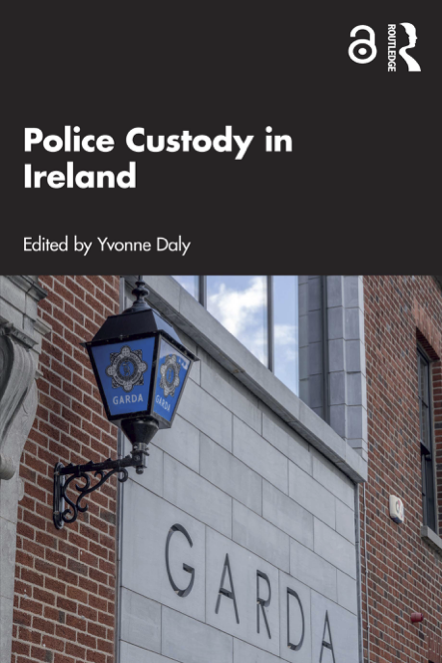
By Yvonne Daly
Police Custody in Ireland brings together experts from policing studies, law, criminology, and psychology, to critically examine contemporary police custody in Ireland, what we know about it, how it operates, how it is experienced, and how it might be improved. This first-of-its-kind collection focuses exclusively on detention in Garda Síochána stations, critically examining it from human rights and best practice perspectives. It examines the physical environment of custody, police interview techniques, existing protections, rights, and entitlements, and experiences of specific communities in custody, such as children, ethnic minorities, non-English speakers, the Mincéir/Traveller community, and those with intellectual disabilities or Autism Spectrum Disorder. Police Custody in Ireland gives a snapshot of garda custody as it is now and makes important recommendations for necessary future improvements.
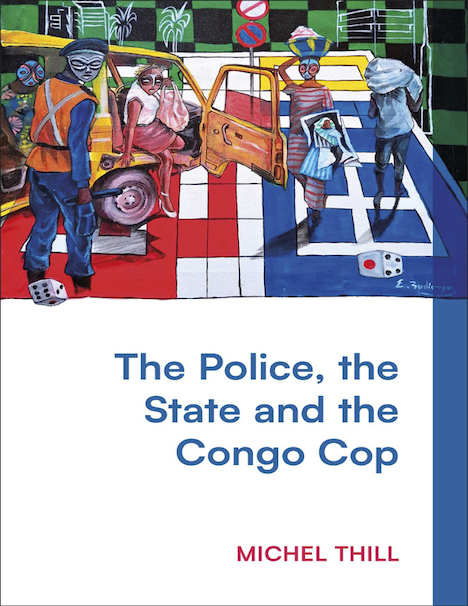
By Michel Thill
This open access book offers the first full-length, empirical deep-dive into everyday policework in the Democratic Republic of Congo. At the same time, its findings go well beyond the DRC and Africa, ultimately providing a new, startlingly nuanced theoretical framework for understanding what police practice and reform efforts tell us about states anywhere in the world. Following officers from the classroom to the station and the street, Michel Thill offers five narrative-driven chapters rich with historical detail and thick description that show how the police force, as an institution, struggles to coordinate practice with training, coercion with
persuasion and reconciliation, and the need to make ends meet with the duty to serve the public. By delving into the convoluted repercussions of police reform, Thill identifies the tensions that shape everyday police work, thereby offering new ways of thinking about police reform while offering practical guidance for practitioners and policymakers.
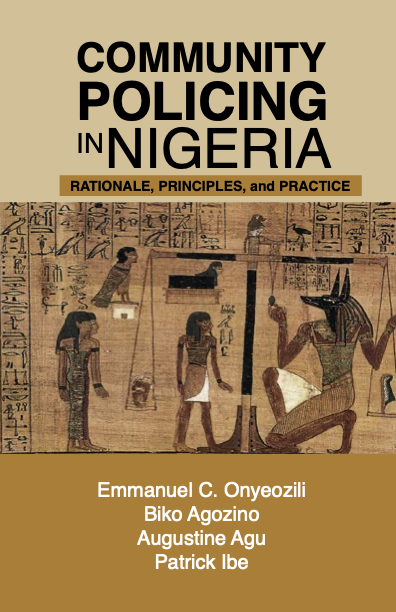
By Emmanuel C. Onyeozili, Biko Agozino, Augustine Agu, Patrick Ibe
In locating policing firmly within the Afrikan tradition, from earliest antiquity to the present, this book returns policing to the people in Afrikan communities. While its focus is on policing within Nigeria, theoretical insights and practical examples, these latter both positive and negative, from around the world are also deployed to illuminate a firm grasp of the evolution of police and policing from colonial times in what is now Nigeria.
The resulting text therefore makes a necessary and radical break with colonial and neocolonial policing in which the police are usually little more—if anything more—than an occupying force organized by Europeans who oppresses the mass of the people on behalf of these foreign masters and their local accomplices, who are junior partners in the exploitation of Afrika.
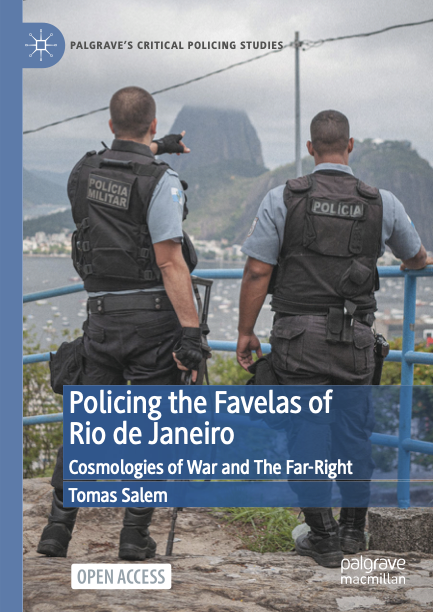
By Tomas Salem
This book offers a unique look into the world of policing and the frontline of Brazil’s war on drugs. It analyzes the tensions produced by attempts to modernize Rio de Janeiro’s public security policies. Since the return of democracy in 1985, Rio's police forces have waged war against armed drug gangs based in the city’s favelas, casting the people who live in these communities as internal enemies. In preparation for the Olympics in 2016, the police sought to ‘pacify’ the favelas and their populations through the establishment of Pacifying Police Units (UPPs) in many of the city’s favela communities. Drawing on eight months of ethnographic fieldwork with the police, this book follows officers across the institutional hierarchy in their daily activities, on patrol, and during training. Tracing the genealogies of contemporary forms of policing-as-warfare through the notion of ‘colonial war’ and ‘cultural war’, it highlights the material and ideational dimensions of war as a cosmological force that shapes Brazilian social relations, subjectivities, landscapes, economies, and politics. It draws on the Deleuzian notion of ‘war machine and state dynamics’ to show how practices of elimination
co-exist with attempts to transform favela territories and their people and analyzes the link between the moral universe of policing and right-wing populism in Brazil. Through rich and nuanced ethnography, it offers a critical perspective on militarized policing and 21st century forms of authoritarianism.
By Aaron Bielejewski
This Open-Access-book questions the relationship between institutionalized images and understandings of policing – the monolithic ideas common to most, if not all, Western law enforcement agencies – and contextual, situate, and local interactions where the human representatives of policing – street-level officers – come into contact with residents. The political and theoretical association of specific forms of “Western” policing with democratic society can be illustrated in the case of German integration: narratives of reform and essentially forging new democratic police agencies in the “new German states” stand at odds with much of the experience and statements of officers who continued to serve following (Re)Unification. Officers who present their works primarily in terms of their local responsibilities, expectations and more specifically to their unique and individual relationship and connection to their communities downplay the relevance of high-level policing policy. Based on a two-year ethnographic study of policing in a rural county in the German state of Brandenburg, this book explores the local nature of policing both in terms of how police officers imagine their communities to be and with reference to broader societal expectations and assumptions of what police, essentially, are, can effectively do, and should effectively do.
Edited by Georgios Leventakis and M. R. Haberfeld
Despite broad and often varied underlying definitions, a common theme throughout community and neighbourhood policing strategies establishes the need to target improvements in the relationship and level of engagement between the police and the communities they serve. Community policing approaches have long underpinned a desire to move away from reactive policing models towards those which establish a
more proactive philosophy, responsive to the wants and needs of the community. The near ubiquitous proliferation of smartphones and other ICTs (Information and Communication Technologies) means they are often seen as a vector through which initiatives of all kinds can instil a culture of proactive engagement with their respective stakeholder communities. This paper builds upon existing research which suggests that technologies for crime prevention should be designed to support communications and problem-solving rather than used simply as a means to disseminate information, unpacking a number of the core concepts that are considered central to participation and effective engagement; social capital, public participation and social and digital inclusion. Moreover, examples of wider initiatives are comparatively discussed, not just those associated with community policing, which target the engagement of communities through the use of technology, and more specifically mobile applications, before reflecting on the empirical evidence and experiences gleaned through the EU H2020 funded ‘UNITY’ project, a project that sought to establish effective strategies for engagement between police and citizen communities.
OR:
Examines the societal implications of community-oriented policing. Explores possibility for improving police-community relations using technology. Presents innovative solutions for policing challenges
Edited by Gemma Davies and Helena Carrapico
This unique open access collection offers an in-depth understanding of UK-EU police and judicial cooperation post-Brexit, an under-explored field.
It considers the legal and political operation of the Trade and Cooperation Agreement (TCA) and its implications for a wide number of policy areas. As well as critiquing its operation, contributors suggest reforms that would improve police and judicial cooperation between the UK and the EU.
This scholarly discussion is balanced against practical considerations, with short chapters setting out practitioners' perspectives on the TCA. It ends by reflecting on lessons that non-EU countries seeking cooperation with the EU might learn.
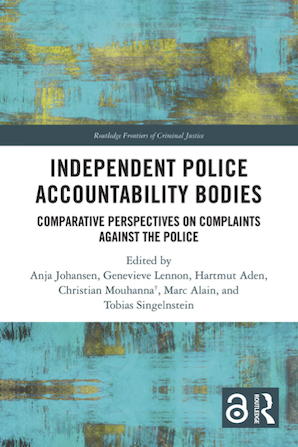
Edited By Anja Johansen, Genevieve Lennon, Hartmut Aden, Christian
Mouhanna, Marc Alain, Tobias Singelnstein
This book provides a detailed comparative analysis of Independent Police Complaints Bodies (IPCBs) in Canada, France, Germany, Japan, and the UK. It explores the distinctive political, cultural, and institutional contexts shaping police accountability arrangements within each country, as well as the transnational dynamics behind the remarkable proliferation of IPCBs over the past three decades, assessing the prospects for future convergence around international standards. Drawing on findings from the international project ‘Police Accountability: Towards International Standards’, the book examines the inherent dilemmas and challenges in the everyday functioning and dynamics of IPCBs.
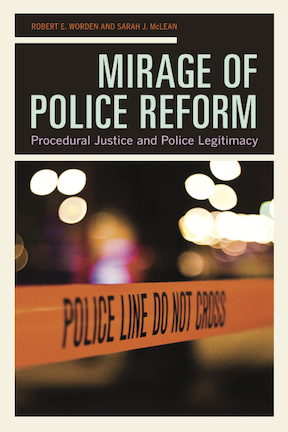
By Robert E. Worden and Sarah J. McLean
In the United States, the exercise of police authority—and the public’s trust that police authority is used properly—is a recurring concern. Contemporary prescriptions for police reform hold that the public would better trust the police and feel a greater obligation to comply and cooperate if police-citizen interactions were marked by higher levels of procedural justice by police.
In this book, Robert E. Worden and Sarah J. McLean argue that the procedural justice model of reform is a mirage. From a distance, procedural justice seemingly offers a relief from strained police-community relations. But a closer look at police organizations and police-citizen interactions shows that the relief offered by such reform is, in fact, illusory.
By Gregory Cote
It is widely accepted that modern policing first came into existence with a bill passed in 1829, establishing the Metropolitan London Police under British Home Secretary Sir Robert Peel. It is Peel after all, who has been labeled the founder of modern policing, an English institution that inspired North American police. I argue that it was Jeremy Bentham who developed an early model of modern policing and whose work on applying his utilitarian philosophy to institutional reform directly influenced Peel’s innovation. I intend to show how Bentham and reformer Patrick Colquhoun established the first modern police department when they
collaborated in drafting the Thames River Police Bill adopted by Parliament in 1800, almost thirty years before Peel’s legislation. It is the Thames River Police created by Bentham and Colquhoun that is the world’s oldest, not the Metropolitan London Police introduced by Peel. John Stuart Mill once wrote that Bentham was a great subversive. And as the great subversive whose years of work on improving police was often done in secret and whose efforts were largely ignored, it is Bentham not Peel, who should be considered the single most important figure in the development of modern policing.
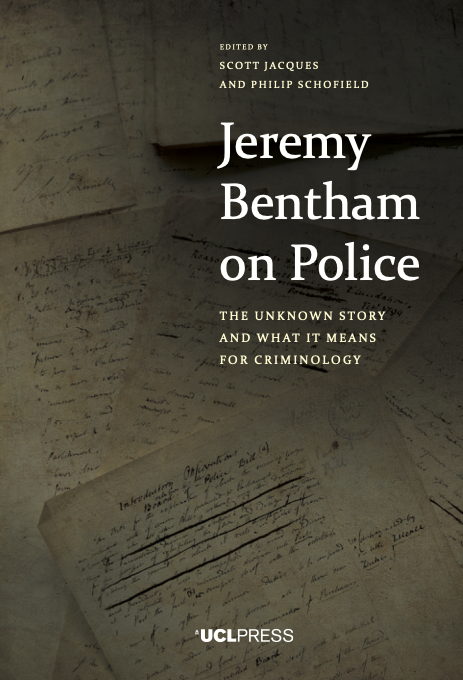
Edited by Scott Jacques and Philip Schofield
Jeremy Bentham’s ideas on punishment are famous. Every criminology student learns about Bentham, and every criminologist contends with him, as advocate or opponent. This discourse concerns his ideas about punishment, namely with respect to legislation and the panopticon. Yet, scholars and students are generally ignorant of Bentham’s ideas on police. Hitherto, these ideas have been largely unknowable. Now, thanks to UCL’s Bentham Project, these ideas are public. Jeremy Bentham on Police celebrates this achievement by exploring the story of Bentham’s writings on police and considering their relevance to the past, present and future of criminology. After Scott Jacques introduces the book, the Director of the Bentham Project, Philip Schofield, describes and explains how it works. Then Michael Quinn, who brought together Bentham’s writings on police, delves into the personal and socio-historical background in which they were created. An extract follows, representing the most (criminologically-)relevant passages from Bentham’s police writings. Finally, a rich variety of scholars offer their thoughts on what those writings mean for criminology. These contributions come from Anthony A. Braga, Ronald Clarke, David J. Cox, Stephen Douglas, Stephen Engelmann, G. Geltner, Joel F. Harrington, Jonathan Jacobs, Paul Knepper, Gloria Laycock, Gary T. Marx, Daniel S. Nagin, Graeme R. Newman, Pat O’Malley, Eric L. Piza, Kim Rossmo, Lucia Summers and Dean Wilson.