

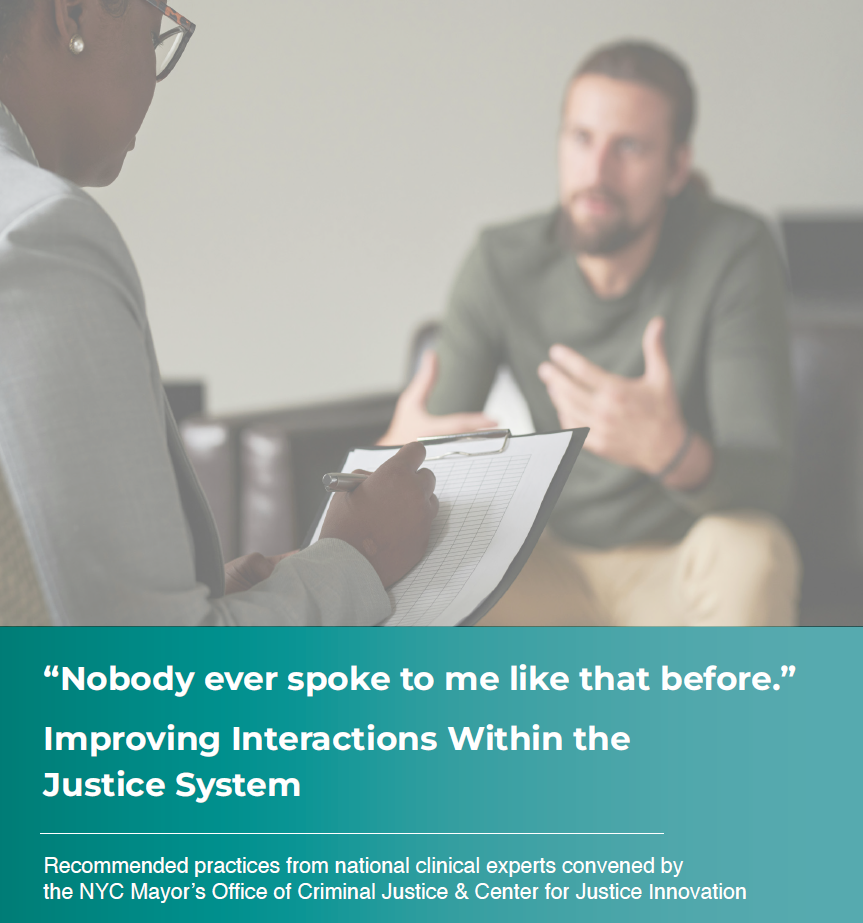
Nobody ever spoke to me like that before.” Improving Interactions Within the Justice System. Recommended practices from national clinical experts convened by the NYC Mayor’s Office of Criminal Justice & Center for Justice Innovation
By The New York City Mayor's Office of Criminal Justice
Most people who are arrested in New York City are not rearrested while they wait for a decision about the outcome of their case. However, a small group are rearrested at substantially elevated rates. And despite their clear need for supportive services, most of this group never receive intensive mental health, emotional health, or behavioral health interventions at any point during their time in the justice system. Instead, most interactions people experience as they journey through the justice system are limited to a series of brief mandated encounters—check-ins, needs assessments, reminders, hearings. Despite their brevity, these encounters represent key intervention points1 with the potential to change individuals’ future well-being and behavior, either negatively or positively, through inevitable influences on their emotional and psychological well-being. As New York City grapples with how to adequately serve people at highest need and highest risk of justice involvement, the New York City Mayor’s Office of Criminal Justice and the Center for Justice Innovation convened a national roundtable of clinical experts in Manhattan on October 12, 2023. Participants were asked to distill their expertise and apply it to the range of processes that practitioners most frequently navigate within the criminal court system context. The goal was to identify key opportunities for making these processes as therapeutic and impactful as possible under the constraints of system-based practice—in New York City and across the country. This roundtable focused on the interactions most system-involved people actually have on a daily basis. Specifically, intake screenings, routine monitoring appointments, and other brief mandated interventions are critical opportunities for providing trauma-informed care, which recognizes and responds to the high rates of trauma that people involved in the justice system experience.2 Often, this trauma is experienced both prior to3 and as a result of their involvement in the system.4 Making use of these opportunities could go a long way toward increasing court appearances, reducing rearrests, and increasing engagement in longer-term supportive and therapeutic services. As the city continues to wrestle with the twin challenges of reducing crime and incarceration and improving behavioral health care in the city, this roundtable could not come at a more critical moment. The roundtable sought to connect overall principles to concrete practices. While practitioners often refer to principles such as being trauma-informed, meeting people where they’re at, strengths based, and non-judgmental, what does that actually look like in practice? And how can staff reconcile these most effectively with accountability? What specific words or actions generate increased engagement and connection with people who do not trust systems of any kind, much less the justice system? This brief provides a list of concrete recommendations for providers, distilled from the roundtable discussion. It should be noted that none of these recommendations should be taken as conclusive or unequivocally endorsed by the Mayor’s Office of Criminal Justice. Instead, MOCJ is providing a summary of the recommendations provided by experts based on their experiences in the field.