

By Min-Taec Kim, Fan Cheng
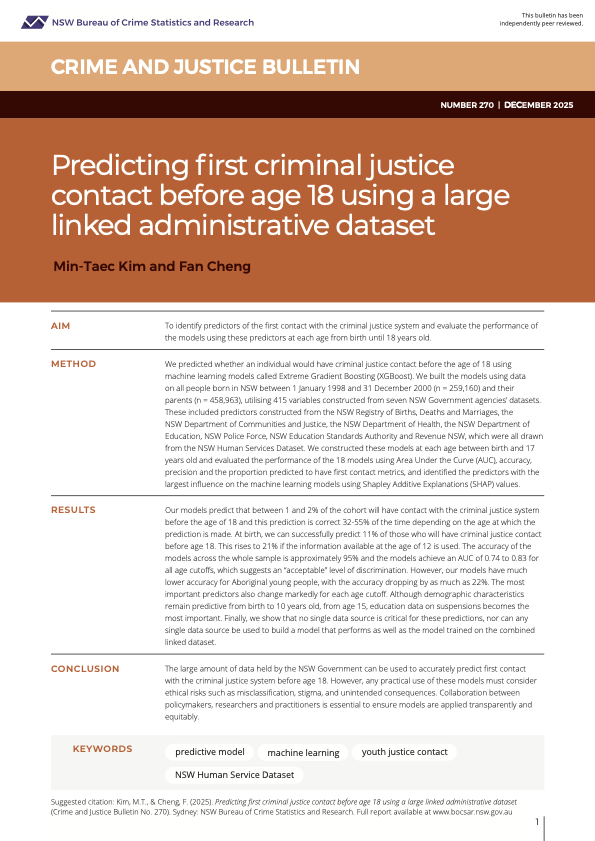
The Bureau of Crime Statistics and Research (BOCSAR) has released a new study that considered whether linked data from health, education, child protection (and more) can be used to predict which children are likely to offend before turning 18. The study found: Whole-of-population level: Machine learning methods applied to large-linked data can identify future young offenders with reasonable accuracy. Aboriginal young people: The models were far less accurate for Aboriginal young people and could not be reliably used for this group. Offending predictions for Aboriginal young people were more likely to be wrong than for non-Aboriginal young people – a higher rate of false positives. This raises significant ethical concerns about the practical use of such models for Aboriginal people and other sub-populations. Predictive factors over time: The study also identified key predictors of offending and how these change with age. At birth, gender and parental characteristics are most influential. Between ages 5 and 10, child protection reports and disability become important. By age 15, school suspension is the strongest predictor of youth offending.

By Violence Policy Center
Large capacity ammunition magazines are the common thread running through most mass shootings in the United States. Since 1980, there have been at least 110 mass shootings (three or more fatalities not including
the shooter) where the shooter used large capacity ammunition magazines containing more than 10 rounds.
A total of 981 people were killed in these shootings, and 1,328 were wounded. This number is likely a significant undercount of actual incidents as there is no consistent collection or reporting on this data. Even in many high-profile shootings, information on magazine capacity is neither released nor reported. The Violence Policy Center has compiled this list of incidents by analyzing news reports and follow-up investigative reports
on mass shootings. Only shootings in which there is specific information that large capacity magazines were used are included. Columbine shooter armed with Intratec TEC-DC9 assault pistol equipped with high capacity ammunition magazine
Large capacity ammunition magazines are the common thread running through most mass shootings in the United States. Since 1980, there have been at least 110 mass shootings (three or more fatalities not including
the shooter) where the shooter used large capacity ammunition magazines containing more than 10 rounds.
A total of 981 people were killed in these shootings, and 1,328 were wounded. This number is likely a significant undercount of actual incidents as there is no consistent collection or reporting on this data. Even in many high-profile shootings, information on magazine capacity is neither released nor reported. The Violence Policy Center has compiled this list of incidents by analyzing news reports and follow-up investigative reports
on mass shootings. Only shootings in which there is specific information that large capacity magazines were used are included.

By Gabriel Silveira de Queirós Campos, Américo Bedê Jr., Aline Pires de Angeli Ferreira
This article presents the findings of a quantitative study on sentencing practices in Brazil, focusing on the presence of numerical patterns and “penal clustering” in judicial decisions. Drawing on a dataset of criminal sentences from São Paulo—the country's most populous and active judiciary—the research statistically investigates whether Brazilian judges display preferences for certain sentence lengths, such as even numbers, “round numbers,” and multiples of 6 months. The study also examines the role of numerical fractions in shaping sentence variability. Despite Brazil's civil law tradition and the absence of formal sentencing guidelines, the results reveal a significant degree of penal clustering, with judges consistently relying on a narrow set of sentencing values. These patterns suggest the influence of cognitive heuristics, particularly “anchoring effects,” in sentencing decisions. While the use of numerical fractions may enhance consistency and predictability, it may also constrain individualization—raising concerns about mechanical decision-making and reduced responsiveness to case-specific circumstances. The article discusses the implications of these findings for judicial training, institutional reform, and public policy. It argues for a more data-informed and psychologically aware approach to sentencing, capable of balancing the dual demands of consistency and individualization within both common law and civil law traditions.

By Kevin Petersen, Brian D. Johnson, Allison D. Redlich, Miranda A. Galvin
Extant research on criminal sentencing generally concludes that racial/ethnic disparity is concentrated in the “in–out” decision, and that racial differences in sentence lengths are small and inconsistent. However, sentence length analyses rarely focus on the fact that criminal sentences are often partially or fully suspended, creating situations in which the sentence formally imposed differs from the sentence served. In many jurisdictions, suspended sentencing is used widely and is a highly discretionary decision that carries considerable potential to mask racial inequality in punishment. This study uses 24 years of sentencing guideline data (2000–2023) from the state of Maryland to test for racial/ethnic disparity in the use of suspended sentences. Using a novel modeling approach capable of simultaneously estimating the probability of receiving a fully suspended sentence, a fully executed sentence, and variation in the proportion of the total sentence suspended, we test for racial disparities in the application of suspended sentencing outcomes. We identify significant and meaningful disparities in suspended sentences that are largest for minority defendants convicted at trial. However, we also find that this disparity has been declining over time. Ultimately, we emphasize the importance of distinguishing between active and suspended sentences in ongoing research on punishment inequalities.
By Francesco Calderoni, Jürgen Lerner, David Bright
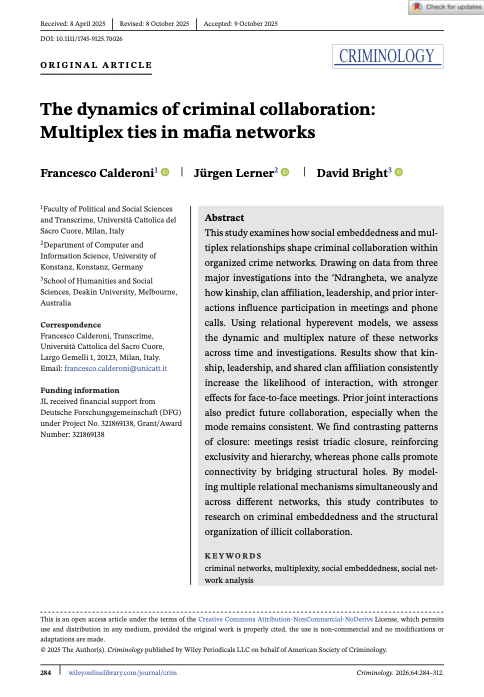
This study examines how social embeddedness and multiplex relationships shape criminal collaboration within organized crime networks. Drawing on data from three major investigations into the ‘Ndrangheta, we analyze how kinship, clan affiliation, leadership, and prior interactions influence participation in meetings and phone calls. Using relational hyperevent models, we assess the dynamic and multiplex nature of these networks across time and investigations. Results show that kinship, leadership, and shared clan affiliation consistently increase the likelihood of interaction, with stronger effects for face-to-face meetings. Prior joint interactions also predict future collaboration, especially when the mode remains consistent. We find contrasting patterns of closure: meetings resist triadic closure, reinforcing exclusivity and hierarchy, whereas phone calls promote connectivity by bridging structural holes. By modeling multiple relational mechanisms simultaneously and across different networks, this study contributes to research on criminal embeddedness and the structural organization of illicit collaboration.

By Jason Robey, Matt Vogel
Social scientists have long been interested in understanding how age, period, and cohort effects shape long-term homicide trends. Yet fundamental measurement challenges remain pervasive in estimating age-specific homicide rates for birth cohorts. We begin by defining multiple alternative approaches for measuring homicide rates for birth cohorts, highlighting their advantages and disadvantages. We empirically demonstrate substantial differences in the estimated cohort-specific homicide rates across alternative measurement approaches. These discrepancies are particularly large when using 5-year age categories and 5-year birth cohorts, with a nearly twofold difference in estimated homicide rates for 15- to 19-year-olds in some cohorts. Substantively, these discrepancies have consequences even for basic questions about homicide trends, including which birth cohorts had the highest homicide rates. We provide a framework for understanding why these discrepancies arise and propose the reconstructed cohort measurement approach as a practical solution to produce valid estimates given available data. Simulation analyses confirm this approach substantially outperforms approaches used in the prior literature. Lastly, we demonstrate that these measurement challenges can lead to fundamentally different results in regression models predicting cohort effects on homicide rates. Our results underscore how accurately measuring cohort-specific homicide rates is an essential, yet often overlooked, part of understanding homicide trends.
By Liat Tuv, Helen Mills, Nisha Waller
The past two decades have seen a sustained rise in multi-defendant homicide prosecutions
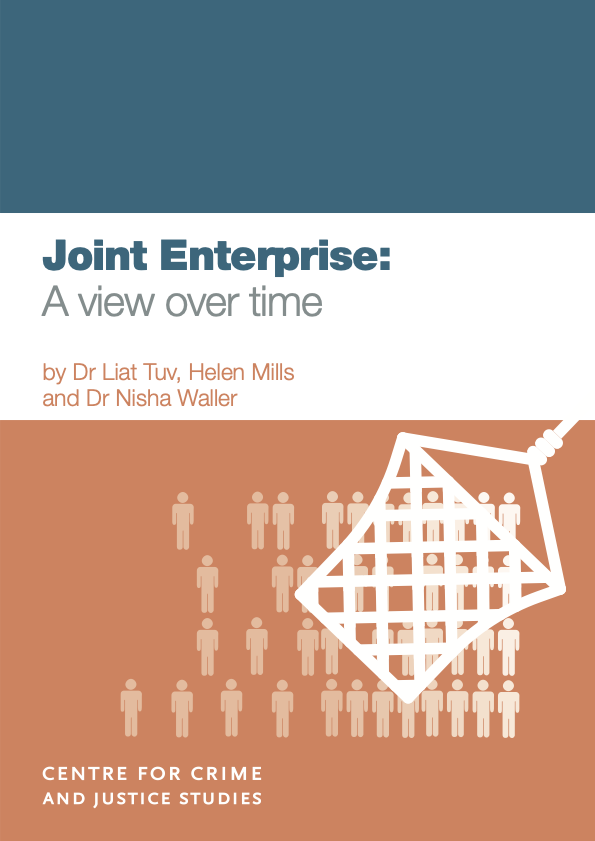
This report tracks multi-defendant homicide prosecutions in England and Wales and the concerns they raise around fairness, youth involvement, and racial disproportionality. Drawing on Home Office and CPS data from 2005–2024, it finds that prosecutions involving multiple defendants have become more common, with young people disproportionately represented among those convicted. It also highlights persistent racial disparities and increasingly severe sentencing outcomes for those convicted.
The report situates these findings within wider academic and policy debates on joint enterprise and shared responsibility in serious crime. Authors make the case for government attention and intervention on three key issues:
Narrow the scope of the law: Via a workable test for when someone can be held liable for the crimes of another.
Proportionate sentencing: With a separate sentencing framework for secondary parties.
Greater transparency and accountability: Requiring prosecutors to state each defendant's individual conduct and intent, and identify possible alternative charging.
By Laurie Caron, Frank Crispino, Cyril Muehlethaler
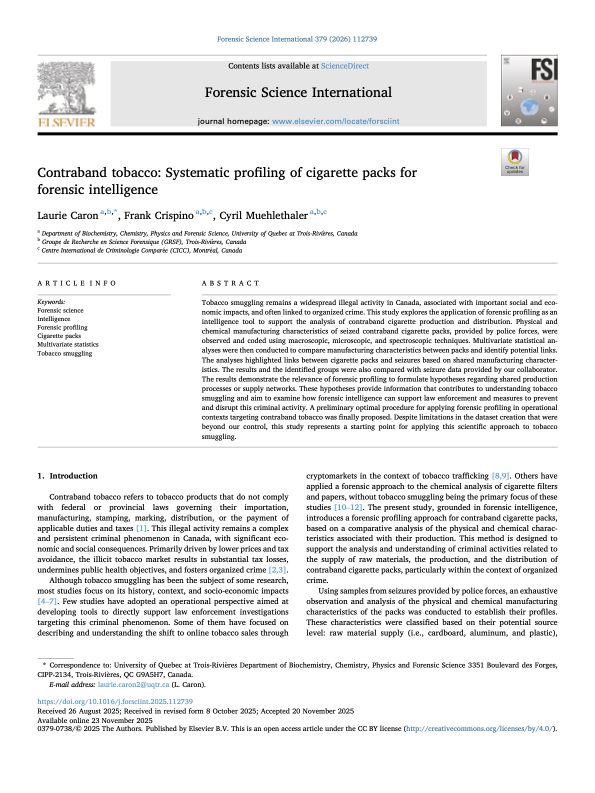
Tobacco smuggling remains a widespread illegal activity in Canada, associated with important social and economic impacts, and often linked to organized crime. This study explores the application of forensic profiling as an intelligence tool to support the analysis of contraband cigarette production and distribution. Physical and chemical manufacturing characteristics of seized contraband cigarette packs, provided by police forces, were observed and coded using macroscopic, microscopic, and spectroscopic techniques. Multivariate statistical analyses were then conducted to compare manufacturing characteristics between packs and identify potential links. The analyses highlighted links between cigarette packs and seizures based on shared manufacturing characteristics. The results and the identified groups were also compared with seizure data provided by our collaborator. The results demonstrate the relevance of forensic profiling to formulate hypotheses regarding shared production processes or supply networks. These hypotheses provide information that contributes to understanding tobacco smuggling and aim to examine how forensic intelligence can support law enforcement and measures to prevent and disrupt this criminal activity. A preliminary optimal procedure for applying forensic profiling in operational contexts targeting contraband tobacco was finally proposed. Despite limitations in the dataset creation that were beyond our control, this study represents a starting point for applying this scientific approach to tobacco smuggling.

By Alexandra Voce and Anthony Morgan
The Australian Institute of Criminology has released a Statistical Bulletin on the availability and purchase of digital firearms products among online Australians, based on a national survey of 9,951 online Australian adults:
More than twice as many respondents (2.4%) had seen digital firearms products for sale on the public internet (clear web) compared with the darknet (0.9%).
Just over one percent (1.1%) of respondents said they or someone they knew had bought or traded digital firearms products online on the public internet (0.7%) or on the darknet (0.8%).
Respondents who said they or someone they knew had bought or traded digital firearms products online were more likely than other respondents to have had contact with the criminal justice system, including for violent offences, to own a firearm without a licence, to have intentionally viewed fringe or radical content and to have seen content depicting or calling for violent action.
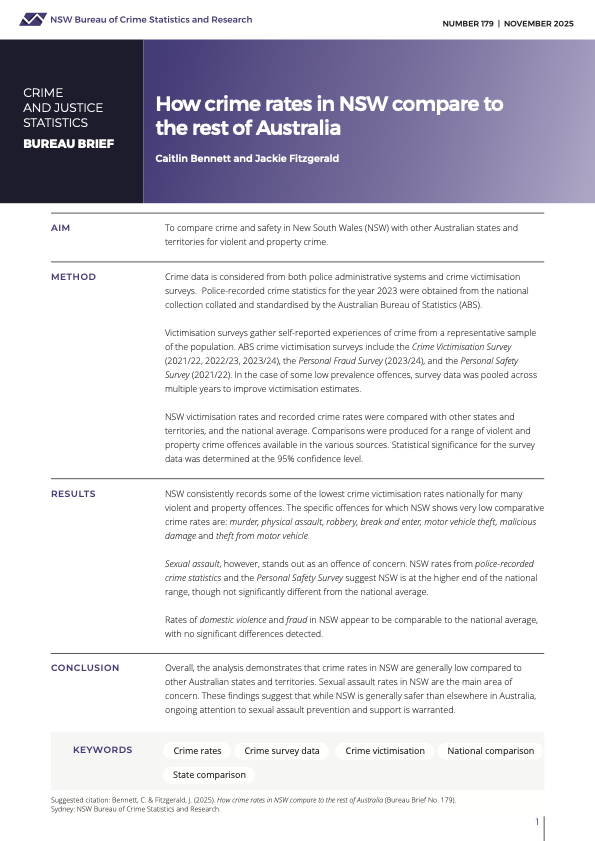
By Caitlin Bennett and Jackie Fitzgerald
AIM To compare crime and safety in New South Wales (NSW) with other Australian states and territories for violent and property crime. METHOD Crime data is considered from both police administrative systems and crime victimisation surveys. Police-recorded crime statistics for the year 2023 were obtained from the national collection collated and standardised by the Australian Bureau of Statistics (ABS). Victimisation surveys gather self-reported experiences of crime from a representative sample of the population. ABS crime victimisation surveys include the Crime Victimisation Survey (2021/22, 2022/23, 2023/24), the Personal Fraud Survey (2023/24), and the Personal Safety Survey (2021/22). In the case of some low prevalence offences, survey data was pooled across multiple years to improve victimisation estimates. NSW victimisation rates and recorded crime rates were compared with other states and territories, and the national average. Comparisons were produced for a range of violent and property crime offences available in the various sources. Statistical significance for the survey data was determined at the 95% confidence level. RESULTS NSW consistently records some of the lowest crime victimisation rates nationally for many violent and property offences. The specific offences for which NSW shows very low comparative crime rates are: murder, physical assault, robbery, break and enter, motor vehicle theft, malicious damage and theft from motor vehicle. Sexual assault, however, stands out as an offence of concern. NSW rates from police-recorded crime statistics and the Personal Safety Survey suggest NSW is at the higher end of the national range, though not significantly different from the national average. Rates of domestic violence and fraud in NSW appear to be comparable to the national average, with no significant differences detected. CONCLUSION Overall, the analysis demonstrates that crime rates in NSW are generally low compared to other Australian states and territories. Sexual assault rates in NSW are the main area of concern. These findings suggest that while NSW is generally safer than elsewhere in Australia, ongoing attention to sexual assault prevention and support is warranted.
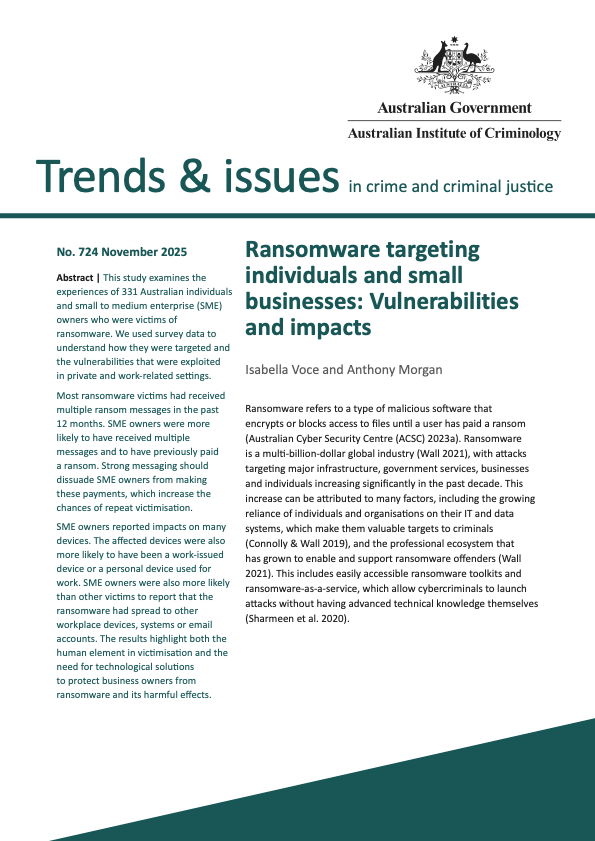
By Isabella Voce and Anthony Morgan
This study examines the experiences of 331 Australian individuals and small to medium enterprise (SME) owners who were victims of ransomware. We used survey data to understand how they were targeted and the vulnerabilities that were exploited in private and work-related settings.
Most ransomware victims had received multiple ransom messages in the past 12 months. SME owners were more likely to have received multiple messages and to have previously paid a ransom. Strong messaging should dissuade SME owners from making these payments, which increase the chances of repeat victimisation.
SME owners reported impacts on many devices. The affected devices were also more likely to have been a work-issued device or a personal device used for work. SME owners were also more likely than other victims to report that the ransomware had spread to other workplace devices, systems or email accounts. The results highlight both the human element in victimisation and the need for technological solutions to protect business owners from ransomware and its harmful effect
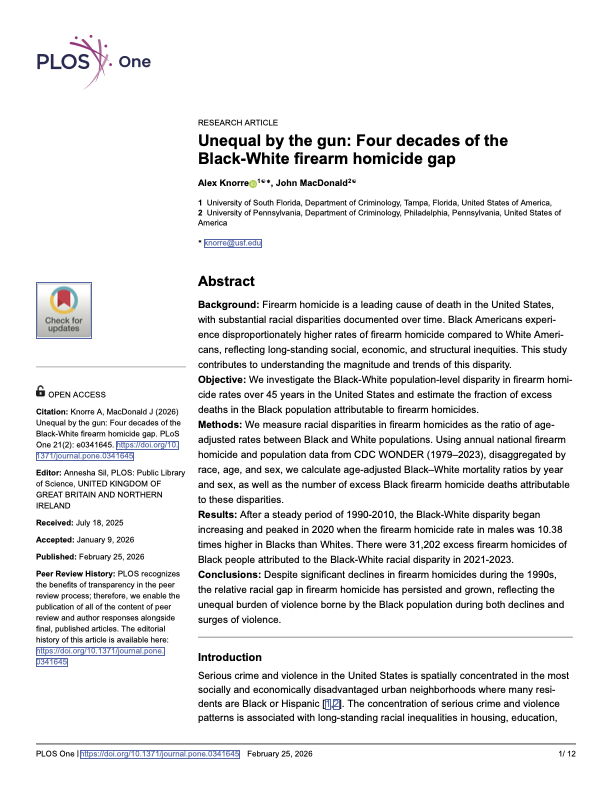
By Alex Knorre , John MacDonald
Background: Firearm homicide is a leading cause of death in the United States, with substantial racial disparities documented over time. Black Americans experience disproportionately higher rates of firearm homicide compared to White Americans, reflecting long-standing social, economic, and structural inequities. This study contributes to understanding the magnitude and trends of this disparity. Objective: We investigate the Black-White population-level disparity in firearm homicide rates over 45 years in the United States and estimate the fraction of excess deaths in the Black population attributable to firearm homicides. Methods: We measure racial disparities in firearm homicides as the ratio of ageadjusted rates between Black and White populations. Using annual national firearm homicide and population data from CDC WONDER (1979–2023), disaggregated by race, age, and sex, we calculate age-adjusted Black–White mortality ratios by year and sex, as well as the number of excess Black firearm homicide deaths attributable to these disparities. Results: After a steady period of 1990-2010, the Black-White disparity began increasing and peaked in 2020 when the firearm homicide rate in males was 10.38 times higher in Blacks than Whites. There were 31,202 excess firearm homicides of Black people attributed to the Black-White racial disparity in 2021-2023. Conclusions: Despite significant declines in firearm homicides during the 1990s, the relative racial gap in firearm homicide has persisted and grown, reflecting the unequal burden of violence borne by the Black population during both declines and surges of violence.
By Maria Laura Di Tommaso, Silvia Mendolia, Silvia Palmaccio, Giulia Savio
A comprehensive understanding of the determinants of sexual violence constitutes a crucial step toward effective prevention. While there is much research on the role of socio-economic circumstances of both victims acund perpetrators, little is known about whether an individual’s physical attractiveness influences the likelihood of perpetrating sexual violence. Using U.S. data from the National Longitudinal Study of Adolescent to Adult Health (Add Health), we examine the relationship between attractiveness and sexual violence perpetration against one’s partner. Physical attractiveness is measured using interviewer-assigned scores for respondents aged 12 to 17. While no correlation is documented for women, among men, a one-point increase in attractiveness (on a 1–5 scale) reduces the likelihood of perpetrating sexual violence in adulthood by 13 percent. We also find that contextual factors, such as parental education and neighborhood cohesion, mitigate this association.
By Robin S. Engel, Jennifer Calnon Cherkauskas
The 2024 Annual Report of the Pennsylvania State Police (PSP) Traffic Stop Study presents a comprehensive analysis of member-initiated traffic stops conducted between January 1 and December 31, 2024. It continues a multi-year initiative to collect, audit, and analyze traffic stop data. In 2021, the Pennsylvania State Police (PSP) revitalized its effort to collect traffic stop data This initiative builds on a voluntary traffic stop data collection system created by the PSP twenty-five years ago in partnership with the current research team, which was operational from 2001 to 2010 and served as a national model for traffic stop data collection (Engel & Cherkauskas, 2022). The report provides a detailed breakdown of traffic stop characteristics and outcomes at the department level, as well as across PSP’s four Areas, 16 Troops, and 89 Stations. PSP’s voluntary data collection and analysis align with best practices, showcasing its commitment to transparency and accountability to its communities and reinforcing its dedication to evidence-based policing practices. The objectives of the traffic stop data collection and analysis are to: (1) identify patterns and trends in traffic stops and their outcomes, specifically documenting any racial/ethnic disparities; (2) utilize data analysis to promote effective and fair law enforcement practices that enhance public and traffic safety; (3) foster public trust through transparent documentation of traffic stop data and findings; (4) identify opportunities for improvement in PSP policies, training, and supervisory oversight concerning traffic stops.
Harrisburg: Pennsylvania State Police, 2025. 139p.
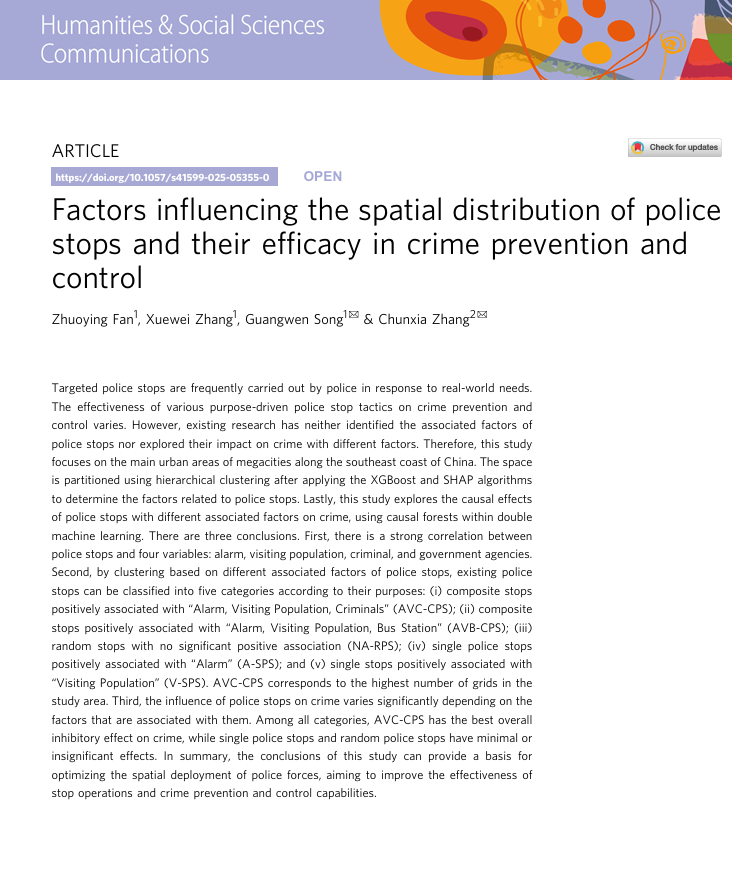
By Zhuoying Fan, Xuewei Zhang, Guangwen Song &Chunxia Zhang
Targeted police stops are frequently carried out by police in response to real-world needs. The effectiveness of various purpose-driven police stop tactics on crime prevention and control varies. However, existing research has neither identified the associated factors of police stops nor explored their impact on crime with different factors. Therefore, this study focuses on the main urban areas of megacities along the southeast coast of China. The space is partitioned using hierarchical clustering after applying the XGBoost and SHAP algorithms to determine the factors related to police stops. Lastly, this study explores the causal effects of police stops with different associated factors on crime, using causal forests within double machine learning. There are three conclusions. First, there is a strong correlation between police stops and four variables: alarm, visiting population, criminal, and government agencies. Second, by clustering based on different associated factors of police stops, existing police stops can be classified into five categories according to their purposes: (i) composite stops positively associated with “Alarm, Visiting Population, Criminals” (AVC-CPS); (ii) composite stops positively associated with “Alarm, Visiting Population, Bus Station” (AVB-CPS); (iii) random stops with no significant positive association (NA-RPS); (iv) single police stops positively associated with “Alarm” (A-SPS); and (v) single stops positively associated with “Visiting Population” (V-SPS). AVC-CPS corresponds to the highest number of grids in the study area. Third, the influence of police stops on crime varies significantly depending on the factors that are associated with them. Among all categories, AVC-CPS has the best overall inhibitory effect on crime, while single police stops and random police stops have minimal or insignificant effects. In summary, the conclusions of this study can provide a basis for optimizing the spatial deployment of police forces, aiming to improve the effectiveness of stop operations and crime prevention and control capabilities.
Humanit Soc Sci Commun 12, 1026 (2025)
By Jeremy D. Barnum., Kevin D. Lucey, Meagan E. Cahill, William H. Sousa,
Illicit drug use is a significant problem in the United States, driven in large part by the opioid crisis. In 2023, the nation reported 107,543 drug overdose deaths, with more than 80,000 deaths involving an opioid. Stimulants have also become a growing problem; in 2023, more than 36,000 overdoses involved a psychostimulant, and nearly 30,000 involved cocaine (CDC 2024). Law enforcement is a crucial piece of the broader response to the drug crisis (PERF 2021). Proactive police interventions that leverage problem-solving and involve partnerships with community stakeholders offer the most substantial evidence of effectiveness (Mazerolle, Soole, and Rombouts 2007). One strategy to reduce drug problems is third-party policing (TPP). TPP involves police efforts to persuade or coerce nonoffending third parties (landlords, business owners, etc.) to take on more responsibility for addressing crime and disorder at or around their premises (Mazerolle and Ransley 2006). Typically, police begin by seeking voluntary cooperation of third parties by sharing information with them about specific problems, educating third parties on ways to prevent problems, or providing support to third parties to make changes. When third parties resist collaborative efforts, police may use coercive approaches, such as warnings, property inspections, or enforcement of civil remedies (Bichler, Schmerler, and Enriquez 2013; Eck and Wartell 1998; Mazerolle and Roehl 1998b). The study This report describes a randomized controlled evaluation of a TPP intervention implemented in Anne Arundel County, Maryland. The intervention, called Operation CheckOut, aimed to reduce drug problems at hotel s and motels by fostering trusted partnerships between police and hotel staff. Officers from the Anne Arundel County Police Department (AACOPD) conducted four in-person visits between August 2022 and May 2023 to a randomly selected group of hotels. During in-person visits, officers engaged in a scripted procedural justice dialogue with hotel managers, delivered educational materials, identified legal responsibilities, and provided a dedicated email address that functioned as a “tip line” to report problems or suspicious activity directly to the Operation Check-Out team. The intervention was designed as a partial replication of Operation Galley, a TPP intervention implemented by the Queensland (Australia) Police Service in 2017 (Mazerolle et al. 2018). The goal of the intervention was to bolster intelligence, investigations, and enforcement actions; reduce crime and disorder; and improve perceptions of police. Key findings Outcome analysis Calls for service data were analyzed to determine the impact of Operation Check-Out on four outcomes: (1) drug activity, (2) sick persons (e.g., overdoses), (3) disorder, and (4) violence. Average monthly calls for service for each outcome were compared among hotels in the treatment and control groups during the pre-intervention period, during the intervention period, and during the post-intervention period. Three findings were significant: 1. Calls reporting drug activity were lower at treatment hotels during the post-intervention period than during the pre-intervention or intervention periods. 2. Calls reporting sick persons were lower at treatment hotels during the post-intervention period than during the pre-intervention or intervention periods. 3. Calls reporting disorder were higher at treatment hotels during the intervention period than during the pre-intervention or post-intervention periods. That there were significantly fewer drug activity calls at treatment hotels following Operation Check-Out than there had been before is encouraging, as the intervention was specifically designed to mitigate drug problems. Reducing drug activity reduces the need for hotel staff to call 911. Also, as part of their efforts to build rapport with hotel management, officers often provided their direct work lines—allowing management to call specific officers familiar with their facility and problems instead of the generic 911 line. That there were significantly fewer sick person calls at treatment hotels during the postintervention period than during the pre-intervention or intervention periods further supports the idea that Operation Check-Out reduced drug activity during the intervention period with impacts realized during the post-intervention period. Given less drug activity, fewer overdoses would be expected. Finally, the finding that there were more disorder calls at treatment hotels during the intervention period than during the pre-intervention or post-intervention periods is somewhat unexpected, as fewer disorder calls would be expected in an environment with greater cooperation, enforcement, and police presence. One plausible explanation is that hotel staff were more willing to contact the police as a result of Operation Check-Out because, for example, they may have felt they had a supportive partner in addressing issues at their hotel, or they may have understood that the intervention involved repeated visits and become concerned about bringing trouble to the hotel if they failed to report problems to police.
Washington, DC: Police Executive Research Forum, 2025. 103p.
By The Policing Project at NYU School of Law
The story of the Chicago Neighborhood Policing Initiative begins in 2019. At that time, the City of Chicago faced a number of serious challenges involving crime and community confidence in the police. Decades-long concerns about discriminatory policing, police accountability, use of force, external oversight, and community responsiveness had reached a critical point that demanded action. Following the police shooting of Laquan McDonald, the United States Department of Justice investigated and found a pattern or practice of unconstitutional policing by the Chicago Police Department (CPD), linking a lack of public trust to reduced crime prevention effectiveness. Within this environment, CPD personnel visited New York City to learn about the New York Police Department’s (NYPD) recently developed Neighborhood Policing model. That approach focused on reorganizing patrol activities in police districts to allow officers to engage meaningfully with the community and address local issues. The NYPD credited this method with enhancing community involvement and revitalizing focus on community policing. It is worth noting that Chicago’s original, groundbreaking community policing model, the Chicago Alternative Policing Strategy (CAPS), shared many features with the NYPD model, such as promoting partnership with community. But CAPS became under-resourced over time and today is a stand-alone program focused on community events rather than crime strategy. Identifying the NYPD model as a promising approach to improving public safety and relationships with the community, CPD leadership asked the Policing Project at New York University School of Law to work with the Department and local communities to develop a strategy to re-imagine the NYPD model to meet the needs and particular challenges of Chicago. Since 2019, the Policing Project has been supporting the development and implementation of the model, made possible by the partnership of a dedicated coalition of Chicago philanthropic organizations. The Neighborhood Policing Initiative (NPI) is a core policing strategy focused on problem-solving and crime reduction activities, undertaken in collaboration with neighborhood residents in a manner that builds trust between police and community. Through NPI, the community and the police share responsibility for addressing public safety issues in communities. NPI’s goal is to transform the community-police dynamic to produce meaningful public safety. Rather than solely relying on traditional police responses, NPI seeks to bring together Chicago communities to identify problems and develop solutions to guide police efforts going forward. NPI’s vision is for this philosophy to permeate every level of the Department, equipping CPD and the communities it serves to reach a shared understanding of what policing should look like. Under NPI, residents are an ongoing, central part of the actual decision-making process on how they are policed.
New York: NYU University School of Law, Policing Project, 2025. 118p.
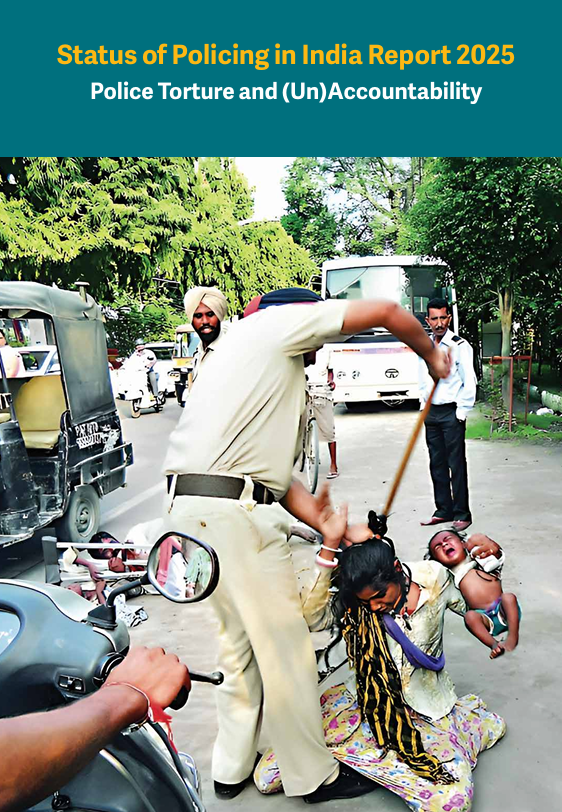
By Lokniti in collaboration with Common Cause.Despite the prohibition of torture being a provision of the Indian Constitution, custodial torture by the police remains widespread and under-reported. A strong societal belief in the utility of torture as a response to crime normalises its use by the police. Cases of police brutality are generally brushed away and only come to light when they result in death. Fewer still result in inquiries or punitive actions against perpetrators. This SPIR study aims to address the normalisation of police violence by establishing reliable and accurate data on public perception of police violence. Unlike previous SPIR reports, the 2025 study does not account for the views of the common citizens but rather directly explores the perceptions of those in authority- police personnel. The study explores the patterns and practices of routine policing that eventually contribute to the use of violence by the police in their day-to-day operations, such as detention, investigation, arrest and interrogation. The study is designed to be utilised for policy and advocacy. It offers key insights into personnel’s belief in the rule of law and level of legal training.The study investigates the nature and contexts of custodial torture and police brutality in India. Furthermore, it examines the trends of official denial. To understand the enmeshment of law enforcement and society that creates propensities to violence, the survey data assesses police opinions on various parameters, such as frequent crimes and arrests, crime control measures, moral policing and mob violence. Police perceptions of the criminal justice system and its functioning, trials and justice-seekers are also assessed. The study engages with personnel’s views on justifications for custodial violence and torture during arrests, engagements with witnesses, interrogations, etc. In the same vein, the survey also probes into police personnel’s views of judicial scrutiny and accountability of custodial deaths, brutality and “encounters”. Views of other stakeholders involved in the process, such as lawyers, doctors, and judges, on police and magisterial accountability are recounted in the scope of the SPIR, too. Finally, the report evaluates the quality and status of official records on police torture and violence.The survey was conducted in 17 Indian states with a sample of 8,276 police personnel across rural areas, capital cities and urban areas. Of the respondents, 85 per cent were male respondents and the rest were female. 59 per cent of respondent personnel were of constabulary rank, forty per cent of upper subordinate rank and one per cent of IPS level ranks.
New Delhi: Common Cause and Lokniti - Centre for the Study of Developing Societies (CSDS) , 2025. 218p.
By Byeongjun Kim
Most previous research on inequality in policing has been limited to race and gender. To widen the knowledge of inequality in policing, this study took note of the location as a novel domain based on varying crime rates by area. The data for the study were drawn from the Crime Survey for England and Wales in 2007–2008 and 2017– 2018. Also, it used the stop-and-search data from 2015 to 2018 and the key facts and fgures taken from Her Majesty’s Inspectorate of Constabulary and Fire & Rescue Services (HMICFRS). The study has been structured into two models. Model 1 examined if there are diferences between regions in citizens’ attitudes towards the police in England. It used one-way analysis of variance as a statistical technique and analysed the efect of the region (independent variable) of England on citizens’ attitudes towards the police (dependent variable). Model 2 analysed the efect of several factors: The stop-and-search rate, residential population, police ofce size, and budget on citizens’ attitudes towards the police to fnd causes of the diferences in the attitudes by region using simple linear regression. The study found that there were spatial diferences in citizens’ attitudes towards the police between regions. In addition, surprisingly, the stop-and-search per 1,000 people had a positive efect on citizens’ attitudes towards the police, which contrasted with previous research suggesting a negative efect of stop-and-search on public support. However, the other factors: Population, police ofce size, and budget did not afect citizens’ attitudes towards the police. In conclusion, there is regional inequality in public opinion of policing, and the public opinion of the police is positively afected by the number of police use of stop-and-search.
Security Journal (2025) 38:56
By Lucia Bird | Jason Eligh, Kingsley Madueke | Mouhamadou Kane
The proliferation of synthetic drugs across West Africa potentially represents one of the most urgent and complex public health and security challenges facing the region. In recent years, the illicit drug landscape has been fundamentally reshaped, moving away from traditional plant-based substances controlled by hierarchical criminal networks towards a fragmented, decentralized market for man-made psychoactive compounds. The harms driven by the synthetic drug market – overdoses, chronic health conditions, severe mental health conditions, community fragmentation – are escalating. Consumption, and consequences, are concentrated in the youth: in the worst-affected countries this poses a serious threat to future stability and economic development. The effects of synthetic drugs in parts of West Africa have become so severe that since 2024 two countries have declared states of emergency – an unprecedented response previously reserved for deadly epidemics and pandemics.1 This report examines the emergence and rapid expansion of this synthetic drug economy in West Africa, detailing how factors such as low barriers to entry, the convenience and anonymity afforded by the proliferation of online platforms and technology, and the minimal capital required for production have enabled a diverse array of new criminal actors to enter the trade. The subsequent influx of substances such as synthetic cannabinoids, nitazenes and other novel compounds of unknown composition, and the expansion of pre-existing synthetic drug markets such as methamphetamine, present a multifaceted threat that is rapidly outpacing the response capacity of regional governments. The breadth and depth of synthetic substance presence globally has grown enormously over the past decade. Increasingly, synthetic substances are being detected in local illicit drug markets that have no prior record of their presence, often being identified as contaminants of, or unknown substitutes for, other more traditional substances. Expanding use of synthetic opioids, particularly tramadol, tramadol derivatives (most prominently tapentadol) and nitazenes in West Africa, is a particularly alarming trend within this growing illicit drug marketplace. These substances, some vital to public health institutions for pain relief and palliative care purposes, have been responsible for a significant increase in drug-related morbidity and mortality worldwide. Their potency and availability pose unprecedented challenges to public health systems and law enforcement agencies alike.
The sheer diversity of substances being synthesized, the inability of existing surveillance systems to effectively identify many of them, and the challenge of interdicting and mitigating their harms significantly impairs the ability of health and security services to respond. Further, the intersection of synthetic drug markets with other illicit activities further complicates efforts to address these challenges effectively. Organized criminal networks leverage the profits generated from synthetic drug production, trafficking and distribution to fund their criminal operations and purchase protection, driving corruption. The report explores the mechanisms driving this rapid expansion in synthetic drug markets in West Africa, analyzing the critical roles of digital technology and globalized supply chains. It looks at how internet penetration across the region has facilitated growth in the online purchase of precursor chemicals and finished products, often from suppliers in Asia and Europe, which are smuggled into the region through difficult-to-monitor channels such as postal and courier services. The report discusses the profound economic incentives that make the synthetic drug trade so attractive, functioning as a ‘bridge’ market that allows new entrants to accumulate capital rapidly. By examining case studies and discussing market trends, the report illustrates how these dynamics have allowed synthetic drugs to capture a growing share of the retail market with alarming speed, potentially leading to devastating social and public health consequences.
Geneva: Global Initiative Against Transnational Organized Crime. 2026. 47p.