

By Samantha Bricknell and Amy McDonald
The Human Trafficking and Modern Slavery National Minimum Dataset is anational data collection on modern slavery events. This study describes modern slavery reports received between July 2024 and June 2025, the characteristics of victim-survivors and perpetrators, the nature of Australia Government-funded support provided to victim-survivors and the outcomes of modern slavery prosecutions.
By Queensland Parliament. Education, Arts and Communities Committee
Responses to elder abuse, and opportunities to improve responses to elder abuse within the government, broader community, non-government and private sectors. The report provides 16 recommendations.
Key findings
Elder abuse often occurs in private settings, frequently within families, and remains underreported due to victims’ reluctance or lack of awareness. Evidence indicates that elder abuse stems from a complex and evolving environment, marked by ambiguous definitions and diverse causes. Contributing factors include family stress, social isolation and financial pressures. The committee noted pervasive ageism, whereby older people are at once undervalued yet expected to share their assets with younger generations. Data collection by government and funded services was found to be inadequate, inconsistent and poorly integrated across agencies. In addition to recommending that the Legislative Assembly note the report, the committee made 15 recommendations around the following key themes, to: improve data collection, management and reporting strengthen Queensland’s elder abuse prevention and response frameworks collaborate at a national level to ensure consistent reform.
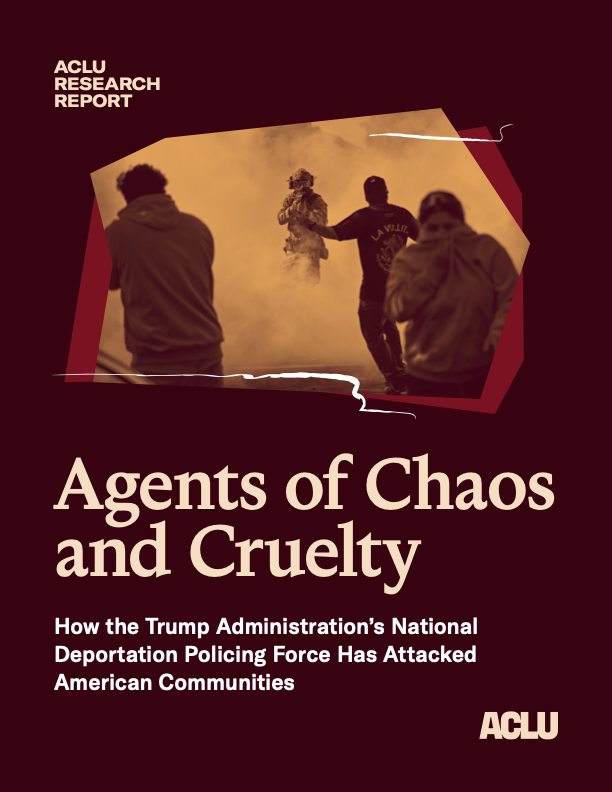
By American Civil Liberties Union
This ACLU research report, Agents of Chaos and Cruelty, documents widespread civil rights violations carried out by immigration agents during the first year of President Trump’s second term. The report examines immigration enforcement incidents in eight states – representing a cross-section of the country and reflecting varying degrees of federal law enforcement presence and personnel surges – and found that over 400 of the more than 1,200 immigration enforcement incidents examined involved misconduct by immigration agents. The report ends with detailed recommendations urging policymakers to call for transformative change to our immigration system, in recognition that it is broken and dangerous to human rights.
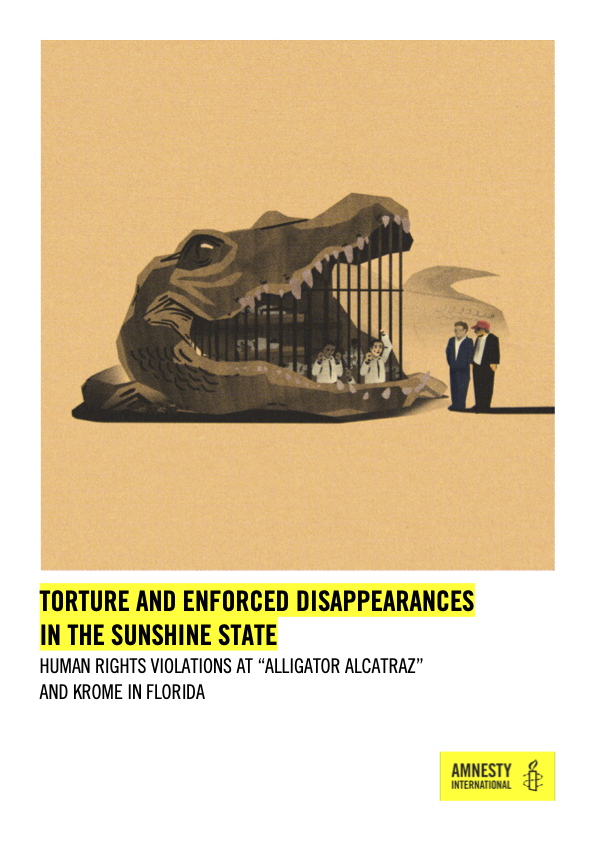
By Amnesty International
This report presents Amnesty International’s findings from a research trip to southern Florida in September 2025, to document the human rights impacts of federal and state migration and asylum policies on mass detention and deportation, access to due process, and detention conditions since President Trump took office on 20 January 2025. In particular, it focuses on detention conditions at the Krome North Service Processing Center (Krome) and the Everglades Detention Facility, also known as “Alligator Alcatraz”.
By The Institute for the Study of Global Antisemitism and Policy (ISGAP)
This study investigates the Muslim Brotherhood’s strategy of “civilizational struggle” (jihad) in Western society, with a specific focus on the United States. By analyzing primary documents, including the “Explanatory Memorandum” (1991) and “The Project” (1982), along with comparative historical analysis, it traces the development of the Brotherhood’s doctrine of tamkeen (institutional entrenchment) from its theoretical roots in early twentieth-century Egypt to its more advanced practical application in the United States. The study identifies and thoroughly analyzes four strategic domains of influence: policy impact through government entryism and coalition-building; manipulation of the legal framework via lawfare and the redefinition of core concepts; institutional infiltration across educational and civil society organizations; and the establishment of narrative control through media influence and discourse shaping. Multiple detailed case studies within each domain show how Brotherhoodaligned groups have executed these strategies across different countries and historical periods. The analysis in this study, supported by extensive documentary evidence and organizational network assessments, demonstrates that the Muslim Brotherhood’s long-term strategy is a deliberate, multigenerational effort that closely aligns with its founders’ vision of gradually transforming Western society from within, primarily through nonviolent means. Ideologically speaking, it is also fundamentally opposed to Western democratic values and governance systems. This study offers an important assessment of the key strategic objectives of Islamist extremism and ideological entryism within democratic systems by the Muslim Brotherhood, as well as the intersection of Islamist extremism with religious identity politics that exploit democratic principles, multicultural respect for diversity, and transnational movements in an era of globalization and information warfare. The study concludes with an assessment of the challenges faced by policymakers, security professionals, and civil society leaders who aim to protect democratic values while respecting religious freedoms. In a nutshell, it states that effective responses need to balance security concerns with civil liberties, differentiate between genuine religious practice and ideological extremism, and create more sophisticated frameworks for understanding and addressing radical Islamism.
By Matthew Clair
Abstract: This paper reviews cultural sociological approaches to the study of law and how they may be applied to future research on law-related social crises. As the world faces myriad social crises, such as rising authoritarianism and police violence, the study of culture and the law has become an even more urgent intellectual and practical endeavor. Over the last decade, five concepts have dominated the cultural study of law: rules, norms, frames, cultural capital, and legal consciousness. While past research has provided generative insight, future research would benefit from more precise considerations of rules and norms in this unsettled moment. Moreover, future research could leverage the five cultural concepts to sharpen understandings of inequality and social control in understudied legal organizations, along understudied axes of social stratification, and with respect to the infusion of new technologies into the legal system.
By Lia Collins,Calli Tzani,Maria Ioannou,Thomas James Vaughan Wiliams,David Lester,Lucas Rogers
While researchers have previously been interested in investigating and understanding psychopathy, much of this research has focussed on criminal psychopaths, and the area of non-criminal psychopathy has remained largely under-researched, particularly surrounding romantic relationships. The present study explored how the traits of psychopathy impact romantic relationships between a psychopathic individual and a non-psychopathic partner and also explored the links between psychopathic traits and stalking victimization in the context of romantic relationships. A sample of 78 participants completed questionnaire with questions about both themselves and their partners, including the Risk Identification Checklist for Stalking Cases (VS-DASH-2009) scales that they filled out with their partners. Analyses revealed that participants who scored higher on Machiavellianism tended to rate their partners as exhibiting more psychopathic traits, although the direction of this relationship remains unclear. Additionally, there are no significant differences between gender and VS-DASH scores.
By Hsiang-Chin Hsu & Tzu-Ching Sung
This study investigates the impact of a service-learning activity on the personal and professional development of 28 international medical students at I-Shou University, focusing on their participation in a service-learning project at a juvenile correctional school in Taiwan. Through the collection and thematic analysis of written reflections, four key themes were identified: cultural competence, empathy development, medical professionalism, and personal and professional growth. The service-learning experience significantly enhanced students’ cultural competence by exposing them to cross-cultural challenges, deepening their understanding of the social determinants of health, and reinforcing the importance of communication skills in overcoming language and cultural barriers. This is particularly relevant in diverse healthcare settings where effective communication is essential for patient-centered care. A notable outcome of the activity was the development of empathy, as students reflected on the emotional needs of the juveniles they encountered, highlighting the critical role of non-judgmental, compassionate care in healthcare practice. Furthermore, the experience fostered medical professionalism by confronting students with ethical dilemmas, such as equitable access to healthcare for marginalized populations, thus emphasizing the responsibility of future physicians to advocate for social justice and address healthcare disparities. Personal and professional growth emerged as another significant outcome, with students reporting increased self-awareness and emotional intelligence. The service-learning activity challenged their preconceived notions about marginalized populations, enabling them to recognize and mitigate personal biases, ultimately contributing to more compassionate and ethical patient care. Overall, the study underscores the transformative role of service-learning in medical education, fostering cultural competence, empathy, ethical awareness, and social responsibility—qualities essential for preparing socially responsible physicians to navigate healthcare. These findings collectively bridge theory and practice, illustrating how transformative learning and professional identity formation manifest through experiential service-learning. Accordingly, this study emphasizes integrating service-learning into medical education curricula to bridge theory and practice and equip students for ethical, cultural, and professional challenges. Future research should explore its long-term impact on professional development and broader curricular integration.
By D. Michael Applegarth, JoAnn S. Lee
This study examines changes in risk and protective factors among youth on probation (N=6,997) and how services received relate to these changes and subsequent recidivism. Using standardized risk assessments at intake and exit, logistic regression models assessed changes in risk and protective subscales, the relationship between specific services and observed changes, and associations with rearrest and reconviction. Overall, youth showed reduced risk and increased protective scores during probation. Increases in treatment, restitution, and assessments were linked to risk reductions, while treatment, assessments, and skill-building services were associated with gains in protective factors. Notably, more treatment services corresponded with increased risk in the school domain. Youth of color were less likely to experience a decrease in risk and an increase in protective scores. Increases in protective school scores and treatment services were linked to lower odds of rearrest and reconviction. In comparison, more monitoring services and increased legal history were associated with higher odds of recidivism. Findings highlight the potential of rehabilitative services to support youth success and suggest compliance based approaches, such as increased monitoring, may undermine outcomes. The study underscores the need for equitable, developmentally appropriate, and supportive interventions in juvenile probation.
By Marilyn FREEMAN
Cross-border parental child abductions in the EU are governed by The 1980 Hague Convention on the Civil Aspects of International Child Abduction and (except for Denmark) the Brussels II-ter Regulation. Countries outside of the EU may or may not be Contracting States to ‘the Convention’, but will not be bound by Brussels II-ter. Research has found that the often negative, long-lasting impact of abduction may continue throughout the lifecycle of those who have been abducted. It may also affect future generations of society. This means that every effort to deter abduction should be made. Where that is not possible, the 1980 Hague Child Abduction Convention should be nurtured to support its application in contemporary society. Specialist mediation should be encouraged in relation to international child abduction generally, and specifically in relation to Third Countries which are not Contracting States to ‘the Convention’. This study was commissioned by the European Parliament’s Policy Department for Citizens’ Rights and Constitutional Affairs at the request of the JURI Committee.
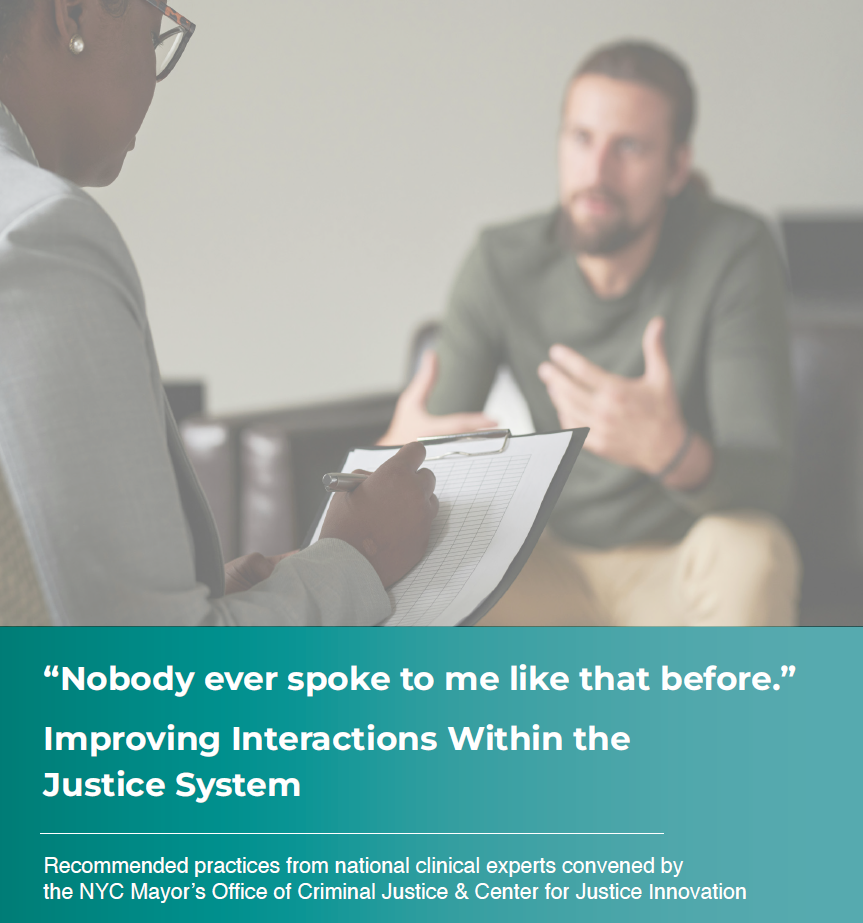
Nobody ever spoke to me like that before.” Improving Interactions Within the Justice System. Recommended practices from national clinical experts convened by the NYC Mayor’s Office of Criminal Justice & Center for Justice Innovation
By The New York City Mayor's Office of Criminal Justice
Most people who are arrested in New York City are not rearrested while they wait for a decision about the outcome of their case. However, a small group are rearrested at substantially elevated rates. And despite their clear need for supportive services, most of this group never receive intensive mental health, emotional health, or behavioral health interventions at any point during their time in the justice system. Instead, most interactions people experience as they journey through the justice system are limited to a series of brief mandated encounters—check-ins, needs assessments, reminders, hearings. Despite their brevity, these encounters represent key intervention points1 with the potential to change individuals’ future well-being and behavior, either negatively or positively, through inevitable influences on their emotional and psychological well-being. As New York City grapples with how to adequately serve people at highest need and highest risk of justice involvement, the New York City Mayor’s Office of Criminal Justice and the Center for Justice Innovation convened a national roundtable of clinical experts in Manhattan on October 12, 2023. Participants were asked to distill their expertise and apply it to the range of processes that practitioners most frequently navigate within the criminal court system context. The goal was to identify key opportunities for making these processes as therapeutic and impactful as possible under the constraints of system-based practice—in New York City and across the country. This roundtable focused on the interactions most system-involved people actually have on a daily basis. Specifically, intake screenings, routine monitoring appointments, and other brief mandated interventions are critical opportunities for providing trauma-informed care, which recognizes and responds to the high rates of trauma that people involved in the justice system experience.2 Often, this trauma is experienced both prior to3 and as a result of their involvement in the system.4 Making use of these opportunities could go a long way toward increasing court appearances, reducing rearrests, and increasing engagement in longer-term supportive and therapeutic services. As the city continues to wrestle with the twin challenges of reducing crime and incarceration and improving behavioral health care in the city, this roundtable could not come at a more critical moment. The roundtable sought to connect overall principles to concrete practices. While practitioners often refer to principles such as being trauma-informed, meeting people where they’re at, strengths based, and non-judgmental, what does that actually look like in practice? And how can staff reconcile these most effectively with accountability? What specific words or actions generate increased engagement and connection with people who do not trust systems of any kind, much less the justice system? This brief provides a list of concrete recommendations for providers, distilled from the roundtable discussion. It should be noted that none of these recommendations should be taken as conclusive or unequivocally endorsed by the Mayor’s Office of Criminal Justice. Instead, MOCJ is providing a summary of the recommendations provided by experts based on their experiences in the field.
By The Alliance for Youth Justice
The briefing, funded by the Barrow Cadbury Trust, examines what happens as exploited children turn 18, exploring how responses across safeguarding and criminal justice fail to keep pace with ongoing risk and harm. It sets out principles and practical steps to ensure protection continues into young adulthood and to prevent the unjust criminalisation of victims.
While awareness of CCE has grown, responses for children remain inconsistent and are too often led by punishment. At 18, those weaknesses are magnified. Support frequently falls away, thresholds for help rise, and young adults are more likely to be treated as perpetrators than recognised as victims. As parliament considers the Crime and Policing Bill’s new offence of child criminal exploitation (CCE), there is a critical opportunity to improve the response for victims – but a growing risk that exploited young adults will be prosecuted as perpetrators.
The briefing is informed by an evidence review and consultation with professionals, legal practitioners, academics, civil servants, and sector experts and identifies several urgent issues:
By Galen Lamphere-England
Gaming is now the most profitable form of entertainment worldwide, with over 3.42 billion people playing some form of games, accounting for a market of $187.7 billion engaging across consoles, PCs, and mobile devices.1 Nearly nine in ten children in middle and upper-income countries play online games2 . While online multiplayer games foster social connection, creativity, and communitybuilding, they are also increasingly exploited by violent organizations, ranging from non-state armed groups in conflict-affected settings to hybrid criminal networks. These actors use gaming spaces to propagandize, groom, recruit, and organize, leveraging gaming platforms' social and technical features to target children and young players. This policy brief examines how gaming ecosystems are being exploited to socialize and recruit children to participate in organized violence and provides recommendations for policymakers, practitioners working with children, and the gaming industry to safeguard children in online gaming environments. Online gaming is neither inherently harmful nor a direct cause of violence, but its social and technical infrastructure is being exploited at scale by malign actors. 3 Indeed, as the American Psychological Association framed the issue in a 2020 resolution, “attributing violence to violent video gaming is not scientifically sound and draws attention away from other factors.”4 At the same time, specific harms are affecting children via online gaming today. To protect children and young players, industry leaders, regulators, law enforcement, and practitioners working with children must act now, establishing robust prevention, detection, and response strategies that ensure children can enjoy their right to play and their right to be protected from violence. Gaming’s prosperous future depends on ensuring its spaces remain safe, inclusive, and free from children being targeted by violent actors and organizations. This report provides a series of recommendations to help achieve that aim.
By Leah Ouellet, Daphne M. Brydon, Laura S. Abrams, Jeffrey T. Ward, Dylan B. Jackson, Rebecca Turner, J. Z. Bennett, Reese Howard, Ashley Xu
Miller v. Alabama and Montgomery v. Louisiana restricted states’ ability to impose life without parole for youth under age 18 (henceforth JLWOP). Since Miller, 46 pieces of legislation across 34 states and the District of Columbia have altered JLWOP sentencing policies. The current study provides the first comprehensive and scientific review of this legislation. Using policy surveillance as a methodological guide, we found that a majority of statutes (N = 28) ban JLWOP sentencing, above and beyond the Supreme Court's requirement. Many statutes also extended sentencing reforms and post-conviction relief eligibility to other types of sentencing beyond JLWOP. However, all but one statute still allows either JLWOP or life with parole as a sentencing option for minors convicted of homicide crimes and requires between 15 and 40 years, at minimum, to be served before being eligible for release. Grounding our analysis in institutional theory, we argue that the relative punitivity of the JLWOP reforms enacted was associated with measures of JLWOP institutionalization across states (i.e., pre-Miller JLWOP population and pre-Miller sentencing schema), suggesting that states where JLWOP was more routinely used were more resistant to policy reform.
Policy Implications
The current study provides implications for future decarceration efforts. Findings suggest that state legislatures are willing to enact post-conviction relief measures (e.g., judicial review or “second look” measures) for individuals convicted of violent crimes to address over-incarceration, deviating from previous decarceration efforts focused on non-violent, low-level offenses. In spite of the promising window for juvenile justice reform that Miller provided, however, these reforms have taken a relatively modest, incremental approach toward altering extreme youth sentencing practices in the United States. Policy makers and advocates seeking to promote sentencing reform efforts should factor in how highly institutionalized a sentencing practice is in each state, as this might inform effective strategies for policy change.
By John M. MacDonald, Aaron Chalfin, Maya Moritz, Brian Wade, Alyssa K. Mendlein, Anthony A. Braga, Eugenia South
Street crimes are thought to be inBy John M. MacDonald, Aaron Chalfin, Maya Moritz, Brian Wade, Alyssa K. Mendlein, Anthony A. Braga, Eugenia South
Street crimes are thought to be influenced by changes in ambient lighting; yet, most studies have focused on small-scale interventions in limited areas. It remains unclear whether enhanced lighting can improve safety on a larger, jurisdiction-wide scale. This study examined the first 10 months of Philadelphia's citywide rollout of enhanced street lighting. Between August 2023 and May 2024, 34,374 streetlights were upgraded across 13,275 street segments, converting roughly one third of the city's street segments to new LED (light-emitting diode) fixtures that provide clearer and more even lighting. We assessed the impact of these upgrades on total crimes, violent crimes, property crimes, and nuisance crimes. Our findings reveal a 15% decline in outdoor nighttime street crimes and a 21% reduction in outdoor nighttime gun violence following the streetlight upgrades. The streetlight upgrades may have contributed to 5% of the citywide decline in Philadelphia gun violence during the study period. Qualitative data also suggest that resident perceptions of safety and neighborhood vitality improved after new streetlights were installed.
Policy Implications
Although prior research has mostly focused on small-scale implementations, our study demonstrates that improvements in street lighting can significantly reduce crime rates across large urban areas. These results support the adoption of energy-efficient LED street lighting as a crime reduction strategy for cities. Further research is needed to explore the impact of enhanced streetlight interventions on other types of crime and to determine whether the crime reduction benefits are sustained when these upgrades are implemented across the entire City of Philadelphia for an extended period
fluenced by changes in ambient lighting; yet, most studies have focused on small-scale interventions in limited areas. It remains unclear whether enhanced lighting can improve safety on a larger, jurisdiction-wide scale. This study examined the first 10 months of Philadelphia's citywide rollout of enhanced street lighting. Between August 2023 and May 2024, 34,374 streetlights were upgraded across 13,275 street segments, converting roughly one third of the city's street segments to new LED (light-emitting diode) fixtures that provide clearer and more even lighting. We assessed the impact of these upgrades on total crimes, violent crimes, property crimes, and nuisance crimes. Our findings reveal a 15% decline in outdoor nighttime street crimes and a 21% reduction in outdoor nighttime gun violence following the streetlight upgrades. The streetlight upgrades may have contributed to 5% of the citywide decline in Philadelphia gun violence during the study period. Qualitative data also suggest that resident perceptions of safety and neighborhood vitality improved after new streetlights were installed.
Policy Implications
Although prior research has mostly focused on small-scale implementations, our study demonstrates that improvements in street lighting can significantly reduce crime rates across large urban areas. These results support the adoption of energy-efficient LED street lighting as a crime reduction strategy for cities. Further research is needed to explore the impact of enhanced streetlight interventions on other types of crime and to determine whether the crime reduction benefits are sustained when these upgrades are implemented across the entire City of Philadelphia for an extended period
By Alagie Jinkang
Italy’s illegal commercialised sex industry is estimated to be worth 90 million Euro and involves up to 9 million clients annually. The industry depends on migrants from Nigeria, Romania and Albania, many of whom are victims of human trafficking, abuse, exploitation, oppression, extreme educational and economic poverty, and non-integration in Italy. But despite legal and policy interventions, sexual exploitation of migrants is highly tolerated, goes largely unpunished and is increasingly threatening to migrant women's wellbeing throughout the peninsula, as in the case of migrant women from Nigeria. This brief focuses on the NigerianItalian HTSE for two main reasons: (a) Italy’s proximity to the central Mediterranean route serving as key irregular route for migrant smugglers and human traffickers; (b) Italy’s dysfunctional and emergencial asylum systems coupled with its insufficient, untimely and inefficient policy intervention on migrants' sexual exploitation, and; (c) perceptions and misinformation about Europe as source of economic and social opportunities and prestige, which all provide a fertile ground for mafia activities and organised crime to flourish. Therefore, coupled with PERCEPTIONS findings, this brief draws political attention to the intersections between irregular migration and asylum, mafia activities and organised crime, targeted deception and misinformation, abject poverty and traditional practices within the discourse of NigerianItalian HTSE.
By The International Organization for Migration
This report, Climate Chains: Mapping the Relationship between Climate, Trafficking in Persons and Building Resilience in the Philippines, explores the complex links between climate change, livelihood, vulnerability, migration and human trafficking in the Philippines. Commissioned by IOM under the Climate Resilience Against Trafficking and Exploitation (CREATE) project, this study forms part of a broader research focusing on Ethiopia and the Philippines – two countries facing distinct climate challenges: slow-onset droughts and sudden-onset typhoons, respectively.
The research used a mixed-methods approach including household surveys, interviews and focus group discussions. The report puts forward a conceptual model that links climate events and trafficking through a series of intertwined steps. It identifies a causal chain where climate events disrupt livelihood, increase vulnerability and heighten migration intentions, which can lead to exploitation and trafficking. The research explores how factors linking climate and trafficking operate in the Philippines.
This study provides critical insights and recommendations for policymakers, donors and organizations in the Philippines and internationally that are working to combat human trafficking and exploitation, while strengthening resilience to climate change
By The International Organization for Migration
This report, Climate Chains: Mapping the Relationship between Climate, Trafficking in Persons and Building Resilience in Ethiopia, explores the complex links between climate change, livelihood, vulnerability, migration and human trafficking in Ethiopia. Commissioned by IOM under the Climate Resilience Against Trafficking and Exploitation (CREATE) project, this study forms part of a broader research focusing on Ethiopia and the Philippines – two countries facing distinct climate challenges: slow-onset droughts and sudden-onset typhoons, respectively.
The research used a mixed-methods approach including household surveys, interviews and focus group discussions. The report puts forward a conceptual model that links climate events and trafficking through a series of intertwined steps. It identifies a causal chain where climate events disrupt livelihood, increase vulnerability and heighten migration intentions, which can lead to exploitation and trafficking. The research explores how factors linking climate and trafficking operate in Ethiopia.
This study provides critical insights and recommendations for policymakers, donors and organizations in Ethiopia and internationally that are working to combat human trafficking and exploitation, while strengthening resilience to climate change.
By Devair Monteiro, Laryssa Suemy Oumoriz , Carmen Silvia Molleis Galego Miziara , Ivan Dieb Miziara
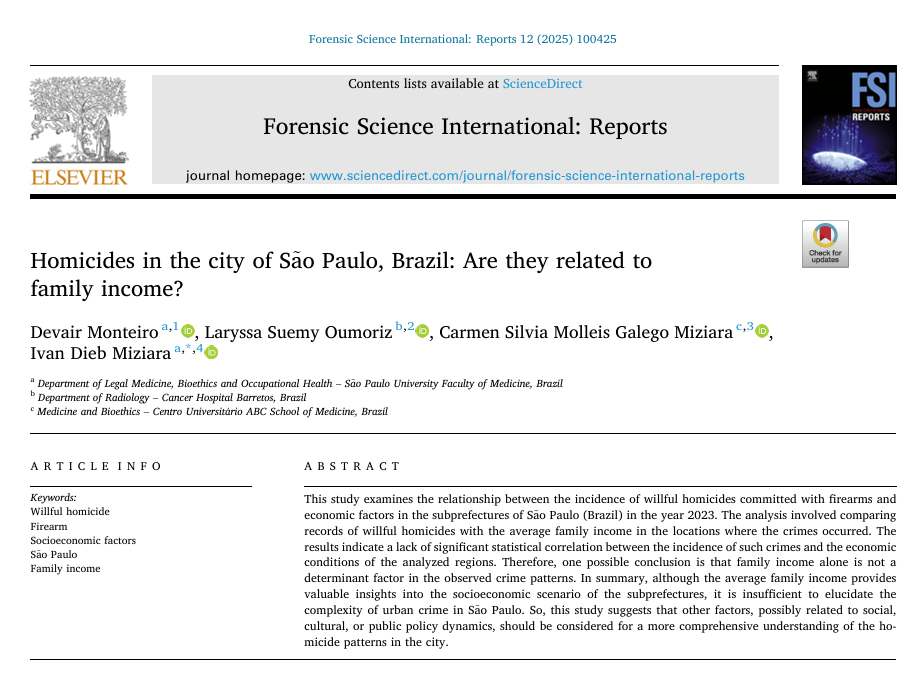
This study examines the relationship between the incidence of willful homicides committed with firearms and economic factors in the subprefectures of São Paulo (Brazil) in the year 2023. The analysis involved comparing records of willful homicides with the average family income in the locations where the crimes occurred. The results indicate a lack of significant statistical correlation between the incidence of such crimes and the economic conditions of the analyzed regions. Therefore, one possible conclusion is that family income alone is not a determinant factor in the observed crime patterns. In summary, although the average family income provides valuable insights into the socioeconomic scenario of the subprefectures, it is insufficient to elucidate the complexity of urban crime in São Paulo. So, this study suggests that other factors, possibly related to social, cultural, or public policy dynamics, should be considered for a more comprehensive understanding of the homicide patterns in the city.
Forensic Science International: Reports, Dec. 2025
By John R. Lott, et al.
After peaking in 2022, the number of Concealed Carry Permit holders across the United States has declined for the third year in a row. The total now sits at 20.88 million, representing a 2.7% drop from last year. A major factor behind this ongoing decrease is the widespread adoption of Constitutional Carry laws. Following Louisiana’s implementation of permitless carry on July 4, 2024, 29 states now allow residents to carry without a permit. As a result, 46.8% of Americans (157.6 million) now live in Constitutional Carry States, with 67.7% of the land in the country (2.57 million square miles). Although no additional states enacted such laws this year, the broader trend remains unchanged. Unlike gun ownership surveys that may be affected by people’s unwillingness to answer personal questions, concealed handgun permit data is the only really “hard data” that we have, but it becomes a less accurate measure as more states become Constitutional Carry states.
Salt Lake City UK: Crime Prevention Research Center, 2025