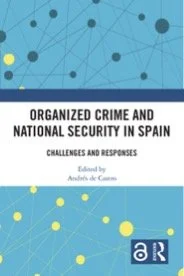
Organized Crime and National Security in Spain:
Challenges and Responses
Edited by Andrés de Castro
This book offers an analysis of how organized crime operates in Spain and the security apparatus designed to contain it. Organized crime is currently one of the most serious security threats facing democratic societies. Despite its intense presence and the responses that states have articulated in recent decades, little attention has been paid to the measurement of the effectiveness of the means adopted to combat it. Thus, this volume delves into this issue and performs an analysis of the police dimension of the response to organized crime in Spain. Firstly, this volume describes the international phenomenon of organized crime and its evolution in Spain, and continues by analyzing the profile and the characteristics of the different police forces and their resources and capabilities. This book then discusses the consequences of the measures at international level, European Union level, and local level, in relation to other police forces. Finally, the volume addresses the legal and public policy efforts that Spanish Law Enforcement Agencies have made in supervising or regulating their own police forces, which is necessary to carry out a detailed analysis of the consequences on the presence and strength of organized crime in the structures, strategies and decisions that Spain adopted over the last decades. As a result, this book builds on and updates the previous work by international scholars and proposes an interesting methodology that can contribute to the advancement of security studies.
London; New York: Routledge, 2025. 265p.