Open Access Publisher and Free Library
Fiction+Mediajpg.jpg

FICTION and MEDIA

CRIME AND MEDIA — TWO PEAS IN A POD

Posts in thriller
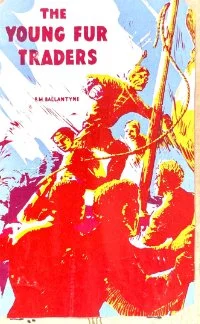
The Young Fur Traders

By R. M. Ballantyne

"The Young Fur Traders" is a children's adventure novel by Scottish author R. M. Ballantyne, first published in 1856. Set in the American Old West, this exciting tale is full of action and daring-do, making it ideal for children with an interest in the Wild West and American history. .

Melbourne. Australia. A Herald Classic. Colorgravure Publications. Originally published 1851. 1950. 223p

John Wentley Wins Through

By J. F. C. Westerman

FROM THE COVER: When JohnWentleyunder- took to fly a British Secret Service agent to a forbidden part he little imagined what would result from his escapade. How he foiled an attempt by a dangerous and un- scrupulous enemy to steal the plans of his recently invented aero engine, took part in two thrilling aerial ducls, and fought against terrific odds to regain the safety of the Swiss border--with secrets in his possession on which de-pended the very existence of the British Empireis excitingly told by one of the foremost writers of boys' adventure stories.

London. The Children's Press. 1930s. 211p. USED BOOK

The Bull Patrol

By Arthur Catherall

Classic how-to book for Boy Scouts conveying all the skills needed for leadership, survival and success in war. Inspired, of course, by the writings of Baden Powell who cut his war teething the Boer war. FROM THE COVER: “ They were an odd gang, Af,l Joe, Dick, and Gyp; but once they got the idea of Scouting they were the staunchest friends that anyone could ask for. Their Patrol Leader set a high standard of courage and endurance, and the others one by one played a loyal part in the many daring rescues and thrilling episodes that were to follow- adventures which will be the envy of every Scout.

London. Butterworth Press. 1949. 120p. USED BOOK

The Rescue Flight: A Biggles Story

By Captain W. E. Johns. Illustrated By Alfred Sindall

A boys’ book from the classic series heralding World War 2, and highlighting the excitement and attractiveness of war..

FROM CHAPTER 1: “ PETER FORTYMORE RECEIVES BAD NEWS. THERE was a pensive, almost wistful, expression on the face of the Honourable Peter Fortymore as, with his chin cupped in his hands, he sat at his study window and stared out across the deserted, moonlit playing-fields of Rundell School, where for five years he had been a pupil. The door be- hind him opened, but he did not turn, for he knew from the heavy, deliberate footsteps that the new- comer washis friend and room-mate, Dick Ripley, known throughout the upper school as Rip…”

London. Geoffrey Cumberlege Oxford University Press. 1950. 245p

Moby Dick

By Herman Melville

From Wikipedia: Moby-Dick; or, The Whale is an 1851 novel by American writer Herman Melville. The book is the sailor Ishmael's narrative of the maniacal quest of Ahab, captain of the whaling ship Pequod, for vengeance against Moby Dick, the giant white sperm whalethat bit off his leg on the ship's previous voyage. A contribution to the literature of the American Renaissance, Moby-Dick was published to mixed reviews, was a commercial failure, and was out of print at the time of the author's death in 1891. Its reputation as a Great American Novel was established only in the 20th century, after the 1919 centennial of its author's birth. William Faulkner said he wished he had written the book himself,[1] and D. H. Lawrence called it "one of the strangest and most wonderful books in the world" and "the greatest book of the sea ever written".[2] Its opening sentence, "Call me Ishmael", is among world literature's most famous.[3]

London. Richard Bentley . 1851. 632p.

The Turn of the Screw

By Henry James

From Wikipedia: The Turn of the Screw is an 1898 horror novella by Henry James which first appeared in serial format in Collier's Weekly (January 27 – April 16, 1898). In October 1898, it was collected in The Two Magics, published by Macmillan in New York City and Heinemannin London. The novella follows a governess who, caring for two children at a remote estate, becomes convinced that the grounds are haunted. The Turn of the Screw is considered a work of both Gothic and horror fiction.

In the century following its publication, critical analysis of the novella underwent several major transformations. Initial reviews regarded it only as a frightening ghost story, but, in the 1930s, some critics suggested that the supernatural elements were figments of the governess' imagination. In the early 1970s, the influence of structuralism resulted in an acknowledgement that the text's ambiguity was its key feature. Later approaches incorporated Marxist and feminist thinking.

  • On Christmas Eve, an unnamed narrator and some of his friends are gathered around a fire. One of them, Douglas, reads a manuscript written by his sister's late governess. The manuscript tells the story of her being hired by a man who has become responsible for his young niece and nephew following the deaths of their parents. He lives mainly in London and has a country house in Bly, Essex. The boy, Miles, is attending a boarding school, while his younger sister, Flora, is living in Bly, where she is cared for by Mrs. Grose, the housekeeper. Flora's uncle, the governess's new employer, is uninterested in raising the children and gives her full charge, explicitly stating that she is not to bother him with communications of any sort. The governess travels to Bly and begins her duties…………

NY.London. Collier Macmillan. 1898. 118p.

My Cousin Rachel

By Daphne Du Maurier

"My Cousin Rachel" is a novel written by Daphne du Maurier, a British author known for her Gothic and romantic suspense novels. The novel was first published in 1951 and is set in 19th-century Cornwall, England.

The story follows the character of Philip Ashley, a young man who is raised by his cousin Ambrose on their estate in Cornwall. When Ambrose travels to Italy for his health and falls in love with their distant cousin Rachel, Philip is initially suspicious of her motives. After Ambrose's sudden death, Philip inherits his estate and becomes increasingly obsessed with Rachel, who comes to visit him in Cornwall.

The novel is a blend of mystery, romance, and psychological drama, as Philip tries to uncover the truth about Rachel's involvement in Ambrose's death and struggles with his conflicting feelings for her.

London. Gollancz. 1951. 221p.

Pompeii

By Robert Harris

"Pompeii" is a historical novel written by Robert Harris, a British author. It was published in 2003 and is set in ancient Rome, specifically during the final days of Pompeii before the eruption of Mount Vesuvius in 79 AD.

The novel follows the character of Marcus Attilius, a young aqueduct engineer who is sent to Pompeii to investigate the sudden loss of water in the city's aqueduct system. Attilius soon discovers that the problem is due to a blockage caused by the eruption of Mount Vesuvius. As the eruption intensifies, Attilius becomes embroiled in a race against time to save the citizens of Pompeii from the impending disaster.

The story is a mix of historical fiction and thriller, with vivid descriptions of life in ancient Rome and the eruption of Mount Vesuvius. The novel is also notable for its accurate depiction of the engineering and technological innovations of the ancient Roman empire, particularly with regard to the aqueduct system.

London. Hutchinson. 2003. 347p.

Rebecca

By Daphne du Maurier

"Rebecca" is a novel by British author Daphne du Maurier, first published in 1938. The novel is a gothic romance and psychological thriller that tells the story of an unnamed young woman who marries a wealthy widower, Maxim de Winter, and moves into his estate, Manderley.

The new Mrs. de Winter soon realizes that the shadow of Maxim's first wife, Rebecca, who died in mysterious circumstances, still looms large over the house and its inhabitants. She feels like an outsider in her own home and is haunted by the memory of Rebecca, who was beautiful, charismatic, and seemingly perfect. As she tries to uncover the truth about Rebecca's death, the new Mrs. de Winter becomes entangled in a web of deceit, jealousy, and danger.

The novel is known for its vivid descriptions of the English countryside, its atmospheric portrayal of Manderley, and its exploration of themes such as love, identity, jealousy, and the nature of truth. It has been adapted into several films, stage productions, and a television series, and is considered one of du Maurier's most popular and enduring works.

London. Gollancz. 1936. 283p.

The Given Day

By Denis Lehane

London. Transworld Publishers. 2008. 702p.

"The Given Day" is a historical novel by American author Dennis Lehane, published in 2008. The book is set in Boston in the years following World War I, and tells the story of two families from different backgrounds whose lives become intertwined in the tumultuous years of the early 20th century.

The novel explores themes of race, class, and politics, and features a cast of characters that includes police officers, labor organizers, politicians, and ordinary citizens. At the heart of the story are two men, one black and one white, who find themselves drawn into the same struggle for justice and equality in a city that is deeply divided by race and class.

"The Given Day" is notable for its vivid and immersive depiction of Boston during a period of significant social and political change. Lehane's meticulous research and attention to historical detail help to bring the city to life, and his skill as a storyteller keeps the reader engaged throughout the book's sprawling narrative.

The Silent Girl

By Hjorth and Rosenfeldt. Trans. Marlaine Delargy.

London. Penguin Arrow Books. 2014. 458p.

"The Silent Girl" is actually a crime thriller novel by Swedish authors Michael Hjorth and Hans Rosenfeldt, originally published in Swedish in 2011 and translated into English by Marlaine Delargy.

The novel follows the investigation of a brutal murder in Stockholm, Sweden, and the subsequent discovery of a string of similar killings. The detective in charge of the case, Sebastian Bergman, is a troubled and emotionally complex character who is forced to confront his own demons as he races against time to catch the killer.

"The Silent Girl" is the fourth novel in Hjorth and Rosenfeldt's Sebastian Bergman series. The book has been praised for its well-crafted plot, nuanced characterization, and atmospheric setting. The authors' background in screenwriting is evident in the book's cinematic pacing and tension, which keep the reader engaged from start to finish.

Our Game

By John Le Carre

Sydney. Holder Headline. 1995. 405p.

"Our Game" is a novel by John le Carré, published in 1995. The book follows the story of a retired British spy named Tim Cranmer, who is pulled back into the world of espionage when his former lover, Emma, and his former colleague, Larry Pettifer, reemerge in his life.

The novel is set in the aftermath of the Cold War and explores the changing landscape of international politics and espionage. As Tim tries to navigate his relationships with Emma and Larry, he becomes embroiled in a web of conspiracy and betrayal that threatens to upend his life and career.

Through its intricate plot and nuanced characterization, "Our Game" offers a complex portrait of the world of espionage and the personal and political costs of the spy game. The novel also touches on themes of loyalty, trust, and the shifting alliances of the post-Cold War era.

The Pillars of the Earth

By Ken Follett

NY. Signet. 1990. 1,020p.

"The Pillars of the Earth" is a historical novel by British author Ken Follett, published in 1989. Set in 12th-century England, the novel follows the story of the building of a cathedral in the fictional town of Kingsbridge.

The novel weaves together the lives of several characters, including the master builder Tom, the noblewoman Aliena, and the monk Prior Philip, as they work to realize their vision of building a great cathedral. Along the way, they must confront numerous challenges, including political strife, personal vendettas, and the technical difficulties of constructing a building of such magnitude.

Through its sweeping scope and vivid characterization, "The Pillars of the Earth" offers a richly detailed portrait of medieval life and society. The novel explores themes of power, faith, and love, and it illuminates the complex interplay between religion, politics, and economics in medieval Europe.

Say Nothing

By Patrick Radden Keefe

London. Harper Collins. 2018. 521p.

Say Nothing: A True Story of Murder and Memory in Northern Ireland" is a nonfiction book by American journalist Patrick Radden Keefe, published in 2019. The book tells the story of the conflict in Northern Ireland, known as "The Troubles", through the lens of one particular crime – the disappearance of a young mother of 10 named Jean McConville.

Keefe uses McConville's disappearance as a focal point to explore the complex and violent history of Northern Ireland, the rise of the Provisional IRA, and the role of secret paramilitary groups like the Irish Republican Army and British Army's Military Reaction Force. He also examines the legacy of the conflict, including the ongoing search for McConville's remains and the Good Friday Agreement, which brought an end to much of the violence in Northern Ireland.

Through extensive research and interviews with those involved, Keefe creates a gripping and detailed narrative that delves into the lives of those caught up in the conflict, including McConville's family and the IRA operatives responsible for her disappearance. He also explores the ways in which memory and trauma continue to shape the lives of those affected by the conflict.

A Clockwork Orange

By Anthony Burgess

From the cover. A CLOCKWORK ORANGE_-Anthony Burgess' most famous novel-is a book of stunning force, the most cogent and terrifying vision of the future since George Orwell's 1984. Adrift in the impersonal, iron-gray society of the superstate, the novel's main character, 15-year-old Alex, leads his gang of teen-age rockers in all-night orgies of random violence and destruction. Told in a slang as electric as the events described, this is Alex's storyo f rapes and stompings and rumbles with the police, of prison life and the frightful "Ludovico Technique" by which Alex is "recon ditioned" into a model citizen, and of his subsequent adventures as a mindless pawn in the cynical hands of the authorities. "A brilliant novel . . . a tour de force in nastiness, an inventive primer in total violence, a savage satire o n t h edistortions o fthe single and collective minds."-New York Times.

NY. W.W. Norton. 1962. 184p.

Little Bee

By Chris Cleave

NY. Simon and Schuster. 2008. 298p.

The novel alternates between the perspectives of Little Bee and Sarah, a British woman whose life intersects with Little Bee's when they meet on a Nigerian beach two years before Little Bee's arrival in England. As the two women's stories unfold, the novel explores themes of identity, trauma, and the complexities of human relationships.

Through the character of Little Bee, the novel sheds light on the experiences of refugees and asylum seekers, and the challenges they face as they try to build new lives in unfamiliar and often hostile environments. It also explores issues of race, privilege, and the legacy of colonialism, as well as the impact of global economic and political forces on the lives of individuals and communities.

The Stranger

By Albert Camus

With the intrigue of a psychological thriller, The Stranger—Camus's masterpiece—gives us the story of an ordinary man unwittingly drawn into a senseless murder on an Algerian beach. With an Introduction by Peter Dunwoodie; translated by Matthew Ward.

Behind the subterfuge, Camus explores what he termed "the nakedness of man faced with the absurd" and describes the condition of reckless alienation and spiritual exhaustion that characterized so much of twentieth-century life. 

“The Stranger is a strikingly modern text and Matthew Ward’s translation will enable readers to appreciate why Camus’s stoical anti-hero and ­devious narrator remains one of the key expressions of a postwar Western malaise, and one of the cleverest exponents of a literature of ambiguity.” –from the Introduction by Peter Dunwoodie.

Through the story of an ordinary man unwittingly drawn into a senseless murder on an Algerian beach, Camus explored what he termed "the nakedness of man faced with the absurd." First published in English in 1946; now in a new translation by Matthew Ward.

London. Knopf. 1946. 77p.

First Person

By Richard Flanagan

Kif Kehlmann, a young, penniless writer, thinks he’s finally caught a break when he’s offered $10,000 to ghostwrite the memoir of Siegfried “Ziggy” Heidl, the notorious con man and corporate criminal. Ziggy is about to go to trial for defrauding banks for $700 million; they have six weeks to write the book.
 
But Ziggy swiftly proves almost impossible to work with: evasive, contradictory, and easily distracted by his still-running “business concerns”—which Kif worries may involve hiring hitmen from their shared office. Worse, Kif finds himself being pulled into an odd, hypnotic, and ever-closer orbit of all things Ziggy. As the deadline draws near, Kif becomes increasingly unsure if he is ghostwriting a memoir, or if Ziggy is rewriting him—his life, his future, and the very nature of the truth.
 
By turns comic, compelling, and finally chilling, First Person is a haunting look at an age where fact is indistinguishable from fiction, and freedom is traded for a false idea of progress.

London. Penguin, 2017, 392p.

Grimus

By Salman Rushdie

A mixture of science fiction and folktale, past and future, primitive and present-day . . . Thunderous and touching. After drinking an elixir that bestows immortality upon him, a young Indian named Flapping Eagle spends the next seven hundred years sailing the seas with the blessing–and ultimately the burden–of living forever. Eventually, weary of the sameness of life, he journeys to the mountainous Calf Island to regain his mortality. There he meets other immortals obsessed with their own stasis and sets out to scale the island’s peak, from which the mysterious and corrosive Grimus Effect emits. Through a series of thrilling quests and encounters, Flapping Eagle comes face-to-face with the island’s creator and unwinds the mysteries of his own humanity. Salman Rushdie’s celebrated debut novel remains as powerful and as haunting as when it was first published more than thirty years ago. A book to be read twice . . . [Grimus] is literate, it is fun, it is meaningful, and perhaps most important, it pushes the boundaries of the form outward.

London. Vintage. 1975. 253p.

Into the Water

By Paula Hawkins

An addictive novel of psychological suspense from the author of #1 New York Times bestseller and global phenomenon The Girl on the Train and A Slow Fire Burning.

“Hawkins is at the forefront of a group of female authors . . who have reinvigorated the literary suspense novel by tapping a rich vein of psychological menace and social unease… there’s a certain solace to a dark escape, in the promise of submerged truths coming to light.” —Vogue

A single mother turns up dead at the bottom of the river that runs through town. Earlier in the summer, a vulnerable teenage girl met the same fate. They are not the first women lost to these dark waters, but their deaths disturb the river and its history, dredging up secrets long submerged.
 
Left behind is a lonely fifteen-year-old girl. Parentless and friendless, she now finds herself in the care of her mother's sister, a fearful stranger who has been dragged back to the place she deliberately ran from—a place to which she vowed she'd never return.
 
With the same propulsive writing and acute understanding of human instincts that captivated millions of readers around the world in her explosive debut thriller, The Girl on the Train, Paula Hawkins delivers an urgent, twisting, deeply satisfying read that hinges on the deceptiveness of emotion and memory, as well as the devastating ways that the past can reach a long arm into the present.

London. Transworld. Penguin. 2017. 357p.